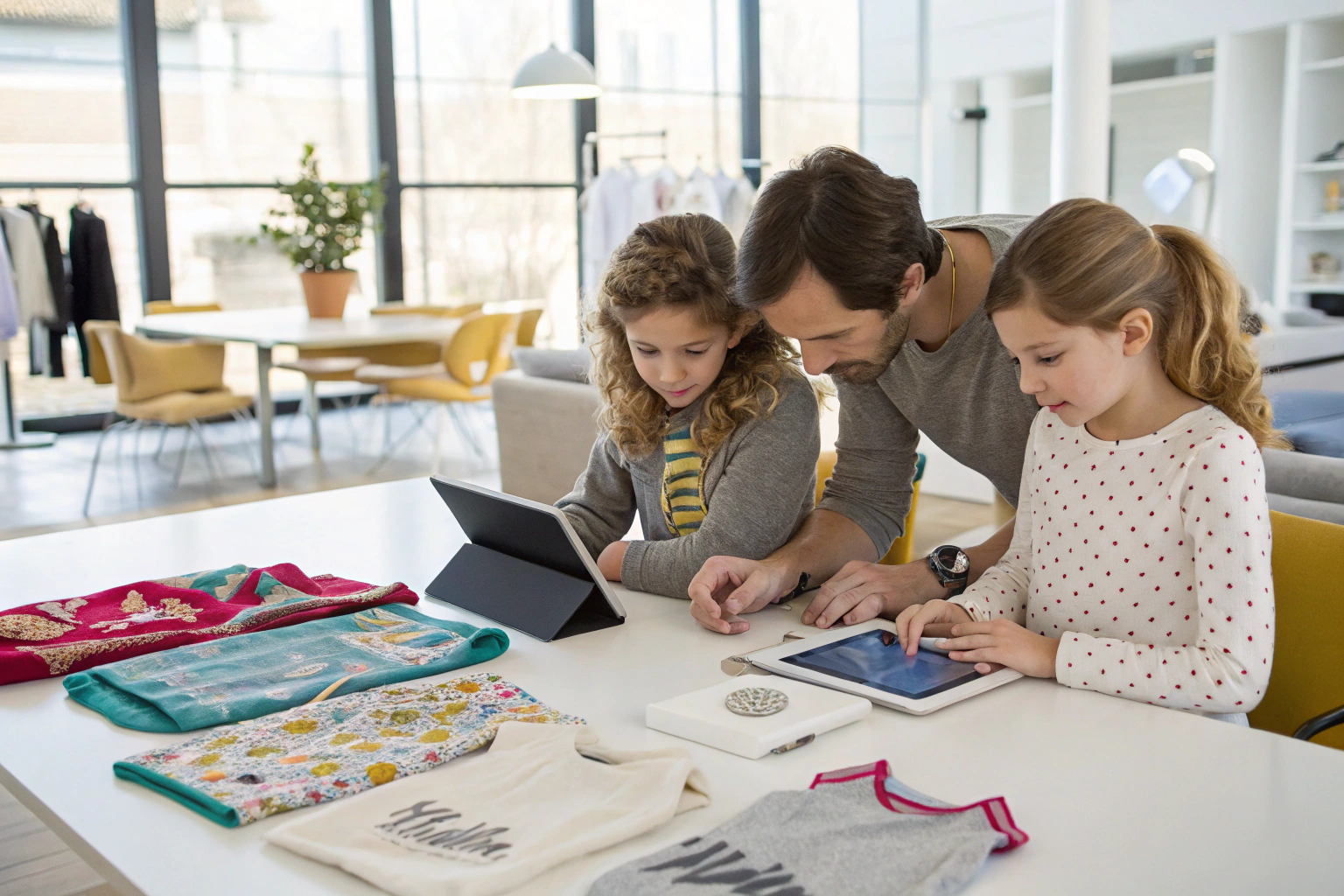
The children's apparel market is experiencing a significant shift toward customization, with personalized and made-to-order clothing becoming increasingly popular among modern parents. As a manufacturer working with brands offering customization options, I've witnessed how this trend reflects broader changes in consumer behavior, manufacturing capabilities, and parenting philosophies.
The demand for kids custom clothing is increasing due to growing desires for personal expression, the rise of social media sharing, advancements in digital manufacturing, and parental preferences for unique, high-quality items that stand out from mass-produced alternatives. This trend represents a fundamental shift from standardized sizing and designs toward personalized solutions that celebrate individuality.
Custom children's wear encompasses everything from personalized names and graphics to made-to-measure sizing and bespoke designs. Let's explore the key drivers behind this growing market segment and what it means for children's fashion.
What social factors are driving custom clothing demand?
Social and cultural shifts have created an environment where personalized children's clothing aligns perfectly with contemporary parenting values and lifestyle needs. The desire for individuality, the influence of social media, and changing family structures all contribute to the growing appeal of custom options.
Key social drivers include the celebration of individual identity, social media visibility, smaller family sizes allowing for greater per-child spending, and the desire for heirloom-quality pieces. Modern parents increasingly view clothing as a form of self-expression for their children rather than merely practical coverings.
How does social media influence customization trends?
Social media influences customization trends by creating visible platforms where unique clothing becomes shareable content and personal branding. Parents frequently document their children's lives online, creating demand for distinctive outfits that photograph well and generate engagement. According to childhood digital footprint research, 81% of parents with young children share photos of them online, making visually distinctive clothing increasingly valuable. Custom items with personal details like names, unique graphics, or special meanings become not just clothing but content opportunities that celebrate a child's individuality in a highly visible way.
Why does personal expression drive custom purchases?
Personal expression drives custom purchases because contemporary parenting philosophies increasingly emphasize recognizing and celebrating each child's unique identity from an early age. Unlike previous generations where children often wore handed-down clothing or uniform styles, today's parents use clothing as a tool for self-discovery and identity formation. The American Psychological Association notes that supporting children's individual expression contributes to healthy development. Custom clothing allows parents to involve children in design choices, creating garments that reflect their emerging personalities, interests, and preferences in ways that mass-produced options cannot match.
What technological advances enable customization?
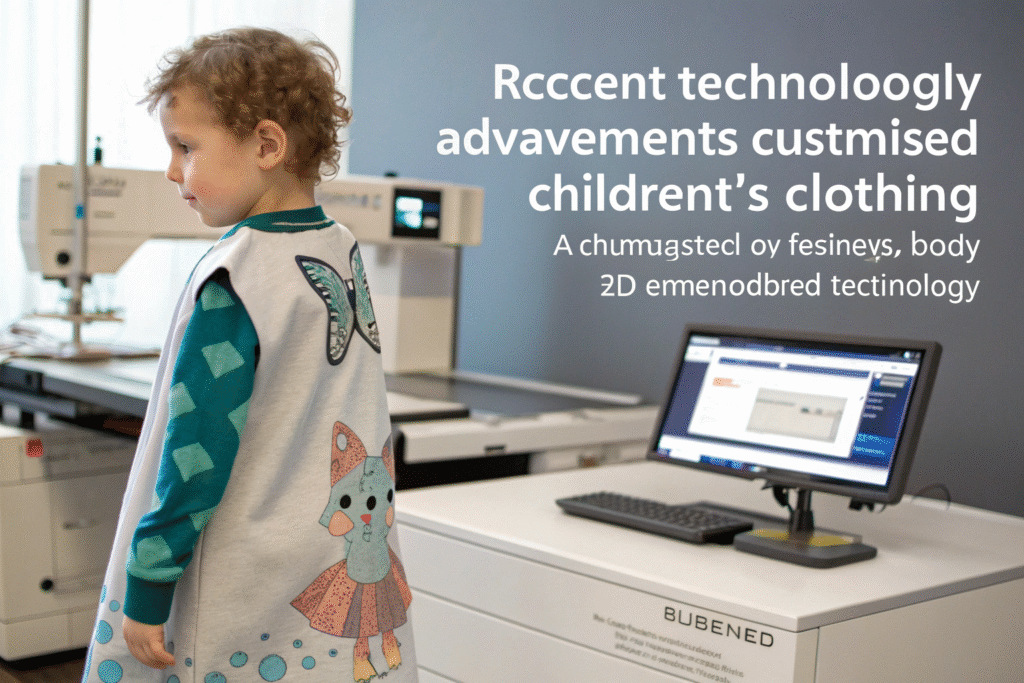
Recent technological advancements have made customized children's clothing increasingly accessible and affordable. Digital manufacturing technologies, e-commerce platforms, and design software have removed traditional barriers that once made customization prohibitively expensive or technically challenging.
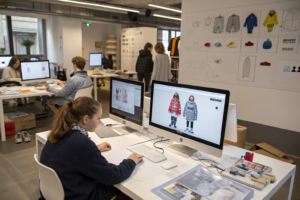
Key technological enablers include direct-to-garment printing, computerized embroidery, 3D body scanning, and AI-powered design tools. These technologies allow for small-batch or single-piece production at reasonable costs while maintaining quality standards comparable to mass production.
How has digital printing revolutionized customization?
Digital printing has revolutionized customization by eliminating minimum order quantities and enabling intricate, full-color designs on demand. Unlike traditional screen printing that requires separate setups for each color, direct-to-garment printing can produce single items with photographic-quality images without setup costs. This technology allows parents to create completely unique patterns, incorporate children's artwork, or reproduce special memories as wearable items. The flexibility extends to mixing sizes, colors, and designs within the same production run, making truly personalized clothing economically viable even for small brands and individual consumers.
What role do online design platforms play?
Online design platforms serve as the bridge between consumer creativity and manufacturing capability, making customization accessible to non-technical users. These platforms offer intuitive interfaces where parents and children can select styles, choose colors, add text, upload images, and visualize final products before ordering. Advanced systems incorporate augmented reality try-on features and size recommendation algorithms that improve accuracy and satisfaction. The most sophisticated platforms learn from user preferences to suggest designs and gradually build detailed size profiles for each child, creating increasingly personalized experiences with repeated use.
What economic factors support this trend?
Economic shifts have made customized children's clothing more accessible across different income levels while changing perceptions of value. While custom items typically carry premium prices, consumers increasingly view them as worthwhile investments rather than extravagant luxuries.
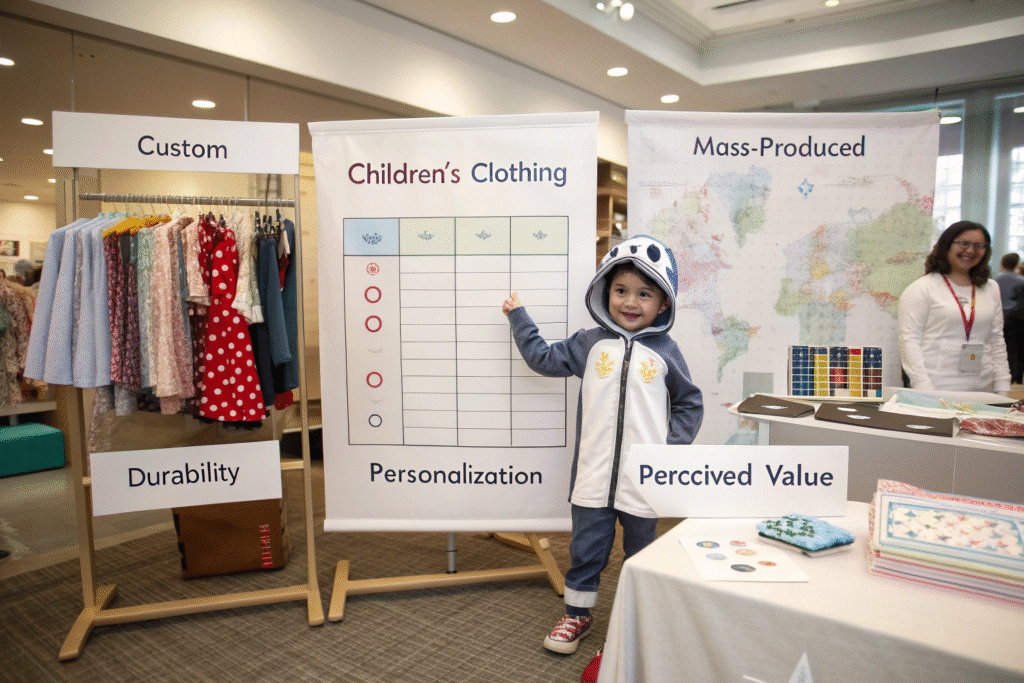
Key economic factors include rising disposable income for experiential purchases, the premiumization of children's products, and the perceived value of longevity in custom items. The table below illustrates the value proposition of custom versus mass-produced children's clothing:
| Factor | Mass-Produced Clothing | Custom Clothing |
|---|---|---|
| Price Point | Lower initial cost | Higher initial investment |
| Long-Term Value | Frequent replacement needed | Longer usability through better fit |
| Emotional Value | Generic, disposable | Personal, meaningful |
| Resale Potential | Low, commoditized | Higher for well-maintained pieces |
Why are parents willing to pay customization premiums?
Parents are willing to pay customization premiums because they perceive greater value in personalized items that offer perfect fit, unique design, and emotional significance. According to consumer behavior research, consumers will pay 10-15% more for products that feel personally tailored to them. For children's clothing, this premium is justified through multiple dimensions: better-fitting clothes that last longer as children grow, reduced returns and exchanges, and the emotional value of items that become keepsakes rather than disposable fashion. The higher cost per wear often compares favorably to cheaper items that are quickly outgrown or rarely worn due to poor fit.
How does customization reduce clothing waste?
Customization reduces clothing waste by creating garments that children actually wear rather than abandoning due to poor fit, dislike of style, or duplication with existing items. The Ellen MacArthur Foundation estimates that over $500 billion of value is lost annually due to clothing underutilization and lack of recycling. Custom clothing addresses this by ensuring better initial fit and alignment with personal preferences, extending garment lifespan. Additionally, made-to-order production eliminates unsold inventory that typically ends in landfills. When children participate in designing their clothing, they develop stronger connections to these items, increasing likelihood of continued wear and careful maintenance.
How does customization address practical parenting challenges?
Custom children's clothing solves several practical challenges that parents face with mass-produced options, particularly regarding fit, sizing consistency, and adaptability for children with non-standard body types or special needs.
Practical benefits include addressing fit issues for growing children, accommodating physical differences, creating adaptable clothing for various activities, and simplifying wardrobe management through versatile, well-fitting pieces.

How does custom sizing solve growth challenges?
Custom sizing solves growth challenges by allowing parents to order slightly larger garments with precise adjustments rather than guessing between standard sizes that may be too loose or too tight in specific areas. For rapidly growing children, some custom services offer "growth allowance" features like adjustable waistbands, extendable cuffs, and hem allowances that can be let out as children grow. This approach extends the wearable life of each garment by months compared to standard sizing, ultimately providing better value despite higher initial costs. The precision of custom sizing also reduces the "in-between sizes" problem where children don't fit standard proportions comfortably.
Why does customization work for children with special needs?
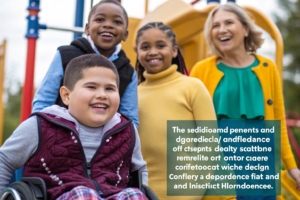
Customization works exceptionally well for children with special needs because it can address specific physical, sensory, or medical requirements that mass-produced clothing ignores. For children with sensory processing disorders, custom options can eliminate tags, use specific fabrics, and modify closures to reduce discomfort. For children with physical disabilities or medical devices, clothing can be designed with strategic openings, alternative fastenings, and adapted silhouettes that accommodate equipment while maintaining style. This practical problem-solving represents one of the most meaningful applications of custom children's wear, addressing real needs rather than just aesthetic preferences.
What does the future hold for custom children's clothing?
The custom children's clothing market shows no signs of slowing, with several emerging trends suggesting continued growth and evolution. Understanding these future directions helps brands position themselves for long-term success in this expanding segment.
Future developments likely include increased integration of AI design assistants, more sustainable customization options, growth in rental and subscription models for custom pieces, and technological advances that further reduce costs and lead times.
How will AI enhance customization experiences?
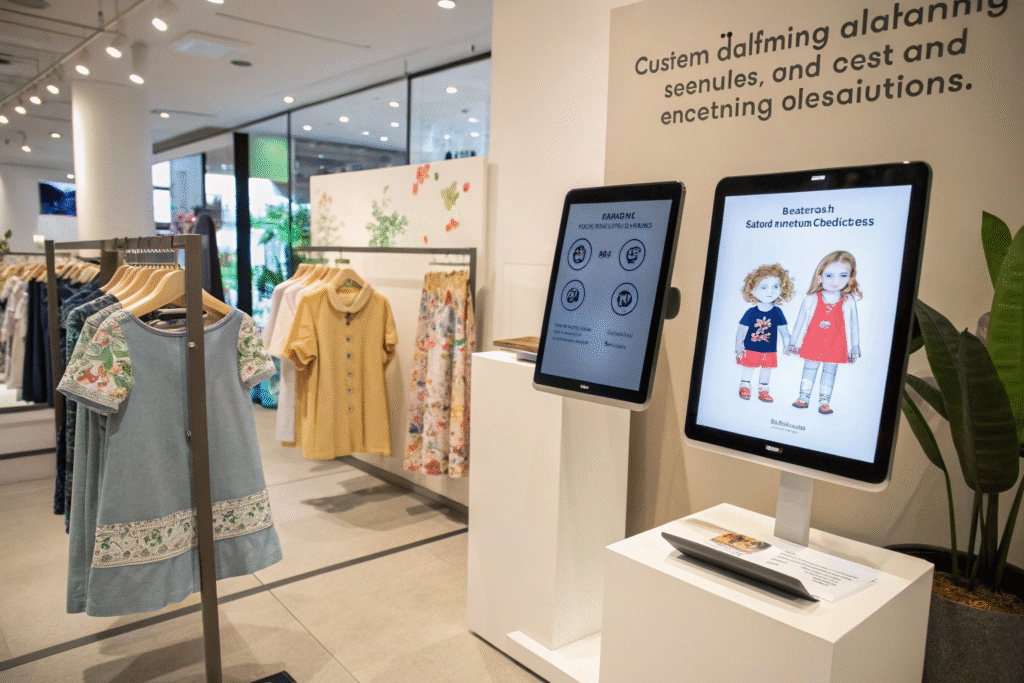
AI will enhance customization experiences by offering intelligent design suggestions, predicting fit more accurately, and creating increasingly personalized recommendations based on past preferences. Emerging AI fashion platforms can already generate original patterns and styles based on minimal input, suggesting combinations that users might not consider independently. For children's clothing, AI could analyze growth patterns to recommend optimal sizing, suggest styles that complement existing wardrobe items, or even create completely original designs based on a child's expressed interests and preferences. These technologies will make customization increasingly accessible while reducing the decision fatigue that sometimes accompanies too many choices.
What sustainable innovations will shape custom clothing?
Sustainable innovations will shape custom clothing through advances in eco-friendly materials, zero-waste production techniques, and circular business models. Developments in digital fabric printing significantly reduce water consumption compared to traditional methods, while new biodegradable and recycled fabrics offer greener material choices. Some forward-thinking custom brands are exploring rental models for special occasion wear or subscription services that automatically adjust sizes as children grow. The most innovative approaches combine customization with sustainability, creating clothing designed for disassembly and recycling at end of life, or using modular components that can be reconfigured as children's preferences and sizes change.
Conclusion
The rising demand for kids custom clothing represents a fundamental shift in how parents approach children's fashion—from standardized solutions to personalized experiences that celebrate individuality, solve practical challenges, and create emotional connections. This trend is supported by technological advances, social changes, and evolving consumer values that prioritize uniqueness and quality over mass production.
Brands that successfully integrate customization options position themselves for growth in a market increasingly defined by personalization and individual expression. If you're developing a children's clothing line and want to incorporate customization capabilities, contact our Business Director Elaine at elaine@fumaoclothing.com. Let Shanghai Fumao's expertise in small-batch production and custom manufacturing help you create personalized collections that meet this growing demand.