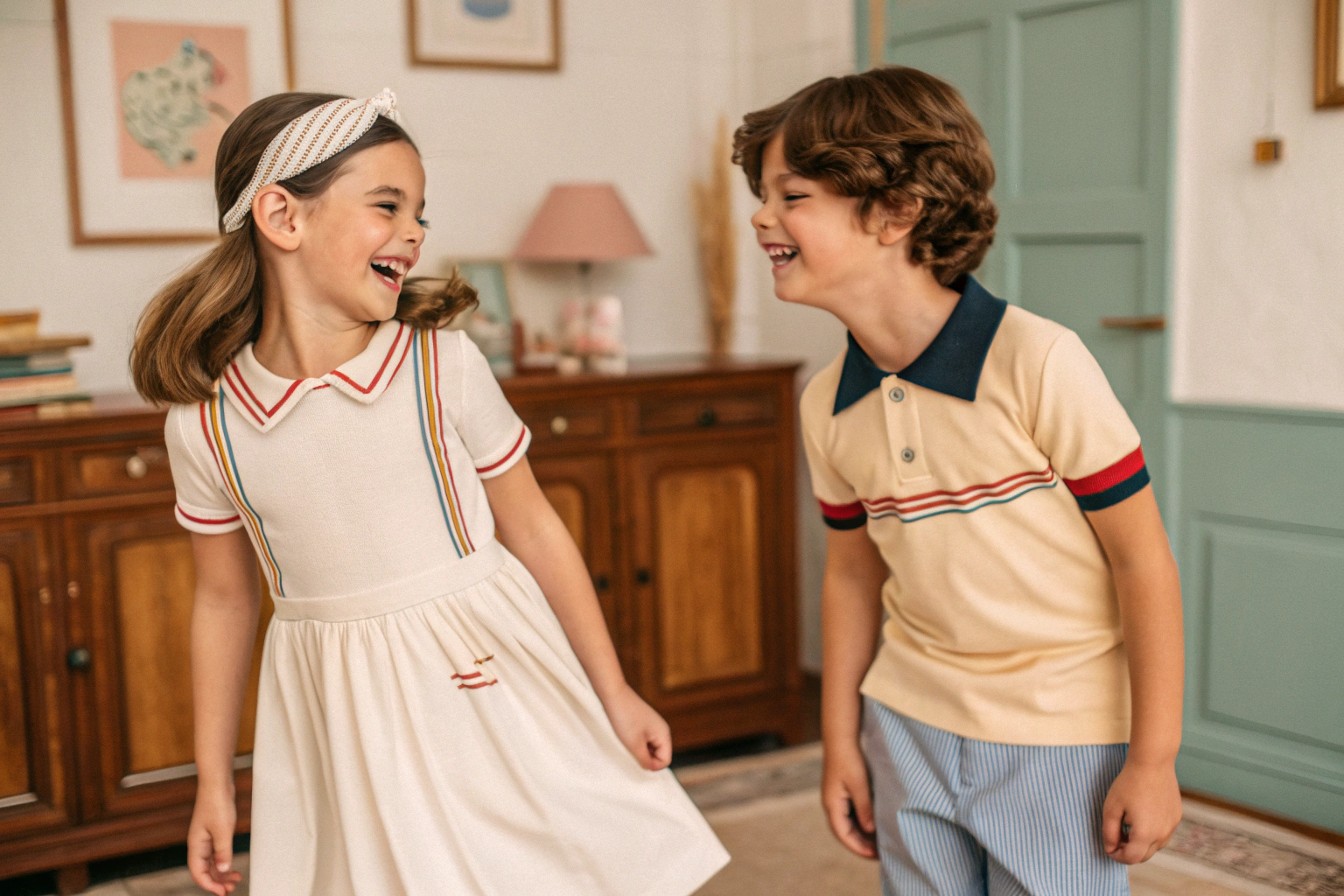
Walk into any children's boutique or scroll through a popular kids' brand online today, and you'll see it: the unmistakable echo of past decades. From 70s-inspired prairie dresses with delicate embroidery to 90s-style oversized graphic tees and bucket hats, vintage aesthetics are not just a niche trend—they're a dominant force in contemporary children's fashion. As a manufacturer who has produced thousands of garments over the years, I've seen trends come and go, but this "vintage revival" feels different. It's not a simple copy-paste of the past; it's a thoughtful reinvention. Parents aren't just buying clothes; they're buying a feeling, a connection, and a statement about quality and values.
Vintage styles are making a powerful comeback in children's fashion because they satisfy a deep cultural craving for nostalgia, authenticity, and sustainability. They allow millennial and Gen Z parents to share their own childhood aesthetics with their kids, offer a perceived alternative to fast fashion's disposability through classic, durable designs, and align perfectly with the modern preference for unisex, playful, and character-driven clothing that feels both timeless and unique.
This trend is a multifaceted response to the digital age, environmental concerns, and a shifting definition of what's "cool." It's less about recreating a specific year and more about curating a mood—one of simplicity, craft, and joy. Let's unravel the key drivers behind this enduring and beloved trend.
1. How Does "Nostalgia Marketing" Connect Generations?
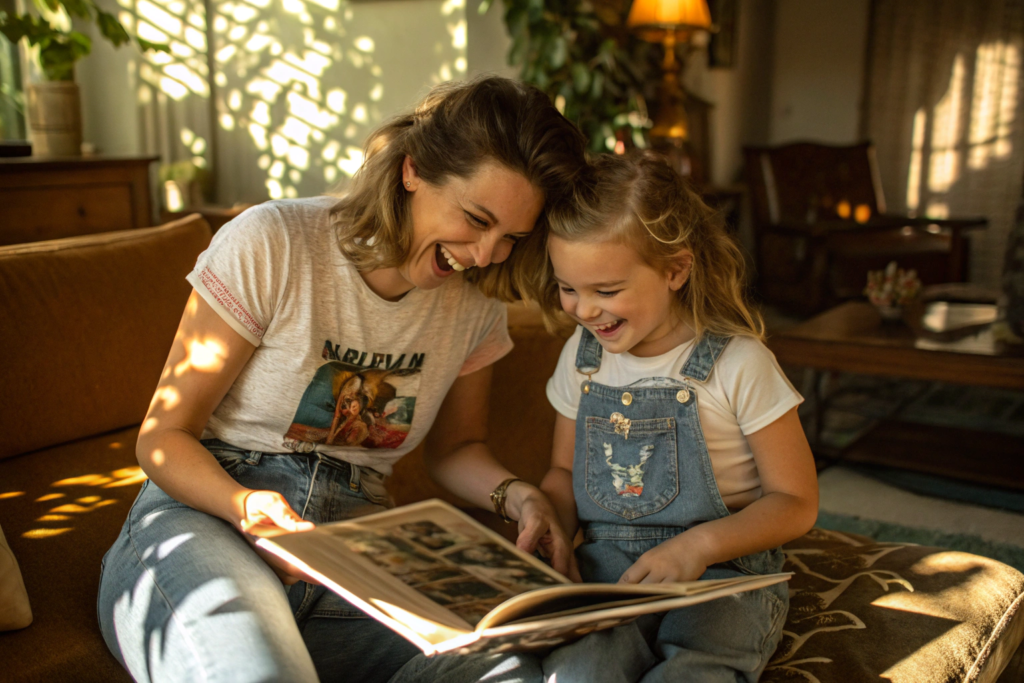
At its heart, the vintage trend is powered by potent nostalgia. The primary shoppers for children's clothing today are millennials and older Gen Zs—generations who have a highly defined, media-saturated sense of their own childhoods (the 80s, 90s, and early 2000s). For them, vintage styles act as a tangible bridge between their past and their child's present.
This is more than just recognition; it's emotional connection. A parent sees their toddler in a sweatshirt with a retro cartoon character or a color-blocked windbreaker reminiscent of their own youth, and it evokes warmth, safety, and happy memories. Brands are skillfully tapping into this "nostalgia marketing." They're not selling just a corduroy overall; they're selling the idea of a simpler, more carefree time—an antidote to the complexity and anxiety of modern parenting. This shared aesthetic becomes a form of non-verbal bonding and storytelling, where clothing sparks conversations like, "I had one just like this!" It makes the act of dressing a child deeply personal and sentimental.
Why Are Specific Decades Resonating So Strongly?
While vintage spans many eras, the 70s, 80s, and 90s are particularly potent. The 70s offer a romantic, free-spirited vibe with smocking, peasant blouses, and earthy tones that align with today's boho and sustainable ethos. The 80s bring bold, unapologetic color, athletic stripes, and punk-inspired details that feel playful and rebellious. The 90s, perhaps the strongest influence, delivers minimalist silhouettes, clean graphics, neutral palettes, and utilitarian styles (like cargo pants and oversized fits) that perfectly suit the modern preference for gender-neutral, practical, and cool looks. Each decade offers a distinct visual language that parents can use to express their own style tribe.
How Are Brands Modernizing These Vintage Looks?
Crucially, today's vintage revival is "vintage-inspired," not a carbon copy. The key is modernization for safety, comfort, and contemporary taste. This means:
- Updated Fabrics: Using softer, more sustainable materials like organic cotton jersey instead of scratchy synthetics.
- Improved Fits: Relaxed, gender-neutral cuts that allow for movement, not the restrictive fits of the past.
- Safety First: Replacing dangerous drawstrings with safer alternatives, using secure stitch-down patches instead of easily detached appliqués, and ensuring all prints and dyes meet modern OEKO-TEX® Standard 100 safety standards.
- Color Refinement: Muting the sometimes harsh neon palettes of the 80s into more wearable, dusty pastels or earthy tones.
2. How Does Vintage Style Counter Fast Fashion Culture?
In an era dominated by fast fashion—characterized by rapidly produced, trend-chasing, often low-quality garments—vintage aesthetics stand in direct opposition. They represent a conscious or subconscious choice for something perceived as more lasting, both in style and in substance.
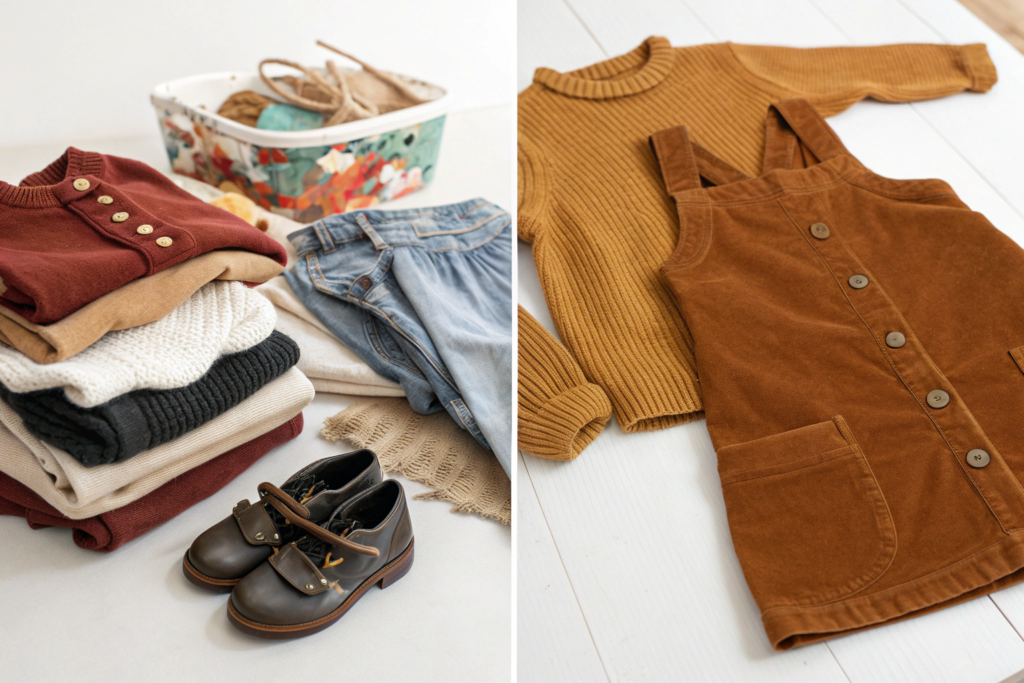
Parents fatigued by the cycle of buying cheap clothes that wear out quickly are drawn to vintage-inspired pieces that promise timelessness. A well-made corduroy jacket or a classic Breton stripe shirt is seen as a "wardrobe staple" that won't look dated next season. This aligns with the "buy less, buy better" philosophy gaining traction among consumers. The vintage trend often goes hand-in-hand with a appreciation for craftsmanship details like embroidery, patchwork, and quality stitching—tangible signs of care and durability that are often missing from mass-produced fast fashion. For brands, offering vintage-inspired pieces is a way to position themselves as purveyors of quality and enduring style, not just fleeting novelties.
What is the Link Between Vintage Aesthetics and Sustainability?
While true vintage is secondhand, the aesthetic of vintage strongly signals sustainability to many consumers. It implies longevity, reusability, and a move away from synthetic, petroleum-based fabrics. Vintage styles are inherently suited to circular fashion models like hand-me-downs, resale, and rental because their timelessness gives them a longer life cycle. Brands are leveraging this by using deadstock fabrics (leftover materials from past seasons) or recycled fibers to create their vintage lines, further strengthening the sustainable narrative. The message is clear: choosing a style that has already "stood the test of time" is a more responsible choice.
How Does "Thrift Shop Culture" Influence New Design?
The rise of platforms like Depop, ThredUp, and even TikTok's "thrift flip" videos has normalized and celebrated secondhand clothing for Gen Z and millennial parents. This constant exposure to authentic vintage pieces directly influences their taste and what they seek in new designs. They appreciate the unique finds, the mix of patterns, and the story behind older garments. Mainstream children's brands are responding by designing new collections that mimic the curated, one-of-a-kind feel of a great thrift store haul, offering pieces that feel special and discovered, not mass-produced.
3. Why Does Vintage Style Align with Modern Parenting Values?
Today's parenting values heavily emphasize creativity, individuality, and freedom from restrictive gender norms. The eclectic, playful nature of vintage and retro styles provides a perfect canvas for these values.
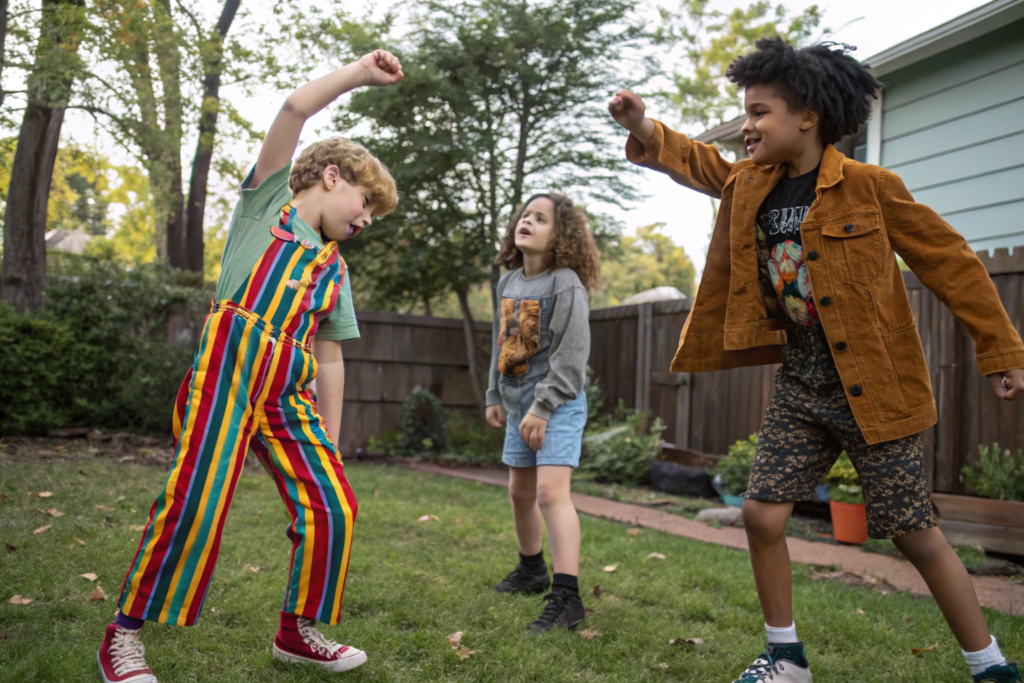
Vintage-inspired clothing is often inherently gender-neutral. Think of overalls, graphic tees, loafers, and relaxed denim—styles that were often worn by all children in past decades before marketing became hyper-gendered. This makes them ideal for parents rejecting the "pink for girls, blue for boys" dichotomy. Furthermore, vintage styles encourage creative expression and imaginative play. A child in a capelet or an explorer's vest isn't just wearing an outfit; they're in a costume for their daily adventures. The quirky prints, bold patterns, and unique details spark imagination in a way that simpler, minimalist modern styles sometimes don't. Parents see this as clothing that supports play, not hinders it.
How Do Vintage Styles Promote "Slow Fashion" for Growing Kids?
The practical reality of children outgrowing clothes quickly is a major pain point. Vintage-inspired styles, with their classic lines and often looser fits, are more forgiving and tend to have a longer "wearable window." An oversized sweatshirt or a dress with a smocked, adjustable bodice can fit for multiple seasons. This practical longevity appeals to value-conscious parents and aligns with a "slow fashion" approach, even within the context of children's rapid growth.
What Role Does Social Media Play in Curating Vintage Aesthetics?
Platforms like Instagram and Pinterest are digital lookbooks for the vintage lifestyle. Influencers and everyday parents curate feeds that present an idealized, aesthetic version of childhood, often heavily featuring vintage and thrifted finds. This creates a powerful visual echo chamber that defines what "stylish kids' wear" looks like, pushing brands to cater to this highly visual, nostalgia-driven demand. The hashtag #kidsvintagefashion has millions of posts, creating a global community that validates and spreads the trend.
4. What Should Brands Consider When Designing Vintage-Inspired Collections?
For brands and manufacturers, successfully riding the vintage wave requires more than digging up old patterns. It demands a strategic approach that balances authenticity with modern necessity.
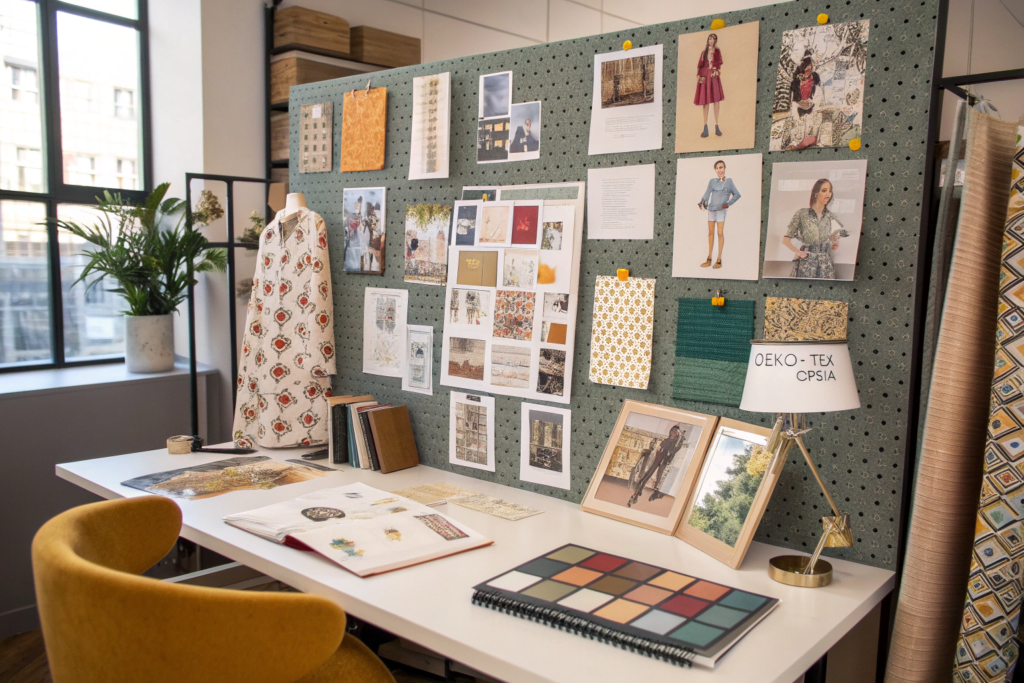
The key is thoughtful curation, not replication. Don't just reissue a 1980s ski suit; deconstruct its appeal. Was it the color? The functional pockets? The graphic logo? Translate those beloved elements into a safer, more comfortable modern garment. Prioritize fabric quality—the right fabric sells the vintage feel. Brushed cotton, sturdy corduroy, and quality jersey make the style believable. Pay obsessive attention to detail: the right type of button, the weight of a ribbed cuff, the precision of a color block. These details are what vintage enthusiasts notice and appreciate. Finally, ensure modern compliance and safety is non-negotiable. Every design must be vetted against current children's wear safety standards for flammability, chemical content, and physical hazards.
How to Avoid "Costume" and Achieve "Contemporary Vintage"?
The pitfall is creating clothing that looks like a costume rather than wearable fashion. The trick is to mix vintage pieces with modern basics. A vintage-inspired patterned shirt should be styled with simple contemporary jeans. This integration makes the look feel fresh and lived-in, not like a period piece. For brands, this means offering a balanced collection where standout vintage-inspired statement pieces are supported by a foundation of clean, modern staples.
What are the Sourcing and Production Implications?
Sourcing the right trims (like specific plastic buttons or retro labels) and fabrics (like authentic-feeling jacquards or prints) can be a challenge. Partnering with a manufacturer like Fumao, which has an extensive network of trim and fabric suppliers and understands the need for this specific aesthetic, is crucial. Furthermore, some vintage-inspired details, like intricate smocking or embroidery, may require specialized machinery or handwork, affecting cost and production time. Clear communication about these requirements from the design stage is essential for feasibility and accurate costing.
Conclusion
The resurgence of vintage styles in children's fashion is a meaningful cultural phenomenon, not a passing fad. It is a collective response to a desire for connection, quality, sustainability, and playful expression in a fast-paced, digital world. For parents, it's a way to weave their own stories into their children's lives. For brands, it represents a significant opportunity to create products with emotional depth, perceived value, and lasting appeal.
Success lies in understanding the why behind the trend and executing it with intelligence and integrity—honoring the past while firmly designing for the present, with all its demands for safety, comfort, and inclusivity. The most successful vintage-inspired pieces are those that don't just look old, but feel timeless.
Ready to design a collection that captures the heart of this timeless trend? Partner with a manufacturer who understands the nuance of blending nostalgia with modern performance. Contact our Business Director, Elaine, at elaine@fumaoclothing.com to explore how Shanghai Fumao can help you create vintage-inspired children's wear that tells a story and stands the test of time.