As a manufacturer who has navigated the complex landscape of children's apparel for decades, I've witnessed a clear and accelerating trend: the regulatory environment for children's sleepwear is not just tightening; it's undergoing a fundamental shift. Brands often ask me, with a hint of frustration, "Why the constant changes? Our old designs passed inspection before." The answer lies in a powerful convergence of evolving science, tragic historical lessons, heightened consumer awareness, and a global push toward preventative safety. For children's sleepwear—a product category worn unsupervised for long hours by our most vulnerable—"good enough" is no longer acceptable.
Safety standards for children's sleepwear are becoming stricter due to a combination of advanced scientific understanding of long-term health risks (like chemical exposure), the persistent statistical reality of sleep-related injuries, the powerful influence of consumer advocacy demanding transparency, and the harmonization of global regulations aiming for the highest level of preventative protection, moving beyond reaction to tragedy to proactive risk elimination.
This isn't bureaucratic red tape; it's a critical evolution in how we define responsible manufacturing. The updates target not just obvious hazards like flammability, but also insidious ones like endocrine disruptors in dyes and finishes. For brands, this shift demands more than compliance—it requires a philosophy of "safety by design" and a partnership with a manufacturer who views these standards as a baseline, not a ceiling. Let's examine the driving forces behind this new era of vigilance.
1. How Have Historical Tragedies Shaped Modern Flammability Rules?
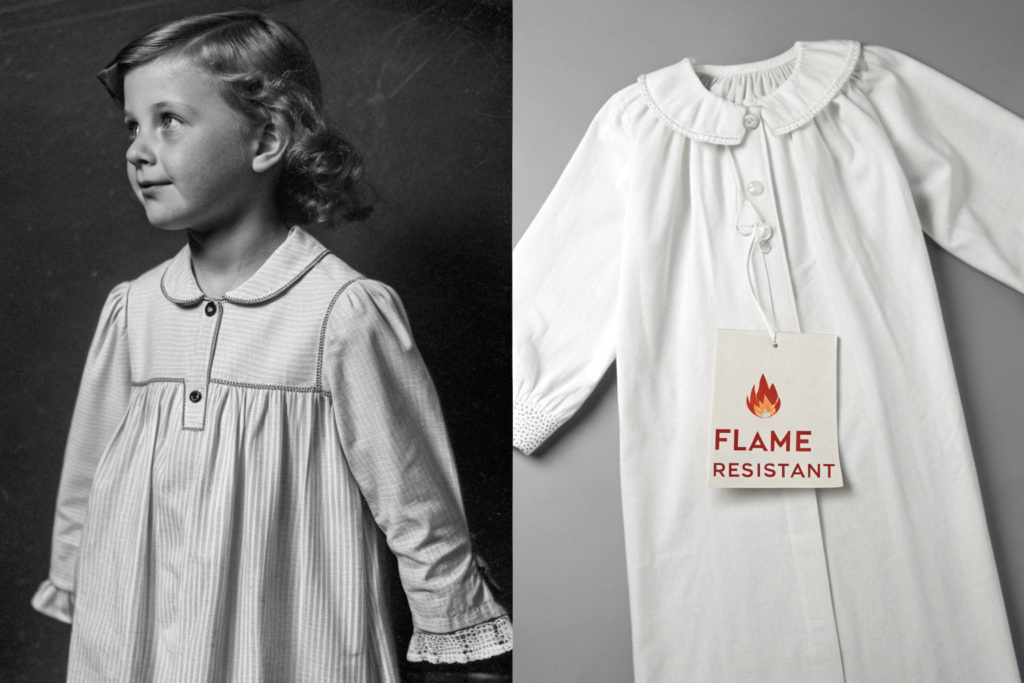
The most visceral and historically rooted driver of strict sleepwear standards is the risk of fire. The modern regulatory framework was born from tragedy. In the mid-20th century, highly flammable cotton nightgowns and pajamas were common. A single spark or candle could lead to devastating, full-body burns in a matter of seconds. Public outrage following heartbreaking incidents propelled governments to act.
The pivotal response in the United States was the implementation of the Flammable Fabrics Act (FFA) and the specific, rigorous standards under 16 CFR Part 1615 and 1616 for children's sleepwear. These rules mandate that sleepwear for sizes 0-14 must either be made from inherently flame-resistant fabrics (like polyester) or be chemically treated to pass strict vertical flame tests. The fabric must self-extinguish once the ignition source is removed. This is a classic example of regulation born from catastrophic failure. Today, while such fires are rarer, they still occur, keeping flammability as the non-negotiable cornerstone of sleepwear safety. The standards have evolved to also restrict the use of certain flame retardant chemicals themselves due to new health concerns, illustrating the continuous cycle of risk assessment and refinement.
What Are the Specific Flammability Tests for Sleepwear Today?
The current test, often called the "vertical flame test," is severe by design. A strip of fabric is suspended vertically in a controlled chamber. A standardized flame is applied to the bottom edge for a specified time. After the flame is removed, the char length (how far the fabric burned) and after-flame time (how long it kept burning) are meticulously measured. To pass, the fabric must have a very short char length and must self-extinguish almost immediately. This test simulates a worst-case scenario to ensure that if a garment does catch fire, it does not become a raging torch. Manufacturers like us must conduct these tests in certified labs on every fabric lot used in sleepwear production.
Why is Tight-Fitting Sleepwear an Important Alternative?
The regulations provide a crucial alternative pathway: tight-fitting sleepwear. Garments that meet specific, strict criteria for snugness (based on chest, waist, seat, and sleeve dimensions) are exempt from the flame-resistance requirement. The science is simple: loose fabric can easily billow out and catch a flame; tight fabric lies close to the skin, with minimal air between fabric and skin to fuel a fire. This has spurred innovation in comfortable, stretchy fits and has made snug-fitting cotton pajamas a popular and safe choice. However, they must be labeled "For child's safety, garment should fit snugly. This garment is not flame resistant. Loose-fitting garment is more likely to catch fire." This highlights the critical link between fit instructions and safety compliance.
2. Why is Chemical Safety (Beyond Flammability) Now a Top Priority?
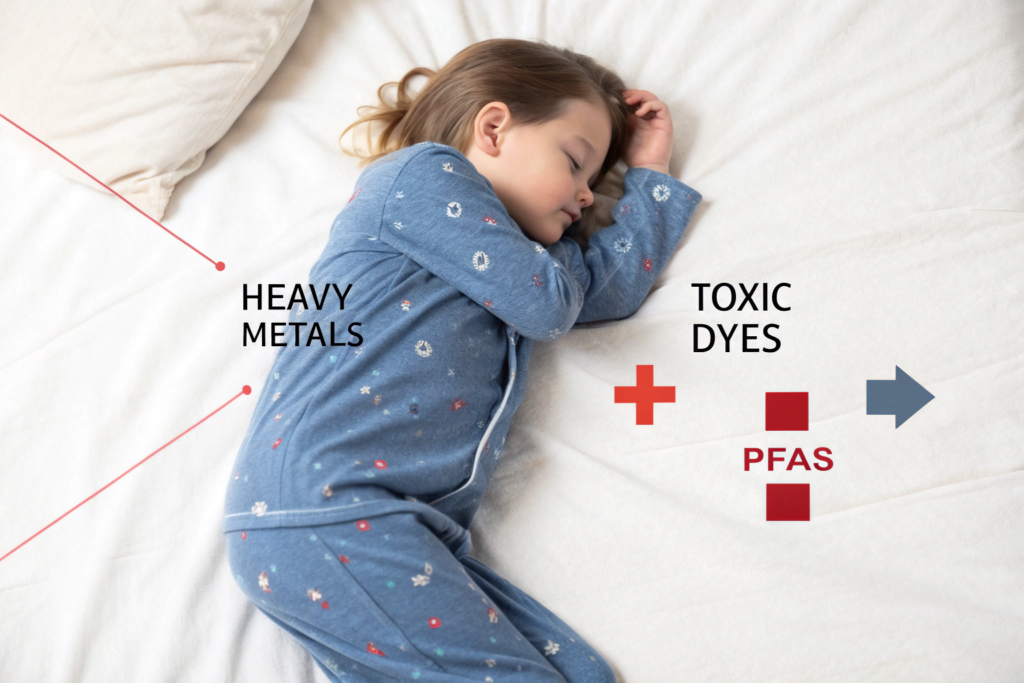
While fire safety grabs headlines, a quieter, more complex revolution is happening in chemical regulation. We now understand that children are not just small adults; their developing organs, skin permeability, and hand-to-mouth behaviors make them uniquely vulnerable to toxic substances. Sleepwear, worn for 10-12 hours in close skin contact, is a primary exposure pathway.
Modern standards have expanded far beyond lead and phthalates. Regulations like California's Proposition 65, the EU's REACH (Registration, Evaluation, Authorisation and Restriction of Chemicals), and updates to the CPSIA (Consumer Product Safety Improvement Act) now restrict or require labeling for a growing list of substances. This includes heavy metals (cadmium, antimony), formaldehyde, certain aromatic amines from azo dyes, and per- and polyfluoroalkyl substances (PFAS) used for stain or water resistance. The driving force is emerging scientific research linking long-term, low-dose exposure to these chemicals with developmental, reproductive, and carcinogenic risks. Consumers, armed with information, are demanding "clean" products, pushing brands and regulators to act preemptively.
What is the Role of Certifications like OEKO-TEX® Standard 100?
In this complex landscape, third-party certifications have become essential for trust and compliance. OEKO-TEX® Standard 100 is the global benchmark. It tests for over 100 regulated and harmful substances, with limits often stricter than national laws, and includes categories specifically for baby and children's products (Product Class I). For a brand, sourcing fabrics and components with valid OEKO-TEX® certification is the most efficient way to manage chemical risk. It provides a verifiable, trusted claim that resonates with safety-conscious parents and streamlines the due diligence process for retailers. In our factory, we insist on OEKO-TEX® certified materials for all sleepwear projects as a foundational requirement.
How Do Brands Manage Supply Chain Transparency for Chemicals?
The real challenge is that restricted substances can be introduced at any stage: fiber production, dyeing, printing, or finishing. Therefore, compliance requires end-to-end supply chain control. Brands must work with manufacturers who can provide a Full Material Disclosure (FMD) or test reports from every supplier in the chain. This means tracing back to the yarn spinner and chemical formulator. It’s a daunting task without a deeply integrated and transparent factory partner. We maintain a restricted substances list (RSL) and require all our material suppliers to provide compliance attestations and batch-specific test reports, creating a documented chain of custody for safety.
3. How is Consumer Advocacy and Digital Transparency Forcing Change?
The regulatory landscape is no longer shaped solely by government agencies. Today, empowered and connected consumers, along with non-governmental organizations (NGOs), are powerful drivers of stricter standards. Social media and online reviews have given parents a megaphone, and they are using it to demand accountability.
Organizations like The Consumer Product Safety Commission (CPSC) in the US publicize recalls and safety warnings, but activist groups like Greenpeace (with its Detox campaign) and The Environmental Working Group (EWG) go further. They conduct independent testing, publish "shame lists" of brands with hazardous chemicals, and create consumer guides. A single viral post about a brand's unsafe pajamas can cause irreparable reputational damage. This environment of public scrutiny means that brands must not only be safe but must also prove and communicate their safety transparently. This public pressure often accelerates regulatory action, as seen with the recent pushes to ban PFAS "forever chemicals" in textiles.

What is the Impact of "Greenwashing" Backlash?
As safety and sustainability become marketing tools, consumers have grown wary of vague claims like "non-toxic" or "green." This skepticism has led to a backlash against "greenwashing." In response, regulators are beginning to crack down on unsubstantiated environmental and safety claims. The Federal Trade Commission's Green Guides in the US, for example, dictate how such terms can be used legally. This forces brands to base their claims on hard data and recognized certifications, further raising the bar for what constitutes acceptable proof of safety. It's no longer enough to say it; you must show the certified test report.
How Can Brands Proactively Communicate Safety to Build Trust?
The smartest brands are turning this challenge into an advantage. They are moving beyond tiny care labels to clear, consumer-friendly communication. This includes:
- Clean, explicit hangtags: "Certified Free from Harmful Substances (OEKO-TEX® Standard 100, Product Class I)."
- QR codes linking to detailed test summaries or supply chain stories.
- Dedicated "Our Safety Promise" page on their website.
- Educational content for parents on why certain standards matter.
This transparent communication builds a fortress of trust around the brand, transforming compliance from a cost into a core brand asset and a powerful sales tool for retailers.
4. What Does "Safety by Design" Mean for Modern Sleepwear Development?
The culmination of all these pressures is a paradigm shift from testing for safety to designing for safety. "Safety by Design" means safety considerations are the first input in the design brief, not a final checkpoint before production. It’s a holistic approach that encompasses material selection, trims, construction, and even packaging.
This philosophy requires deep collaboration between the brand and the manufacturer from day one. For example, a designer might want a certain metallic snap or a fluffy pom-pom trim. A "Safety by Design" approach would immediately ask: Does that snap contain nickel or lead? Is the pom-pom securely attached to withstand a pull test and is its fiber content flame-resistant? Could the drawstring on the hood be replaced with a silicone print adjustment for safety? This mindset eliminates hazards at the source, preventing costly redesigns, rejected shipments, or—worst of all—recalls. It’s how leading manufacturers like Fumao now operate, acting as safety consultants in the creative process.

What Are the New Physical Safety Considerations (Beyond Cords)?
While drawstring hazards are well-known (regulated by ASTM F1816 and EN 14682), "Safety by Design" looks deeper. It considers:
- Small Parts: Are buttons, snaps, or decorative elements securely attached to withstand rigorous use and not pose a choking hazard?
- Skin Comfort: Are seams flat and non-abrasive? Are labels printed or exceptionally soft to prevent irritation?
- Durability: Will the garment withstand repeated washing without degrading in a way that creates new hazards (e.g., pilling that could be ingested)?
Each of these points requires specific material choices, stitch types, and quality control protocols during manufacturing.
How Can a Manufacturing Partner Ensure "Safety by Design" Execution?
A true partner does more than follow your tech pack; they challenge it for safety. They will have a pre-production checklist that scrutinizes every component. They will have an approved vendor list for trims and fabrics that are pre-vetted for compliance. Their quality control will include specific tests for sleepwear: pull tests on buttons, inspections for stray pins or needles, and verification of flame-resistant treatments or tight-fit measurements. They will maintain an organized library of compliance certificates for every material used. By choosing such a partner, a brand effectively outsources its risk management and gains the confidence that its products are engineered for safety from the inside out.
Conclusion
The trend toward stricter children's sleepwear standards is irreversible and accelerating. It is driven by a powerful alignment of historical lessons, scientific advancement, consumer empowerment, and global regulatory harmonization. For brands, this is not a burden to be minimized, but an imperative to be embraced. The market is ruthlessly sorting brands into two categories: those who see safety as a compliance cost and those who see it as the core of their brand promise and product integrity.
Success in this new environment requires a "Safety by Design" philosophy, unparalleled supply chain transparency, and a manufacturing partnership built on expertise and shared values. The brands that lead will be those that don't just meet the standards, but that tell the story of their commitment to safety with clarity and pride, earning the deepest trust of parents worldwide.
If you are developing a children's sleepwear line and seek a manufacturing partner who views safety with the same seriousness as you do, let's connect. Contact our Business Director, Elaine, at elaine@fumaoclothing.com to discuss how Shanghai Fumao can help you build a collection that is not only beautiful and comfortable but is also a benchmark for safety and trust.