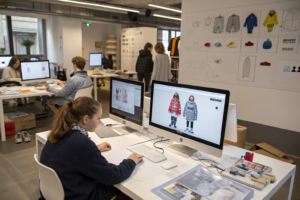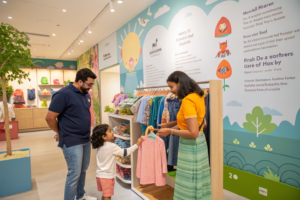

The children's apparel industry is undergoing a digital transformation, with virtual try-on technology emerging as a significant investment area for forward-thinking brands. As a manufacturer working with brands implementing these technologies, I've witnessed firsthand how virtual fitting solutions are addressing longstanding challenges in kids wear retail while creating new opportunities for engagement and conversion.
Kids clothing brands are investing in virtual try-on technology to solve fundamental sizing challenges, reduce return rates, enhance online shopping experiences, and capture valuable fit data. This technology addresses the unique difficulties parents face when buying clothes for growing children while providing brands with unprecedented insights into fit preferences and purchasing behavior.
Virtual try-on represents more than just a novelty feature—it's becoming an essential tool for competing in the increasingly digital children's wear market. Let's explore the specific drivers behind this technological investment.
How does virtual try-on address sizing challenges?
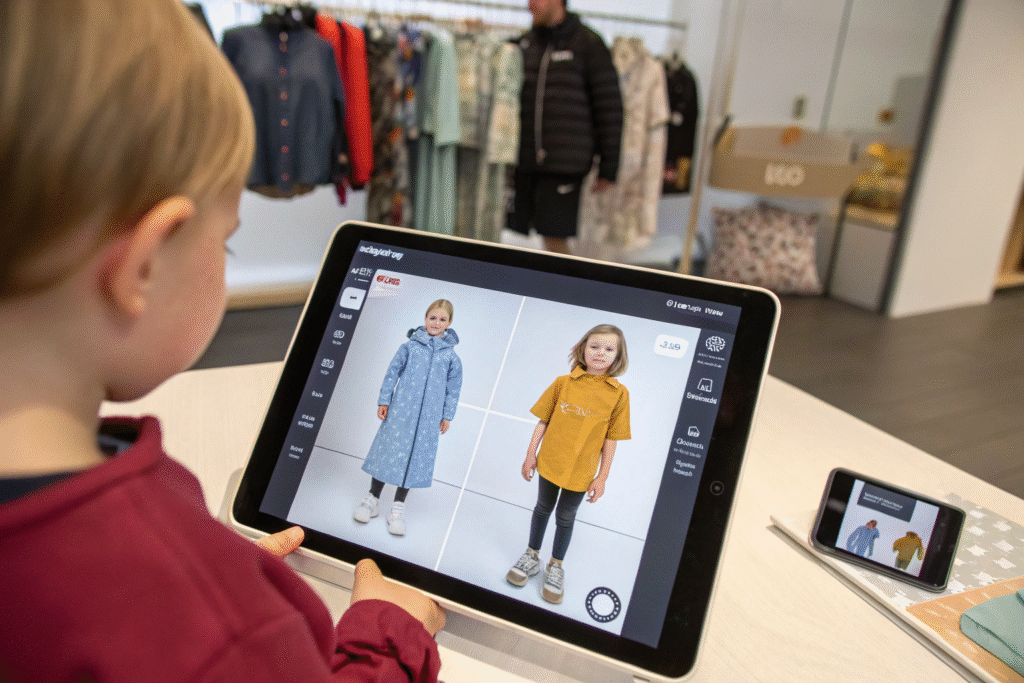
Sizing represents one of the most persistent pain points in children's apparel, with inconsistent sizing across brands and rapid growth making fit difficult to predict. Virtual try-on technology directly addresses these challenges by allowing parents to visualize how garments will fit their specific child before purchasing.
The technology uses either avatar-based systems that create digital twins of children or augmented reality that superimposes garments onto live video. Both approaches provide visual confirmation of fit that static size charts cannot match. For growing children, these systems can even project how items will fit months into the future based on growth patterns, helping parents select sizes that accommodate growth.
Why is children's sizing particularly problematic?
Children's sizing is notoriously inconsistent because there are no standardized sizing regulations across brands, and children's body proportions change rapidly during development. A "size 4" can vary by up to three inches between different brands, creating confusion and purchase hesitation. According to American Society for Testing and Materials research, children's body shapes evolve through distinct phases that don't always align with age-based sizing systems. Virtual try-on technology bypasses these inconsistencies by focusing on the individual child's measurements rather than arbitrary size labels, providing personalized fit guidance that static charts cannot offer.
How does growth projection technology help parents?
Growth projection technology helps parents make smarter purchasing decisions by visualizing how clothing will fit throughout an entire season or school year. Advanced systems incorporate pediatric growth charts and algorithms that predict typical growth patterns based on a child's age, current measurements, and family history. This allows parents to select sizes that accommodate anticipated growth without needing to choose between items that fit immediately but will be outgrown quickly versus items that are overly large initially. This functionality is particularly valuable for seasonal items like winter coats or back-to-school clothing that children need to wear for extended periods.
What business benefits drive this investment?
Beyond improving customer experience, virtual try-on technology delivers measurable business benefits that justify the significant investment required. Brands implementing these solutions report substantial improvements in key performance metrics that directly impact profitability and customer loyalty.
The primary business benefits include reduced return rates, increased conversion rates, higher average order values, and valuable data collection. These advantages create a compelling return on investment case that extends far beyond the initial technological novelty. The table below outlines the key business benefits:
| Business Benefit | Impact on Performance |
|---|---|
| Reduced Return Rates | Lower reverse logistics costs and improved profitability |
| Increased Conversion | Higher sales from reduced purchase hesitation |
| Enhanced Customer Data | Improved product development and inventory planning |
| Competitive Differentiation | Standout feature in crowded digital marketplace |

How significant are return rate reductions?
Return rate reductions are substantial, with brands reporting 20-40% decreases in size-related returns after implementing virtual try-on technology. For children's wear specifically, where return rates typically exceed 30% due to sizing issues, this represents significant cost savings. According to National Retail Federation data, returns cost retailers an average of 66% of the original item's price when accounting for reverse logistics, restocking, and lost value. For children's brands dealing with rapid seasonality and growth-related returns, virtual try-on technology can dramatically improve profitability by keeping more sales final.
What data insights do brands gain?
The data insights from virtual try-on systems provide unprecedented visibility into fit preferences, sizing patterns, and body shape distribution across different age groups. Brands collect detailed measurements from thousands of children, revealing patterns that inform everything from pattern grading to inventory allocation. This data-driven design approach allows brands to optimize their sizing systems based on actual customer bodies rather than theoretical standards. Additionally, the technology reveals which items have fit issues before they reach mass production, enabling proactive adjustments that prevent widespread returns and customer dissatisfaction.
How does virtual try-on enhance customer experience?
Virtual try-on technology transforms the children's clothing shopping experience from a frustrating guessing game into an engaging, interactive process. This enhanced experience drives emotional connection with brands while solving practical problems that traditionally discouraged online purchasing.
The customer experience benefits include increased confidence in purchases, reduced decision fatigue, entertainment value for children, and time savings for busy parents. These elements combine to create a shopping journey that feels both efficient and enjoyable rather than stressful and uncertain.

Why does visualization build purchase confidence?
Visualization builds purchase confidence by providing concrete evidence of how garments will look and fit, reducing the uncertainty that plagues online clothing purchases. When parents can see a virtual representation of their child wearing an item, they transition from imagining how it might fit to knowing how it will fit. Research from interactive retail studies shows that product visualization can increase conversion rates by up to 250% for fashion items by bridging the imagination gap that causes cart abandonment. For children's wear, where parents cannot easily verify fit without the child present, this visualization is particularly powerful in overcoming purchase hesitation.
How does gamification engage children in the process?
Gamification elements engage children by transforming shopping from a chore into an entertaining activity. Virtual try-on platforms often incorporate game-like features such as digital dressing rooms, outfit combinations, and shareable images that children enjoy. This engagement is crucial because children increasingly influence family purchasing decisions, with market research indicating that 65% of parents consider their children's preferences when buying apparel. By making the shopping experience fun and interactive, brands capture children's attention and generate excitement about new clothing, reducing resistance to trying unfamiliar items or styles.
What technological advancements enable this adoption?
Recent technological advancements have made virtual try-on solutions increasingly accessible and effective for children's wear brands. Improvements in artificial intelligence, augmented reality, and mobile device capabilities have converged to create solutions that are both sophisticated enough to deliver value and affordable enough to justify implementation.
Key technological enablers include advanced computer vision algorithms, improved mobile processing power, cloud computing infrastructure, and more accurate body scanning techniques. These developments have addressed previous limitations that made virtual fitting technologically challenging or cost-prohibitive for many brands.
How has computer vision technology evolved?
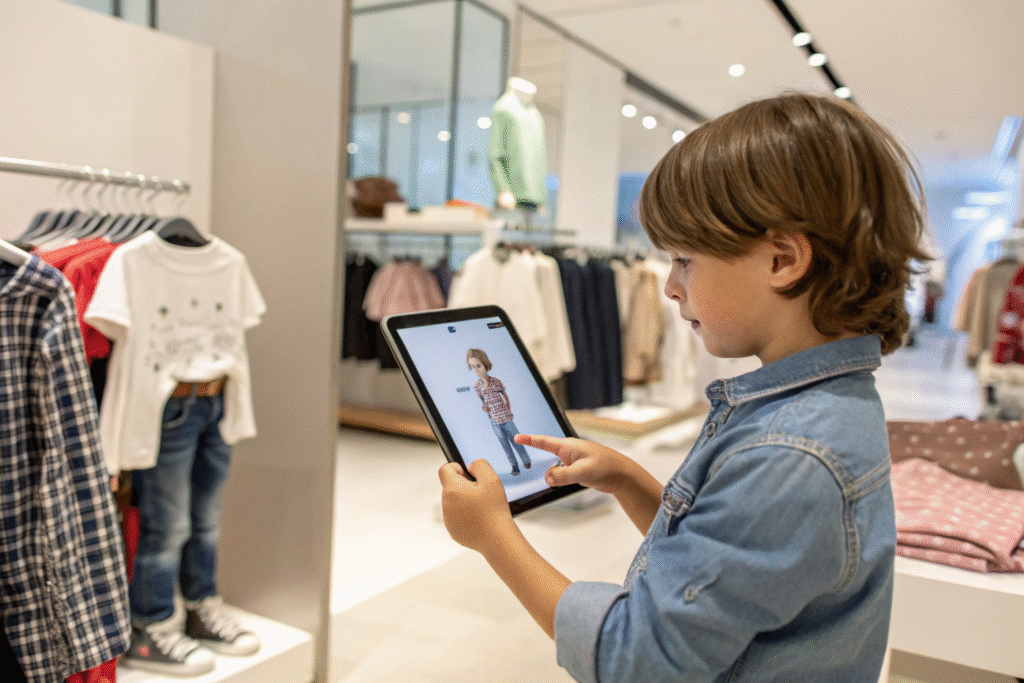
Computer vision technology has evolved dramatically, with modern algorithms capable of accurately mapping clothing to moving bodies in real-time. Early virtual try-on systems struggled with fabric drape, movement simulation, and accurate size scaling—all critical elements for assessing fit. Today's systems use deep learning models trained on millions of body and garment images to predict how specific fabrics will behave on different body types. For children's wear, this includes understanding how proportions change across age groups and how active movement affects fit—crucial considerations that static images cannot address.
Why are mobile platforms ideal for this application?
Mobile platforms are ideal for virtual try-on because they combine camera capabilities, processing power, and accessibility in a device families already own and use daily. Smartphone penetration exceeds 85% in key markets like North America and Europe, eliminating the need for specialized hardware. Modern mobile devices contain advanced AR frameworks like Apple's ARKit and Google's ARCore that provide the foundation for realistic garment visualization. The convenience of using a personal device means families can access virtual try-on experiences anywhere, whether at home during evening routines or in-store while shopping, creating seamless omnichannel experiences that drive engagement across touchpoints.
Conclusion
Virtual try-on technology represents a strategic investment for children's clothing brands seeking to overcome industry-specific challenges while meeting evolving consumer expectations. By addressing sizing uncertainties, reducing returns, enhancing engagement, and providing valuable data insights, this technology delivers compelling benefits for both businesses and families.
As the children's wear market becomes increasingly competitive and digital, virtual fitting solutions will transition from competitive advantages to expected features. Brands that implement these technologies now position themselves as innovators while building the infrastructure for future retail experiences. If you're developing children's apparel and need manufacturing partnership to create garments optimized for virtual try-on technology, contact our Business Director Elaine at elaine@fumaoclothing.com. Let Shanghai Fumao's expertise in precision sizing and quality construction help you create collections that perform exceptionally in both physical and digital fitting environments.