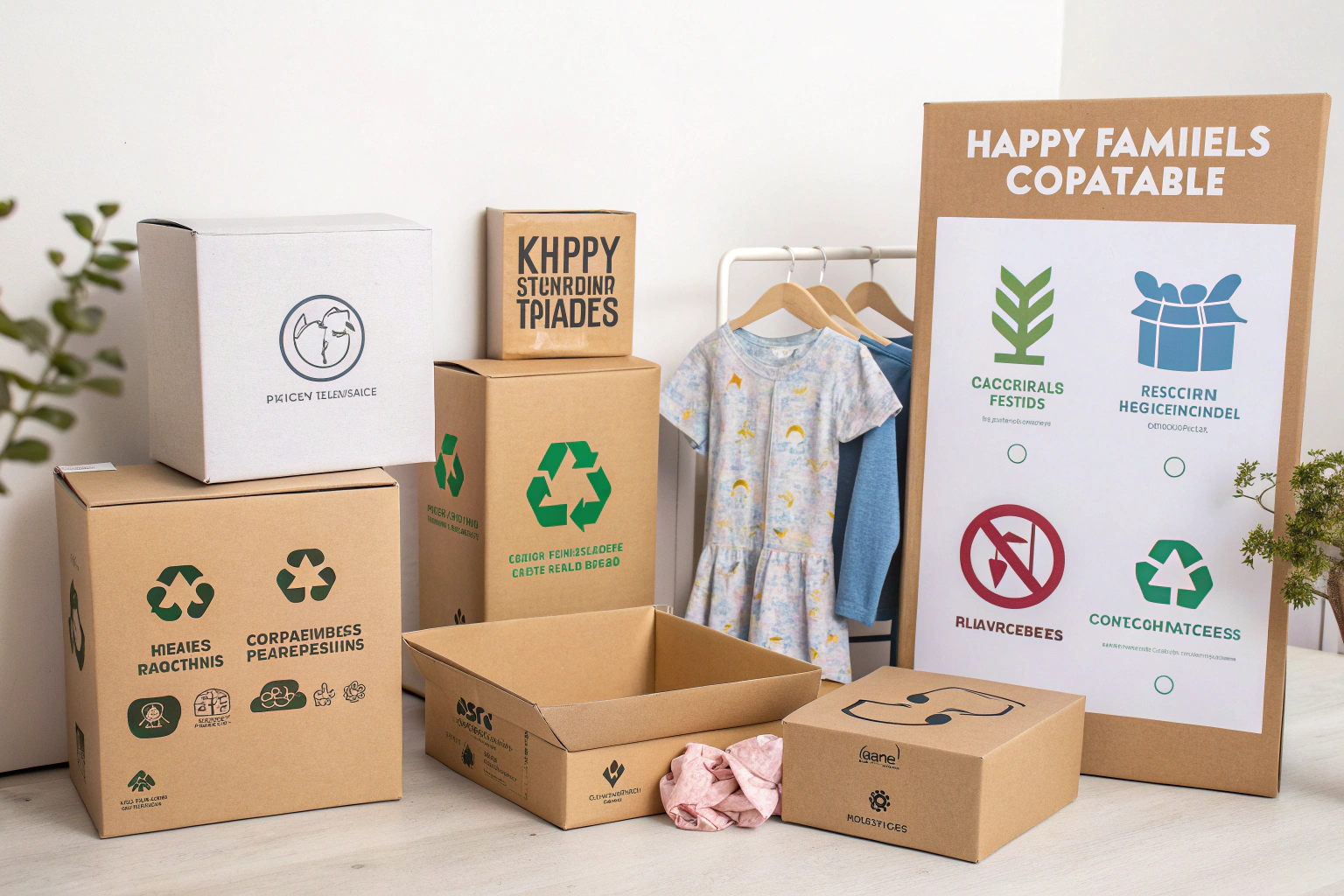
The shift toward eco-friendly packaging in the children’s wear industry represents a significant transformation in how brands approach their environmental responsibility and customer relationships. As a manufacturer supplying American and European markets, I’ve witnessed this evolution from peripheral concern to central business strategy. This movement goes beyond superficial greenwashing to address genuine consumer expectations, regulatory pressures, and brand values that increasingly define market success.
Kids clothing brands are investing in eco-friendly packaging due to growing parental demand for sustainable practices, regulatory pressures reducing plastic usage, brand differentiation opportunities, cost savings from material reduction, and genuine environmental commitment that aligns with family values. This investment represents both ethical progression and strategic business decision-making that impacts brand perception, customer loyalty, and operational efficiency.
The packaging transformation encompasses materials, design, logistics, and communication—creating comprehensive approaches that reduce environmental impact while enhancing the customer experience.
How Does Consumer Demand Drive Packaging Changes?
Modern parents, particularly millennials and Gen Z, are increasingly making purchasing decisions based on environmental values, with packaging representing a visible demonstration of brand commitment.
Eco-friendly packaging has transformed from nice-to-have feature to expectation among environmentally conscious families who vote with their wallets for brands aligning with their values.

Why Do Parents Value Sustainable Packaging?
Today’s parents associate eco-friendly packaging with broader brand responsibility, viewing it as indicative of attention to detail, quality standards, and ethical manufacturing practices. This perception is particularly strong in children’s products where safety and care considerations are paramount. According to Sustainable Consumer Research, 68% of parents are willing to pay 5-10% more for children’s products with eco-friendly packaging, viewing it as part of their environmental responsibility.
How Does Packaging Influence Brand Perception?
Unboxing experiences create powerful brand impressions, with sustainable packaging signaling modernity, responsibility, and care that extends to product quality. Parents sharing unboxing experiences on social media particularly appreciate packaging that reflects well on their environmental values. This organic marketing amplifies the brand benefits beyond the immediate customer experience.
What Regulatory Pressures Are Accelerating the Shift?
Government regulations and industry standards are increasingly mandating sustainable packaging practices, making environmental responsibility a compliance requirement.
Legislative changes, particularly in European markets, are establishing stricter packaging requirements that global children’s brands must meet to access these valuable markets.

How Are Plastic Bans Transforming Packaging?
European Union directives and various national plastic bans are eliminating conventional plastic poly bags and packaging elements that have long been industry standards. These regulations require alternative materials and designs that maintain product protection while reducing environmental impact. Brands serving international markets must adapt their packaging to meet the strictest standards across their distribution regions.
What Extended Producer Responsibility Requirements Exist?
Growing EPR regulations require brands to manage packaging throughout its lifecycle, including collection, recycling, and disposal. This responsibility creates financial incentives for minimal, recyclable packaging that reduces end-of-life management costs. Understanding these evolving regulations is essential for global brands navigating different national requirements.
How Does Sustainable Packaging Create Business Value?
Beyond environmental benefits, eco-friendly packaging delivers tangible business advantages including cost savings, brand differentiation, and operational efficiencies.
Strategic packaging investments often yield financial returns that justify the initial transition costs while building brand equity.

What Cost Savings Can Packaging Optimization Deliver?
Reduced material usage, lighter weight shipping, and streamlined designs often offset any premium for sustainable materials. The most successful packaging redesigns typically achieve 15-30% cost reduction while improving environmental performance. Additionally, minimized packaging reduces storage space requirements and shipping costs—particularly valuable for e-commerce focused brands.
How Does Packaging Differentiation Impact Sales?
In crowded children’s wear markets, sustainable packaging provides meaningful differentiation that can sway purchasing decisions. This differentiation is particularly valuable for new customer acquisition and can justify premium positioning. According to Packaging Impact Research, 45% of consumers have switched brands due to packaging environmental concerns, representing significant market share opportunity.
What Material Innovations Support This Transition?
Advanced sustainable materials now provide performance parity with conventional options while offering superior environmental credentials.
Material science innovations have addressed previous limitations of eco-friendly packaging, removing barriers to adoption across price points and product types.

How Have Recycled Materials Evolved?
Post-consumer recycled cardboard and paper now achieve strength and print quality equivalent to virgin materials while offering 40-60% lower carbon footprints. These materials work particularly well for shipping boxes and gift packaging where durability and presentation matter. The availability and quality of recycled packaging materials have improved dramatically, making them viable for premium applications.
What Role Do Bioplastics Play?
Compostable bioplastics derived from corn, sugarcane, or other renewable resources offer alternatives to conventional plastic poly bags for garment protection. While requiring specific disposal conditions to realize their environmental benefits, these materials prevent fossil fuel consumption and can break down in industrial composting facilities. Their adoption is growing particularly quickly for e-commerce applications.
How Does Packaging Design Reduce Environmental Impact?
Thoughtful design approaches minimize material usage, optimize logistics efficiency, and enhance recyclability while maintaining product protection.
Sustainable packaging design considers the entire lifecycle from manufacturing through disposal, creating systems rather than just containers.

How Does Right-Sizing Packaging Create Benefits?
Packaging sized precisely for contents reduces material usage, shipping volume, and the need for additional filler materials. This approach demonstrates thoughtful design while delivering cost and environmental benefits. The most effective right-sizing maintains adequate protection while eliminating wasteful empty space that characterizes many standard packaging solutions.
What Role Does Modular Design Play?
Packaging systems that work across multiple product types and sizes simplify inventory management while ensuring consistent brand presentation. Modular approaches might use the same outer shipping box with different internal configurations for various garment types. This standardization improves efficiency while maintaining flexibility for diverse product assortments.
Conclusion
Kids clothing brands are investing in eco-friendly packaging because it simultaneously addresses consumer expectations, regulatory requirements, business efficiency, and environmental responsibility. The most successful approaches treat packaging as an integral brand element rather than an afterthought, creating comprehensive systems that deliver both business value and environmental benefits.
At Shanghai Fumao Clothing, we’ve implemented sustainable packaging options for our brand partners, understanding that packaging represents the final touchpoint in our manufacturing process and the first touchpoint in the customer experience. If you’re looking to enhance your packaging sustainability, contact our Business Director Elaine at elaine@fumaoclothing.com to discuss how our packaging expertise can support your environmental goals and brand positioning.