The children's fashion industry is experiencing a transformative shift as interactive elements evolve from occasional novelties to integral design components. This movement represents a fundamental rethinking of children's clothing as not just protective covering but as tools for engagement, development, and entertainment that compete for children's attention in a screen-dominated world.
Interactive elements are being incorporated into kids clothing to enhance sensory development, extend play value beyond the clothing itself, support developmental milestones, differentiate products in a competitive market, and create emotional connections that build brand loyalty. These functional additions transform passive clothing into active play partners.
Interactive clothing represents the intersection of fashion, child development, and play theory. By integrating elements that respond to children's natural curiosity and need for engagement, forward-thinking brands are creating products that children actively want to wear rather than just passively accept. This approach acknowledges that children experience clothing through multiple senses and that engagement can be a powerful differentiator in a crowded market. Let's explore the specific drivers behind this innovative trend.
How do interactive elements support child development?
Interactive clothing components are increasingly designed with specific developmental benefits in mind, addressing areas like sensory processing, fine motor skills, and cognitive development through integrated features that children can manipulate during wear.
Interactive elements support child development by providing tactile stimulation for sensory integration, offering manipulation opportunities that refine fine motor skills, creating cause-and-effect experiences that build cognitive understanding, and encouraging problem-solving through clothing fastenings and transformations. These developmental benefits make interactive clothing appealing to educated, development-focused parents.
What sensory benefits do interactive textiles provide?
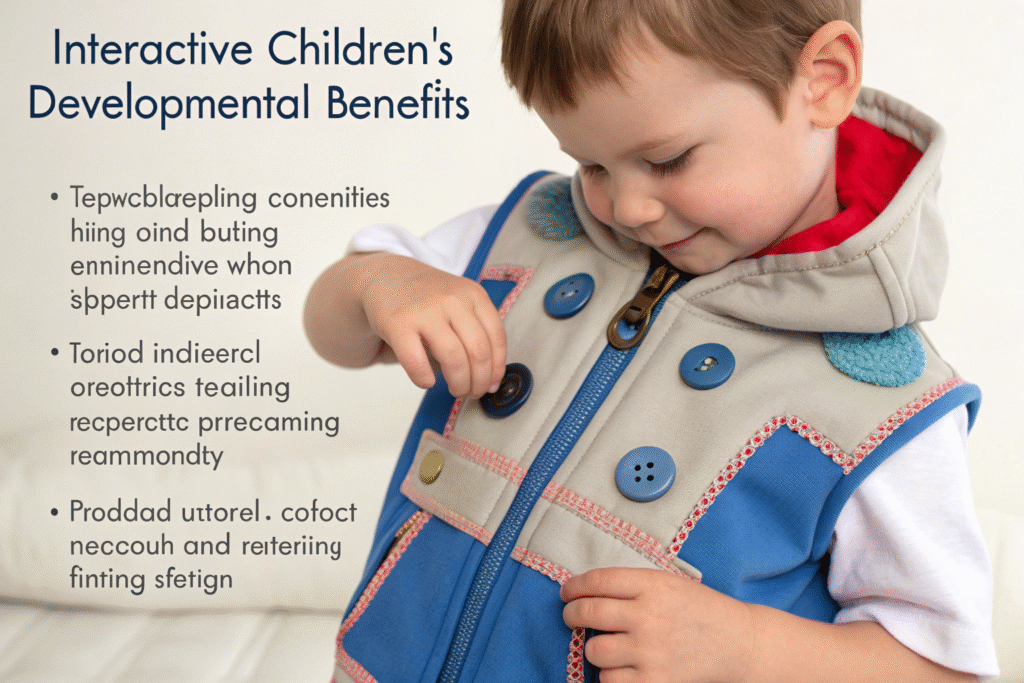
Clothing with varied textures, sensory-friendly features, and tactile elements supports sensory integration—the neurological process of organizing sensory information for functional use. Interactive clothing might include silicone tracing paths for finger tracking, varied fabric textures (smooth, bumpy, soft, crinkly) in strategic locations, or subtle sound elements that provide auditory feedback. These features are particularly valuable for children with sensory processing challenges but benefit all children by providing appropriate sensory stimulation throughout the day. Brands incorporating these elements often work with child development specialists to ensure features align with developmental stages.
How do manipulation features build fine motor skills?
Interactive elements like specially designed fastenings, zipper pulls with manipulation components, detachable elements that require precise handling, and layered components that practice pincer grasp all contribute to fine motor development. Unlike traditional clothing that adults typically fasten, interactive clothing is designed to invite child participation, supporting the development of dressing independence while building the hand strength and coordination needed for writing and other school readiness skills. The most effective designs balance challenge and achievability to maintain engagement without frustration.
Why are brands using interactivity for market differentiation?
In a highly competitive children's wear market, interactive elements provide meaningful differentiation that transcends superficial styling variations. These features create tangible reasons for parents to choose one brand over another while giving children specific reasons to prefer certain clothing items.
Brands are using interactivity for market differentiation by creating unique play propositions that stand out, justifying premium pricing through added value, generating word-of-mouth marketing through shareable features, and building emotional connections that transcend seasonal trends. This differentiation is particularly valuable in markets saturated with similar aesthetic offerings.
How do interactive features justify price premiums?
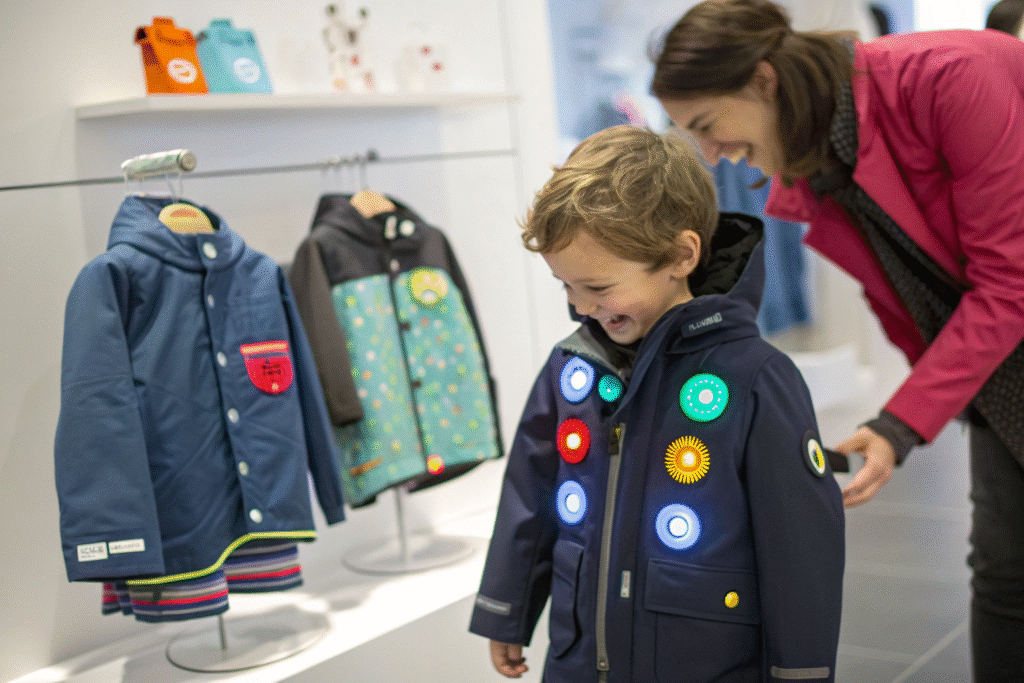
Clothing with well-designed interactive elements typically commands 15-30% price premiums over similar non-interactive items because parents perceive added value beyond basic clothing function. When a $28 t-shirt becomes a play activity that engages a child for hours, its value proposition shifts from cost-per-wear to cost-per-engagement. Successful implementations clearly communicate these benefits through marketing that shows children actively engaging with the features, helping parents understand they're purchasing both clothing and entertainment/developmental tools.
What role does shareability play in marketing interactive clothing?
Interactive elements naturally encourage social sharing as children demonstrate features to friends and parents share particularly clever implementations on social media. This organic marketing extends brand reach far beyond traditional advertising. The most shareable features often involve transformation (clothing that changes appearance), surprise (hidden elements), or collaboration (features that work better when children interact together). Brands that successfully leverage this shareability often see disproportionate growth with minimal marketing investment as the products themselves become their own marketing vehicles.
How does interactive clothing extend play value?
Interactive elements transform clothing from background items to foreground play objects, significantly extending their engagement value beyond basic wear time. This extended play value is particularly appealing to parents seeking to maximize the return on clothing investments.
Interactive clothing extends play value by creating play opportunities during dressing routines, transforming waiting times into engagement moments, encouraging imaginative play through themed elements, and providing ongoing discovery through layered interactions. This approach recognizes that children's clothing is worn during play, not just before or after.
What types of interactive features most extend engagement?
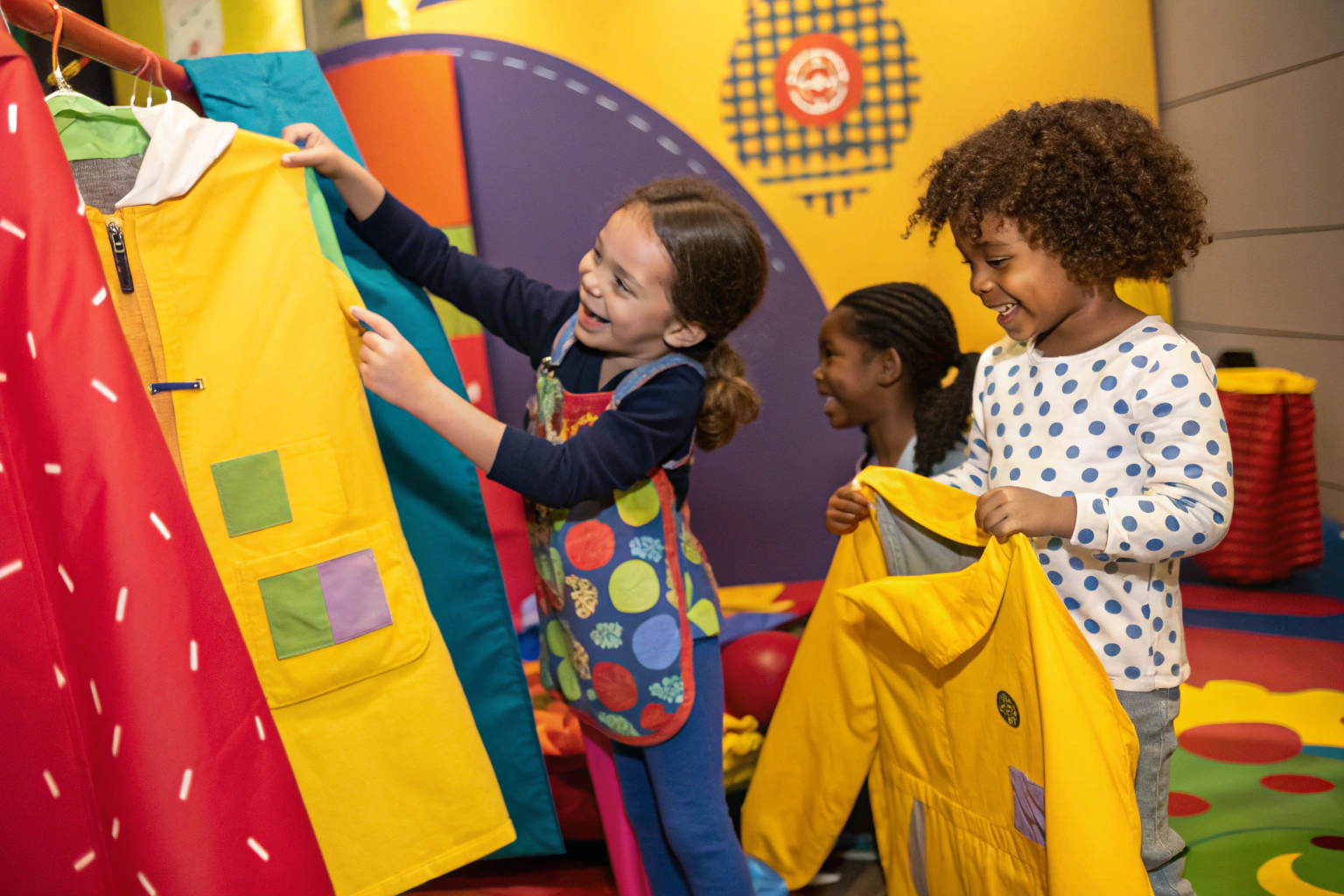
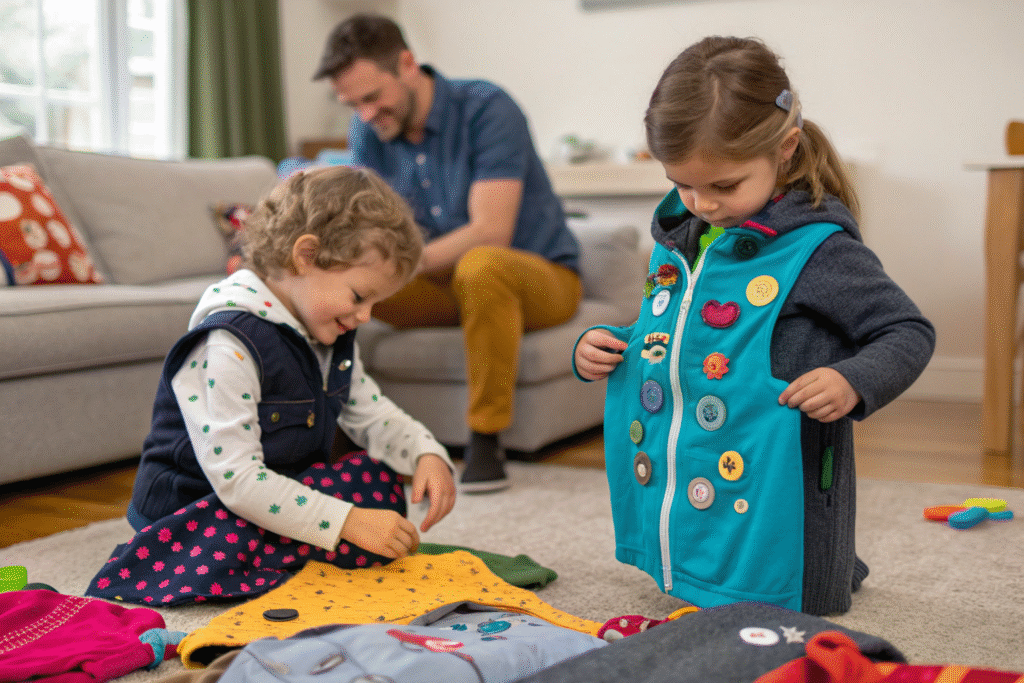
The most engaging interactive features often include transformative elements like reversible clothing that creates costume changes, modular components that can be rearranged, hidden details that reveal themselves during movement or exploration, and storytelling elements that encourage narrative development. These features support sustained engagement because they offer multiple interaction possibilities rather than one-time novelty. The most successful implementations consider how features will work during actual wear—not just during intentional play—recognizing that children discover and engage with clothing throughout their day.
How can clothing become a platform for imagination?
Interactive clothing serves as a physical platform for imaginative play when it includes elements like character-integrated designs that suggest roles, customizable components that allow personalization, or feature sets that suggest specific scenarios (explorer, scientist, superhero). This approach is particularly effective when clothing elements work together to create cohesive play themes rather than offering random interactive features. The most sophisticated implementations connect clothing features to broader brand storytelling, creating narrative coherence that deepens engagement across multiple products and seasons.
What technological innovations are enabling new interactions?
Advancements in textile technology, electronics integration, and material science are expanding the possibilities for interactive clothing beyond traditional sewing and printing techniques. These technological innovations create opportunities for entirely new categories of interaction.
Technological innovations enabling new interactions include advances in conductive textiles, miniaturized electronics, responsive materials that change with temperature or touch, and digital integration through scannable elements. These technologies bridge physical and digital play experiences in ways previously impossible.
How are smart textiles creating new interactive possibilities?
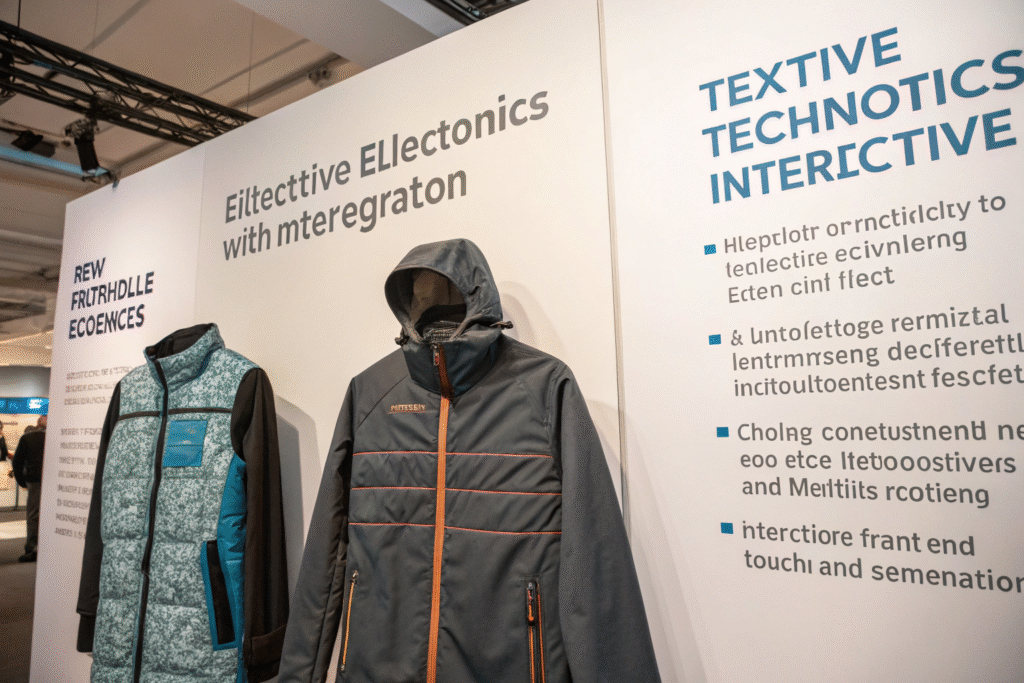
Smart textile innovations include thermochromic inks that change color with body heat, conductive fabrics that complete circuits for light or sound elements, and pressure-sensitive materials that respond to touch or movement. These technologies allow clothing to respond to children's actions and environments in ways that feel magical while being grounded in solid engineering. The most successful implementations prioritize safety and durability, ensuring that electronic components are properly insulated and that interactive features withstand the rigors of children's wear and care.
What role does augmented reality play in interactive clothing?
Clothing with AR triggers (QR codes, specific patterns, or images that smartphones can recognize) connects physical garments to digital experiences like character animations, games, or storytelling content. This approach extends play beyond the physical limitations of the clothing while creating opportunities for ongoing digital engagement. The most effective AR integrations enhance rather than replace physical play, using digital elements to expand narratives or provide additional layers of discovery that complement the tangible clothing features.
How are safety considerations addressed in interactive designs?
Interactive elements introduce additional safety considerations beyond standard children's wear requirements. Responsible implementation requires careful attention to potential hazards while maintaining the engaging qualities that make these features valuable.
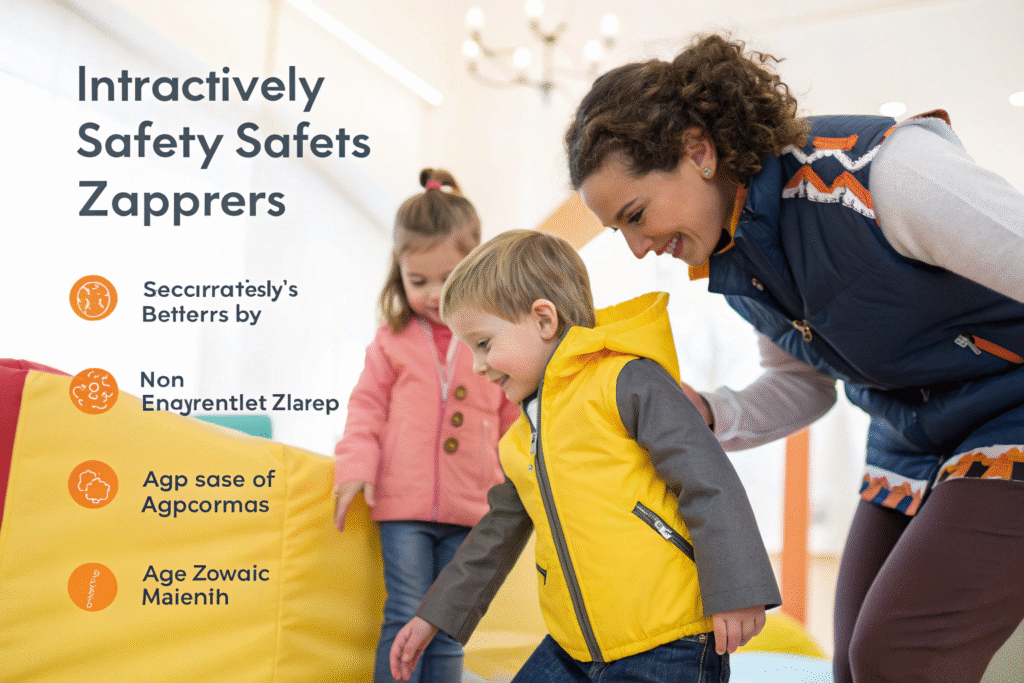
Safety considerations in interactive designs are addressed through rigorous testing of all components, secure attachment methods that prevent detachment, careful material selection to avoid toxicity, and age-appropriate design that matches developmental capabilities. This safety-first approach ensures that interactive elements enhance rather than compromise children's wellbeing.
What safety standards specifically apply to interactive clothing?
Interactive clothing must comply with all standard children's wear safety regulations plus additional requirements for any non-standard components. This includes small parts testing for detachable elements, sharp point and edge evaluation for rigid components, lead content testing for colored elements, and flammability requirements for all materials. Additionally, electrical components must meet toy safety standards for batteries and circuitry. Responsible brands conduct thorough risk assessments during design and testing throughout development to identify and address potential hazards before production.
How can interactive features be designed for maximum safety?
The safest interactive designs integrate features directly into clothing construction rather than adding them as attachments, use soft materials rather than rigid components, avoid creating entanglement hazards, and ensure that all elements withstand reasonable force without breaking into small pieces. Additionally, safety considerations extend to cleaning—interactive features must maintain their safety and functionality through repeated washing. The most thoughtful designs consider safety from multiple perspectives: physical safety, chemical safety, and developmental appropriateness for the target age group.
Conclusion
The incorporation of interactive elements into kids clothing represents a significant evolution in how we conceptualize children's fashion. By transforming clothing from passive covering to active engagement tools, forward-thinking brands are addressing children's developmental needs while creating meaningful differentiation in a competitive market.
The most successful interactive clothing balances innovation with practicality, safety with engagement, and novelty with lasting play value. As this category continues to evolve, we can expect to see even more sophisticated integrations of technology, storytelling, and developmental theory into everyday children's wear.
For brands, interactive elements offer opportunities to build deeper connections with young consumers, justify premium pricing through added value, and create products that children actively request rather than simply accept. This approach represents the future of children's fashion as it adapts to the needs of modern families.
Ready to incorporate interactive elements into your kids clothing designs? Our manufacturing expertise includes developing engaging, safe interactive features that align with child development principles while maintaining production feasibility. Contact our Business Director, Elaine, at elaine@fumaoclothing.com to discuss how we can help you create clothing that children love to engage with.