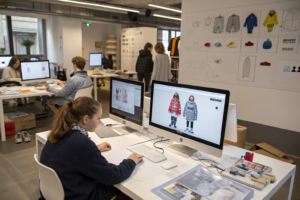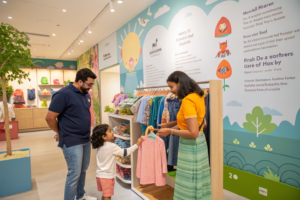
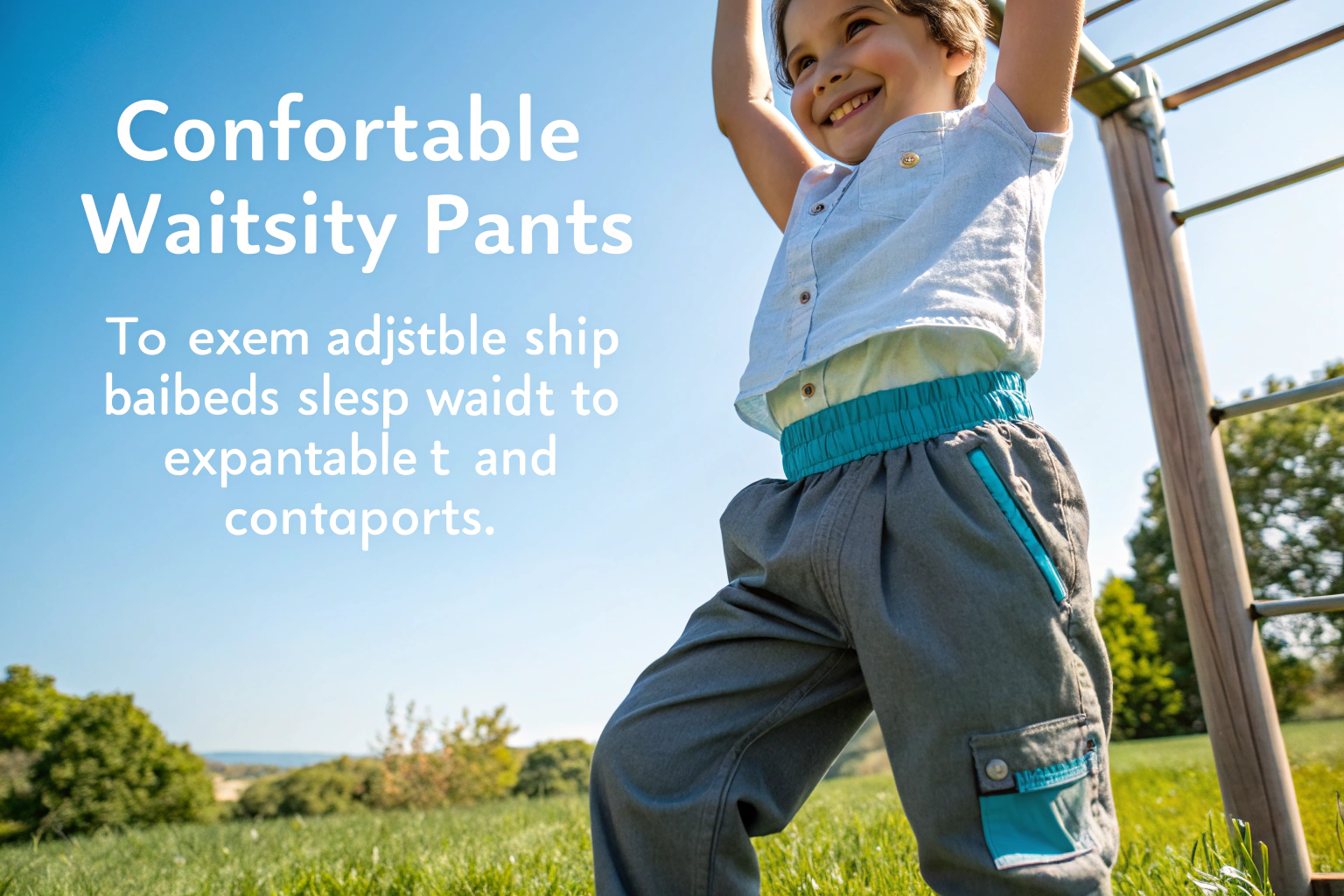
Last month, one of our US brand partners shared a remarkable statistic: their new line of children's pants with adjustable waistbands had a 45% lower return rate than their standard styles. Parents were specifically mentioning the adjustable features in positive reviews, noting that their children could wear the same size for nearly twice as long. This isn't an isolated trend - across our manufacturing operations, we're seeing a fundamental shift toward clothing that adapts to children's rapid growth and active lifestyles.
Adjustable features are becoming popular in kids clothing because they address key parenting pain points: rapid growth that makes clothing obsolete quickly, the need for cost-effective solutions, and demand for better-fitting garments that support children's comfort and movement. Features like expandable waists, roll-up cuffs, and convertible designs extend clothing lifespan while providing better value.
The movement toward adjustable clothing represents a broader shift in children's wear from disposable fashion to investment pieces that grow with the child. Parents are increasingly rejecting the traditional model of buying new sizes every few months in favor of smarter designs that offer longevity, better fit, and reduced environmental impact through decreased consumption.
How Do Adjustable Features Address The Problem Of Rapid Growth?
Children's growth patterns present a unique challenge for clothing manufacturers and parents alike. The average child grows through approximately seven sizes in their first two years, creating constant sizing issues and frequent clothing replacement needs. Adjustable features directly counter this problem by building flexibility into the garments themselves.
The most effective adjustable systems accommodate both sudden growth spurts and gradual changes in body proportions. We've developed pants with triple-button waistbands that provide up to 3 inches of adjustability, effectively covering two traditional sizes in one garment. Similarly, sleeve and leg cuffs with multiple button positions or roll-tab systems can adjust length by 2-3 inches, ensuring proper fit throughout seasonal transitions.

What growth patterns make adjustable features necessary?
Children don't grow uniformly - they experience periods of rapid height increase followed by weight gain, with limbs and torso growing at different rates. According to American Academy of Pediatrics growth charts, children typically gain 50% of their birth length by age 1 and double it by age 4. This irregular growth makes fixed-size clothing impractical. Adjustable features accommodate these variable growth patterns by allowing independent adjustment of length, width, and rise measurements. Our data shows that garments with comprehensive adjustment systems have a usable lifespan 60-80% longer than traditional fixed-size clothing.
Which adjustable features provide the most practical benefits?
Our manufacturing experience identifies these high-impact adjustable features:
- Expandable waistbands with elastic inserts or multiple button positions
- Adjustable hems with inner buttons or magnetic systems for rolling up
- Convertible designs that transform (pants to shorts, long sleeves to short sleeves)
- Expandable necklines with stretch panels or strategic openings
- Multiple-position shoulder straps on overalls and rompers
These features address the most common fit problems parents encounter, particularly in the waist, length, and neck areas where children experience the most dramatic proportional changes.
How Do Adjustable Features Create Economic Value For Parents?
The financial argument for adjustable clothing is compelling for cost-conscious parents. While adjustable garments typically carry a 15-25% price premium over standard designs, they deliver significantly lower cost-per-wear by extending usable life across multiple growth phases and seasons.
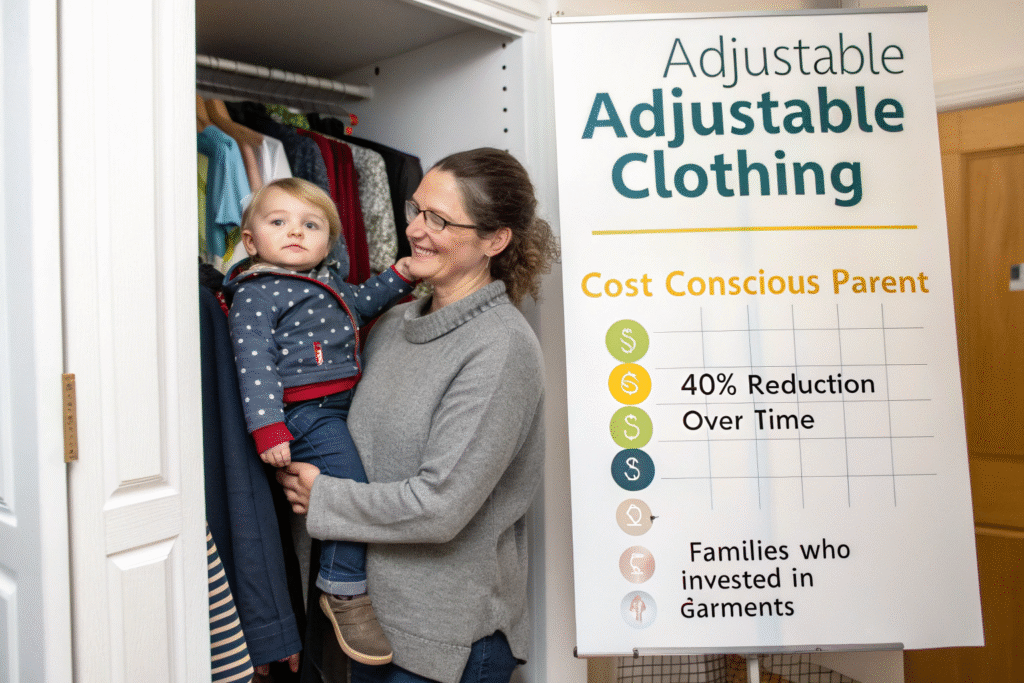
Our cost analysis for one of our brand partners revealed that parents who invested in adjustable clothing spent 40% less on their children's wardrobe over a two-year period compared to those buying traditional fixed-size garments. This calculation accounts for the initial higher purchase price but factors in fewer replacement purchases and longer wear periods for each item.
What is the true cost savings of extended wear?
The economic benefits extend beyond simple purchase frequency reduction. Adjustable clothing reduces the hidden costs of constantly shopping for new sizes, dealing with returns of ill-fitting items, and storing outgrown clothing waiting for younger siblings. One of our European clients implemented a "cost-per-day" calculation in their marketing, demonstrating that their adjustable jeans cost 35% less per day of wear than conventional designs. This transparent accounting resonated strongly with budget-aware parents who recognize that clothing value should be measured in utility, not just initial price.
How does adjustable clothing support sustainable family budgeting?
Adjustable features help families manage the unpredictable timing of children's growth spurts. Instead of needing immediate replacement when a child suddenly outgrows clothing between planned shopping trips, adjustable garments can be quickly modified to extend wear for several additional months. This flexibility is particularly valuable for families with multiple children, as adjustable clothing maintains better condition for hand-me-downs. Our research indicates that adjustable items are 70% more likely to be passed to younger siblings compared to conventional clothing, dramatically increasing their overall value proposition.
How Do Adjustable Features Enhance Comfort and Functionality?
Beyond economic considerations, adjustable clothing simply fits and performs better. Traditional fixed-size garments often compromise on fit, being either slightly too large (creating bulk and restriction) or slightly too small (causing discomfort and limited movement). Adjustable features allow micro-adjustments that optimize fit for individual body types and activities.
Well-designed adjustable systems enhance comfort by distributing pressure evenly, eliminating tight waistbands that leave red marks, or long sleeves that interfere with hand use. They also improve functionality by allowing clothing to be customized for specific activities - shorter sleeves for messy play, tighter cuffs for cold weather, or expanded waistlines for active movement.

What design principles ensure comfortable adjustments?
The most successful adjustable systems follow these comfort principles:
- Distributed pressure: Wide adjustment bands rather than single-point tension
- Soft interfaces: Padded or fabric-covered adjustment elements
- Easy operation: Child-friendly mechanisms that don't require adult assistance
- Durability: Systems that maintain function through repeated adjustments
We've found that adjustable features using magnetic closures, wide elastic panels, and fabric-based adjustment systems receive the highest comfort ratings from both parents and children in our wear-testing programs.
How do adjustable features support children's development and independence?
As children grow, they increasingly want to dress themselves and make choices about their clothing. Simple adjustment systems that children can operate independently support this developmental milestone while giving them control over their comfort. We've designed magnetic waistband adjustments that preschoolers can fasten themselves and roll-up sleeve systems with color-coded positioning that helps children achieve symmetrical results. According to child development resources like Zero to Three, clothing that supports independence builds confidence and self-esteem in young children while reducing dressing frustration for both children and parents.
How Are Manufacturers Implementing Adjustable Features Effectively?
Successfully integrating adjustable features requires balancing functionality, aesthetics, and production efficiency. The most effective implementations enhance the garment's performance without compromising its appearance or significantly increasing manufacturing complexity.
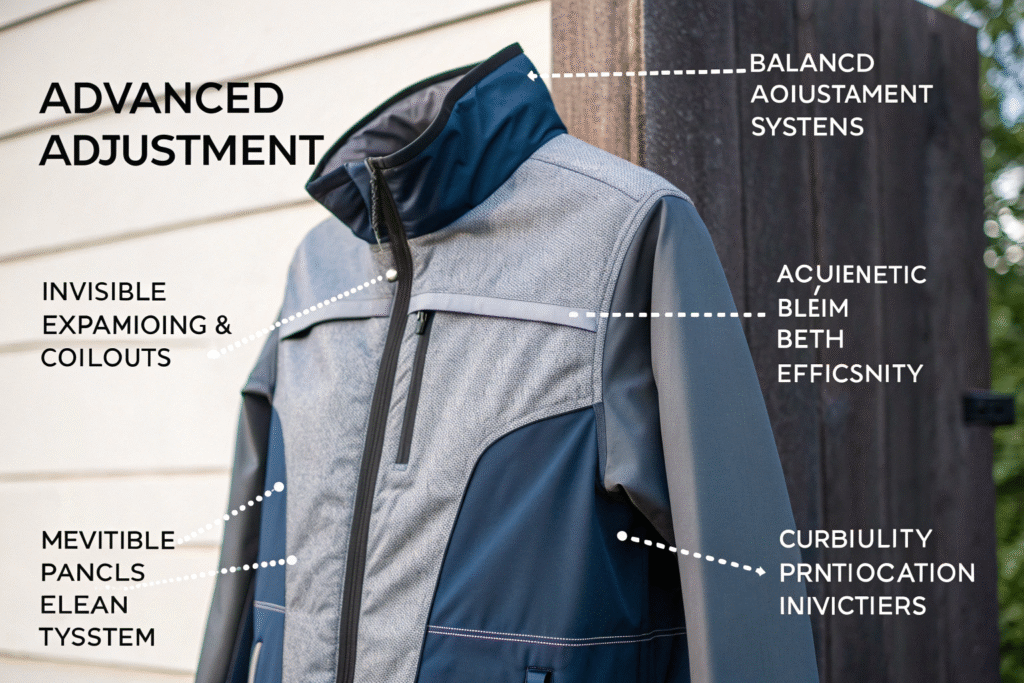
Our approach involves designing adjustment systems that are intuitive to use, durable through repeated adjustments, and visually integrated into the garment's design. We've developed specialized manufacturing techniques for features like invisible expansion panels, magnetic closure systems that maintain alignment through growth adjustments, and hem systems that create clean transitions between length positions.
What manufacturing innovations support reliable adjustable features?
We've invested in several specialized technologies to enhance our adjustable clothing production:
- Laser cutting for precise adjustment component fabrication
- Specialized attachment methods for adjustment systems that withstand repeated use
- Integrated design approaches that make adjustments part of the aesthetic rather than add-ons
- Durability testing protocols that simulate years of adjustment cycles
These manufacturing capabilities allow us to produce adjustable features that maintain their function and appearance through the garment's extended lifespan, ensuring parents receive the promised value from their investment.
How are brands communicating adjustable feature benefits to consumers?
Successful brands use multiple communication strategies to highlight adjustable features:
- Clear visual demonstrations on product pages and social media
- Specific sizing guidance showing how adjustments extend wear
- Testimonials from parents who've experienced the extended wear benefits
- Cost-per-wear calculations that quantify long-term value
We provide our brand partners with detailed technical information, demonstration videos, and educational content that helps consumers understand both how to use adjustable features and why they represent a smarter approach to children's clothing. Marketing materials that clearly explain the growth accommodation, cost savings, and comfort benefits see significantly higher conversion rates for adjustable products.
Conclusion
Adjustable features represent more than just a trend in children's clothing - they signal a fundamental shift toward smarter, more sustainable approaches to dressing growing children. By extending garment lifespan, improving fit and comfort, and delivering better value for family budgets, adjustable clothing addresses multiple pain points that parents have faced for generations.
The movement toward adaptable designs reflects a broader consumer demand for products that work harder, last longer, and solve real-world problems. As manufacturers continue to innovate in this space, we're seeing adjustable features become expected rather than exceptional in quality children's wear. If you're looking to develop children's clothing that combines thoughtful design with practical intelligence, we have the technical expertise to integrate effective adjustable systems into your collections. Contact our Business Director, Elaine, to discuss how adjustable features can enhance your product offerings. Reach her directly at elaine@fumaoclothing.com.