As the owner of a children's clothing factory, I've watched countless design and production cycles unfold. For decades, the process was largely manual: designers sketching based on intuition and trend reports, pattern makers meticulously drafting, and production planners juggling complex spreadsheets. Today, a powerful new partner is entering the atelier and the factory floor: Artificial Intelligence (AI). Its impact is not about replacing human creativity or craftsmanship, but about augmenting and supercharging every step of the journey—from predicting what the next hot color will be to ensuring every stitch is perfect. The question is no longer if AI will transform our industry, but how we can harness it to build better brands, faster and more responsibly.
The impact of AI on children's clothing design and manufacturing is transformative, enabling hyper-personalized, trend-accurate design at unprecedented speed, optimizing supply chains for efficiency and sustainability, automating quality control with superhuman precision, and fundamentally reshaping how brands interact with consumers, ultimately leading to more responsive, responsible, and creative products for the global market.
This shift is moving us from a model of guesswork and reaction to one of prediction and precision. For forward-thinking brands and manufacturers, AI is becoming the ultimate competitive tool, unlocking new levels of agility, personalization, and quality assurance that were previously unimaginable. Let's explore the concrete ways AI is reshaping our world.
1. How Is AI Revolutionizing the Design and Development Phase?
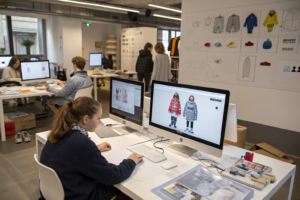
The most visible impact of AI is at the very beginning of the creative pipeline. Design inspiration, trend forecasting, and even initial prototyping are being accelerated and enhanced by machine learning algorithms that can process vast amounts of data no human team could ever absorb.
AI tools are now capable of analyzing terabytes of data from social media (like Instagram and TikTok), global e-commerce sites, search trends, and even street-style imagery to identify emerging micro-trends specific to children's wear. They can predict which colors, prints (e.g., dinosaurs vs. aliens), silhouettes, and even sleeve details will resonate in specific markets 12-18 months out. Platforms like Heuritech or WGSN's AI tools provide these insights. Furthermore, generative AI can create thousands of unique print patterns, graphic tee concepts, or colorway variations in minutes based on simple text prompts from a designer ("a playful dinosaur print for toddlers in muted earth tones"). This doesn't replace the designer; it liberates them from tedious tasks, allowing them to curate, refine, and inject true human emotion and brand identity into the AI-generated options. The result is a design process that is both more data-informed and more creatively expansive.

How Does AI Facilitate Hyper-Personalization and On-Demand Design?
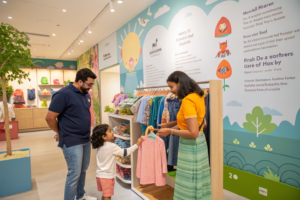
Beyond mass trends, AI enables micro-segmentation and personalization at scale. Algorithms can analyze customer purchase history and browsing behavior to suggest or even generate custom designs for specific niches—for example, creating a capsule collection for "left-handed preschool artists who love space" by identifying overlapping, niche interests. Some brands are experimenting with platforms where parents can input their child's interests, and an AI generates a unique graphic or product suggestion. This moves children's wear from a one-to-many model to a nearing one-to-one model, increasing engagement and reducing inventory waste by producing only what is predicted to sell or is explicitly requested.
Can AI Improve Sizing, Fit, and Technical Design?
Yes, profoundly. AI is tackling one of the industry's oldest challenges: inconsistent sizing and poor fit. By analyzing thousands of body scan data points from children (in anonymized, ethical ways), AI can create more accurate and inclusive size charts that reflect real body diversity, not just theoretical averages. In technical design, AI-powered software can automatically generate graded patterns (sizing up and down from a base sample) with extreme precision, reducing human error and time. It can also simulate how a digital garment will drape and move on a virtual child model of any size, allowing for fit adjustments before a single physical prototype is made. This reduces sample waste and speeds the development cycle.
2. How Is AI Optimizing Manufacturing and Supply Chain Operations?
While design gets the headlines, the "nuts and bolts" of manufacturing is where AI delivers staggering efficiency gains. It brings predictive power and automation to areas traditionally plagued by delays, waste, and human error.
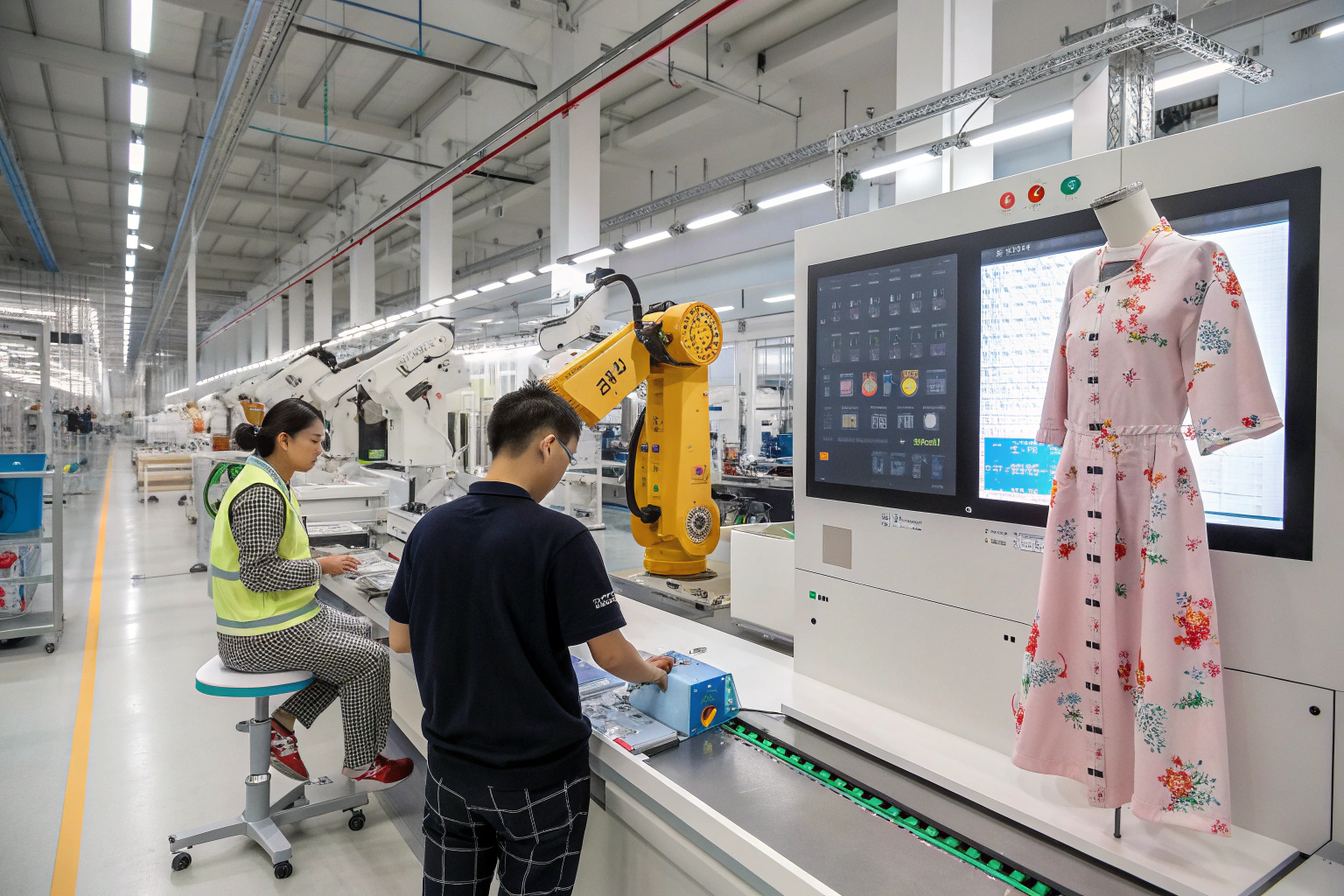
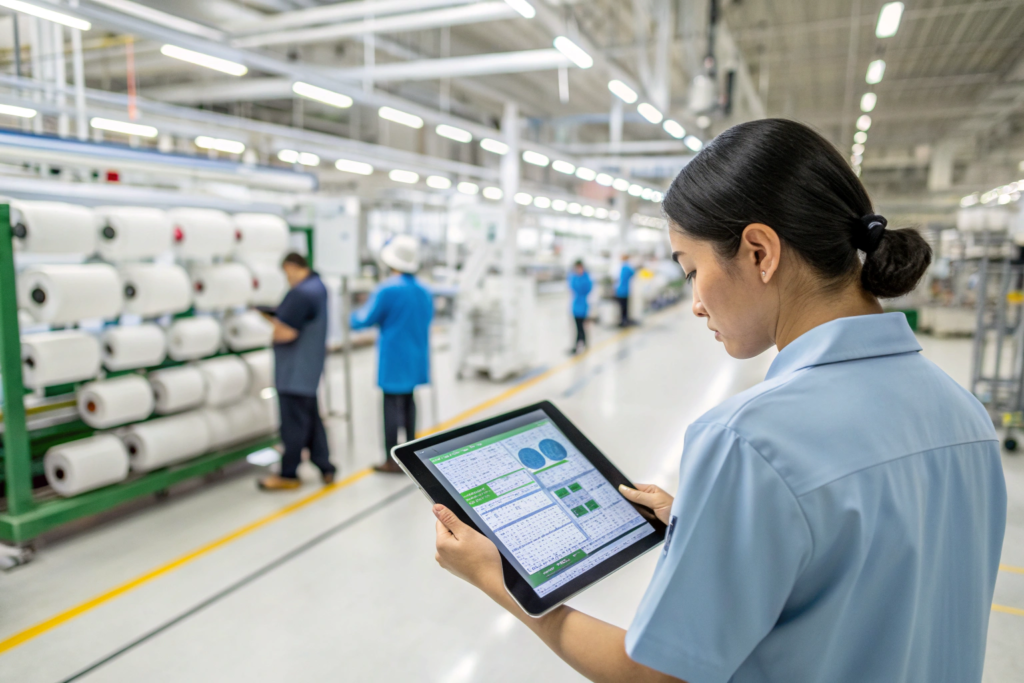
In our own factory, we are integrating AI in several key areas. Predictive maintenance uses sensors on sewing machines and cutting equipment to predict failures before they happen, preventing costly production line stoppages. Smart production planning algorithms analyze order complexity, machine capacity, and worker skill sets to create optimal production schedules that minimize changeover time and maximize throughput. Most significantly, AI is revolutionizing demand forecasting and inventory management. By analyzing sales data, weather patterns, local events, and even school calendars, AI can predict regional demand for specific items (like raincoats in Seattle in October) with remarkable accuracy. This allows for smarter fabric purchasing, reduced overproduction, and a more responsive, just-in-time manufacturing model aligned with actual consumption, a core tenet of sustainable fashion.
What Role Does AI Play in Sustainable Material Sourcing?
AI is a powerful ally in the push for sustainability. It can help brands and manufacturers navigate the complex landscape of eco-materials. Algorithms can scour databases to find alternative, lower-impact fabrics that match the performance and cost parameters of conventional ones. More advanced systems can even model the cradle-to-gate environmental footprint of different material choices, helping designers make informed decisions at the sketch stage. Furthermore, AI can optimize fabric cutting layouts to minimize waste (a process called "marker making"), squeezing more garments out of each roll of fabric and directly reducing material consumption and cost.
How is AI-Enhanced Logistics Reducing Delays?
For brands dealing with overseas production, logistics is a major pain point. AI-powered logistics platforms use real-time data from ports, shipping lines, and traffic networks to predict delays and dynamically reroute shipments. They can optimize container loading for space and weight and select the most cost-effective and reliable freight forwarders based on historical performance data. This level of intelligent logistics planning drastically reduces the risk of missed selling seasons and improves supply chain visibility, directly addressing a core concern for buyers like Ron.
3. How Is AI Transforming Quality Control and Safety Compliance?
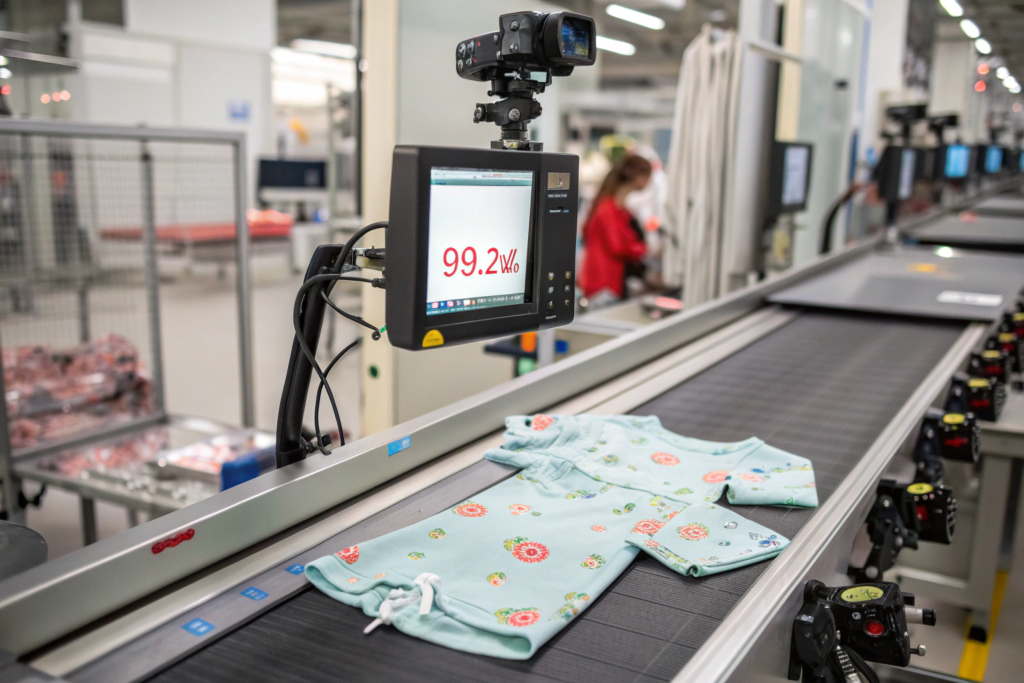
This is perhaps the most impactful application for children's wear, where safety is paramount. AI-powered computer vision systems are bringing a new level of objectivity, speed, and thoroughness to quality inspection.
Traditional QC relies on human inspectors who, despite their skill, can suffer from fatigue and inconsistency. An AI vision system, equipped with high-resolution cameras, can inspect every single garment on the line at high speed. It is trained to identify dozens of defect types: stitching errors, misaligned patterns, color discrepancies, loose threads, and even safety-critical issues like insecure buttons or improperly trimmed threads that could pose a choking hazard. It does this with micron-level precision, 24/7. In our facility, implementing such systems has dramatically reduced the defect escape rate and provided our clients with quantifiable, data-driven quality reports for each batch. For compliance, AI can automatically verify that labels contain all required safety information and warnings in the correct languages, reducing the risk of costly recalls.
Can AI Help Ensure Chemical and Regulatory Compliance?
While physical inspection is one thing, chemical compliance is another. AI is emerging as a tool here as well. By analyzing global regulatory databases and material safety data sheets (MSDS), AI systems can help compliance officers flag potential restricted substances in a proposed bill of materials. They can track the ever-changing landscape of regulations (like updates to REACH or CPSIA) and alert teams if a sourced component falls under a new restriction. This proactive, data-driven approach to compliance management is far more robust than manual tracking and is essential for brands selling in multiple, highly regulated markets.
How Does AI-Powered QC Improve Supplier Relationships?
When quality issues are identified by an AI system, the data is objective and irrefutable. Instead of subjective disputes ("This doesn't look right"), we can show a supplier a precise image with metrics: "Seam allowance variance of 4mm detected on 5% of units from Batch #123." This facilitates clearer, fact-based communication and collaborative problem-solving, focusing on fixing the root cause in the production process rather than assigning blame. It elevates the entire supply chain's quality standard.
4. What Are the Ethical Considerations and Future Skills Required?
The integration of AI is not without its challenges. It raises important ethical questions and necessitates a shift in the skills valued within our industry. Navigating this thoughtfully is key to responsible adoption.
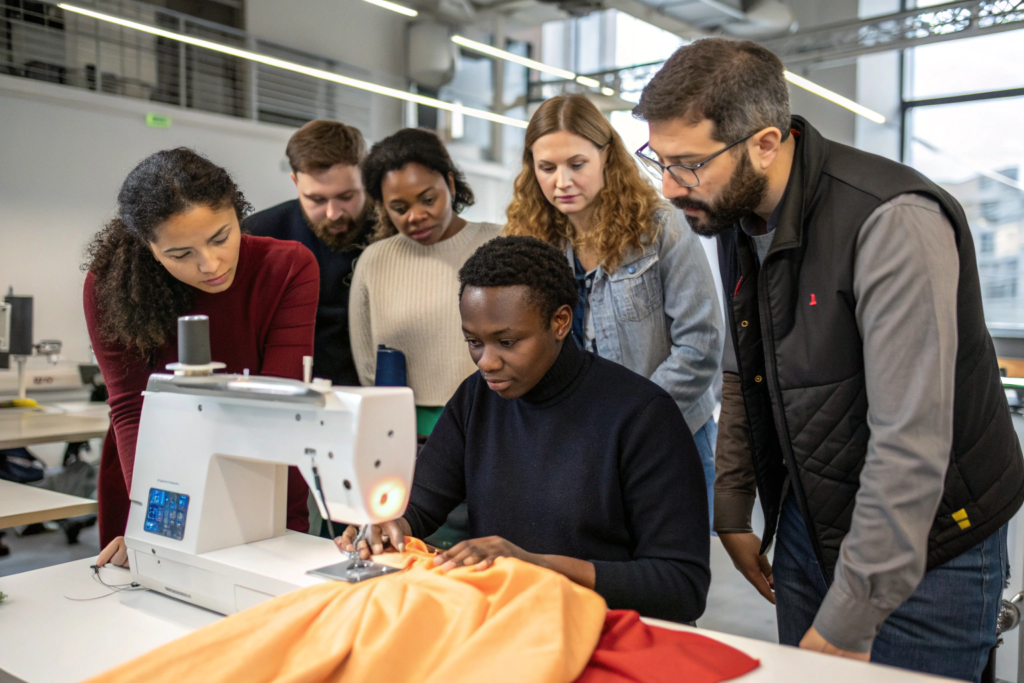
Key ethical considerations include data privacy (especially when using data related to children), algorithmic bias (ensuring AI tools don't perpetuate stereotypes or exclude certain body types or styles), and the environmental cost of training large AI models. Furthermore, there is a valid concern about job displacement for repetitive tasks. The industry must focus on reskilling: training pattern makers to become "AI pattern trainers," quality inspectors to become "QC data analysts," and designers to become "creative directors of AI." The human roles will evolve towards strategy, curation, emotional intelligence, and overseeing the ethical use of technology. The future belongs to those who can partner with AI, not those who fear it.
How Can Small and Medium Brands Access AI Tools?
The perception that AI is only for giants is fading. The rise of Software-as-a-Service (SaaS) platforms has democratized access. Brands can subscribe to AI-powered trend forecasting services, use cloud-based generative design tools, or partner with manufacturers (like Fumao) who have already invested in AI-integrated production and QC systems. This allows smaller brands to leverage world-class AI capabilities without massive upfront investment, leveling the playing field and allowing creativity and agility to shine.
What is the Ultimate Goal: Full Automation or Augmented Intelligence?
The endgame is not a fully automated, human-less factory. For children's wear, the nuance of touch, the understanding of emotional appeal, and the ethical responsibility of safety require a human in the loop. The goal is augmented intelligence. AI handles the massive data processing, prediction, and repetitive precision tasks. Humans provide the creative vision, the emotional context, the strategic oversight, and the compassionate judgment. This symbiotic relationship will produce children's clothing that is not only smarter and faster to market but also more delightful, safer, and better suited to the real needs of children and families.
Conclusion
The impact of AI on children's clothing design and manufacturing is profound and multifaceted. It is compressing development timelines, personalizing design, optimizing sustainable production, guaranteeing unparalleled quality and safety, and creating a more responsive supply chain. This is not a distant future; it is the present state of innovation in leading factories and brands.
For business owners and buyers, embracing this change is imperative. The brands that will thrive are those that view AI not as a threat, but as the most powerful tool in their toolkit—a tool that frees them to focus on what humans do best: dreaming, storytelling, and building emotional connections, while leaving the execution of complexity to intelligent machines.
Ready to explore how AI-augmented design and manufacturing can future-proof your children's wear brand? Partner with a manufacturer at the forefront of this integration. Contact our Business Director, Elaine, at elaine@fumaoclothing.com to discuss how Shanghai Fumao's smart capabilities can bring efficiency, innovation, and precision to your next collection.