Selecting the right winter boots for a child is a critical decision that balances protection, comfort, and practicality. Unlike adult footwear, kids’ winter boots must accommodate rapid growth, withstand extreme play, and provide safety in slippery, cold conditions—all while being easy for small hands (or frustrated parents) to put on. As a manufacturer of children’s apparel and footwear components, I can attest that the best winter boots are engineered systems, not just cute shoes. Their most important features are dictated by the harsh realities of winter weather and the boundless energy of childhood.
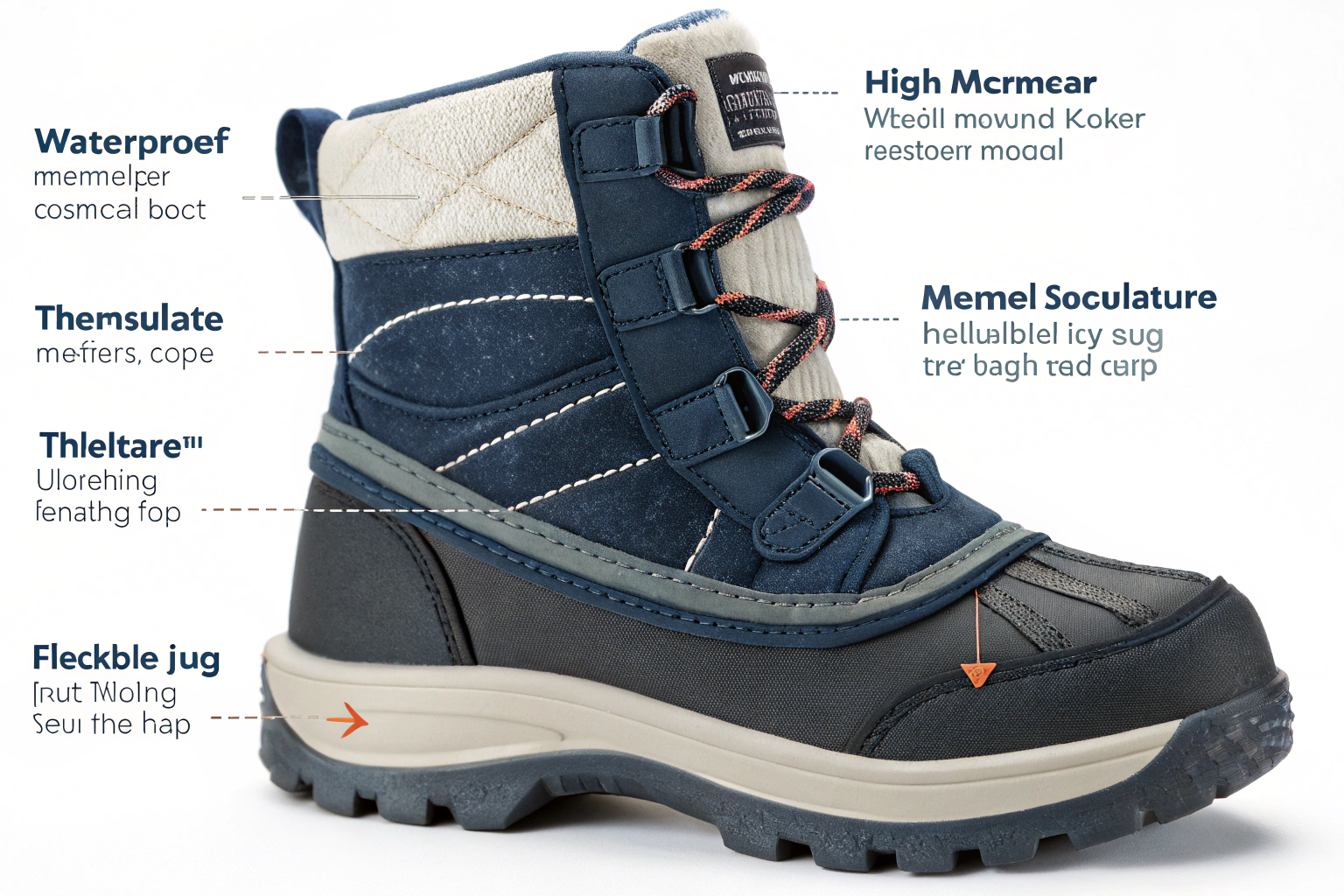
The most important features of kids winter boots are waterproof integrity with sealed seams, genuine thermal insulation appropriate for the climate, flexible yet grippy outsoles for traction, a secure and easy closure system, and a durable, supportive construction that protects growing feet while allowing for natural movement.
A boot that fails in any one of these areas can lead to cold, wet, unhappy feet and a lost day of play. Let’s dive into the non-negotiable elements that define high-performing, safe, and parent-approved winter footwear for children.
Why is Waterproofing the Non-Negotiable Foundation?
A winter boot that isn’t waterproof is simply a cold-weather shoe. Wet feet are the fastest route to discomfort, misery, and even frostbite in severe conditions. True waterproofing means preventing moisture from entering from the outside (snow, slush, puddles) while also managing perspiration from the inside.
This requires a waterproof and breathable membrane (like Gore-Tex, SympaTex, or a proprietary brand equivalent) bonded to the boot’s inner construction. Crucially, all seams—where water most easily seeps in—must be fully sealed with waterproof tape or welding. The exterior material should also have a Durable Water Repellent (DWR) finish to cause moisture to bead up and roll off. Simply claiming "water-resistant" is insufficient for true winter play.

What is the Difference Between "Water-Resistant" and "Waterproof"?
- Water-Resistant: The material can repel light moisture for a short time (e.g., a drizzle). It is not sealed and will eventually wet through under sustained exposure or in deep puddles/snow. This is acceptable for mild fall weather but not for winter boots.
- Waterproof: The boot is constructed with a barrier that prevents any water penetration under defined conditions, often measured by a hydrostatic head rating (e.g., 5,000mm). Combined with sealed seams, it ensures dry feet in slush and snow.
Parents should look for explicit "Waterproof" labeling and technologies like Gore-Tex or similar. Brands that use these are making a verifiable performance claim.
How Do Sealed Seams and Gusseted Tongues Prevent Leaks?
The devil is in the details. Fully taped seams inside the boot ensure no stitching holes become water entry points. A gusseted tongue—where the tongue is attached to the boot’s sides—is essential. It prevents snow and water from funneling down into the boot through the front opening. A traditional, unattached tongue is a major vulnerability in deep snow. These construction features are hallmarks of a boot designed for serious winter conditions, not just aesthetics.
How Does Effective Insulation Keep Feet Warm Without Overheating?
Insulation traps body heat. However, for active kids, the wrong type or amount of insulation can lead to sweaty feet, which then become cold feet. The goal is thermal regulation—maintaining a warm, dry microclimate.
Effective boots use synthetic insulations like Thinsulate™, which provides excellent warmth for its thin profile, or Primaloft®, known for its warmth even when damp. The Insulation weight (measured in grams, e.g., 200g, 400g) should be chosen for your climate. Light insulation (100-200g) is suitable for mild, wet winters, while heavy insulation (400g+) is for sub-zero, dry cold. The lining should also be moisture-wicking, often made from fleece or wool-blend fabrics, to pull sweat away from the skin.

What is the Role of Moisture-Wicking Linings?
Warmth is as much about staying dry as it is about insulation. A moisture-wicking lining actively pulls perspiration away from the foot and into the insulation or outer layers where it can evaporate. This prevents the "clammy cold" feeling. Merino wool blends are exceptional at this, offering natural odor resistance and temperature regulation. A removable, washable liner is a fantastic feature, as it allows for easy cleaning and drying, extending the boot’s life and freshness.
How to Choose the Right Insulation Level for Your Climate?
Matching insulation to your local winter is key to comfort:
- Mild & Wet (30-50°F / -1 to 10°C): Focus on waterproofing first. Light insulation (100-200g) or a thermal fleece lining is sufficient. Over-insulating leads to sweaty feet.
- Cold & Snowy (10-30°F / -12 to -1°C): A mid-weight insulation (200-400g) is ideal. Look for boots with a combination of a waterproof membrane and a warm, wicking lining.
- Very Cold & Dry (Below 10°F / -12°C): Heavy insulation (400g+) is necessary. Boots may also have additional reflective thermal layers and be designed to accommodate thick thermal socks.
Brands should clearly state the intended temperature range for their boots.
Why Are Traction and Flexibility in the Outsole Critical?
A winter boot’s outsole must perform a delicate dance: it needs to grip icy surfaces to prevent falls but also be flexible enough to allow a child’s foot to bend naturally while walking and running. A stiff, rigid boot impedes movement and can cause tripping or discomfort.
Look for outsoles made from non-marking, winter-specific rubber compounds that stay pliable in freezing temperatures. The tread pattern (lug design) should be multi-directional and deep enough to shed snow and grip uneven terrain. Many high-performance boots incorporate ice-gripping technology like Vibram Arctic Grip or embedded micro-spikes for confidence on ice.

What Makes a Tread Pattern Effective on Ice and Snow?
An effective winter tread has:
- Deep, Multi-Directional Lugs: To bite into snow and provide edges for gripping on ice.
- Self-Cleaning Channels: Gaps that prevent snow from packing into the sole, which creates a dangerous, slick surface (a problem known as "snowballing").
- A Heel Brake: A pronounced lug at the heel to assist with stopping on slippery descents.
The sole should also have a wide platform for stability, reducing the chance of ankle rolls on uneven ground.
How Can a Boot Be Both Supportive and Flexible?
Support does not mean rigidity. A good winter boot has a shank (a stiff insert in the midsole) that provides torsional stability, preventing the boot from twisting excessively. However, the forefoot (toe area) should flex easily at the ball of the foot, where natural bending occurs. This is often achieved through articulated flex zones in the outsole design. The ankle collar should be padded and supportive but not restrictive. This balance protects growing bones and joints while allowing for the dynamic movement of play.
What Closure Systems Best Balance Security and Ease of Use?
Getting boots on and off a wiggling child, often multiple times a day, is a major parental pain point. The closure system must be secure enough to keep snow out and the foot stable, yet simple enough for older children to manage independently and for parents to operate quickly.
The most user-friendly systems combine speed lacing (like a Boa dial or quick-pull system) with a wide opening and a robust, easy-grip zipper protected by a storm flap. Traditional laces offer the most customizable fit but are the slowest and most difficult for young kids. Dual closure systems (e.g., a zipper plus a velcro strap or speed-lace top) offer the best of both worlds: quick on/off with fine-tuned security.

Why are Zippers with Storm Flaps and Gaiter Hooks Important?
A full-length zipper with a large pull tab is a game-changer for ease. However, a zipper alone is a weak point against snow ingress. A waterproof storm flap behind the zipper is essential. Additionally, many technical winter boots include a gaiter hook or loop at the top of the tongue. This allows the boot to be used with external snow gaiters, which are crucial for keeping deep snow out of the boot during hiking or deep snow play, offering a level of protection beyond the boot itself.
How Do You Ensure a Proper, Secure Fit for Growing Feet?
Fit is paramount. Key considerations:
- Room for Thick Socks: There should be enough space for a thermal sock without cramping toes.
- Growth Room vs. Stability: A thumb’s width of space in front of the toes is standard, but the heel must be locked in place to prevent slippage. Heel counters and padded ankle collars achieve this.
- Adjustability: The closure system must allow you to snug down the instep and ankle without compressing the toes.
A proper fit ensures warmth, prevents blisters, and allows the boot to perform as designed. Always reference the brand’s specific size chart and consider trying boots on with the socks they’ll be worn with.
Conclusion
The most important features of kids’ winter boots form an interconnected system of protection: waterproof integrity guards against external moisture, appropriate insulation and moisture-wicking linings maintain a warm and dry interior, a flexible and grippy outsole ensures safe mobility, and a thoughtful closure system guarantees a secure, manageable fit. A boot that excels in all these areas is an investment in a child’s winter joy, safety, and comfort.
For manufacturers and brands, creating such a boot requires deep expertise in material science, ergonomic design, and durable construction—expertise that goes far beyond standard footwear. At Fumao Clothing, while our core is apparel, we understand the technical partnerships required to bring such high-performance gear to life. If you’re developing a winter boot line that needs to meet the highest standards of function and durability, we can connect you with the right specialized partners. Contact our Business Director, Elaine, at elaine@fumaoclothing.com to discuss building a winter collection from the ground up—starting with boots that can take on anything.