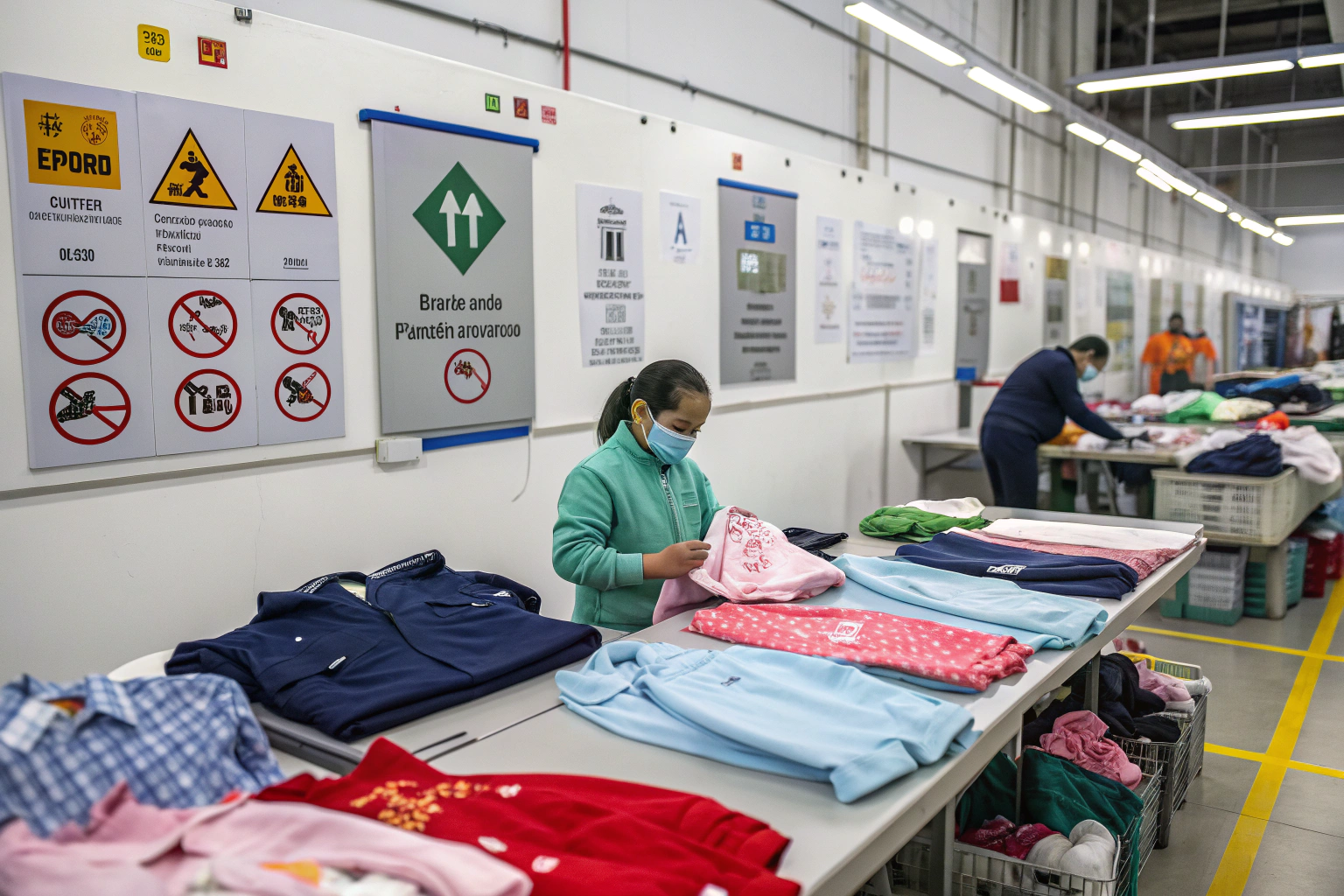
As a children's clothing manufacturer with decades of experience supplying the US market, I've seen how safety regulations evolve from mere compliance checkboxes to genuine competitive advantages. Just last quarter, one of our brand partners had to recall an entire shipment due to overlooked drawstring requirements - a costly mistake that could have been prevented with proper regulatory awareness. For any brand selling children's apparel in the United States, understanding these regulations isn't just about avoiding penalties; it's about building trust with safety-conscious parents.
The latest US safety regulations for children's clothing primarily focus on flammability standards, chemical restrictions, mechanical hazards like drawstrings and small parts, and tracking label requirements. The key governing bodies are the Consumer Product Safety Commission (CPSC) enforcing the Consumer Product Safety Improvement Act (CPSIA), along with specific standards for sleepwear flammability (16 CFR Part 1615/1616) and drawstring guidelines (ASTM F1816-18).
The regulatory landscape has significantly tightened over the past five years, with increased enforcement and higher penalties for non-compliance. What many importers don't realize is that compliance responsibility extends beyond the manufacturer to include brands, distributors, and retailers. At our factory, we've integrated regulatory compliance into every production stage, from fabric sourcing to final inspection, because we've learned that safety cannot be inspected into a product - it must be manufactured into it.
What Are The Current Flammability Requirements For Children's Sleepwear?
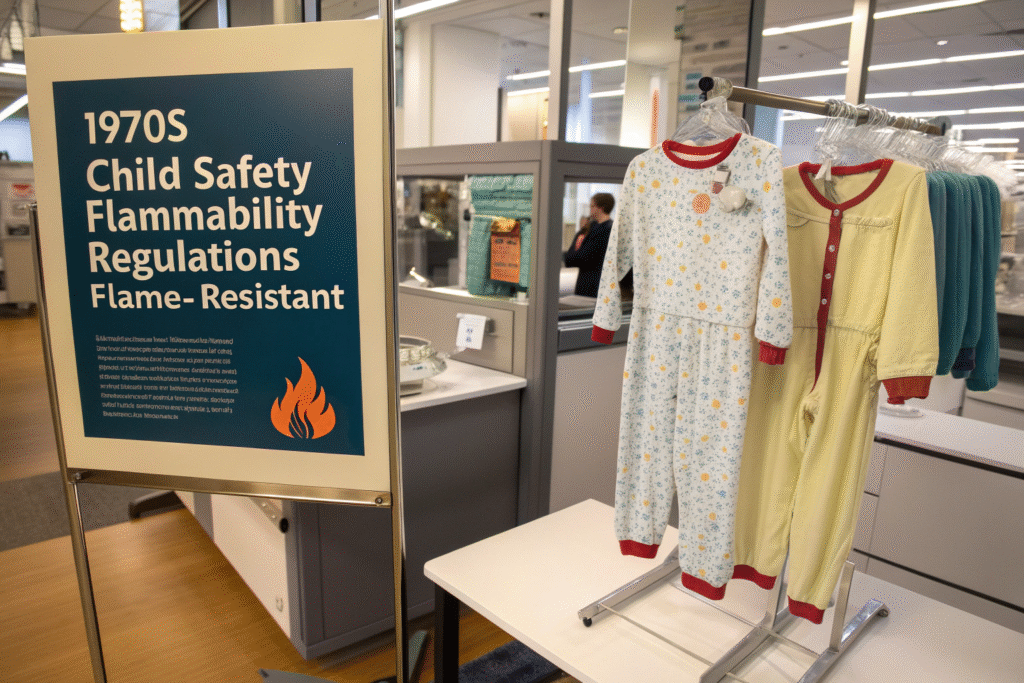
Children's sleepwear flammability standards remain among the most stringent regulations in the apparel industry. These regulations were established after tragic incidents in the 1970s and have been continuously updated to enhance child safety. Understanding the distinction between sleepwear and other clothing categories is crucial for proper compliance.
The current standards (16 CFR Parts 1615 and 1616) apply to sleepwear for children sizes 0-14 and require fabrics and garments to meet specific flammability tests. The regulations cover both the fabric's inherent resistance to flame and the garment's design characteristics. All sleepwear must be flame-resistant and self-extinguish when exposed to an ignition source. This applies regardless of whether the garments are intended as pajamas or are promoted as sleepwear.
How are sleepwear flammability tests conducted?
The standard test method involves placing a fabric specimen in a controlled chamber and exposing it to a specified flame for 3 seconds. The char length (the damaged area) must not exceed 7 inches for 5 of 10 specimens. We conduct these tests through CPSC-accepted third-party laboratories during our fabric development stage, not just for final compliance certification. Our quality team also performs random in-house verification tests using standardized procedures to catch potential issues before production runs.
What design elements affect sleepwear compliance?
Tight-fitting sleepwear has different requirements than loose-fitting garments. Tight-fitting sleepwear is exempt from the strict fabric flammability standards but must meet specific sizing dimensions that reduce the air space between the garment and skin. We maintain separate pattern blocks for compliant tight-fitting sleepwear and ensure all such garments are labeled "Wear Snug-Fitting. Not Flame Resistant." Loose-fitting sleepwear must be made from inherently flame-resistant fabrics or treated with flame-retardant chemicals that remain effective through 50 wash cycles.
What Chemical Restrictions Apply To Children's Clothing?
Chemical safety has become increasingly regulated in children's products, with new substances being added to restricted lists regularly. The CPSIA's lead and phthalates limits form the foundation, but additional state-level regulations and voluntary standards have created a complex compliance landscape that requires diligent monitoring.
The CPSIA mandates that children's products (including clothing) contain no more than 100 ppm of lead in any accessible component. This includes prints, dyes, buttons, zippers, and other trims. Phthalates are restricted to 0.1% in any children's toy or child care article, which includes certain clothing items like bibs. Additionally, many retailers now require compliance with stricter voluntary standards like the Oeko-Tex Standard 100, which tests for numerous harmful substances beyond federal requirements.
How are lead content requirements enforced?
The CPSC requires children's product manufacturers to conduct third-party testing by CPSC-accepted laboratories and issue a Children's Product Certificate (CPC) for each product. We maintain a comprehensive component tracking system that documents the compliance status of every material - from thread to main fabric to labels. This allows us to quickly generate accurate CPCs for our brand partners and respond efficiently to any regulatory inquiries. Our due diligence includes requiring chemical compliance certificates from all our material suppliers.
What additional chemical restrictions should brands know?
Several states have implemented their own chemical regulations that often exceed federal requirements. California's Proposition 65 requires warnings if products contain chemicals known to cause cancer or reproductive harm above safe harbor levels. Washington State's Children's Safe Products Act requires reporting of certain chemicals of high concern to children. We regularly update our restricted substances list (RSL) to incorporate the strictest requirements across all states where our clients sell, ensuring nationwide compliance for their products.
What Are The Current Rules For Drawstrings and Small Parts?
Mechanical hazards represent some of the most immediately dangerous compliance failures in children's clothing. Drawstring and small part regulations have been strengthened significantly based on incident data showing these elements pose entanglement, choking, and strangulation risks to children.
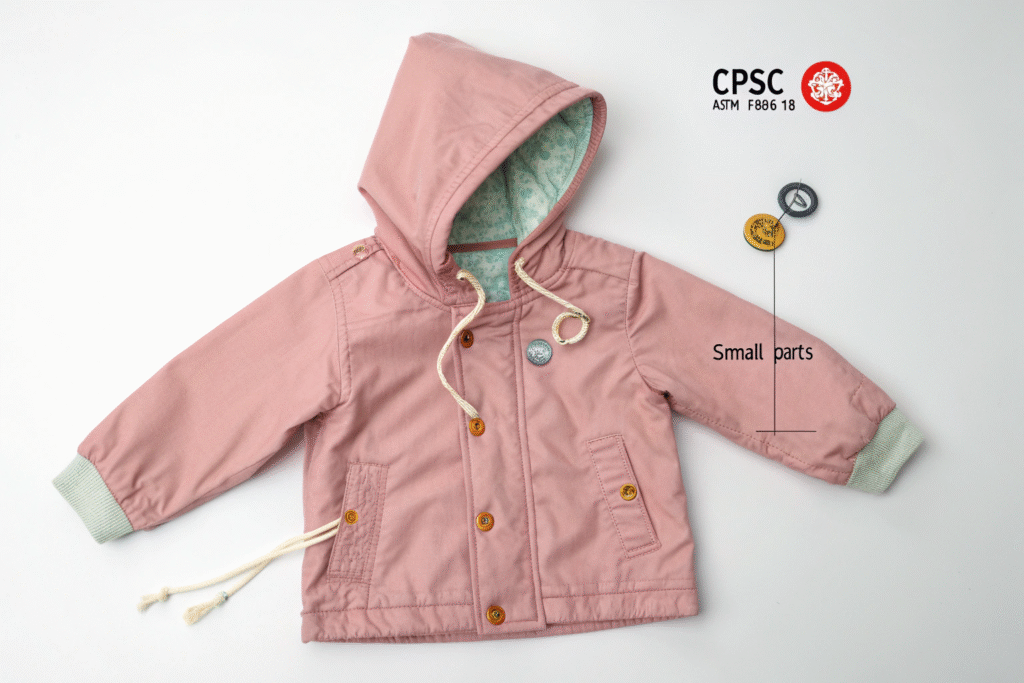
The CPSC strongly enforces the ASTM F1816-18 standard for drawstrings in children's upper outerwear. This standard effectively bans drawstrings at the hood and neck area in sizes 2T-12 and imposes strict limitations on waist and bottom drawstrings. Additionally, small parts regulations (16 CFR Part 1501) prohibit components that can fit in a small parts cylinder from being used on clothing for children under 3 years, as these pose choking hazards.
Where are drawstrings prohibited in children's clothing?
Drawstrings are completely prohibited at the hood and neck area for all children's upper outerwear in sizes 2T through 12. This includes jackets, sweatshirts, and sweaters. For sizes 2T-12, waist and bottom drawstrings must meet specific requirements: they cannot extend more than 3 inches when the garment is expanded to its fullest width, must be bartacked, cannot have toggles or knots, and must be sewn at the midpoint to prevent sliding. We've redesigned numerous jacket styles for our clients to replace drawstrings with alternative closure systems like elastic, velcro, or snap adjustments.
What constitutes a hazardous small part?
The CPSC uses a small parts cylinder (approximately 1.25 inches in diameter by 2.25 inches deep) to determine choking hazards. Any component that fits completely into this cylinder is prohibited on clothing for children under 3 years. This includes buttons, snaps, decorative elements, and even pompoms if not securely attached. Our design team uses a calibrated small parts cylinder during product development to test all components. We also conduct pull tests on all attachments to ensure they withstand 15 pounds of force for 10 seconds, exceeding the minimum requirement.
What Tracking and Labeling Requirements Must Be Followed?
Proper tracking and labeling represent the administrative backbone of children's product safety compliance. These requirements enable effective recalls when necessary and provide consumers with essential safety information. The tracking label requirement is one of the most frequently violated regulations, often because importers underestimate its importance.
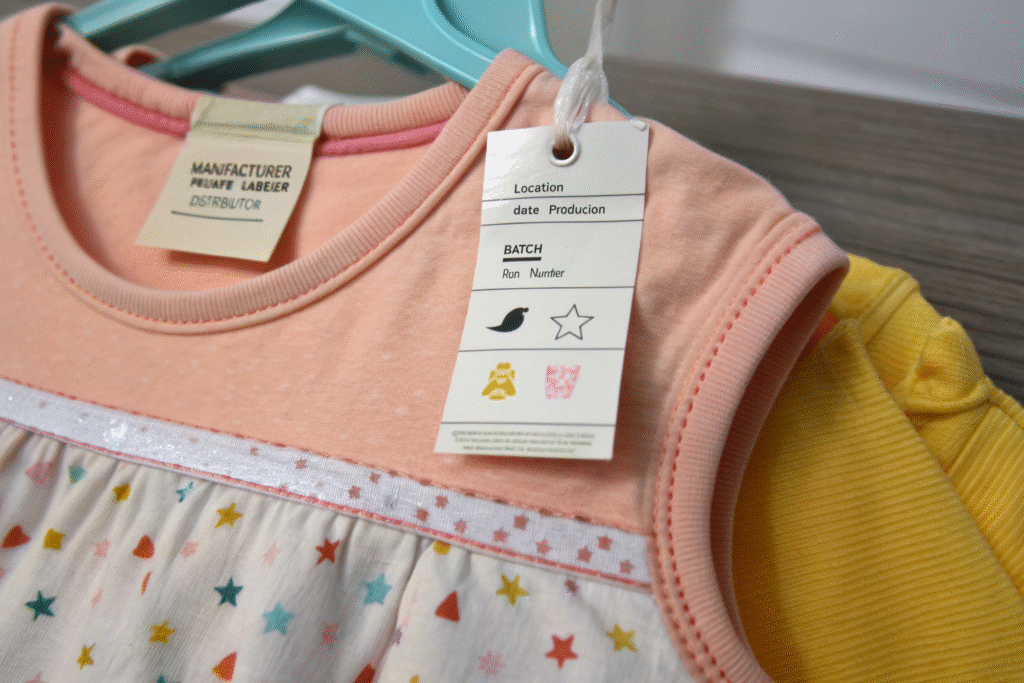
The CPSIA mandates that all children's products must have permanent tracking labels that provide specific information. These labels must include: source identification (manufacturer, private labeler, or distributor), location and date of production, cohort information (batch, run number, or other identifying characteristics), and any other information to facilitate tracking. Additionally, all wearing apparel must have permanent care labels that comply with the Care Labeling Rule from the Federal Trade Commission.
What information must tracking labels include?
Tracking labels must be permanent, meaning they should last the expected lifetime of the product. We typically weave this information directly into our care labels or use printed labels that withstand repeated washing. The minimum requirements include: our company name (Fumao Clothing) or designated importer, city and country of manufacture, date of manufacture (month and year at minimum), and detailed cohort information such as style number, purchase order number, or batch code. This allows any garment to be traced back to its specific production run, which is crucial for targeted recalls if necessary.
How should care labels and warning labels be applied?
Care labels must be attached permanently and remain legible for the product's useful life. We typically attach them at the center back neckline or side seam. For children's sleepwear, additional permanent labels are required stating either "Flame Resistant" or "Wear Snug-Fitting. Not Flame Resistant." We also include appropriate warning labels, such as the California Proposition 65 warning if applicable. Our labeling process includes verification checks at multiple production stages to ensure every garment leaves our facility with complete, accurate, and permanently attached labels.
Conclusion
Navigating the complex landscape of US children's clothing safety regulations requires diligent attention to flammability standards, chemical restrictions, mechanical hazards, and labeling requirements. The most successful brands treat compliance not as a burden but as a fundamental component of product quality and brand integrity. With regulations continuously evolving and enforcement increasing, partnering with a manufacturer that has robust compliance systems is no longer optional - it's essential for market success and consumer trust.
At Fumao Clothing, we've built regulatory compliance into our production DNA because we believe safe children's clothing is non-negotiable. If you're looking for a manufacturing partner who can navigate this complex regulatory environment while delivering high-quality, compliant children's apparel, we should connect. Contact our Business Director, Elaine, to discuss how we can ensure your products meet all US safety requirements. Reach her directly at elaine@fumaoclothing.com.