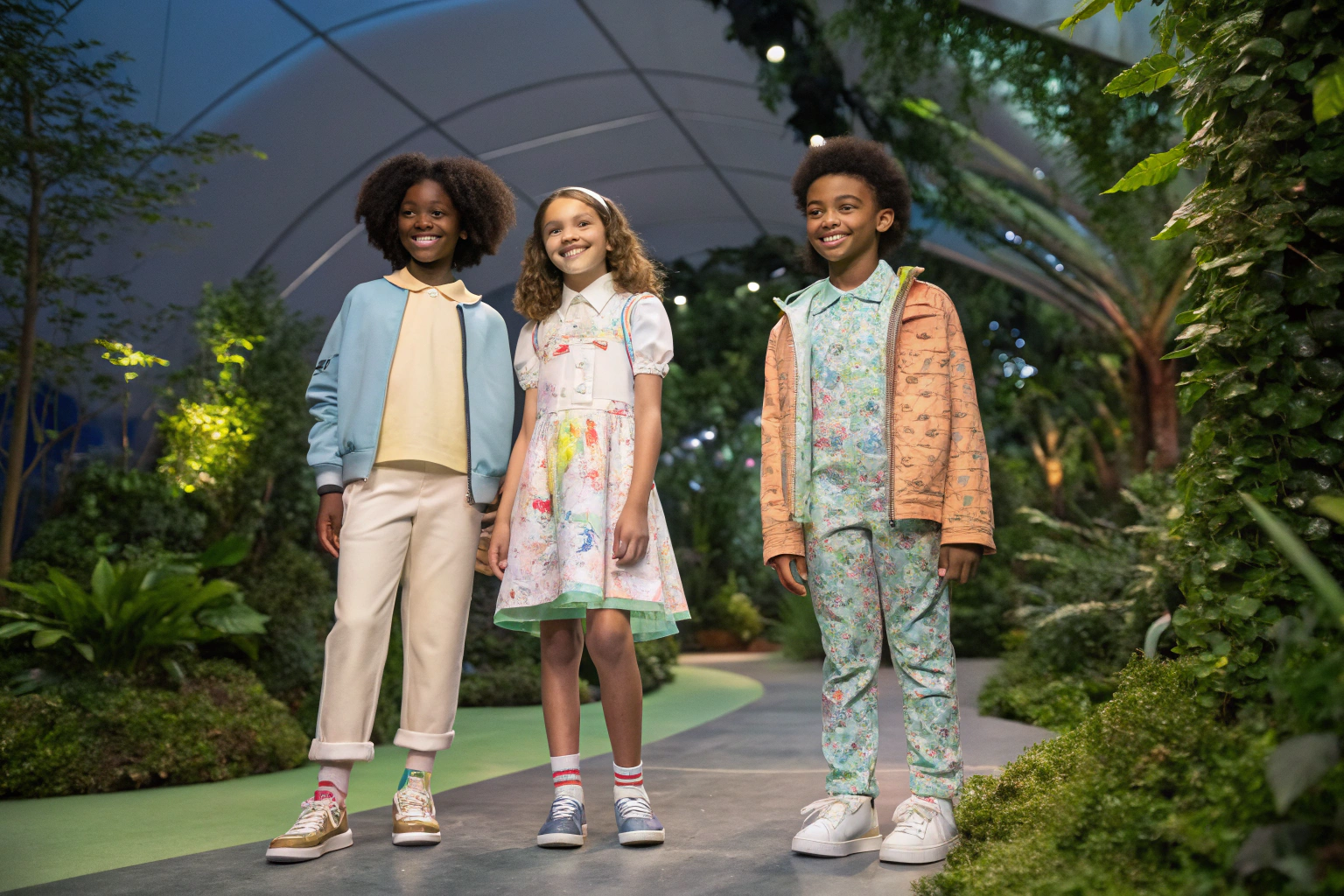
As we look toward Spring 2026, children’s fashion continues evolving with stronger emphasis on sustainability, technological integration, and designs that balance imaginative expression with practical functionality. Based on current trajectory and emerging consumer preferences, several key trends are positioned to define the season.
The key trends in kids fashion for Spring 2026 include bio-based smart fabrics, adaptive gender-neutral designs, digital-physical clothing integration, regenerative fashion systems, and multi-sensory aesthetic experiences. These directions reflect broader societal shifts toward environmental consciousness, technological adoption, and inclusive design while maintaining the playful essence of childhood. The most successful collections will balance forward-thinking innovation with the practical realities of children’s active lives and parents’ value considerations.
How Are Sustainable Innovations Evolving Beyond Basic Eco-Fabrics?
Spring 2026 will showcase sustainability advancements that extend beyond material selection to encompass circular systems, regenerative practices, and carbon-positive production methods.
The sustainability conversation is maturing from simply using organic cotton to implementing comprehensive systems that address fashion’s entire environmental impact. Spring 2026 collections will demonstrate this evolution through carbon-negative production, water-positive manufacturing, and clothing designed for multiple lifecycles rather than single use. These advancements represent the industry’s response to growing consumer demand for genuine environmental responsibility rather than superficial greenwashing.

What Role Will Carbon-Negative Materials Play?
Carbon-negative textiles that remove more CO2 from the atmosphere than their production emits will transition from niche innovation to commercial availability by Spring 2026. Fabrics like algae-based textiles and enhanced regenerative cotton will demonstrate that clothing can actively benefit the environment rather than simply minimizing harm. According to the Fashion for Good initiative, these materials will comprise approximately 15% of premium children’s collections by 2026, particularly in basics where volume justifies investment in emerging technologies. For environmentally conscious parents, these offerings provide tangible ways to align purchasing with climate values.
How Will Circular Design Principles Transform Collections?
Circularity will evolve beyond recycling programs to become embedded in design philosophy, with Spring 2026 collections featuring disassembly-ready construction, modular components, and built-in transformation features. Clothing will be designed for easy repair, size adjustment, and style updates that extend usable life. The Ellen MacArthur Foundation’s circular design guidelines predict that by 2026, 30% of new children’s wear will incorporate circular principles, responding to parents’ practical needs for clothing that lasts through multiple children while reducing environmental impact. These designs will feature standardized component sizing, accessible repair points, and digital passports tracking materials for eventual recycling.
What Technological Integrations Will Define Smart Clothing?
Wearable technology in children’s fashion will mature beyond novelty to offer genuine utility while addressing privacy and safety concerns that have previously limited adoption.
Spring 2026 will showcase technology that enhances rather than dominates the clothing experience, with subtle integrations providing practical benefits without compromising comfort, style, or safety. The most successful implementations will solve genuine parenting concerns while respecting children’s need for unmonitored play and self-expression.

How Will Responsive Materials Enhance Functionality?
Phase-change materials and thermoregulating fabrics will become commercially viable for children’s wear, providing automatic temperature adjustment that maintains comfort across varying spring conditions. These smart textiles use microencapsulated phase change materials (PCMs) that absorb, store, and release heat as needed, creating a personal microclimate. For Spring 2026, these technologies will be particularly featured in outerwear and school uniforms where children experience significant temperature variations throughout the day. The development represents a significant advancement from basic layering systems to integrated climate control that supports children’s comfort and focus.
What Safety Innovations Will Become Mainstream?
Discreet safety features will become standard in premium children’s wear, with Spring 2026 collections incorporating subtle reflective elements, UV monitoring, and non-intrusive location capabilities. Unlike previous generations of smart clothing that emphasized their technological components, these integrations will be virtually invisible during normal use. According to the Consumer Technology Association’s wearable forecast, safety-focused wearable technology in children’s products will grow 45% annually through 2026, with the most successful implementations balancing protection with preserving childhood independence. These features will be presented as thoughtful inclusions rather than primary selling points, respecting parents’ privacy concerns while addressing genuine safety needs.
How Will Gender-Neutral Design Continue Evolving?
Gender-neutral children’s fashion will mature beyond simply removing gendered signifiers to developing distinctive aesthetics that celebrate inclusivity as a positive design philosophy rather than an absence of gender coding.
Spring 2026 will showcase gender-neutral collections with strong visual identities that don’t rely on traditional gender associations, moving beyond the neutral palette approach to incorporate vibrant colors, expressive patterns, and innovative silhouettes that work for all children. This evolution reflects growing recognition that children benefit from clothing that supports self-expression without artificial gender constraints.

What New Aesthetics Will Define Gender-Neutral Fashion?
Gender-neutral design will develop distinct visual languages that don’t reference traditional gendered aesthetics, drawing inspiration from nature, architecture, and global cultures rather than gendered color associations or pattern preferences. Spring 2026 collections will feature what industry analysts at WGSN term "inclusive aesthetics" – designs that celebrate diversity through universal appeal rather than gender avoidance. These collections will use color psychology research to select palettes that resonate across demographics, pattern systems based on mathematical principles rather than cultural gender associations, and silhouettes that accommodate diverse body types without gendered assumptions.
How Will Adaptive Design Support Inclusivity?
Inclusive design will expand beyond gender to encompass diverse abilities, body types, and sensory preferences, with Spring 2026 collections featuring adaptive elements as standard rather than specialty offerings. Magnetic closures instead of buttons, seamless construction for sensory sensitivity, and adjustable sizing will become commonplace in mainstream collections. The Open Style Lab methodology predicts that by 2026, 25% of children’s brands will design all collections with accessibility as a core principle rather than an afterthought. This approach recognizes that inclusive design benefits all children while specifically addressing needs that have historically been underserved by mainstream fashion.
What Aesthetic Directions Will Dominate Visual Presentation?
Spring 2026 color palettes, patterns, and silhouettes will reflect optimism and connection to nature while incorporating digital-native influences that resonate with children growing up in increasingly hybrid physical-digital environments.
The aesthetic direction for Spring 2026 balances hopeful futurism with nature connection, responding to children’s desire for imaginative expression and parents’ preference for timeless elements that withstand rapid trend cycles. This balance creates clothing that children love wearing while delivering value through extended relevance.

Which Color Stories Will Define the Season?
Spring 2026 color palettes will be characterized by optimistic brights balanced with organic neutrals, creating energy while maintaining versatility. Pantone’s color forecast indicates a shift toward "digital nature" hues – colors that reference natural elements but with enhanced saturation that reflects screen-influenced visual preferences. These will include aquatic blues and greens, solar yellows and oranges, and earthy neutrals with warm undertones. The palette responds to research from the Color Association showing that both children and parents gravitate toward colors that feel uplifting and connected to positive outdoor experiences after years of increased indoor time.
How Will Pattern Systems Evolve?
Pattern design will incorporate algorithmic generation and nature-inspired mathematics, creating visually engaging designs with underlying structure that appeals to both children’s pattern recognition abilities and adult aesthetic preferences. Spring 2026 will see increased use of generative design patterns created through computational processes rather than traditional repeating motifs. These patterns will feature in clothing, with their creation stories becoming part of brand narratives that appeal to parents interested in STEAM education principles. The approach represents a fusion of technological process and artistic outcome that aligns with contemporary values while delivering visual interest that captivates children.
Conclusion
Spring 2026 children’s fashion will be defined by the sophisticated integration of sustainability, technology, inclusivity, and joy—addressing serious concerns about environmental impact and social values without sacrificing the playful essence of childhood. The most successful collections will balance forward-thinking innovation with practical considerations, creating clothing that children love wearing while delivering the quality, durability, and value that parents prioritize.
These trends represent not just aesthetic directions but fundamental shifts in how children’s clothing is designed, produced, and experienced. If you’re planning your Spring 2026 collection and need a manufacturing partner capable of executing these advanced concepts with technical precision and ethical responsibility, contact our Business Director, Elaine, at elaine@fumaoclothing.com. Let’s discuss how we can help you translate these emerging trends into commercially successful collections that capture the spirit of Spring 2026 while meeting the highest standards of quality and responsibility.