Launching a kids’ wear brand or collection is a high-stakes endeavor that blends creative vision with operational precision. In a market crowded with established players and fleeting trends, a successful launch requires more than just cute designs. It demands a strategic, multi-faceted plan that builds anticipation, delivers exceptional value, and lays a foundation for sustainable growth. As a manufacturer who has partnered on countless launches, I’ve observed that the difference between a flash in the pan and a lasting brand is often adherence to a set of core, non-negotiable principles executed with excellence.
The key elements of a successful kids wear launch are a strong, authentic brand story and positioning; a strategically curated, commercially viable product collection; a multi-channel pre-launch marketing campaign to build an audience; flawless operational execution for on-time delivery; and a post-launch plan focused on community building and data-driven iteration.
A launch is not an event; it’s the first chapter of your brand’s story. Let’s deconstruct the essential components that ensure that first chapter captivates your audience and sets the stage for a sequel.
How to Build an Irresistible Brand Foundation Before Launch?
The most common fatal error is rushing to product before defining the brand. Your brand is the "why" that makes your product matter. It’s the filter for every decision you’ll make, from fabric choice to Instagram caption. A weak foundation cannot support a lasting business.
This involves crystallizing your Mission, Vision, and Values, defining your Target Customer Avatar with deep specificity, crafting a Unique Value Proposition (UVP) that clearly states why you exist, and developing a Cohesive Visual and Verbal Identity (logo, palette, tone of voice) that communicates your essence instantly.

Why is a Compelling "Origin Story" Your Most Powerful Asset?
People connect with stories, not spreadsheets. Your origin story answers the critical question: "Why did you start this?" Was it a personal frustration as a parent? A passion for sustainable design? A gap in the market you couldn’t ignore? This narrative creates emotional resonance and authenticity. It should be the centerpiece of your "About Us" page and woven into your marketing. A story like, "As a mom of a child with eczema, I couldn’t find truly soft, chemical-free basics, so I created them," builds immediate trust and differentiation. This is the heart of authentic branding.
How to Conduct a "Pre-Mortem" for Strategic Clarity?
Before launch, conduct a "pre-mortem" exercise. Assemble your team (even if it’s just you) and imagine it’s one year post-launch, and the brand has failed. Brainstorm all the possible reasons why: "We didn’t understand our customer’s real price point," "Our quality was inconsistent," "Our messaging was confusing," "We ran out of cash." This proactive problem-identification forces you to confront risks head-on and build mitigating strategies into your launch plan from day one. It’s a powerful tool for strategic planning.
How to Curate a Launch Collection That Sells and Tells a Story?
Your launch collection is your first handshake with the world. It must be a curated edit, not an overwhelming warehouse. Every piece should serve a strategic purpose: to introduce your brand aesthetic, solve a core customer problem, and demonstrate your unique value.
A successful launch collection has a hero product that embodies your UVP, a set of complementary basics that support the hero and ensure a complete outfit, a clear size range aligned with your avatar, and a cohesive color palette and design theme that tells a visual story. It should be small enough to produce flawlessly but broad enough to show your vision.

What is the "Hero, Hub, Hygiene" Framework for Product Assortment?
Adapting this content marketing framework to product planning is highly effective:
- Hero Product: The star. This is your most innovative, talk-worthy item that perfectly showcases your UVP (e.g., a reversible, weather-proof jacket with hidden growth panels).
- Hub Products: The supportive core. These are the well-designed, versatile staples that customers will repurchase and that complement the hero (e.g., the perfect organic cotton tee, the durable leggings).
- Hygiene Products: The essentials. For a kids’ brand, this might be simple socks or a hair accessory that rounds out an order, increases average order value (AOV), and serves as a low-risk entry point for new customers.
This framework ensures your collection has depth, purpose, and commercial logic.
Why is Prototyping and Fit Testing Non-Negotiable?
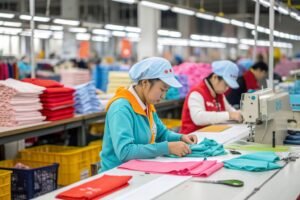
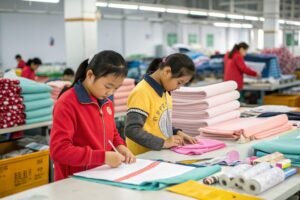
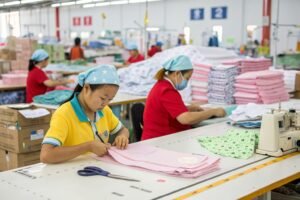
Never launch with untested samples. Prototyping is where design meets reality. You must produce fit samples on actual child models (or accurate size forms) across your entire size range. Check for movement, comfort, and ease of dressing. How does the fabric wash? Does the color bleed? This phase uncovers flaws that would lead to mass returns and brand damage. A professional manufacturer will guide you through multiple sample stages (Proto, Fit, Pre-Production) to ensure the bulk production matches your vision perfectly. This is the bedrock of quality assurance.
How to Execute a Multi-Channel Pre-Launch Marketing Campaign?
A launch to an empty room is a failure. The goal of pre-launch is to build a community of eager potential customers before you open your doors. This transforms launch day from a question mark into a celebration.
This campaign should start 8-12 weeks before launch and include: Building an email list via a landing page with a lead magnet (e.g., "Join for early access + 15% off"), Teasing your brand story and products on social media (behind-the-scenes, founder diaries, fabric close-ups), Securing early PR with relevant parenting or niche blogs, and potentially running a small-scale influencer seeding program with micro-influencers who align with your values.

How to Use a "Coming Soon" Landing Page Effectively?
Your pre-launch hub is a "Coming Soon" landing page. It should have:
- A compelling headline that states your UVP.
- Beautiful, atmospheric imagery that sets the brand mood.
- An email sign-up form (this is your primary goal).
- A clear promise of value for subscribers (e.g., exclusive access, launch discount).
- Links to your social channels to build followings there.
Drive all early traffic (from PR, social teasers, your network) to this page. Every email address is a potential launch-day customer. Tools like Mailchimp or Klaviyo are essential for managing this.
What is the Role of "Soft Launch" or Pre-Order Strategies?
Consider a controlled soft launch or pre-order for your true launch. A soft launch to your email list first allows you to test the website, payment processing, and customer service flow with a supportive audience before a full public blast. A pre-order campaign (taking orders for 1-2 weeks before you begin production) is the ultimate de-risking tool. It validates demand with real dollars, informs your production quantities, and generates crucial cash flow upfront. It turns your launch into a market-funded event.
How to Ensure Flawless Operational Execution on Launch Day?
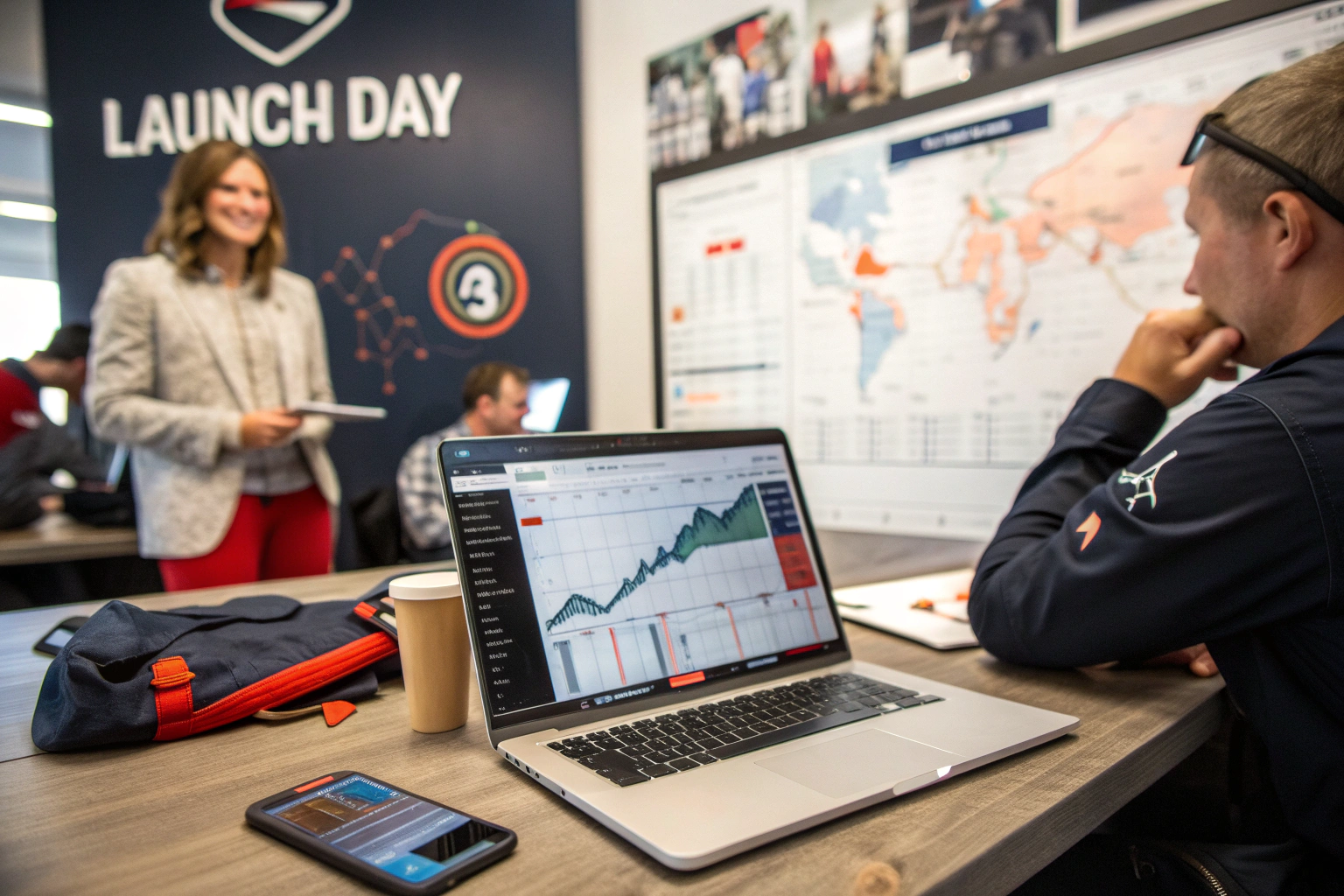
Launch day is when promise meets logistics. A beautiful website that crashes, inventory that sells out in 30 seconds, or confusing shipping information can shatter the trust you’ve built. Operational excellence is the unsexy but critical backbone of success.
This encompasses a robust, tested e-commerce platform, clear inventory allocation (what’s physically in your warehouse vs. on pre-order), transparent shipping timelines and costs, a scaled customer service plan (with prepared answers to FAQs), and a crisis communication plan for if something goes wrong (e.g., a delayed production shipment).

Why is a Detailed "Critical Path" Timeline Essential?
From the moment you finalize designs, every task must be mapped on a backward-planned critical path timeline. This includes:
- Final Sample Approval Date
- Fabric & Trim Order Deadline
- Production Start & Finish Dates
- QC & Shipping Dates
- Warehouse Receipt & Photography
- Website Load & Testing
- Marketing Content Creation
Missing one deadline cascades into a delayed launch. Share this timeline with your manufacturer (like Fumao) to ensure they are aligned and can flag any risks immediately. This is professional project management.
How to Plan Inventory for the "Launch Spike" and Beyond?
Inventory planning is a tightrope. Use your pre-launch sign-ups and pre-orders to forecast initial demand. A best practice is to produce enough to cover your forecasted first 2-3 months of sales, with a plan for a fast reorder on your best sellers. Your manufacturer’s lead time for reorders is a key factor here. You want to avoid the disaster of selling out on day one with no restock for 4 months, but you also cannot afford to be stuck with 12 months of dead stock. Agility is key.
What is the Crucial Post-Launch Strategy for Momentum?
The work intensifies after the "buy" button is clicked. The post-launch phase is about converting one-time buyers into a community, learning from real data, and setting the stage for your next collection.
This involves a stellar post-purchase customer journey (order confirmations, shipping updates, a delightful unboxing experience), an active community engagement strategy on social media (featuring customer photos, hosting Q&As), a rigorous analysis of launch data (what sold, who bought, what was returned and why), and immediately beginning to solicit and incorporate customer feedback into your next development cycle.

How to Turn First-Time Buyers into Brand Advocates?
The post-purchase email sequence is your best tool. After the "thank you" and shipping confirmation, follow up after they receive the product. Ask for a review. Encourage them to share a photo on social media with a branded hashtag. Offer a loyalty discount on their next purchase. This nurtures the relationship. Featuring user-generated content (UGC) on your own channels makes customers feel seen and valued, turning them into powerful unpaid advocates.
What Launch Data is Most Important to Analyze?
Move beyond total sales revenue. Dive into:
- Best & Worst Sellers: Why did one item outperform? Was it marketing, design, or price?
- Average Order Value (AOV): Did people buy one item or multiple? This informs future bundling.
- Customer Acquisition Cost (CAC): How much did you spend on marketing per customer? Is it sustainable?
- Return Reasons: If returns are high for fit, you have a sizing chart or pattern issue.
- Traffic Sources: Where did your buyers come from? Double down on what worked.
This data is the factual foundation for your Season 2 strategy, ensuring you evolve based on evidence, not just instinct.
Conclusion
A successful kids’ wear launch is a symphony, not a solo. It requires the harmonious integration of a compelling brand story, a commercially astute product collection, a patient and building marketing campaign, ironclad operational logistics, and a nurturing post-launch community strategy. It’s a marathon of preparation that culminates in a sprint of execution, followed by the long journey of building a brand. Those who respect the complexity of each element and prepare accordingly don’t just launch a collection; they ignite a brand with the fuel to grow and endure.
For manufacturers, being part of a successful launch is a partnership of trust and precision. At Fumao Clothing, we integrate into your critical path, providing not just production but guidance on timelines, sample refinement, and quality assurance to ensure the product that launches is worthy of the story you tell. If you’re preparing for a launch built to last, let’s build it together. Contact our Business Director, Elaine, at elaine@fumaoclothing.com to begin.