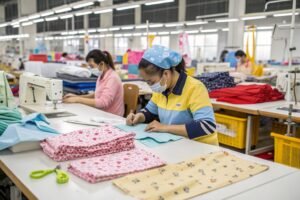
As a children’s clothing manufacturer with decades of experience supplying both European and American brands, I’m often asked this question by our partners. Getting the sizing right is crucial for brand success, customer satisfaction, and minimizing returns. The confusion between these two sizing systems is a common pain point for buyers sourcing from overseas.
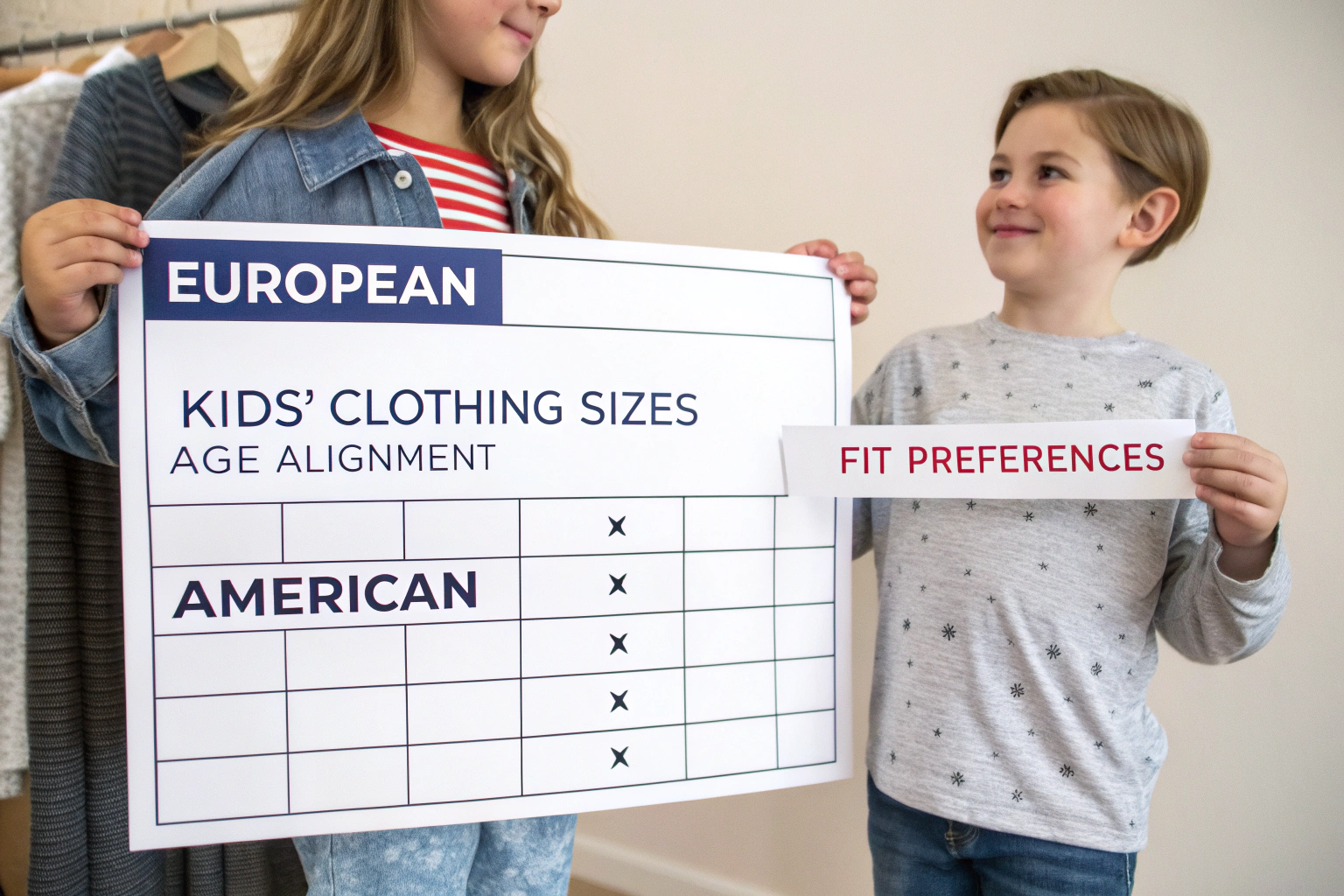
Understanding the key differences between European and American kids’ sizing is essential for any brand operating in international markets. The core distinctions lie in the measurement systems used, the age alignment, and the specific fit preferences rooted in each region’s culture. Navigating these differences successfully is key to ensuring your clothing line meets customer expectations, whether you’re selling in Paris, Ohio, or both. A clear sizing strategy protects your brand from the costly pitfalls of high return rates and damaged customer trust.
This guide will break down the European vs. American kids’ sizing puzzle into simple, actionable parts. We will explore the measurement systems, compare the size charts, and provide practical tips for brands. By the end, you’ll have the clarity needed to make informed decisions for your next collection.
How to Convert European Kids Sizes to American Sizes?
Converting sizes doesn’t have to be a headache. The most reliable method is to use a standardized size chart based on a child’s height and chest measurements, rather than relying solely on age. At our factory, we always guide our partners through this process to ensure accuracy from the first sample.
The fundamental difference lies in the units. European sizes are typically based on the metric system, with height in centimeters being the primary guide. American sizes often use age (e.g., 4T) or a numbered system, with measurements in inches. A quick rule of thumb is that a European size in centimeters (e.g., 110) is roughly equivalent to the height of the child in cm. To convert this to a common American size, you’d look for a size that corresponds to a child around 110cm tall, which is often a US 4T or 5. However, this is just a starting point, as fit can vary.

Why is a unified measurement chart crucial for international brands?
Using a unified measurement chart is non-negotiable for brands working with overseas manufacturers. It eliminates guesswork and miscommunication. We provide all our clients with a detailed tech pack that includes a comprehensive size chart based on body measurements, not just labeled sizes. This practice ensures that a "Size 110" made in our China factory will fit the same target child as a "Size 5" specified by our US client. This precision in pre-production is what prevents costly batch rejections and maintains a brand’s reputation for consistency.
What practical tools can simplify the size conversion process?
We recommend two practical tools. First, always insist on a physical measurement sample before bulk production. This allows you to verify the fit on a standard mannequin or, even better, on a real child of the target size. Second, leverage digital tools. Many industry websites and fashion logistics companies offer online conversion charts. However, the best tool is a partnership with a manufacturer that understands these nuances. We build this expertise into our service, offering customized size charts that bridge the gap between European and American standards, ensuring your DDP mode shipments are filled with products that fit perfectly from the start.
What Are The Core Measurement Systems for EU and US Kids Clothing?
The core measurement systems are fundamentally different, which is the root of the sizing confusion. The EU system is metric and height-centric, while the US system is often age-related and uses imperial measurements. Understanding this is the first step to mastering sizing for both markets.
European sizing is brilliantly straightforward for manufacturers: it’s primarily based on the child’s height in centimeters. A size 110 is designed for a child approximately 110cm tall. The chest and waist measurements are then proportionally scaled based on this height. American sizing, however, frequently uses age ranges (e.g., 2T, 3T, 4) and is rooted in imperial units (inches). The "T" stands for toddler and signifies a cut that accommodates diapers. This age-based labeling can be less precise, as children of the same age can vary greatly in height and build.

How do body measurements differ between the two regions?
The actual body measurements for a similarly labeled size can differ significantly. For example, a European size 110 might have a chest width of 58cm, while a US size 5 might have a chest width of 56cm. This reflects subtle differences in the average body type of children in those markets. Furthermore, European cuts often have a slimmer, more tailored garment fit, while American cuts can be slightly wider and boxier to accommodate a preference for ease of movement and layering. This is why we always cross-reference the key measurement points: height, chest, waist, and hip.
What are the key measurement points for a perfect fit?
To guarantee a perfect fit, you must focus on four key measurement points, regardless of the regional system. First, height is the primary anchor. Second, chest circumference is critical for tops and jackets. Third, waist circumference and hip circumference are vital for bottoms like pants and skirts. At our factory, our quality control team checks these points against the approved spec sheet for every production run. We advise our brand partners to provide us with their detailed specifications for these key points, which allows us to produce clothing that not only fits the size label but also the regional expectations for comfort and style.
How Does Kids Clothing Fit and Style Vary Across the Atlantic?
The differences extend beyond numbers to the very philosophy of fit and style. American kids’ wear often prioritizes comfort and practicality, while European styles may lean towards a more sophisticated, tailored aesthetic. Recognizing this helps brands tailor their designs for each market.
American children’s fashion frequently features bold graphics, licensed characters, and a focus on durable, easy-care fabrics suitable for active play. The fit is generally more relaxed, with more room in the seat and thighs for pants. European children’s clothing, in contrast, often uses more muted color palettes, classic patterns, and a focus on natural materials like cotton and linen. The fit is typically slimmer, with a straighter leg on pants and a more defined silhouette on tops. This is a generalization, but it reflects the contemporary trends we see from our brand clients on both continents.

What are the common fit preferences in Europe versus the USA?
The common fit preferences are a direct reflection of lifestyle. In the USA, a "roomy" fit is often desired. Parents look for clothes that are easy to get on and off and that allow for unrestricted movement. Think of baby & toddler apparel designed for crawling and climbing. In Europe, a "close" or "narrow" fit is more common. Clothing is seen as more formal, even for young children, and the expectation is for a neat, put-together look. This is evident in items like tailored coats or slim-fit jeans, which are staples in European kids' wear collections.
How do fabric choices influence the perceived fit and style?
Fabric choice is intrinsically linked to fit and style. Heavier, more structured fabrics like denim or thick knits will create a different silhouette than soft, drapey fabrics like jersey. European brands might select a high-quality, rigid cotton for a dress to hold its shape, contributing to a tailored look. An American brand might choose a stretchy, premium quality cotton blend for the same dress to ensure comfort and ease of movement. As a manufacturer, we guide our partners on fabric selection based on the desired end-result, ensuring the material properties align with the fit and style goals for their target market. Our expertise in apparel production allows us to source the right materials to achieve either aesthetic.
Why is Understanding Size Differences Vital for Your Brand’s Success?
For business owners like Ron, understanding these size differences is not an academic exercise—it’s a critical component of profitability and brand integrity. Sizing errors lead directly to customer returns, negative reviews, and lost trust, which can be devastating in the competitive children’s wear market.
Ignoring the nuances of EU vs. US sizing can cripple a brand’s expansion plans. Imagine launching your US-tested collection in Europe, only to be flooded with returns because the clothes run too large and boxy for local expectations. The reverse is also true. This directly impacts your bottom line through increased logistics costs for returns and markdowns on unsellable inventory. Furthermore, consistent sizing is a marker of a professional, reliable brand. Customers who are confident that your size "4" will fit their child perfectly are far more likely to become repeat buyers.

How can accurate sizing reduce customer returns and increase trust?
Accurate sizing is the most effective strategy to reduce returns. A clear, detailed size chart on your product pages, one that includes measurements in both inches and centimeters, sets clear expectations. When you manufacture with a partner who rigorously enforces quality assurance standards in sizing, you ensure product consistency. This consistency builds immense trust. Customers learn that they can order from your brand with confidence, which fosters loyalty and positive word-of-mouth. In an era of online shopping, this trust is your most valuable asset.
What role does a manufacturer play in navigating international sizing?
A knowledgeable manufacturer is your greatest ally. We act as your on-the-ground experts in international standards. For our partners, we don’t just produce clothes; we provide guidance. We help you develop a localized sizing strategy, create accurate technical specifications for each market, and implement rigorous quality control checks throughout production to ensure every garment meets its specified measurements. We understand the pain points of delayed shipments and inefficient communication, which is why we assign a dedicated representative to ensure clear, timely updates, preventing the certificate falsification issues you may have encountered elsewhere. We make navigating international sizing seamless.
Conclusion
Navigating the differences between European and American kids’ sizes is a manageable task with the right knowledge and partners. By focusing on measurement systems, understanding regional fit preferences, and using precise tools, you can confidently create collections that resonate with customers on both sides of the Atlantic. Accurate sizing is the foundation of customer satisfaction, reduced returns, and a strong, trustworthy brand reputation.
We hope this guide empowers you to make smarter sizing decisions for your brand. If you are looking for a manufacturing partner that combines competitive pricing with deep expertise in both European and American children’s fashion, let’s talk. We specialize in helping brands like yours thrive. For a reliable supply chain and seamless production experience, please contact our Business Director, Elaine, at elaine@fumaoclothing.com to discuss your next clothing order.