
Getting your beautifully designed and manufactured kids' clothing from the factory floor to your customer's doorstep is a complex, high-stakes operation. One misstep in logistics can erase your profit margin, damage your brand reputation, and disappoint your customers. As a manufacturer who has managed thousands of shipments, I can tell you that logistics is not a back-office function; it is a core competency that determines your brand's reliability and scalability.
The key considerations for kids clothing logistics encompass selecting the right Incoterms for cost and risk control, ensuring compliance with strict safety and customs regulations, optimizing packaging for both protection and unboxing experience, and building a resilient supply chain with contingency planning for inevitable delays.
Mastering these elements transforms logistics from a cost center into a strategic advantage, ensuring your products arrive on time, in perfect condition, and with all necessary documentation. Let's navigate the critical path.
How to Choose and Negotiate the Right Incoterms?
The terms of sale you agree upon with your supplier dictate who is responsible for cost, risk, and control at every stage of the journey. Choosing the wrong term is a common and costly mistake for new importers.
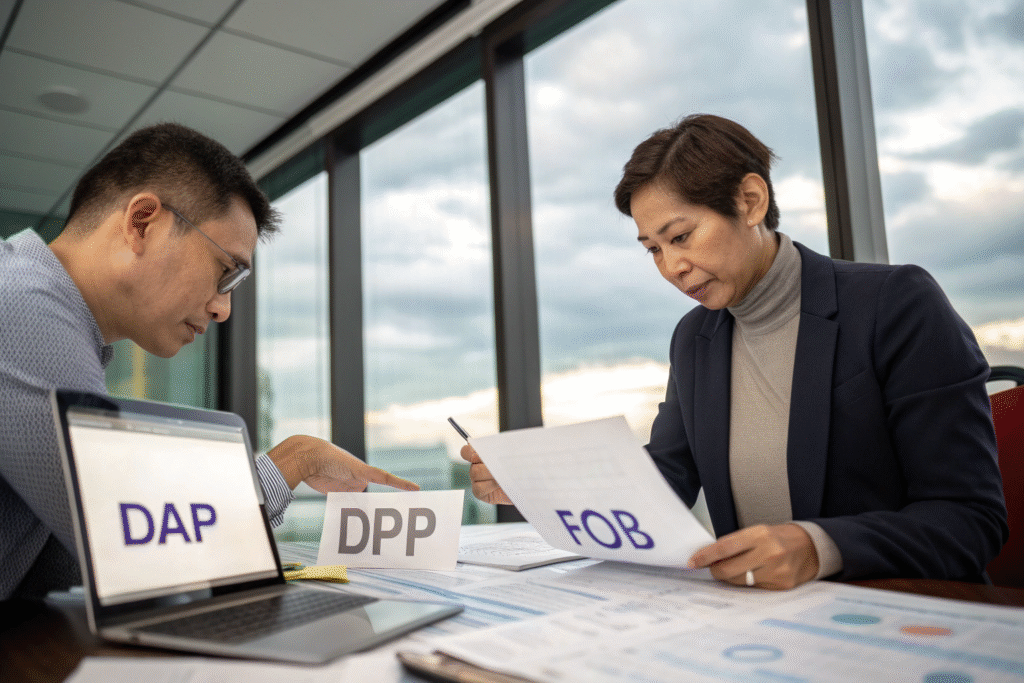
Selecting the right Incoterms involves understanding your own operational capacity, budget, and risk tolerance. For brands lacking deep logistics expertise, terms like DAP (Delivered at Place) or DDP (Delivered Duty Paid) with the manufacturer handling most of the process are often safest. For those with established freight forwarders, FOB (Free on Board) provides more control. The goal is to avoid unexpected costs and liability gaps.
What is the Practical Difference Between FOB, CIF, and DDP for Importers?
- FOB (Free on Board) [Port]: Your responsibility and risk begin the moment the goods are loaded onto the ship/aircraft at the origin port. You (or your forwarder) control and pay for main freight, insurance, and all destination costs (duty, customs clearance, trucking). This offers more control and potential cost savings but requires you to manage the process.
- CIF (Cost, Insurance, and Freight) [Port]: The supplier pays for and arranges the main freight and basic insurance to the destination port. Risk still transfers to you once loaded at origin. You are responsible for all costs and procedures after the ship arrives, including customs clearance. This can create a dangerous "responsibility gap" at the destination.
- DDP (Delivered Duty Paid): The supplier/manufacturer handles everything—export paperwork, freight, insurance, customs clearance, duty/tax payment, and final delivery to your door. You receive one landed cost. This is the simplest for the buyer but is typically more expensive overall, as the supplier builds in risk and admin cost.
For most US-based kids' brands, FOB (with a trusted forwarder) for control or DDP for simplicity are the most common and recommended choices. The International Chamber of Commerce's Incoterms rules provide the definitive guide.
How Do Incoterms Impact Your Landed Cost Calculation?
Your landed cost is the total cost to get one unit of product to your warehouse. It includes the unit cost (FOB price) PLUS all logistics add-ons: ocean/air freight, marine insurance, customs brokerage fees, import duties & taxes (HTS codes), port fees, and final trucking. Under FOB, you must obtain and add all these costs yourself. Under DDP, the manufacturer quotes you a single price that includes their estimate of all these elements. Misunderstanding this leads to severe miscalculations of profitability. You must model your landed cost under different Incoterms scenarios before finalizing any purchase order.
How to Ensure Compliance and Smooth Customs Clearance?
Children's products are among the most highly scrutinized categories by customs agencies like U.S. Customs and Border Protection (CBP). Failure to comply results in holds, seizures, fines, and destroyed shipments.
Ensuring compliance means having all required safety documentation (like CPSIA certificates) ready, correctly classifying your products with the right Harmonized Tariff Schedule (HTS) codes, ensuring your supplier's commercial invoice is perfectly accurate, and working with a licensed customs broker who specializes in apparel and textiles.
What Documentation is Absolutely Critical for Kids' Apparel Shipments?
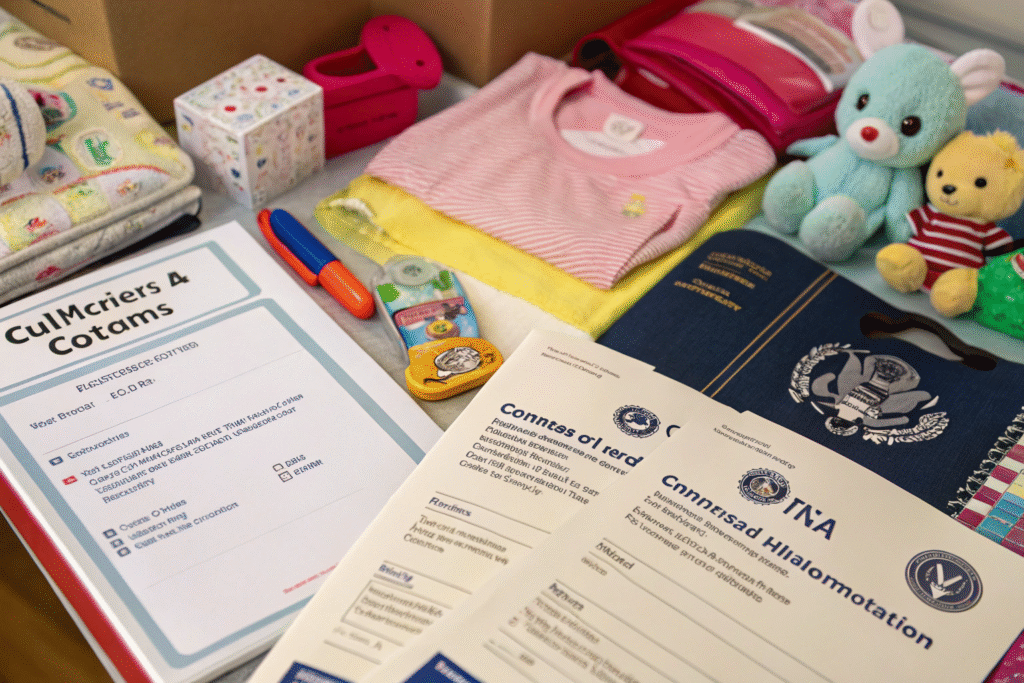
The paperwork is as important as the product. The non-negotiable documents include:
- Commercial Invoice: Must precisely match the goods, values, and Incoterms.
- Packing List: Details carton counts, dimensions, weights, and contents per carton.
- Bill of Lading (Ocean) or Air Waybill (Air): The contract of carriage and title document.
- CPSIA Compliance Certificate / Test Report: For the US, this is mandatory proof your garments meet safety standards for lead, phthalates, and flammability.
- Country of Origin Labeling: Often must be disclosed on documents and physically on the product.
- Customs Power of Attorney: Allows your broker to act on your behalf.
Missing or incorrect CPSIA documentation is the single biggest cause of holds for kids' clothing at US ports. Your manufacturer must provide this.
Why is Correct HTS Code Classification Essential?
The HTS code determines your duty rate. Children's apparel has different (often higher) duty rates than adult apparel. Misclassifying to get a lower rate is illegal and will result in penalties, back-duty, and audits. For example, a baby cotton sweater has a different code than a toddler synthetic jacket. You or your broker must classify correctly based on fabric, gender, and garment type. The duty paid is a direct hit to your landed cost and must be factored into your pricing. Resources like the U.S. International Trade Commission's HTS Search are essential tools.
How to Design Packaging for Protection and Brand Experience?
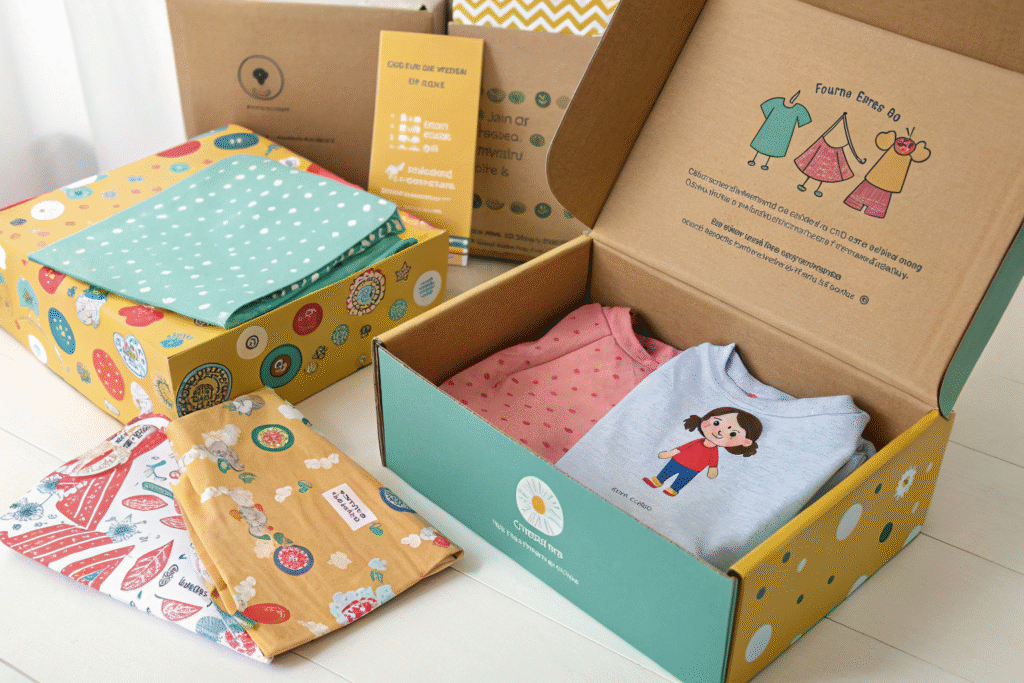
Packaging serves two masters: it must protect the goods during a rough journey across oceans and continents, and it must deliver a brand moment upon unboxing. For kids' brands, this is a prime opportunity to delight both parent and child.
Optimize packaging by using strong, right-sized corrugated cartons, polybags for individual garment protection, considering eco-friendly materials, and designing interior elements (tissue, stickers, thank-you cards) that enhance the unboxing experience and encourage social sharing.
What are the Best Practices for Shipping Carton Design and Packing?
Cartonization—how you pack cartons—impacts both safety and cost. Use the smallest possible carton that safely holds the goods to minimize dimensional (DIM) weight charges. Ensure cartons are strong enough (ECT-32 or higher) for palletization and long voyages. Use quality polybags inside to prevent moisture damage and garment transfer. Pack heavier items (like denim) at the bottom. Distribute sizes/styles evenly across cartons so if one is lost, you don't lose an entire size run. Always request and review the factory's packing list before shipment to ensure it matches your instructions. Proper packaging design is a science that prevents costly damage claims.
How Can Unboxing Enhance Customer Loyalty and Marketing?
The unboxing is a tangible touchpoint. For a kids' brand, this is magic. Use branded tissue paper, a colorful sticker, a simple thank-you card (maybe even from a "CEO" like a cartoon mascot), or a small, non-plastic surprise. For higher-end brands, a fabric drawstring bag for storage adds value. This experience turns a customer into a brand advocate. They are far more likely to post about it on social media, providing you with free, authentic user-generated content (UGC). The cost of these extras is minimal compared to the lifetime value and marketing value generated. Think of packaging as your silent salesperson.
How to Build a Resilient and Contingent Supply Chain?
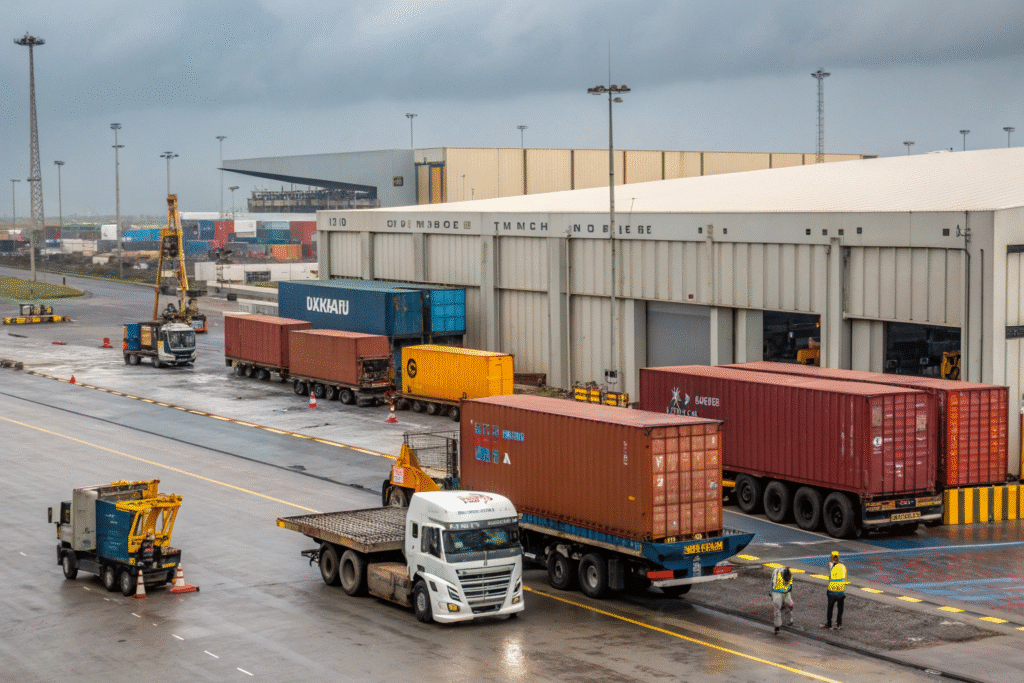
Disruption is the norm. Port strikes, weather events, capacity crunches, and customs delays are not "if" but "when." A resilient logistics plan has built-in buffers and alternatives to keep product flowing.
Build resilience by diversifying shipping modes (air vs. sea), using multiple ports of entry, building realistic timelines with buffer weeks, maintaining safety stock, and cultivating strong relationships with both your manufacturer and your freight forwarder for proactive communication.
How to Create a Realistic Production-to-Delivery Timeline?
Work backwards from your in-stock date and add buffers at every stage:
- Production Time: Confirm with factory.
- Inland Transit to Port: 3-7 days in China.
- Port Congestion & Carrier Booking: Buffer 7-14 days.
- Ocean Transit: Asia to US West Coast (~14 days), to East Coast (~30-35 days).
- Port Unloading & Customs Clearance: Buffer 7-10 days.
- Domestic Trucking to Warehouse: 3-7 days.
A typical ocean shipment can easily take 60-90 days from order completion to warehouse receipt. Air freight can cut this to 7-14 days but at 4-6x the cost. Factor this into your seasonal planning to avoid missed selling seasons.
What Contingency Plans Mitigate Shipping Delays and Disruptions?
Have a Plan B (and C). Key strategies include:
- Dual Sourcing: Shipping partial orders via air if sea is delayed.
- Port Diversification: Ability to route to LA/Long Beach, Oakland, or Tacoma/Seattle if one port is congested.
- Clear Communication Protocol: Establish with your manufacturer that they must notify you immediately of any production delay that will impact the shipping date.
- Freight Forwarder Partnership: Work with a forwarder who provides real-time tracking and proactive alerts, not just a cheap rate. They are your eyes and ears in the supply chain.
Investing in supply chain visibility software or using your forwarder's portal is no longer a luxury; it's essential for managing risk and setting customer expectations accurately.
Conclusion
Logistics for kids' clothing is a multifaceted discipline where legal compliance, financial planning, operational execution, and brand marketing intersect. Success requires a proactive, detail-oriented approach from the moment the purchase order is cut to the moment the customer opens the box. By mastering Incoterms, prioritizing compliance, designing thoughtful packaging, and building a resilient supply chain, you transform logistics from a persistent headache into a reliable, brand-enhancing engine for growth.
At Fumao Clothing, we guide our partners through this complexity. From ensuring accurate documentation and recommending Incoterms to providing secure packing and coordinating with forwarders, we act as an extension of your logistics team. If you seek a manufacturing partner who understands that the journey is as important as the product, let's connect. Contact our Business Director, Elaine, at elaine@fumaoclothing.com to build a seamless supply chain for your brand.