
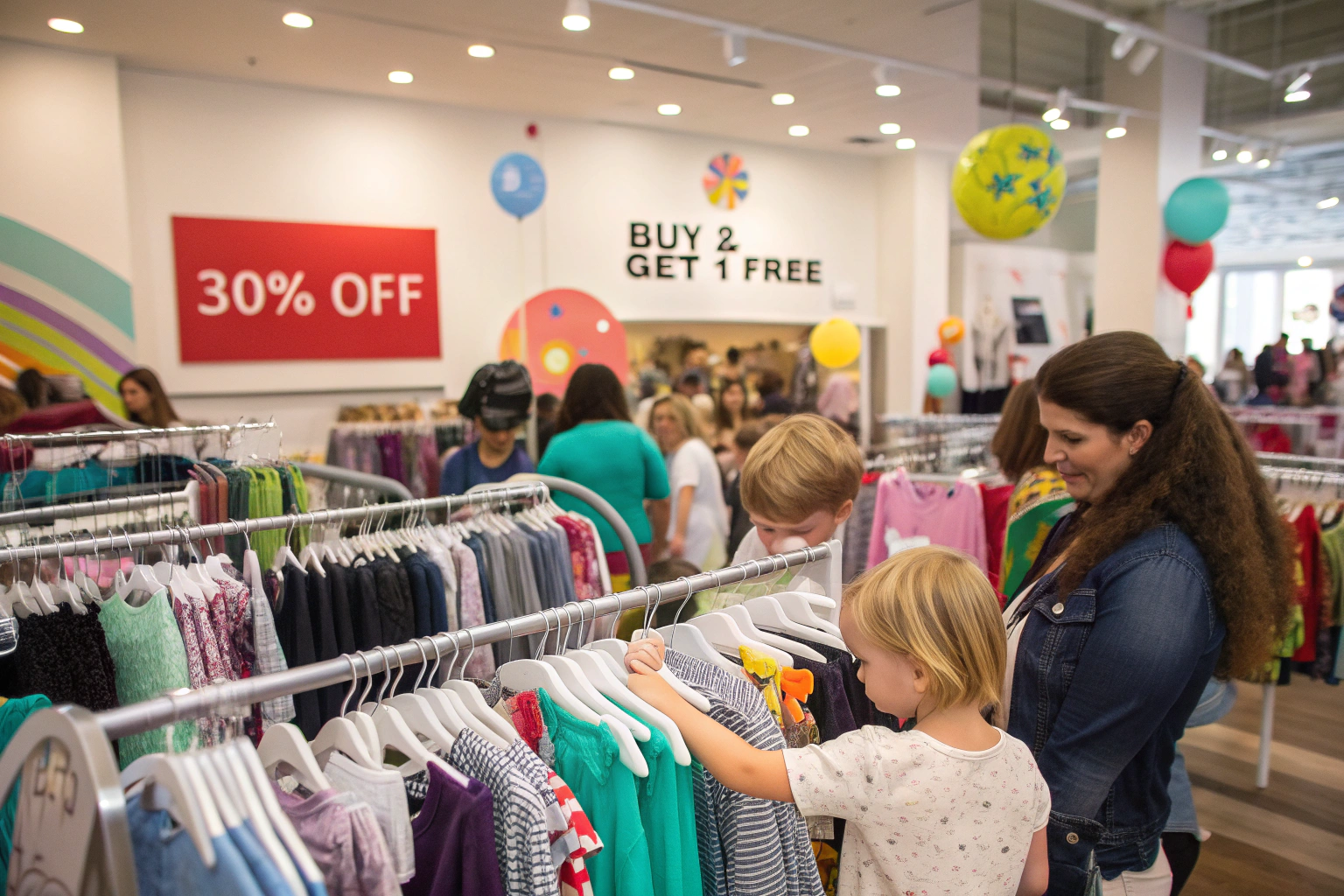
Every season, children's clothing brands face the same critical challenge: moving out leftover inventory to make room for new collections. A poorly executed clearance can trap cash in dead stock, while a smart one can boost revenue, acquire new customers, and keep your brand healthy. As a manufacturer who sees the entire cycle, I know that clearance isn't just about slashing prices—it's a strategic tool for inventory and brand management.
The best strategies for kids clothing clearance sales combine tiered discounting, targeted bundling, multi-channel promotion, and data-driven timing. The goal is to maximize recovery value, clear space efficiently, and turn a necessary process into a positive customer experience that supports long-term loyalty.
Let's move beyond the "50% Off Everything" banner and explore sophisticated tactics that protect your brand's value while effectively clearing your racks and digital shelves.
How to Plan and Time Your Clearance for Maximum Impact?
Timing is the most powerful lever in a clearance strategy. A sale that starts too late misses momentum; one that starts too early trains customers to never pay full price. Your calendar should be as precise as your production schedule.
Plan your clearance to begin shortly after the peak selling season for that collection has definitively passed. Use sell-through rate data to trigger action, and stage the clearance in waves (e.g., 30% off, then 50% off, then final bundle deals) to maximize average order value and clear inventory efficiently.

What Are the Key Signals to Start a Clearance Event?
Don't rely on gut feeling. Let data dictate the start date. Key signals include:
- Sell-Through Rate Drops: When weekly sales for a specific style or size drop below a predetermined threshold (e.g., less than 5% of remaining inventory per week).
- Days of Inventory (DOI) Rising: If you have more than, say, 90 days' worth of a particular item left as the season ends, it's a prime candidate.
- Upcoming Inventory Arrival: The most concrete signal is the confirmed shipping date of your next season's goods. Your clearance must create physical or digital warehouse space.
Using an inventory management system to track these key performance indicators (KPIs) automates this trigger, removing emotion from the decision.
How Does Staged Discounting Protect Your Brand Value?
A single, deep discount teaches customers to wait. Staged, or tiered, discounting creates urgency at multiple levels. Start with a modest discount (e.g., 25-30% off) on the entire clearance category to attract your full-price customers. After 10-14 days, increase the discount (e.g., 50% off) to capture the more price-sensitive segment. Finally, use aggressive bundling or "final markdown" prices to clear stubborn remnants. This method, often called price laddering, maximizes revenue by segmenting your customer base and protects the perceived value of your future full-price collections.
What Pricing and Promotion Tactics Drive Fast Inventory Turn?
The goal is speed and volume without giving everything away. Your pricing strategy should be designed to move multiple units per transaction and make the clearance feel like an exciting opportunity, not a dumpster fire.
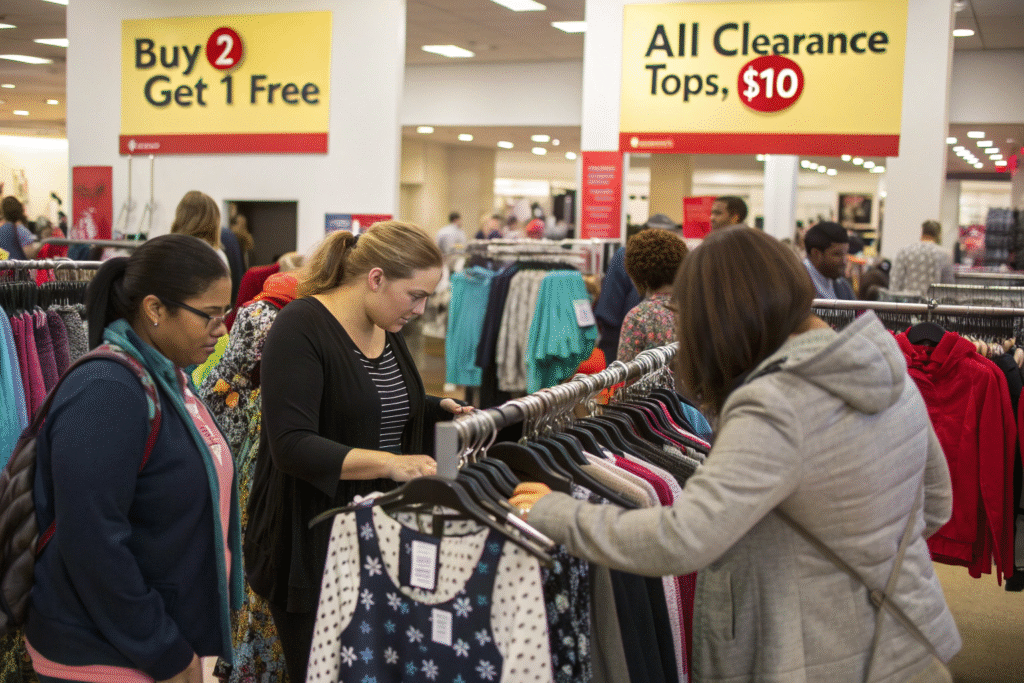
Effective tactics include bundle pricing ("Buy 2, Get 1 Free"), value-based pricing (e.g., "All Clearance Tops, $10"), flash sales for loyal customers, and cross-promoting clearance items with bestsellers to increase overall cart value.
Why Are Bundling Strategies More Effective Than Simple Discounts?
For kids' clothing, bundling is uniquely powerful. Parents constantly need multiple items and sizes. A "Buy 2, Get 1 Free" offer on clearance t-shirts or leggings incentivizes a larger purchase than a 33% discount on a single item. It increases the Average Order Value (AOV) and clears more inventory per transaction. You can create curated "Playtime Packs" (3 graphic tees) or "Growth Spurt Bundles" (sizes 3T-5T of the same style) that solve a problem for the customer. This tactic feels more like a valuable solution than just a discount, enhancing customer satisfaction while achieving your inventory goals.
How to Use Email Segmentation for Targeted Clearance Promotions?
Blasting a "Everything Must Go!" email to your entire list is a missed opportunity. Segment your list for surgical precision:
- Loyalty/VIP Customers: Give them 24-48 hour early access to the clearance as a reward. This makes them feel special and often captures the best items at the first discount tier.
- Past Clearance Shoppers: Target customers who have previously bought from sale sections with the most aggressive promotions.
- Cart Abandoners: Send a targeted email featuring clearance items similar to what they left behind, or offer a small extra incentive on top of the clearance price.
Tools for effective email marketing segmentation are critical for executing this strategy and protecting relationships with your full-price customers.
How to Optimize Your Online and In-Store Clearance Experience?
The customer's journey during a clearance event should be frictionless and encouraging. A messy experience can damage your brand image and reduce conversion rates, regardless of how low the prices are.
Optimize by creating a dedicated, easy-to-navigate "Sale" section online, using clear filters (size, price, category), highlighting the original price for contrast, and ensuring in-store sections are well-organized and sized. Transparency about final sale policies is crucial to avoid returns.

What Makes an E-commerce Clearance Page Convert?
Your online sale section is a destination, not an afterthought. Best practices include:
- Dedicated Landing Page: Use a clear URL like
yoursite.com/season-end-sale. - Smart Filtering: Allow filtering by the child's size, category (tops, bottoms), price (under $15), and even color. Parents shop with specific needs.
- Strong Visual Cues: Use bold badges ("60% OFF"), strikethrough original prices, and a countdown timer for staged sales to create urgency.
- Upsell Prompts: At checkout, suggest a best-selling full-price accessory or a clearance bundle deal to increase AOV. A seamless e-commerce user experience during sales is key to conversion.
How to Manage In-Store Clearance to Maintain Brand Perception?
A chaotic, disorganized clearance rack hurts your brand. To maintain a premium feel:
- Curate the Space: Keep it tidy and well-sized. A few neatly folded piles are better than a mountain of tangled clothes.
- Clear Signage: Use signs that explain the deal simply ("All Red Tag Items, $9.99").
- Link to New Arrivals: Place your clearance section strategically so customers must walk past the new, full-price collection to get to it. This can drive interest in the upcoming season.
Train staff to be experts on both the sale items and the new line, enabling them to cross-sell effectively and turn a bargain hunter into a full-price customer.
What to Do With Leftover Inventory After the Sale?
Even the best clearance will leave some remnants. Having a post-clearance plan is essential to avoid carrying dead stock into the next year, which ties up capital and storage space.
Options for leftover inventory include donating to charities for a potential tax deduction, selling in bulk to liquidation platforms, repurposing fabric for samples or new products, and holding it for deep discounting in a future "Warehouse Sale" or mystery box promotion.

When is Donation a Strategic (and Ethical) Choice?
Donation is not an admission of failure; it's a strategic brand decision. Donating high-quality, unsold inventory to vetted children's charities, women's shelters, or schools can:
- Generate a tax deduction based on the cost of goods.
- Build positive community relations and corporate social responsibility (CSR) stories.
- Ensure your brand's products bring value to those in need, which aligns with the values of many modern consumers.
Ensure items are in good condition and partner with reputable organizations. This approach is often better for brand perception than selling for pennies on the dollar.
How Can Bulk Liquidation or Mystery Boxes Be Profitable?
If donation isn't viable, consider controlled liquidation.
- Bulk Sales: Sell remaining lots to online bulk liquidation platforms like B-Stock or through B2B marketplaces. You recover a small percentage of cost quickly and free up space.
- Mystery Boxes/Grab Bags: This has become a popular DTC strategy. Sell a "Summer Mystery Box" (3-5 surprise items for a fixed low price) through your website or email list. It creates excitement, clears inventory in batches, and can introduce customers to styles they might not have chosen but end up loving. Be transparent about the potential value and types of items included.
Conclusion
A kids clothing clearance sale is a complex but manageable operation that, when executed strategically, strengthens rather than diminishes your brand. By planning with data, pricing intelligently, optimizing the customer experience across channels, and having a responsible plan for leftovers, you transform a seasonal necessity into a tool for revenue recovery, customer acquisition, and inventory health.
A reliable manufacturing partner understands this cycle. At Fumao Clothing, we help brands plan production quantities to minimize overstock from the start and advise on fabric choices that remain desirable across seasons. If you're looking to build a more resilient and profitable children's wear brand with a partner who understands the entire business cycle, let's talk. Contact our Business Director, Elaine, at elaine@fumaoclothing.com to discuss how we can support your growth, from production to profitable clearance.