Creating an effective children's clothing store layout requires balancing practical shopping needs with experiential elements that engage both children and parents. As a manufacturer who has visited countless retail environments across American and European markets, I've observed how thoughtful store design directly impacts sales, customer satisfaction, and brand perception. The most successful layouts recognize that children's wear shopping involves unique dynamics distinct from adult retail experiences.
The best practices for kids clothing store layout include creating intuitive navigation by age groups, designing interactive elements for children, ensuring stroller accessibility, implementing strategic product adjacencies, and maintaining flexible spaces that accommodate both focused shopping and family experiences. These elements work together to create environments that reduce parental stress while encouraging exploration and discovery.
Effective store design transforms shopping from chore to enjoyable family activity while optimizing operational efficiency and sales conversion through thoughtful space planning.
How Should Age-Based Navigation Be Structured?
Organizing store layouts by developmental stages rather than just size ranges creates intuitive shopping experiences that respect parents' primary search pattern.
Clear age zoning helps parents quickly locate appropriate sections while preventing the overwhelm that comes from navigating through unrelated age categories.
What Age Group Sections Are Most Effective?
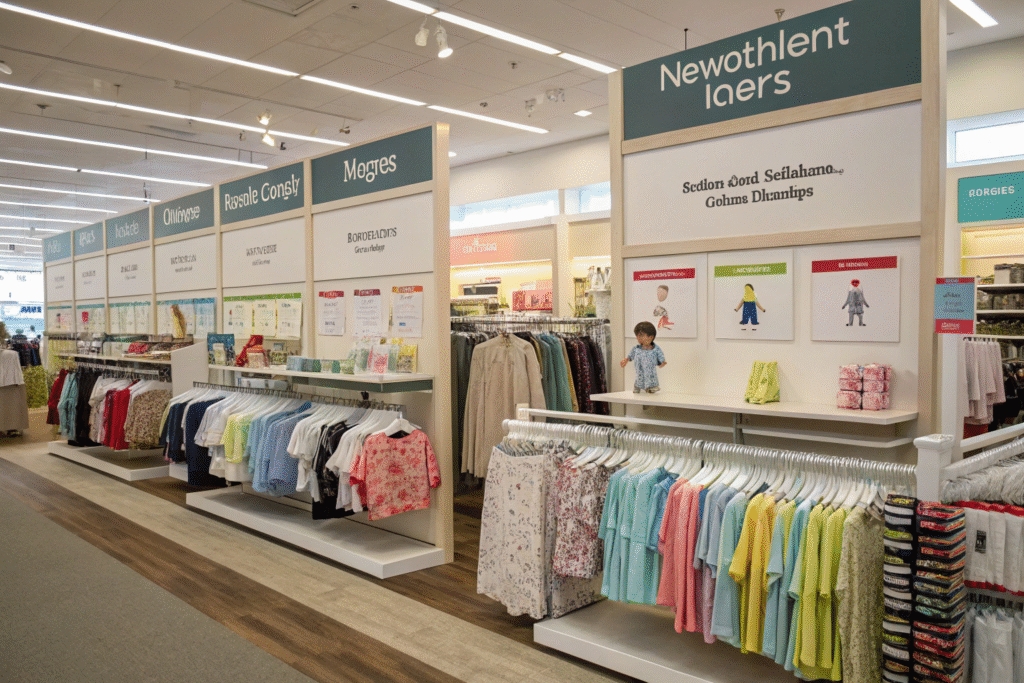
Newborn (0-12 months), toddler (1-3 years), young child (4-7 years), and older child/tween (8-12+ years) represent the most practical divisions. Each section should feature appropriate fixture heights, accessible product placement, and relevant adjacencies (like newborn clothing near feeding accessories). According to Retail Navigation Research, stores with clear age zoning achieve 25-40% faster customer navigation to target products.
How Should Transition Between Sections Be Managed?
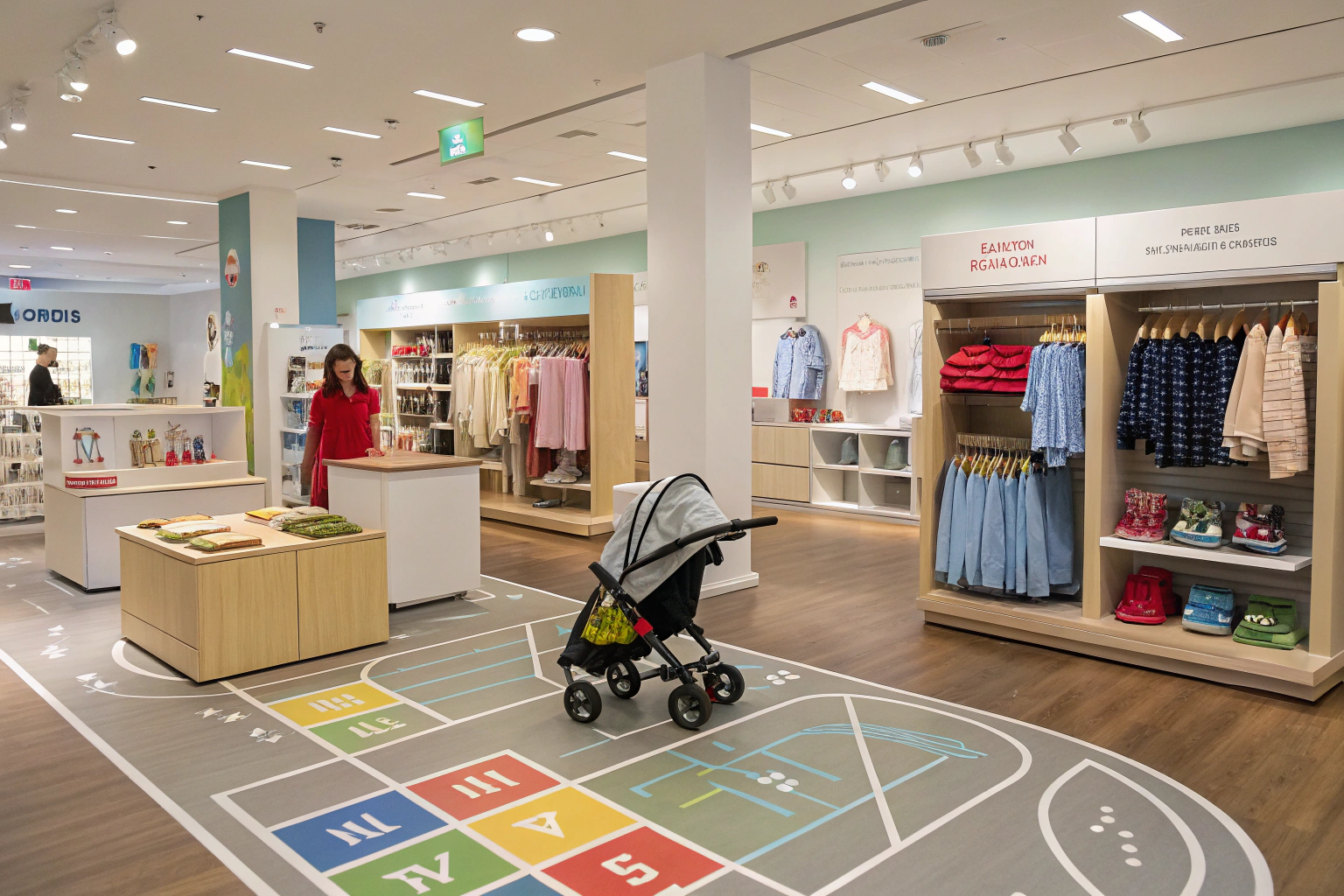
Gradual transitions with overlapping size ranges prevent frustration when children fall between standard categories. Visual cues like color-coded signage, changing fixture styles, or floor material variations help signal zone changes without confusing customers. These transitions should feel natural rather than abrupt, respecting that children's development occurs along continuums rather than at precise age boundaries.
Why Are Interactive Elements Essential?
Designated play or engagement areas keep children occupied while parents shop, reducing stress and increasing browsing time and purchase likelihood.
These elements should be strategically placed to maximize visibility and safety while complementing rather than competing with shopping activities.

What Types of Interactive Features Work Best?
Low-maintenance activities like magnetic wall boards, simple building block stations, or themed reading nooks provide engagement without constant staff supervision. These features should be visible from multiple shopping areas to reassure parents while allowing continued shopping. The Family Retail Institute reports that stores with well-designed interactive areas see 30-50% longer average visit durations.
How Should Play Areas Be Integrated?
Located centrally with clear sightlines to surrounding shopping areas, play zones should be safely designed with soft flooring and rounded edges. Their positioning should encourage natural traffic flow past strategic merchandise while preventing children from wandering into unsupervised areas. The most effective designs balance child engagement with parental peace of mind.
What Stroller Accessibility Considerations Matter?
Ample space for stroller navigation is non-negotiable in children's retail, affecting both customer satisfaction and safety.
Proper stroller accommodation demonstrates understanding of practical family needs while preventing congestion and potential accidents.

What Aisle Width Standards Should Be Maintained?
Minimum 36-inch clear pathways between fixtures, with 48-60 inches in main circulation areas, accommodate most single and double strollers comfortably. These dimensions also support ADA compliance while allowing multiple customers to pass simultaneously. According to Retail Accessibility Standards, proper stroller accommodation reduces abandoned shopping trips by approximately 40% in family-focused retail.
Where Should Stroller Parking Be Located?
Designated parking areas near store entrances, fitting rooms, and checkout stations prevent aisle blockage while providing convenient access. These areas should be clearly marked and sized to accommodate peak capacity without impeding traffic flow. Some stores offer supervised stroller parking with security features for premium shopping experiences.
How Do Strategic Adjacencies Increase Sales?
Thoughtful product placement creates natural discovery and cross-selling opportunities while simplifying the shopping journey.
Adjacencies should reflect how parents actually shop rather than arbitrary organizational systems.

What Natural Adjacencies Drive Additional Purchases?
Outfit coordination areas showing complete looks, accessory displays near relevant clothing categories, and seasonal item groupings create logical shopping sequences. For example, swimwear should be adjacent to cover-ups, sunscreen, and beach toys rather than isolated by product type. These adjacencies reflect how parents actually assemble children's wardrobes for specific needs or seasons.
How Should Basic and Fashion Items Be Positioned?
Core basics positioned toward store interiors encourage navigation past trend-forward or seasonal items, while fashion-forward pieces at the front capture attention. This positioning recognizes that parents typically seek specific basics but may impulse-purchase fashionable items when discovered. According to Retail Adjacency Research, strategic product placement can increase cross-selling by 20-35%.
Why Is Flexibility Important in Store Design?
Modular elements and adaptable spaces allow stores to accommodate different shopping modes, seasonal changes, and special events.
Flexible design supports evolving retail needs without requiring complete redesign, providing long-term value and relevance.
What Modular Elements Support Adaptability?
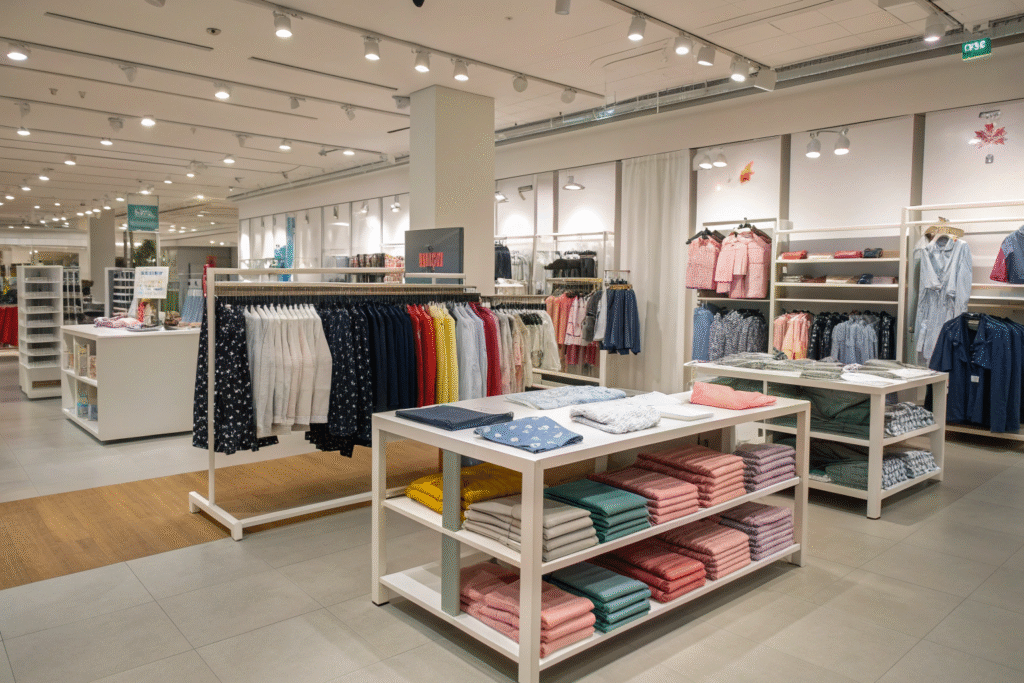
Mobile fixtures on lockable casters, interchangeable signage systems, and multi-use display units allow stores to reconfigure for different seasons, promotions, or shopping events. This adaptability is particularly valuable for children's wear with its dramatic seasonal shifts and size-specific merchandising challenges. Our retail partners report that modular systems typically extend effective layout life by 2-3 years compared to fixed installations.
How Can Spaces Accommodate Different Shopping Modes?
Designated areas for quick grab-and-go purchases, leisurely browsing, and special services (like personal styling or birthday registries) create inclusive environments. These zones should flow naturally into each other while maintaining distinct characters that serve different customer needs. The most successful stores recognize that parents visit with different intentions at different times and design accordingly.
Conclusion
Effective kids clothing store layout requires balancing intuitive organization, engaging experiences, practical accessibility, strategic merchandising, and flexible design. The most successful approaches recognize that children's wear shopping involves unique family dynamics that differ from solo adult shopping, creating environments that reduce stress while encouraging discovery and enjoyment.
At Shanghai Fumao Clothing, we support our retail partners with merchandising guidance and fixture recommendations that complement our products' quality and design. If you're designing or optimizing a children's wear retail space, contact our Business Director Elaine at elaine@fumaoclothing.com to discuss how our manufacturing perspective can inform your store layout decisions for maximum effectiveness.