
Effective store displays in children's clothing retail serve as silent salespeople, communicating brand identity while addressing the unique challenges of selling to both children and their parents. As manufacturers who have helped brands optimize their retail presence, we understand how strategic visual merchandising can dramatically impact sales, brand perception, and customer experience.
The best practices for kids clothing store display include creating child-accessible merchandising, implementing clear size organization, designing engaging interactive elements, telling cohesive visual stories, and maintaining flexibility for seasonal updates. Successful displays balance aesthetic appeal with practical functionality, recognizing that children and parents have different needs and shopping behaviors. The most effective stores create environments where children want to stay and explore while parents can shop efficiently with minimal stress.
How Can You Create Child-Friendly Merchandising?
Designing displays that engage children while maintaining organization requires understanding children's physical proportions, curiosity, and shopping behaviors compared to adult customers.
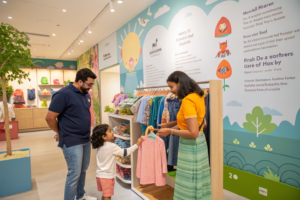
Children experience retail environments differently than adults, with different sight lines, interaction patterns, and attention spans. Successful kids stores incorporate displays at multiple height levels, with the most engaging elements positioned at child eye-level to capture their interest immediately upon entering. This approach recognizes that children often drive initial interest in specific items, while parents make final purchasing decisions based on practical considerations like price, quality, and fit.
Why Is Multi-Level Merchandising Essential?
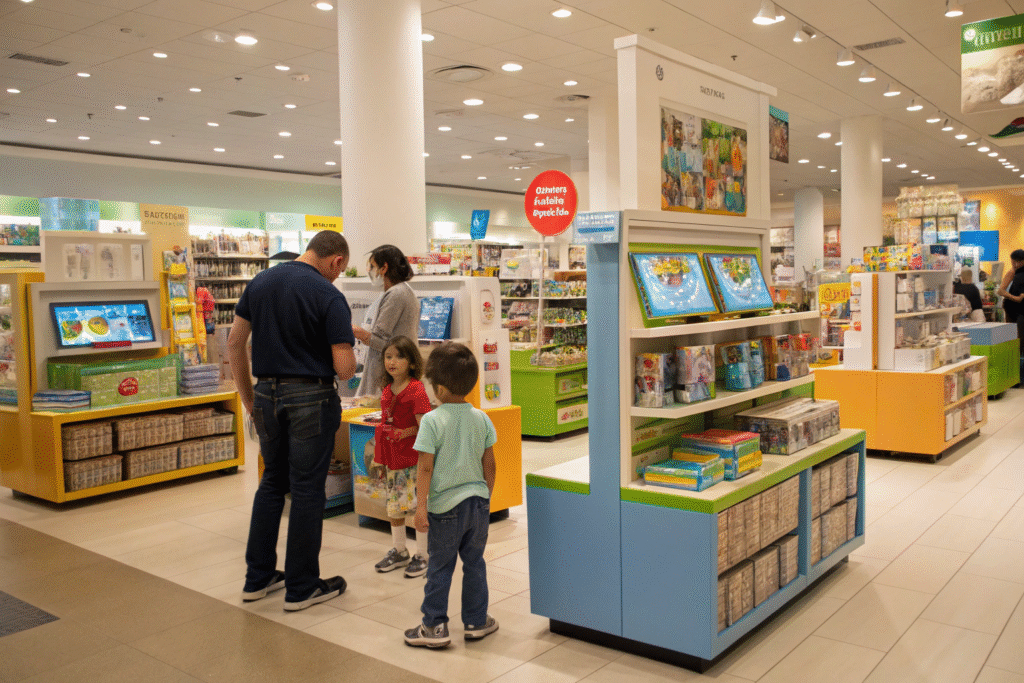
Displaying merchandise at various heights accommodates both children's and adults' visual perspectives and physical reach. According to retail anthropometry research, the average sight line for a 5-year-old is approximately 3 feet, compared to 5-6 feet for adults. Strategic multi-level merchandising places colorful, character-driven items at child height to spark interest, while practical information and premium items remain at adult eye level. This approach increases engagement from both audiences while reducing frustration from children unable to see or reach items that catch their interest. Stores that implement thoughtful vertical merchandising typically see 25-40% longer dwell times from families.
How Do Interactive Elements Enhance the Shopping Experience?
Interactive displays transform shopping from a chore into an engaging activity for children, reducing family stress and increasing purchase likelihood. Simple interactions might include touchable texture samples, magnetic outfit-building boards, or digital screens showing clothing in use. The National Retail Federation reports that stores incorporating interactive elements see 30% higher conversion rates on children's products. These engagements keep children occupied while parents shop, reducing the "hurry up" pressure that often shortens shopping trips. The most effective interactive elements relate directly to the merchandise, such as allowing children to mix and match separates or see themselves in virtual outfits.
What Organization Systems Improve the Shopping Experience?
Clear, intuitive organization reduces decision fatigue for parents while helping children develop shopping skills and independence within a structured environment.
Parents shopping for children's clothing typically operate under time constraints and may be purchasing for multiple children of different ages and sizes. Effective organization systems minimize search time while making size progression and coordination obvious. Meanwhile, children benefit from clear categories that help them understand where to find items that match their interests and fit their bodies.

Why Is Size-Specific Merchandising Critical?
Organizing displays by size rather than solely by collection or style dramatically improves the shopping experience for time-pressed parents. Research from the Retail Consumer Experience Association shows that 68% of parents cite difficulty finding correct sizes as their primary frustration when shopping for children's clothing. Clear size signage, color-coded size labels, and dedicated sections for each age group prevent the frustration of finding a desired item only to discover it's not available in the needed size. Some successful retailers even provide measuring stations where children can check their height against size charts, turning a practical necessity into an engaging activity.
How Does Category-Based Organization Aid Navigation?
Grouping items by category (playwear, dressy, outerwear) rather than mixing all types together helps parents shop efficiently for specific needs. Within categories, further organization by color or collection creates visual coherence that simplifies decision-making. According to visual merchandising studies, stores with clear category organization achieve 35% faster shopping trips with equivalent basket sizes. For children, category-based displays help them understand clothing purposes and appropriate contexts for different items, supporting their developing understanding of social norms and practical dressing.
How Can Visual Storytelling Increase Engagement?
Themed displays that tell stories or create imaginative scenarios help children form emotional connections with merchandise while providing parents with styling inspiration.
Children respond strongly to narrative and fantasy, making storytelling displays particularly effective in kids retail. When merchandise is presented within a compelling visual story—whether seasonal, character-based, or activity-focused—children are more likely to engage imaginatively with the clothing and request specific items. Meanwhile, parents appreciate seeing complete outfits and understanding how pieces work together.

What Role Do Seasonal Themes Play in Display Strategy?
Seasonal displays create natural refresh cycles that encourage repeat visits while addressing practical parenting needs. Back-to-school, holiday, and summer collections each present opportunities for themed environments that showcase appropriate merchandise while creating excitement. The International Council of Shopping Centers reports that seasonal displays can increase sales of featured items by 50-75% compared to basic presentation. For children, seasonal themes connect clothing to anticipated events and activities, making items feel more relevant and desirable. Successful stores often extend themes beyond merchandise to include window displays, signage, and in-store activities that create immersive experiences.
How Do Lifestyle Displays Provide Styling Inspiration?
Showing complete outfits in context helps parents visualize how items will work in their children's lives while demonstrating the brand's styling philosophy. Lifestyle displays might show school outfits complete with backpacks, play clothes with relevant toys, or special occasion looks with accessory suggestions. According to retail merchandising research, stores that showcase complete outfits rather than individual items achieve 25% higher units per transaction. For time-pressed parents who may lack confidence putting together children's outfits, these curated suggestions simplify decision-making while encouraging multiple item purchases.
What Practical Considerations Ensure Display Effectiveness?
Beyond aesthetics, successful kids clothing displays must address practical concerns like durability, safety, and flexibility to withstand the unique challenges of family shopping.
Children's retail environments experience more physical interaction, accidental damage, and safety concerns than adult-focused stores. Displays must be sturdy enough to withstand curious hands, safe with no sharp edges or tipping hazards, and easily reconfigured for changing merchandise or store layouts. These practical considerations ensure displays remain effective and safe through daily use.

Why Must Durability Be a Primary Display Consideration?
Children naturally touch, lean on, and sometimes climb displays, requiring construction that withstands more physical interaction than adult retail environments. Materials should be easy to clean, resistant to scuffs and stains, and stable enough not to tip when leaned upon. The Store Fixture Manufacturers Association recommends that children's retail displays undergo stability testing at 150% of expected load. Additionally, fixtures should have rounded edges, secure mounting, and no small detachable parts that could pose choking hazards. Investing in durable displays reduces long-term replacement costs while maintaining a professional appearance despite heavy use.
How Does Display Flexibility Support Merchandising Agility?
Modular display systems allow retailers to quickly reconfigure spaces for new collections, seasonal changes, or special promotions without significant downtime or expense. Flexible systems might include adjustable shelving, movable walls, or interchangeable signage components. According to retail operations research, stores with flexible displays can implement new merchandising strategies 60% faster than those with fixed installations. This agility is particularly valuable in children's wear, where inventory turns quickly and seasonal changes require complete visual transformations several times per year.
Conclusion
Exceptional kids clothing store displays successfully balance multiple objectives: engaging children's imaginations while supporting parents' practical needs, creating brand-enhancing aesthetics while withstanding physical use, and telling compelling stories while maintaining clear organization. The most effective displays recognize that children and parents shop as a team with different priorities and behaviors, creating environments that serve both audiences simultaneously.
When displays successfully transform shopping from a chore into an enjoyable experience, they build brand loyalty that extends far beyond single purchases. If you're designing retail displays for children's clothing and need manufacturing partners who understand how to create products that work within these specialized environments, contact our Business Director, Elaine, at elaine@fumaoclothing.com. Let's discuss how we can help you create displays that not only showcase your clothing effectively but also enhance the overall shopping experience for families.