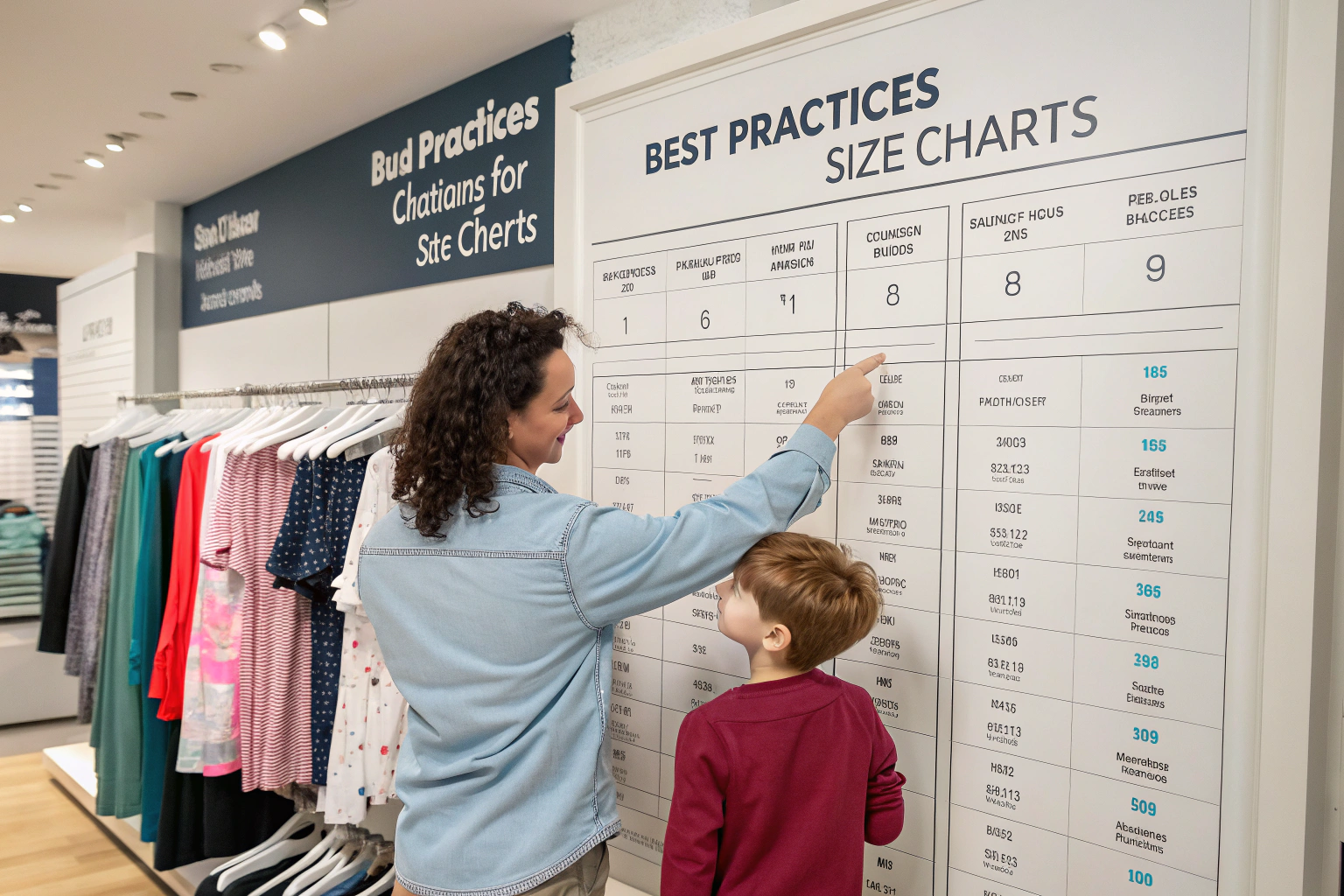
Creating accurate and user-friendly size charts represents one of the most critical yet challenging aspects of children's wear e-commerce and retail. As a manufacturer working with American and European brands, I've seen how size chart effectiveness directly impacts conversion rates, return rates, and customer satisfaction. The best approaches combine anthropometric data, clear communication, and practical fitting guidance that helps parents select the right size with confidence.
The most effective kids clothing size charts incorporate age ranges as reference only, provide detailed body measurements, include fit-specific guidance, account for growth, and offer practical fitting advice that addresses common parental concerns. These elements work together to reduce sizing uncertainty and prevent the costly returns that plague children's wear retailers.
Despite the availability of standardized sizing systems, the reality is that children's bodies vary dramatically within age categories, making comprehensive size charts essential for bridging the gap between statistical averages and individual children.
Why Should Age Ranges Be Reference Only?
Using age ranges as primary sizing indicators represents the most common mistake in children's size charts, often leading to poor fit and customer frustration when children don't conform to standardized growth expectations.
Age-based sizing provides helpful context but fails as a primary sizing method because children's growth patterns, body proportions, and height-weight distributions vary significantly within any age group.
How Much Do Children Vary Within Age Groups?
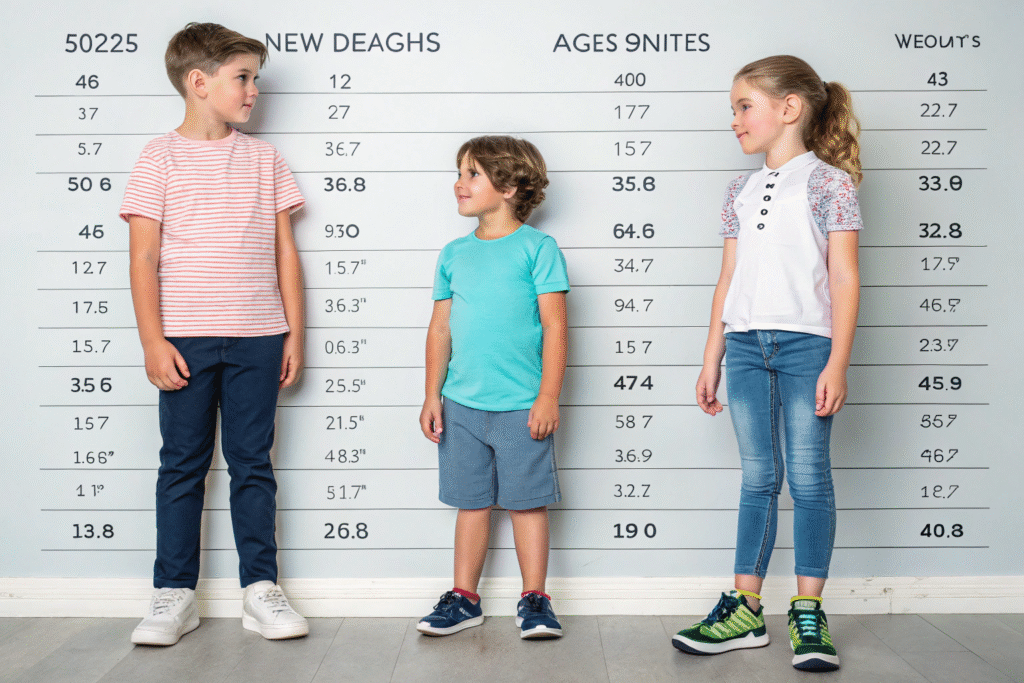
Research from the CDC Growth Charts shows that within any six-month age range, children's heights can vary by up to 6 inches and weights by 15 pounds while still falling within normal growth parameters. This natural variation means that two healthy 4-year-olds might require completely different clothing sizes despite being the same age. Brands that acknowledge this reality in their sizing approach build trust through realistic expectations.
What Role Should Age Play in Size Charts?
Age serves best as a secondary reference point after body measurements, providing context for parents who may not know their child's exact measurements but understand general age-appropriate sizing. The most effective size charts position age as "typically fits" rather than "fits exactly," acknowledging that individual variation is normal rather than exceptional. This approach reduces frustration when children don't match age-based expectations.
What Body Measurements Are Essential?
Comprehensive body measurements form the foundation of effective size charts, providing the objective data parents need to compare against their child's actual proportions.
The most helpful measurement charts include both vertical and horizontal dimensions that reflect how clothing actually fits on active, three-dimensional children rather than just basic height and weight.

Which Key Measurements Prevent Fit Issues?
Beyond basic height and weight, essential measurements include chest/bust circumference, waist circumference, hip circumference, and inseam length. For specific garments, additional measurements like neck opening, sleeve length, and rise provide crucial fitting information. At Fumao, we provide brands with detailed measurement specifications based on anthropometric research, ensuring their size charts reflect how children's clothing actually fits rather than just statistical averages.
How Should Measurement Instructions Be Presented?
Clear visual guides showing where and how to measure prevent confusion and ensure consistent measurement techniques. Diagrams should show measuring tape placement for each dimension, with specific instructions like "measure around the fullest part of the chest" or "measure from shoulder to desired sleeve length." These details significantly improve measurement accuracy and subsequent size selection success.
How Can Fit-Specific Guidance Reduce Returns?
Different garment types and styles fit differently even within the same size category, making style-specific fitting guidance essential for accurate size selection.
Providing fit characteristics for different silhouettes, fabric stretches, and design intentions helps parents understand how specific garments will fit their child's unique body shape.

Why Do Different Styles Require Different Sizing?
A slim-fit jean, regular-fit pant, and athletic-fit legging all fit differently even with identical waist and inseam measurements. The most effective size charts provide specific guidance for each style, such as "this style runs slim—consider sizing up for comfortable fit" or "this design has generous ease for layering." This specificity prevents the frustration of receiving properly sized clothing that doesn't match fit expectations. According to Apparel Fit Research, style-specific sizing guidance can reduce returns by up to 35% in children's wear.
How Should Stretch and Ease Be Communicated?
Fabric stretch percentage and design ease (the amount of extra room built into a garment) significantly impact fit but are rarely communicated effectively. Quantifying these elements—"this style has 25% stretch and 2 inches of ease at chest"—provides concrete information for size decisions. This approach is particularly valuable for parents of children with non-average proportions who need to understand how garments will actually fit beyond basic measurements.
What Growth Considerations Should Be Addressed?
Children's clothing must accommodate growth between purchases, making growth guidance an essential element of effective size charts that acknowledges the practical reality of childhood clothing purchases.
Providing guidance on how much growth room to expect in different garment types helps parents balance current fit with future wearability.

How Much Growth Room Do Different Garments Allow?
Pants with adjustable waists, dresses with generous hem allowances, and tops with roomy cut typically accommodate more growth than fitted styles. Quantifying this accommodation—"this style typically accommodates 3-4 months of growth" or "consider sizing up for extended wear"—provides practical guidance for purchase decisions. This approach acknowledges that children's clothing serves both immediate and future needs simultaneously.
When Should Parents Size Up?
Guidance on when to consider sizing up for growth versus selecting exact sizing for specific occasions helps parents make strategic decisions. Generally, play clothes and everyday wear benefit from growth room, while special occasion outfits and outerwear typically work better with precise fitting. The Children's Wear Guidance Institute recommends clear communication about which garments are designed with growth accommodation versus those intended for precise fitting.
How Can Practical Fitting Advice Enhance Size Charts?
Beyond measurements and dimensions, practical fitting tips that address common challenges significantly improve size selection success and customer satisfaction.
Real-world fitting advice acknowledges that children's clothing must function on active, moving bodies rather than static mannequins.
What Movement Considerations Matter?
Clothing must fit not just when standing straight but during running, sitting, climbing, and stretching. Guidance should address functional fit aspects like "ensure 2 inches of ease across shoulders for full movement" or "check that rise length allows comfortable sitting." This practical approach prevents technically correct sizing that fails in real-world use. Our fitting guidelines include mobility testing protocols that ensure garments accommodate children's natural movement patterns.
How Can Common Fit Problems Be Prevented?
Addressing frequent fit issues like sleeve length that's too short when arms are extended, pants that become high-waters when sitting, or neck openings that choke when turning head can dramatically improve customer satisfaction. Proactively providing solutions to these common problems—"if your child is between sizes, select based on sleeve length rather than chest measurement"—demonstrates understanding of real-world wearing experiences.
Conclusion
Effective kids clothing size charts bridge the gap between standardized sizing and individual children's unique proportions by providing comprehensive measurements, style-specific guidance, growth considerations, and practical fitting advice. The most successful approaches acknowledge that children vary dramatically within age categories and that clothing must function on active, growing bodies rather than just meeting statistical averages.
At Shanghai Fumao Clothing, we provide our brand partners with detailed size chart templates and fitting guidance based on our extensive experience manufacturing children's wear for American and European markets. If you're looking to improve your size chart effectiveness and reduce returns, contact our Business Director Elaine at elaine@fumaoclothing.com to discuss how our sizing expertise can support your e-commerce success and customer satisfaction goals.