
In the overcrowded and noisy children’s wear market, a clear and compelling brand position isn’t just a marketing exercise—it’s the fundamental blueprint for survival and growth. Positioning is the art of carving out a distinct, ownable space in the mind of your ideal customer. It’s not just what you sell, but who you are for and why you matter in their lives. As a manufacturer who has witnessed countless brand journeys, I can definitively say that those with a razor-sharp position outlast and outperform those competing on price or generic cuteness alone.
The best practices for kids clothing brand positioning involve deeply understanding a specific niche customer, articulating a unique value proposition that solves their real problems, building a cohesive brand personality and visual world, consistently communicating across all touchpoints, and aligning your entire operation—from product design to customer service—to deliver on that singular promise.
Positioning is the strategic foundation upon which every other business decision is built. Let’s explore the actionable steps to define and own your unique place in the market.
How to Identify and Deeply Understand Your Niche Audience?
Trying to be for "everyone" is the fastest path to being for "no one." Effective positioning starts with ruthless focus on a specific segment of the market. This isn’t about limiting your potential; it’s about creating intense relevance for the customers most likely to love you.
Go beyond basic demographics (age, income). Build a detailed psychographic profile: What are their values? What are their pain points? Where do they shop? What media do they consume? What do they aspire to for their children? This deep understanding allows you to speak directly to their hearts and minds, not just their wallets.

What Are the Most Viable Niche Segments in Today’s Market?
The market has fragmented into clear, passionate niches. High-potential segments include:
- The Sustainable & Ethical Parent: Prioritizes GOTS organic materials, transparent supply chains, and circularity.
- The Sensory-Aware Parent: Seeks ultra-soft, tagless, seam-free clothing for sensitive children or those with neurodiversities.
- The Style-Conscious "Mini-Me" Parent: Values high-fashion aesthetics, boutique brands, and curated, Instagram-worthy outfits.
- The Practical & Value-Driven Parent: Focuses on durability, multifunctionality, and cost-per-wear (e.g., high-quality basics that last through siblings).
- The Nostalgic or Heritage-Seeking Parent: Drawn to classic styles, heirloom-quality construction, and traditional motifs.
Your brand can dominate one of these or find a unique intersection (e.g., sustainable style for the sensory-sensitive child).
How to Create a Detailed Customer Avatar for Precision Targeting?
Give your ideal customer a name and a story. For example, "Eco-Conscious Emma":
- Demographics: 34, urban, dual-income, first-time mom to a 2-year-old.
- Values: Environmental stewardship, social justice, mindful consumption.
- Pain Points: Overwhelmed by "greenwashing," frustrated with fast fashion quality, wants clothing that is safe and soft.
- Media Diet: Follows specific eco-influencers, listens to parenting podcasts, reads Goop or Mindful.
- Aspirations: To build a minimalist, high-quality capsule wardrobe for her child that aligns with her family’s values.
This avatar becomes your litmus test for every decision—from product design to Instagram caption. Tools like Make My Persona by HubSpot can help structure this.
How to Craft a Unique and Compelling Value Proposition (UVP)?
Your UVP is a clear, single sentence that states the unique benefit you offer, to whom, and how you solve their problem better than anyone else. It’s the core of your positioning and should be unmistakable in everything you do.
A strong UVP for a kids’ brand goes beyond "we sell cute clothes." It might be: "We create scientifically designed, sensory-friendly clothing that allows children with autism to dress independently and feel comfortable all day long." Or: "We offer timeless, heirloom-quality knitwear for children, handmade from ethically sourced wool, designed to be passed down for generations."

How to Differentiate in a Market Full of "Cute" and "Comfortable"?
"Quality," "cute," and "comfortable" are table stakes. Differentiation must be specific and ownable. Ask:
- What is our unfair advantage? Is it a proprietary fabric? A patented design feature? An unparalleled manufacturing access?
- What emotional need do we fulfill? Is it peace of mind for an anxious parent? The joy of self-expression for a creative child?
- What is our "only" statement? "We are the only kids’ brand that…" (e.g., "…uses 100% traceable, regenerative merino wool.").
Your UVP should be so clear that if a competitor tried to claim it, your customers would call them out for copying. This is the essence of strategic positioning.
Why is a "Problem-First" Approach More Powerful Than a "Product-First" One?
Lead with the customer’s struggle, not your solution. Instead of "Our dresses are made from organic cotton," say "Tired of worrying about harsh chemicals against your baby’s skin? Our dresses are certified 100% GOTS organic cotton, so you can trust what touches them from day one." This framing immediately creates relevance and empathy. It shows you understand their world, making your product the welcomed answer. This is a core principle of value proposition design.
How to Build a Cohesive Brand Personality and Visual Identity?
Your brand’s personality is how it speaks, feels, and behaves. Is it a wise, gentle caretaker? A playful, imaginative friend? A cool, minimalist mentor? This personality must be expressed consistently through every visual and verbal element to build recognition and trust.
This encompasses your brand name, logo, color palette, typography, photography style, tone of voice (in copywriting), and even your packaging and unboxing experience. Every element should be a deliberate reflection of your core position and resonate deeply with your niche audience.

How to Develop a Visual Identity That Communicates Your Position Instantly?
Your visual identity is a silent salesman. A sustainable, earthy brand might use muted natural tones (sage, clay, cream), raw textures, and documentary-style photography. A luxury, fashion-forward brand might use a crisp serif font, a minimalist black-and-white palette, and highly stylized editorial shoots. A playful, imaginative brand might use bold primary colors, hand-drawn illustrations, and dynamic, joyful action shots. The key is consistency. Use tools like Canva Brand Kit to enforce your visual guidelines across all creators and platforms.
What Role Does "Brand Voice" Play in Connecting with Your Niche?
Your brand voice is the personality expressed in words. If your avatar is "Eco-Conscious Emma," a preachy or overly technical voice will alienate her. An informed, empowering, and collaborative voice will connect. If your target is a "Style-Conscious Dad," a witty, knowledgeable, and slightly irreverent tone might work. Document your voice guidelines: "We are [Adjective 1], [Adjective 2], but never [Adjective 3]." (e.g., "We are empowering, warm, and transparent, but never judgmental or alarmist."). This ensures every email, social post, and product description builds the same relationship.
How to Ensure Operational Alignment with Your Brand Promise?
The most beautiful positioning crumbles if your operations don’t deliver. Your brand promise must be embedded in your product development, sourcing, manufacturing, customer service, and even your return policy. This integrity is what turns first-time buyers into loyal advocates.
If you promise sustainability, your packaging must be plastic-free. If you promise premium quality, your customer service must be exceptional and your seams must be flawless. If you promise inclusivity, your size range and marketing imagery must reflect that. Any disconnect is a brand liability.

How Does Your Choice of Manufacturer Become a Core Part of Your Positioning?
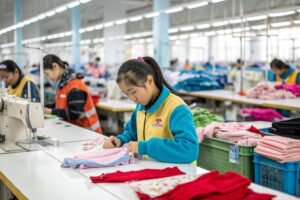
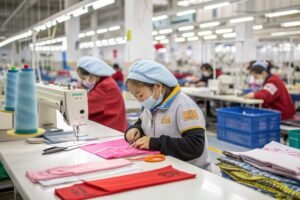
Your manufacturer is your biggest operational partner. Their capabilities and ethics directly enable or undermine your position. A brand positioning on "radical transparency" must partner with a factory open to audits and sharing its supply chain. A brand built on "technical performance" needs a manufacturer with expertise in activewear fabrics and construction. A brand centered on "artisanal craftsmanship" needs a facility skilled in small-batch, detailed work. As your manufacturer, we at Fumao don’t just make clothes; we become the operational engine of your brand promise, a fact you can confidently share with your customers.
Why Must Customer Experience Be Designed to Reinforce Your Position?
The post-purchase experience is a critical branding moment. For a luxury positioning, this might mean silk-lined gift boxes, handwritten notes, and VIP early access. For a community-focused positioning, it might mean inviting customers to a private Facebook group or featuring their photos prominently. For a practical, problem-solving positioning, it could mean an incredibly easy, no-questions-asked return policy and detailed size guides. Each touchpoint is an opportunity to say, "We are exactly who we promised to be." This is the discipline of customer experience (CX) design.
How to Communicate and Evolve Your Position Over Time?
Positioning is not a "set it and forget it" task. It requires consistent communication across all channels and the agility to evolve as your customer and the market change—without losing your core essence.
This involves a disciplined content marketing strategy that reinforces your key messages, strategic partnerships and collaborations with aligned brands or influencers, and a commitment to listening to customer feedback to refine your offering while staying true to your north star.

What is a Content Strategy That Reinforces, Rather Than Dilutes, Position?
Every piece of content should be a brick in your brand’s house. If you’re a science-backed sensory brand, your blog should feature articles by occupational therapists, deep dives on fabric technology, and real parent testimonials about behavioral changes. If you’re a heritage adventure brand, your Instagram should tell stories of craftsmanship, showcase garments in rugged natural settings, and share tales of exploration. Avoid chasing generic viral trends that don’t align; it confuses your audience. This strategic focus is key to building a content moat.
How to Know When to Pivot Your Positioning vs. Staying the Course?
Evolution is necessary; a complete pivot is risky. Monitor key signals: Are your core customers aging out and not being replaced? Are new competitors directly solving your UVP better? Has a fundamental customer need shifted (e.g., the pandemic accelerating demand for comfort)? Use data from Google Analytics and direct customer surveys. A pivot might mean expanding your product line to serve your avatar as their child grows (e.g., from babywear to toddler playwear). A complete repositioning should only happen if your original niche has fundamentally dissolved. The goal is evolution within your framework, not reactionary jumping to a new trend.
Conclusion
Masterful brand positioning in the kids’ clothing market is the deliberate, holistic process of choosing who to serve, defining how you will serve them uniquely, and then aligning every fiber of your business to deliver on that promise with unwavering consistency. It transforms your brand from a commodity into a cherished, trusted partner in the journey of parenting. It’s what allows you to command loyalty and price premiums, and ultimately, to build a business with lasting meaning and value.
At Fumao Clothing, we succeed when our partner brands succeed. We act as a strategic extension of your team, ensuring our manufacturing capabilities, quality standards, and ethical practices are perfectly aligned to bring your distinct brand position to life in every stitch. If you have a clear vision for a brand that stands for something, let’s build it with intention. Contact our Business Director, Elaine, at elaine@fumaoclothing.com to begin a partnership rooted in strategic clarity.