
Accurate inventory forecasting has become a cornerstone of efficient supply chain management. Poor estimates often lead to overstocks, stockouts, or rising storage costs, all of which erode profit margins. In the apparel sector—particularly children’s and babywear, where seasonality and size variations strongly affect sales—precision in forecasting directly determines financial performance and customer satisfaction.
The leading approaches for forecasting include time-series modeling, demand sensing, machine learning applications, and collaborative planning across supply networks. Each method addresses different industry conditions, depending on data quality, market volatility, and product complexity.
How does time-series modeling support demand prediction?
Time-series models remain the backbone of many forecasting systems.

What is the principle behind it?
Historical sales patterns are analyzed to project future demand. Approaches such as moving averages, exponential smoothing, and ARIMA models reveal seasonality, long-term growth, and cyclical trends.
Why is this effective in fashion?
Children’s clothing follows predictable cycles, with sharp increases during holiday seasons and back-to-school months. As explained by Investopedia, time-series models are highly effective when regular and recurring patterns exist, making them suitable for apparel with established seasonal shifts.
What advantages does demand sensing bring?
Demand sensing helps reduce the gap between consumer purchases and supply chain responses.
How is it applied?
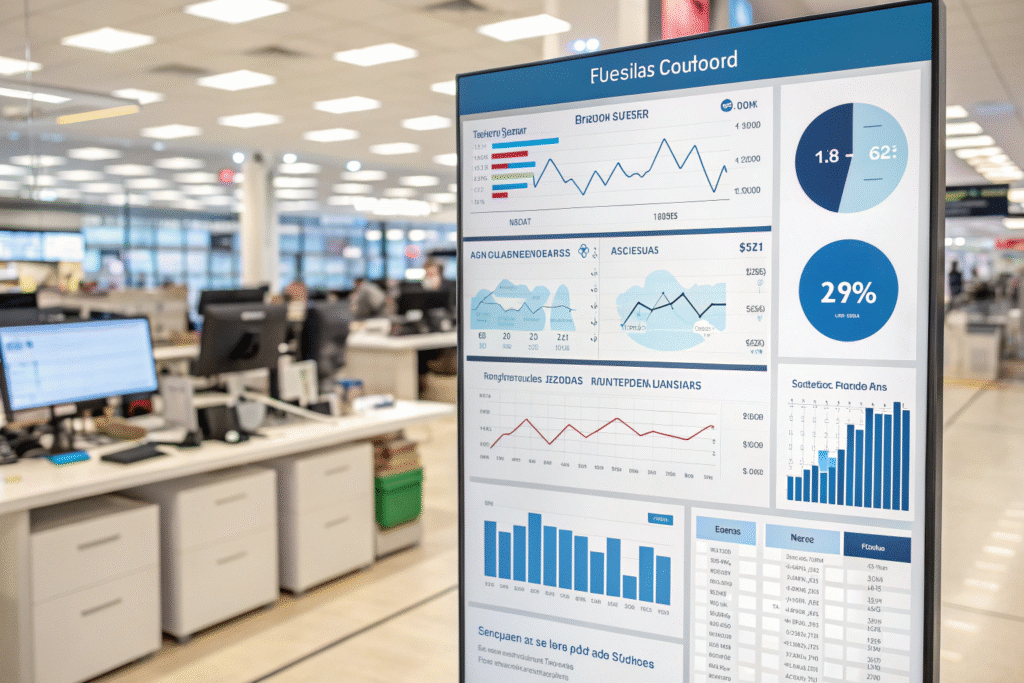
This technique leverages near real-time inputs, such as point-of-sale transactions, promotional activities, weather forecasts, and even social media trends, to update forecasts.
Why is it increasingly relevant?
Supply Chain Dive reports that demand sensing can lower forecasting errors by 30–40% when compared with traditional models. In apparel, where sudden changes in fashion trends are common, this responsiveness helps align production with current market realities.
In what ways does machine learning enhance accuracy?
Artificial intelligence adds predictive power by uncovering relationships that simple models cannot detect.

How is it used?
Machine learning integrates multiple datasets, such as sales history, marketing activities, demographic data, and supply disruptions. Algorithms including neural networks, gradient boosting, and random forests refine themselves continuously to produce more precise outcomes.
What are the strengths?
Research published by MIT Sloan shows that AI-based models offer greater accuracy in markets with complex, fast-changing demand. For children’s apparel, machine learning can incorporate factors such as growing demand for sustainable fabrics, size variations, and the influence of social media on parent preferences.
How does collaborative planning improve forecasting?
Joint planning ensures all stakeholders work from consistent information.

What is included in this approach?
Often referred to as Collaborative Planning, Forecasting, and Replenishment (CPFR), it combines data from retailers, distributors, manufacturers, and suppliers into a shared platform.
Why does it provide value?
According to APICS, CPFR reduces inventory costs by 10–20% while improving product availability. In children’s fashion, where delays can lead to missed seasonal sales, aligning projections across the chain helps ensure timely replenishment and minimize markdowns.
Conclusion
Effective inventory management requires the integration of several approaches. Time-series models work well when patterns are stable, demand sensing enhances responsiveness, machine learning adds predictive sophistication, and collaborative planning promotes alignment across supply networks. Together, these methods create a robust system that reduces risk and improves profitability.
At Shanghai Fumao, we combine forecasting technologies with hands-on industry knowledge to secure efficient apparel production cycles. Our practices help clients maintain optimal inventory levels and timely deliveries. For cooperation in children’s wear sourcing, please contact our Business Director Elaine at elaine@fumaoclothing.com.