
As temperatures drop, parents face the annual challenge of keeping their children warm, dry, and comfortable during winter activities. The right materials can make the difference between children enjoying outdoor winter fun and begging to go inside because they're cold, wet, or restricted by bulky clothing. Understanding which fabrics perform best in cold conditions helps parents make informed choices that balance warmth, mobility, and practicality.
The best materials for kids clothing in cold weather include wool for superior insulation, technical synthetics for active warmth, down and synthetic fills for extreme cold, and strategic layering combinations that manage moisture while trapping heat. These materials work together to create a system that maintains comfortable body temperatures across varying activity levels and weather conditions.
Selecting winter clothing involves more than just choosing the warmest-looking options. The most effective materials manage moisture, allow freedom of movement, and provide reliable performance when children transition between active play and stationary moments. Let's explore the specific materials that deliver optimal cold-weather performance for children's unique needs.
Why is wool considered a superior natural insulator?
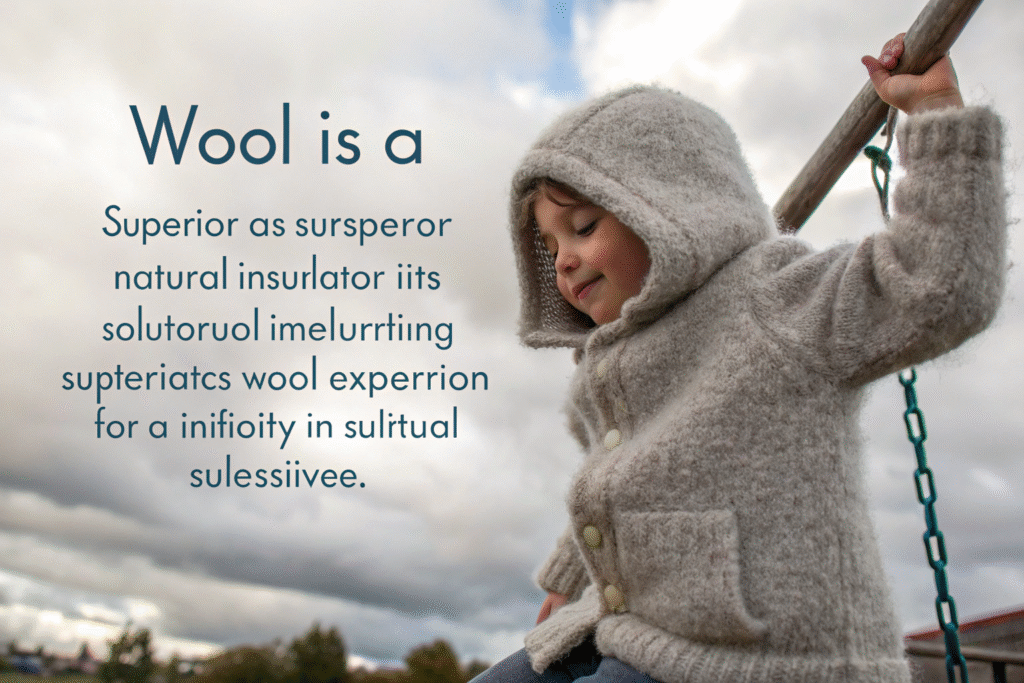
Wool stands as one of nature's most remarkable insulating materials, offering unique properties that synthetic fabrics struggle to replicate completely. Its natural structure creates tiny air pockets that trap warmth while managing moisture in ways that keep children comfortable across changing activity levels and temperatures.
Wool is considered a superior natural insulator because it provides exceptional warmth-to-weight ratio, maintains insulating properties when wet, naturally wicks moisture away from the skin, and resists odor-causing bacteria. These characteristics make it particularly valuable for children who experience dramatic temperature fluctuations between active play and rest periods.
 )
)
What types of wool work best for children's clothing?
Merino wool represents the gold standard for children's wear due to its exceptionally fine fibers that feel soft against sensitive skin without itching. Unlike traditional wool, merino wool contains lanolin that naturally repels water while allowing the fabric to breathe. For heavier insulation, wool blends that combine merino with synthetic fibers provide enhanced durability for active play while maintaining wool's natural temperature-regulating benefits. These blends often offer better value while delivering performance that pure synthetics cannot match.
How does wool's moisture management protect against chilling?
Wool can absorb up to 30% of its weight in moisture without feeling wet, pulling perspiration away from skin where evaporation can cause dangerous chilling. This moisture-wicking capability is crucial for active children who may not recognize when they're sweating excessively before slowing down. As children transition from running and playing to standing still or riding in strollers, wool's gradual moisture release prevents the rapid cooling that occurs with sweat-soaked synthetic layers, maintaining a consistent thermal barrier that adapts to changing activity levels.
How do technical synthetics provide active warmth?
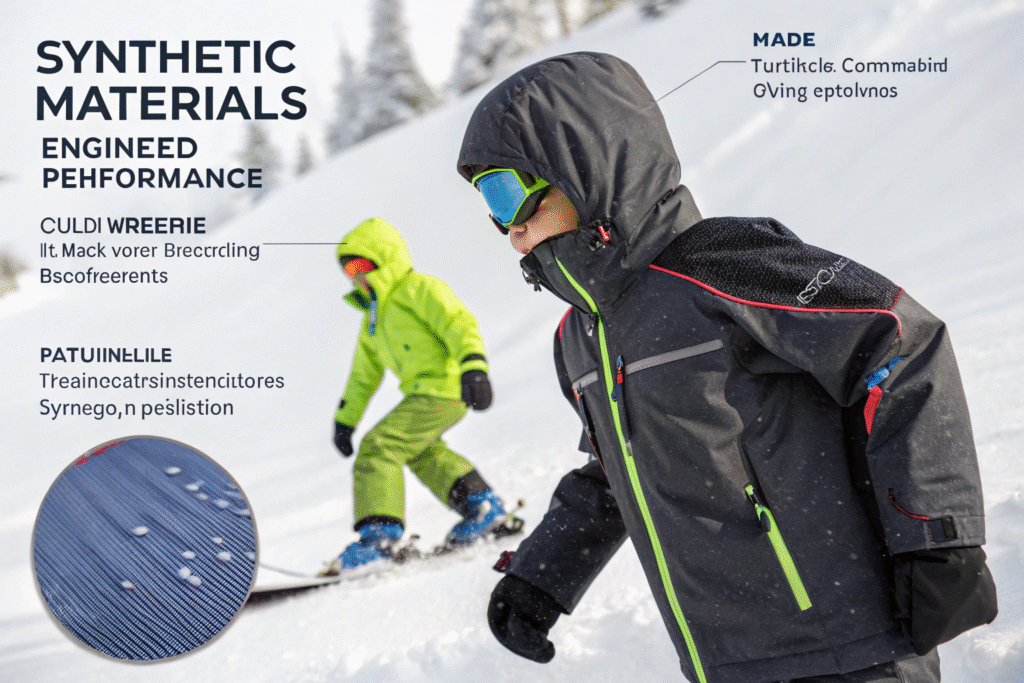
Synthetic materials engineered specifically for cold weather performance offer reliable solutions for high-energy activities where moisture management becomes as important as insulation. These fabrics combine scientific fiber engineering with practical design to create clothing that supports winter adventures.
Technical synthetics provide active warmth through hydrophobic properties that repel water, breathable constructions that release perspiration, quick-drying capabilities that prevent moisture buildup, and consistent insulation regardless of humidity conditions. These features make them ideal for snowy play, winter sports, and situations where children will be actively generating body heat.
What synthetic materials excel in wet cold conditions?
Polyester fleece remains a standout for mid-layer insulation due to its excellent warmth-to-weight ratio, stretch recovery, and rapid drying time. For outer layers, nylon and polyester fabrics with DWR (Durable Water Repellent) coatings provide protection against snow and light precipitation while maintaining breathability. Advanced synthetic insulations like PrimaLoft and Thinsulate offer lightweight warmth that mimics down's loft while maintaining performance when wet, making them superior choices for damp winter conditions where traditional down would clump and lose insulating power.
How do moisture-wicking synthetics prevent hypothermia risk?
By moving perspiration quickly away from the skin to the fabric's outer surface where it can evaporate, technical synthetics prevent the moisture buildup that leads to rapid heat loss. This moisture transport is particularly important for children who may not verbalize when they're becoming cold and wet. Synthetic base layers worn next to skin create a dry microclimate that maintains warmth even during high-output activities like sledding or snowball fights, then continue to protect during cooler rest periods when damp clothing could become dangerous.
What role do down and synthetic fills play in extreme cold?
When temperatures drop significantly or children will be relatively stationary, insulated jackets with specialized fills provide necessary protection that thinner layers cannot match. Understanding the differences between natural and synthetic insulation helps parents choose the right option for specific winter scenarios.
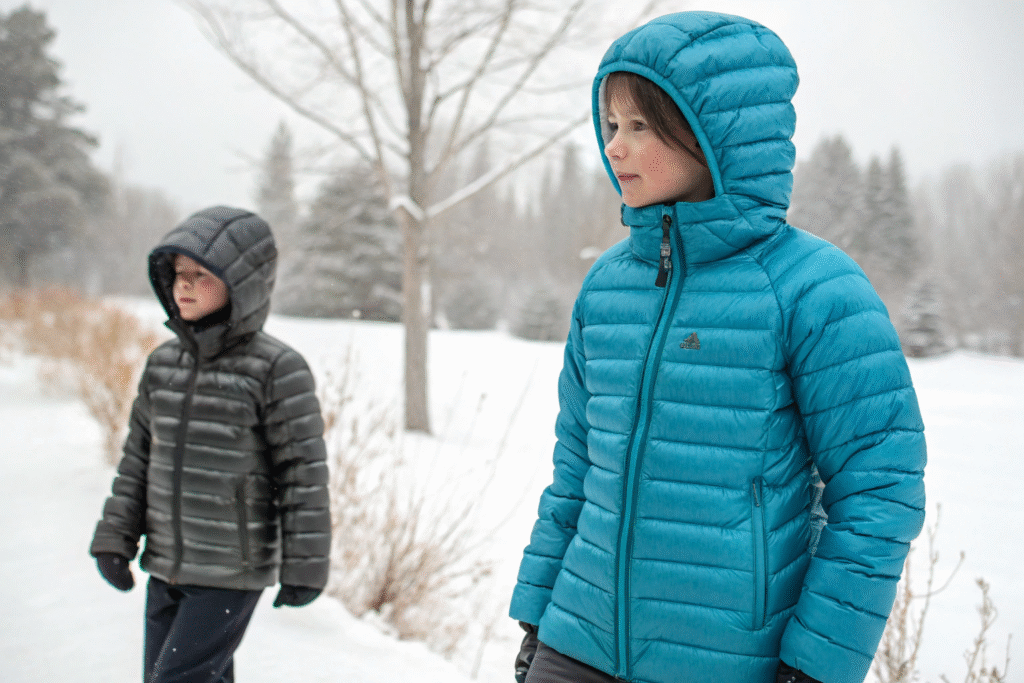
Down and synthetic fills provide crucial protection in extreme cold through lofting properties that trap body heat, compressibility that allows layering under outer shells, and specialized construction that minimizes heat loss in freezing conditions. These materials create the thermal barrier needed for prolonged exposure to cold temperatures.
When does down insulation outperform synthetic options?
High-quality down with fill power ratings of 600-800 provides exceptional warmth for its weight, making it ideal for situations where children need maximum insulation without restrictive bulk. Down's superior compressibility allows for easier layering under waterproof shells and more comfortable car seat use. However, down performs best in dry cold conditions, as it loses insulating properties when wet. For children who will primarily experience cold dry weather or whose outer layers reliably protect against moisture, down offers unmatched warmth for stationary activities like waiting for buses or watching winter sports events.
What synthetic insulation advantages matter for children?
Synthetic insulations like PrimaLoft Gold and ThermoBall provide consistent warmth even when damp from snow, perspiration, or accidental spills. This moisture resistance makes them more forgiving for everyday winter wear where complete dryness cannot be guaranteed. Synthetic fills also dry faster, maintain loft after compression (important for storage between wears), and typically cost less than equivalent down products. For active children in variable winter conditions, these practical advantages often outweigh down's theoretical warmth superiority.
How does strategic layering maximize material benefits?
No single material provides perfect cold-weather performance across all scenarios. The most effective approach combines different materials in a layering system that can be adjusted as conditions change, creating versatility that single heavy layers cannot match.
Strategic layering maximizes material benefits by combining moisture-wicking base layers, insulating mid-layers, and protective outer layers that work together to maintain thermal regulation across varying activity levels and weather conditions. This system approach provides flexibility that single heavy garments cannot match.

What base layer materials work with children's sensitive skin?
For direct skin contact, merino wool and technical synthetics like polyester or polypropylene provide effective moisture management without irritation. Bamboo viscose has emerged as an excellent base layer option, offering natural antibacterial properties, exceptional softness, and better moisture-wicking than cotton. Avoid cotton entirely in base layers, as it absorbs moisture and holds it against the skin, creating dangerous cooling effects. The best base layers feel comfortable against sensitive skin while reliably moving perspiration away from the body to prevent chilling.
How do mid-layer combinations enhance temperature regulation?
Combining different mid-layer materials allows for precise warmth adjustment. A thin merino wool layer under a synthetic fleece provides more versatile temperature control than a single thick layer. This modular approach enables parents to remove or add layers as children transition between activities and environments. For example, a child might wear just a base layer during active snow play, add a fleece mid-layer when walking home, then include both mid-layers while standing watching a winter parade. This flexibility prevents overheating during activity while ensuring warmth during rest periods.
What material safety considerations protect children?
Children's unique vulnerabilities require special attention to material safety beyond basic performance characteristics. From choking hazards to skin sensitivities, the safest winter materials address these concerns while delivering cold-weather protection.
Material safety considerations include flame resistance for sleepwear, non-toxic waterproofing treatments, avoidance of small detachable components, and hypoallergenic properties for sensitive skin. These factors ensure winter clothing protects without introducing new risks.
What certifications ensure material safety?
Look for OEKO-TEX Standard 100 certification that verifies textiles are free from harmful chemicals and safe for children's sensitive skin. For sleepwear, CPSC (Consumer Product Safety Commission) compliance ensures flame resistance in fabrics. Additionally, bluesign certification indicates environmentally responsible manufacturing that minimizes chemical usage. These certifications provide independent verification that materials meet rigorous safety standards beyond basic performance requirements, giving parents confidence in their winter clothing choices.
How do material choices impact car seat safety?
Bulky winter coats can prevent proper harness tightening in car seats, creating dangerous gaps between the child and restraint system. Materials that provide warmth without excessive bulk, like high-loft synthetic insulations or thin wool layers, allow for safe car seat use without compromising warmth. Some manufacturers now create specifically designed car seat coats with special seams or panels that compress under harnesses while maintaining insulation elsewhere. Understanding this interaction between material bulk and safety restraints is crucial for winter clothing selection.
Conclusion
The best materials for kids' cold-weather clothing combine technical performance with practical safety considerations. By selecting wool for its natural intelligence, synthetics for active moisture management, appropriate fills for extreme conditions, and implementing smart layering systems, parents can keep children comfortable and protected throughout winter activities. The optimal approach often combines multiple materials in a system that can be adjusted as conditions change.
Looking for children's winter clothing that combines the best materials with expert construction? Our manufacturing specializes in creating high-performance winter wear that balances warmth, safety, and comfort. Contact our Business Director, Elaine, at elaine@fumaoclothing.com to discuss our winter collection designed for real children's cold-weather adventures.