

Production delays, missed deadlines, and poor visibility into work-in-progress are some of the most common challenges apparel factories face today. In a children’s wear factory, a single late shipment can mean losing an entire selling season, which could cost tens of thousands of dollars in lost revenue and erode buyer confidence. That is why production tracking software has become an indispensable tool for manufacturers who want to maintain efficiency, accountability, and transparency.
The best production tracking software provides real-time monitoring of every stage of the process—from fabric arrival to final shipment—while generating data-driven insights that help managers make faster, smarter decisions. For exporters like us, these systems are also a powerful way to reassure international buyers that their orders are in safe hands, reducing disputes and building stronger long-term partnerships.
In this article, I will break down the essential features of modern production tracking systems, introduce the leading solutions available in 2025, and explain how they benefit children’s clothing exporters.
What features define the best production tracking software?
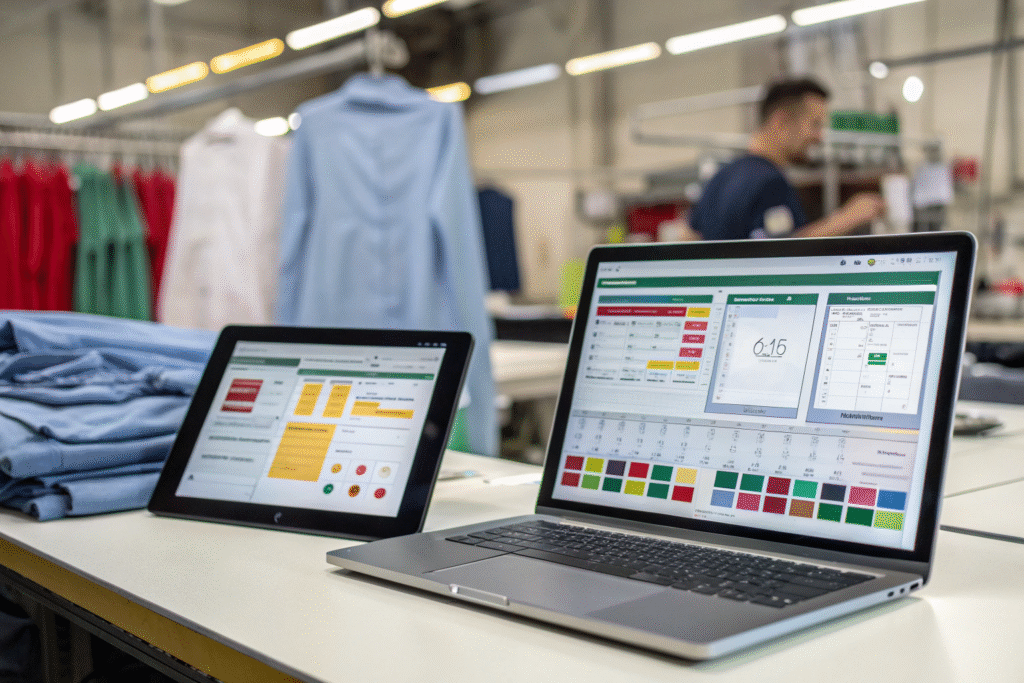
The best production tracking software is not only about recording numbers—it is about creating real-time visibility across the shop floor. For a children’s wear exporter, this level of visibility ensures production stays on schedule and prevents costly last-minute surprises.
Must-have features include:
- Real-time status tracking: A manager can instantly see whether a batch of 500 toddler hoodies is in the cutting stage, halfway through sewing, or awaiting packaging.
- Work-in-progress dashboards: Supervisors can identify bottlenecks. If sewing lines are producing 20% fewer units per hour compared to the target, the system will highlight the discrepancy so corrective action can be taken.
- Inventory and material monitoring: The system alerts staff when trims, zippers, or labels are running low. In one case, our supplier nearly caused a delay because labels weren’t delivered on time; software like this would have flagged the shortage a week earlier.
- Quality control tracking: QC inspectors can log stitching errors, color mismatches, or broken zippers directly into the system, and reports are generated instantly.
- Scheduling and capacity planning: If a last-minute U.S. order requires an additional 10,000 pieces, software can automatically reschedule shifts and reallocate machines to meet the deadline.
- Cost and labor tracking: Each garment’s exact labor cost, fabric consumption, and overhead can be calculated. This data helps during price negotiations with buyers.

Why is real-time data essential in garment production?
Real-time tracking allows managers to detect issues before they escalate. For example, if a stitching defect rate rises above 3% on Line 2, the system can instantly trigger an alert to supervisors. According to McKinsey, manufacturers using real-time monitoring improve productivity by 15–20%, while reducing waste by as much as 12%.
How does tracking software improve accountability?
Digital tracking creates a clear trail of data. If a shipment is delayed, managers can trace the exact point in production where the delay occurred, whether in cutting, sewing, or packing. A study from Apparel Resources found that factories adopting production tracking systems reduced late deliveries by 25% within six months, largely because accountability motivated staff to adhere to schedules.
What are the top production tracking software in 2025?
Several software systems stand out in 2025 for their ability to help factories of different sizes and industries manage production efficiently.
Leading solutions include:
- Katana Manufacturing ERP – Real-time inventory management, visual scheduling, and integration with e-commerce platforms make it popular for mid-sized apparel exporters. A factory producing 50,000 garments per month could use Katana to align fabric availability with daily production targets. Katana
- MRPEasy – Known for its affordability and ease of use, MRPEasy offers drag-and-drop scheduling and WIP dashboards. It’s ideal for small to medium factories with under 200 workers. MRPEasy
- Fishbowl Inventory – Excellent for inventory-heavy manufacturers. It integrates with QuickBooks and supports work order management, making it attractive for factories where component tracking is critical. Fishbowl Inventory
- Odoo Manufacturing – Highly customizable open-source ERP that covers everything from BOM to compliance tracking. For growing exporters, Odoo provides flexibility to adapt as order volumes and buyer requirements increase. Odoo
- JobBOSS – Designed for custom and make-to-order businesses, with strong job costing and resource scheduling. Useful when dealing with many small, varied orders. JobBOSS
- monday.com Work Management – Offers strong team collaboration and customizable dashboards. It’s ideal for communication and visibility across departments but may require integrations for complex ERP functions. monday.com
- Rootstock – A Salesforce-based ERP solution suitable for large enterprises. It excels in compliance-heavy industries and supports multi-site, multi-country operations. Rootstock
Which software suits small and medium factories best?
For apparel exporters with five to ten production lines, Katana and MRPEasy are the most practical options. According to Software Connect, small manufacturers that adopt cloud-based ERPs like MRPEasy reduce inventory costs by 15% within the first year.
Which systems benefit large-scale operations?
Large factories with multiple sites or high compliance requirements may prefer Rootstock or a well-configured Odoo ERP system. These platforms handle complex BOM structures, multi-site scheduling, and in-depth compliance tracking, which are essential when serving strict markets like the EU.
How can tracking software benefit children’s wear exporters?
Children’s clothing is one of the most regulated apparel categories. Buyers demand not only trendy styles but also strict adherence to safety standards and delivery schedules. Production tracking software directly supports these needs.
Key benefits include:
- Improved buyer trust: By sharing screenshots of live dashboards, exporters can prove that production is on schedule.
- Regulatory compliance: Systems can store chemical test results, OEKO-TEX® certificates, and inspection reports, making audits smoother.
- Faster buyer communication: Instead of waiting for manual updates, factories can send real-time status reports in seconds.
- Reduced waste: By flagging issues early, such as defective stitching or dye mismatches, rework is minimized.
- On-time delivery: Rescheduling tools ensure urgent orders are prioritized without jeopardizing existing commitments.

How does it help in compliance-heavy markets like Europe?
The European Union has strict standards for children’s clothing, including chemical safety and flammability tests. Production software allows compliance reports to be attached directly to each batch, ensuring that during audits, buyers can access everything from dye certifications to QC photos instantly.
How does tracking software enhance communication with buyers?
Reports generated directly from the system can detail how many units are finished, how many are in QC, and the estimated ship date. According to Work Management, factories using integrated dashboards cut communication delays with buyers by 30%, improving relationships and securing repeat orders.
What should factories consider before choosing software?
Selecting the right production tracking software depends on the scale, complexity, and growth plans of the factory.
Factors to evaluate include:
- Size of operation: A five-line children’s wear factory may thrive with Katana, while a 2,000-worker facility will require a scalable ERP like Rootstock.
- Integration needs: Check compatibility with accounting software, shipping tools, and compliance systems.
- Budget: Beyond monthly subscriptions, consider customization, training, and long-term maintenance.
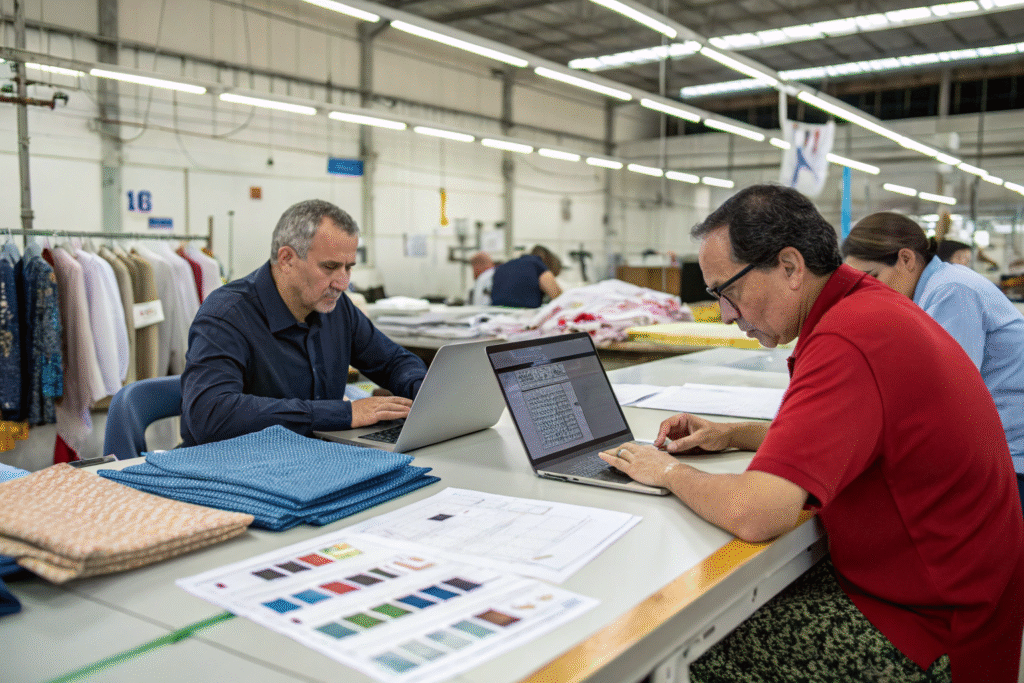
- User adoption: A system must be simple enough for floor supervisors to use daily. Mobile access and barcode scanning help adoption.
- Scalability: The chosen software should support growth into multiple sites without becoming prohibitively expensive.
What are the risks of poor software adoption?
If staff do not consistently update the system, data accuracy declines. For example, if WIP numbers are not logged correctly, managers may think production is ahead when in fact sewing is falling behind. This creates delivery risks.
How can factories test before full adoption?
The most effective approach is to run a pilot project. For example, track one major order for 20,000 baby bodysuits through the software. Evaluate how it handles order scheduling, QC logging, and reporting. If results are positive, expand to all production lines. Providers like Katana and MRPEasy often offer free trials, making testing low-risk.
Conclusion
The best production tracking software is not one-size-fits-all. Small and medium apparel factories often succeed with Katana or MRPEasy, while large-scale exporters may need Rootstock or a customized Odoo ERP. The ultimate goal is to ensure real-time visibility, compliance tracking, and scalable growth.
At Shanghai Fumao, we understand the importance of transparency in children’s wear production. By combining production tracking systems with our five production lines, we deliver reliable order visibility, strict compliance documentation, and on-time shipments to North America and Europe. If you are a brand owner or distributor looking for a manufacturing partner that leverages modern software to guarantee efficiency and trust, contact our Business Director Elaine at elaine@fumaoclothing.com to discuss how we can manage your next order.