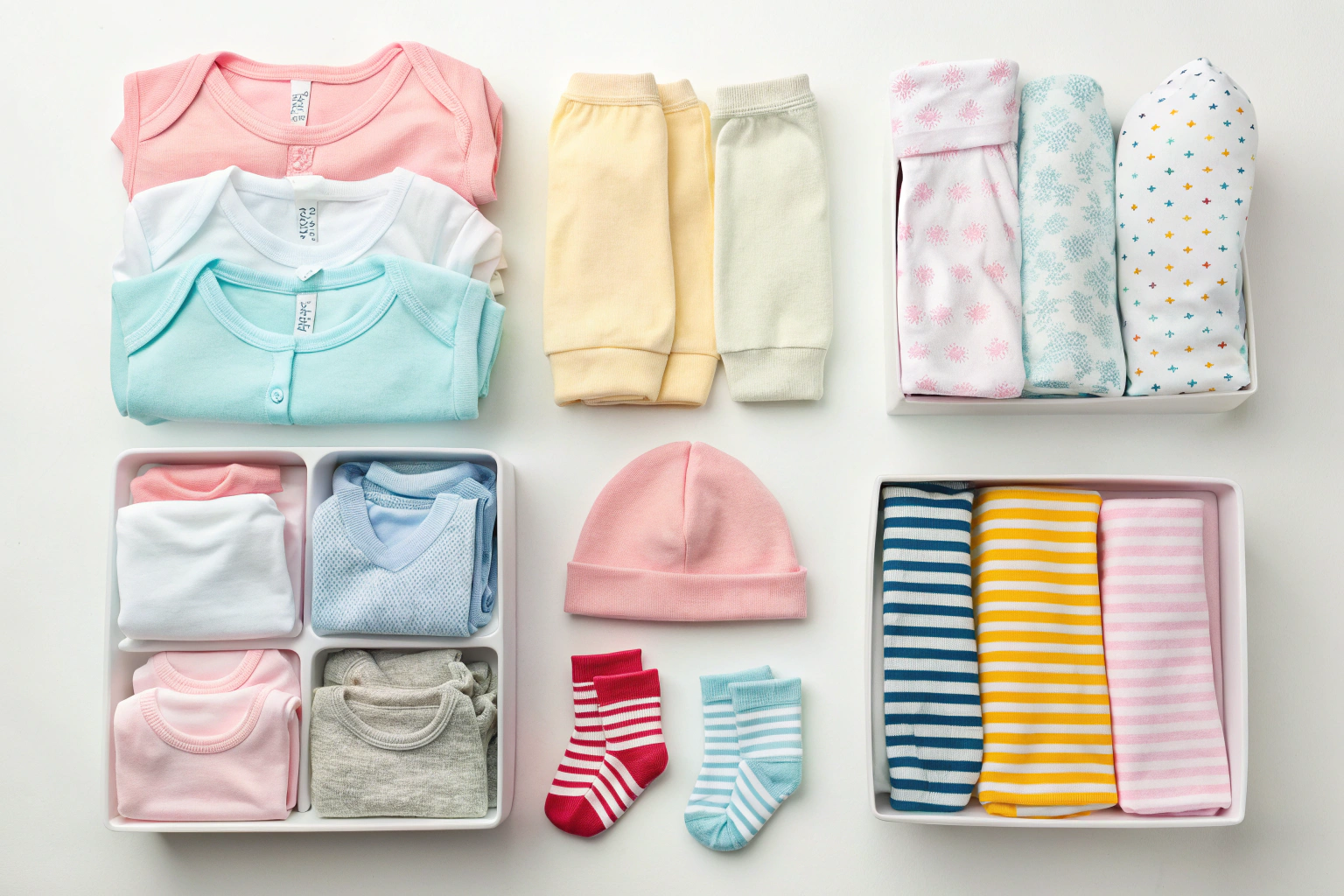
Organizing baby clothing can quickly become overwhelming. Tiny onesies, sleepers, and endless socks often create clutter if not stored properly. Without a clear system, drawers overflow, clothes wrinkle, and parents spend valuable time searching for the right outfit.
The best folding techniques for baby clothing are simple methods that maximize space, keep items visible, and protect delicate fabrics. Popular approaches include the KonMari method, rolling, divider-based folding systems, and a hanging-plus-folding combo.
This article will guide you through each technique and explain how they can work together to make your baby’s wardrobe neat, efficient, and easy to manage.
Why Is Folding Baby Clothes Important?
Baby clothing is smaller, softer, and more delicate than adult clothing. Because parents often keep multiple sizes on hand, clutter builds quickly if items are not folded properly.
Good folding techniques save space, simplify daily routines, and preserve fabric quality.

How Does Folding Help With Space Management?
When baby clothes are stacked loosely, drawers become crowded and messy. Folding garments into compact, uniform shapes allows more items to fit neatly in limited storage.
According to Good Housekeeping, vertical folding methods can reduce wasted drawer space by nearly half, giving parents more room to store essentials.
Why Is Fabric Protection Important?
Delicate cotton and organic fabrics stretch or wrinkle easily. Proper folding prevents this damage and helps clothing last longer, which is especially useful when saving garments for younger siblings or resale.
The KonMari Method
Made popular by Marie Kondo, this method focuses on visibility and tidiness.
The KonMari fold turns baby clothes into small rectangles that stand upright, so every item is visible at a glance.

How Do You Fold Onesies With KonMari?
- Lay the onesie flat and fold in the sleeves.
- Fold the garment lengthwise into thirds.
- Fold again into a compact rectangle that can stand on its own.
This makes it easier to grab a single onesie without disturbing the rest. According to KonMari Method™, this style of storage reduces clutter and stress.
How Can You Apply It to Pants and Sleepers?
- Pants: Fold in half lengthwise, then fold into thirds.
- Sleepers: Tuck in the arms, fold in half, then fold into thirds.
Uniform shapes ensure drawers stay organized and items remain easy to find.
The Rolling Technique
While KonMari emphasizes visibility, rolling prioritizes space efficiency and portability.
Rolling baby clothes reduces wrinkles, saves drawer space, and works perfectly for travel or daycare bags.

How Do You Roll Onesies and Shirts?
Lay each item flat, fold in the sides, and roll tightly from bottom to top. For shirts, fold in sleeves before rolling. The result is a compact bundle that fits well into small compartments.
Travel products such as packing cubes work especially well with rolled baby clothes, keeping them organized while on the go.
What About Pants and Sleepers?
Pants can be folded together and rolled from waistband down. Sleepers should be folded at the arms, then rolled tightly from top to bottom. Rolling is quick and ensures fewer wrinkles, making it ideal for busy parents.
Drawer Divider Systems
Even with efficient folding, items can mix together. Dividers create structure inside drawers and make it easier to separate categories.
Drawer divider systems or bins help organize onesies, socks, bibs, and pajamas into clear sections.

How Do Dividers Improve Organization?
Dividers prevent piles from merging and keep essentials easy to reach. Each section can be assigned to a specific type of clothing, which simplifies busy mornings.
Retailers like IKEA offer drawer inserts designed for children’s storage, making organization affordable and accessible.
How Should You Combine Folding With Dividers?
Fold clothes into small rectangles or rolls before placing them into bins. Adding labels helps caregivers, babysitters, or daycare staff quickly find what they need.
Hanging and Folding Combo
Not all baby garments belong in drawers. Some items require hanging to preserve their shape and appearance.
A mixed system of folding basics and hanging delicate outfits balances convenience with garment care.

Which Clothes Should Be Hung?
- Dresses and jackets.
- Special occasion outfits.
- Delicate fabrics prone to creasing.
Using slim baby hangers saves closet space and prevents stretching, as noted by The Spruce.
How Do You Balance Hanging With Folding?
Reserve drawers for everyday basics like onesies, pants, and sleepers. Hang formal or delicate clothing separately. This combination keeps essentials accessible while protecting items that require extra care.
Conclusion
Folding baby clothing is more than a household chore—it is a system that saves time, reduces stress, and extends the life of garments. The KonMari method creates visible and tidy drawers, the rolling technique maximizes space for travel and storage, drawer dividers provide structure, and a hanging-plus-folding combo keeps delicate items in shape.
By combining these methods, parents can create a practical and organized system that makes daily routines smoother.
For retailers, distributors, or apparel companies interested in professional children’s wear solutions, Shanghai Fumao Clothing provides high-quality, customizable baby apparel. To discuss cooperation, please contact our Business Director Elaine at elaine@fumaoclothing.com.