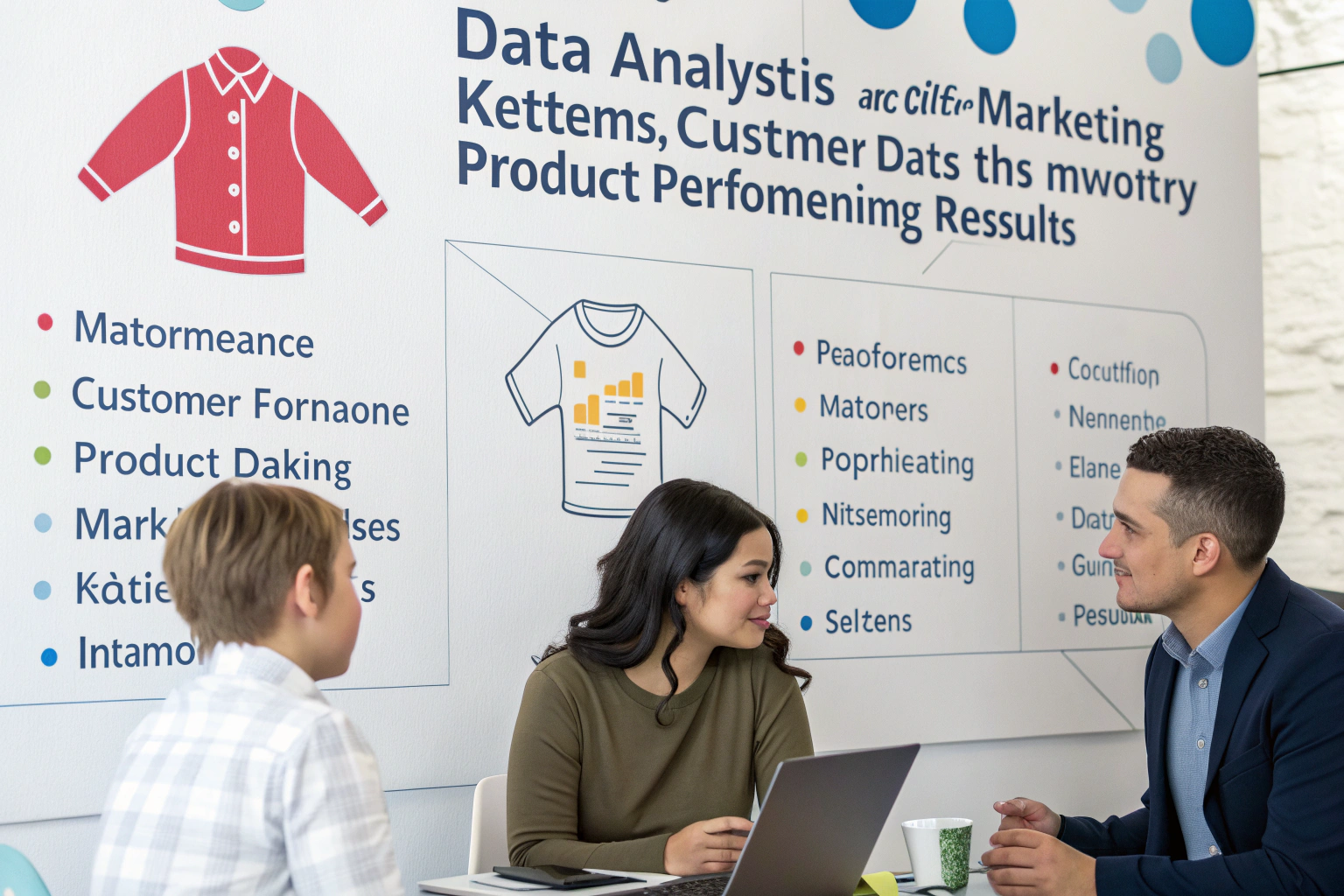
In today’s data-driven retail environment, analytics transform guesswork into strategic advantage, providing unprecedented insights into customer behavior, product performance, and market opportunities. As a manufacturer who has helped numerous American and European children’s wear brands leverage data effectively, I’ve witnessed how analytical approaches can dramatically improve sales performance while reducing risk and wasted resources.
Using analytics to improve kids clothing sales involves tracking customer behavior patterns, analyzing product performance data, optimizing inventory through demand forecasting, personalizing marketing based on insights, and continuously testing and refining strategies based on measurable results. The most successful brands treat data as a strategic asset rather than just a reporting tool, embedding analytical thinking throughout their organizations.
The power of analytics lies not just in collecting data but in translating insights into actions that directly impact sales performance, customer satisfaction, and operational efficiency.
How Can Customer Analytics Drive Sales Growth?
Understanding customer behavior through analytics provides the foundation for strategic decision-making that increases conversion rates, average order value, and customer lifetime value.
Customer analytics move beyond basic demographics to reveal patterns in purchasing behavior, preferences, and engagement that directly inform sales strategies.

What Purchase Pattern Analysis Reveals Opportunities?
Analyzing purchase timing, frequency, and product combinations identifies natural buying rhythms and complementary items that can be leveraged through targeted promotions. For children’s wear specifically, tracking size progression and age-based purchasing patterns allows for perfectly timed recommendations. According to Customer Analytics Research, brands implementing purchase pattern analysis achieve 25-40% higher conversion rates from targeted communications.
How Does Customer Segmentation Improve Targeting?
Dividing customers into meaningful segments based on behavior, preferences, and value allows for precisely tailored messaging and offers. For children’s wear, valuable segments might include "new parents," "school uniform shoppers," "seasonal occasion buyers," or "gift purchasers." Each segment responds differently to messaging, pricing, and channel approaches. Effective segmentation typically increases marketing ROI by 30-50% according to segmentation research.
What Product Performance Metrics Matter Most?
Tracking the right product metrics identifies winners early, flags underperformers quickly, and provides insights for product development and inventory planning.
Product analytics transform subjective opinions into objective data that guides assortment planning, pricing, and promotional strategies.

Which Sales Velocity Metrics Predict Success?
Early sales velocity—how quickly items sell after launch—provides powerful predictive insights about overall performance. Products that achieve rapid initial sales typically continue outperforming, while slow starters rarely recover momentum. Monitoring sales velocity patterns allows for quick inventory adjustments and promotional interventions that maximize full-price sell-through.
How Do Return Analytics Identify Product Issues?
High return rates specific to certain items, sizes, or colors signal potential problems with fit, quality, or description accuracy. For children’s wear, analyzing return reasons by age group and product type reveals patterns that can be addressed through sizing adjustments, construction improvements, or better product information. Reducing return rates by just 5% can improve profitability by 15-20% according to return analysis studies.
How Can Inventory Analytics Optimize Stock Levels?
Inventory analytics balance availability with efficiency, ensuring popular items remain in stock while minimizing capital tied up in slow-moving products.
Smart inventory management directly impacts sales by preventing stockouts of high-demand items and reducing markdowns on poor performers.

What Demand Forecasting Prevents Stockouts?
Advanced forecasting models that incorporate historical sales data, seasonality patterns, promotional calendars, and external factors (like weather for seasonal items) ensure optimal inventory levels. For children’s wear, forecasting must also account for size curves and growth patterns that differ from adult apparel. Proper demand forecasting typically reduces stockouts by 40-60% while improving inventory turnover.
How Does Sell-Through Analysis Guide Replenishment?
Monitoring sell-through rates by item, color, and size identifies what deserves reordering and what should be allowed to sell out. This analysis is particularly valuable for core basics and school uniforms where predictable demand patterns exist. The most successful brands use automated replenishment systems that trigger reorders based on real-time sell-through data.
What Marketing Analytics Improve Campaign Performance?
Tracking marketing effectiveness across channels provides insights for optimizing spend, improving messaging, and increasing return on marketing investment.
Marketing analytics move beyond vanity metrics to connect activities directly to sales outcomes, enabling continuous improvement of marketing strategies.

How Does Attribution Analysis Guide Budget Allocation?
Understanding which marketing touchpoints actually drive conversions—whether first touch, last touch, or multi-touch attribution—prevents wasted spend on ineffective channels. For children’s wear, attribution often reveals surprising patterns, such as social media driving awareness but email driving conversions, or grandmothers responding to different channels than parents. Proper attribution typically improves marketing efficiency by 25-35%.
What A/B Testing Optimizes Conversion Rates?
Systematic testing of website elements, email subject lines, product photography, and promotional offers identifies small changes that generate significant lifts in conversion. For children’s wear, testing might reveal that showing clothing on real children outperforms mannequins, or that highlighting durability features increases conversion among practical parents. Continuous testing creates compounding improvements over time.
How Can Personalization Analytics Increase Customer Value?
Using data to deliver personalized experiences dramatically improves engagement, conversion, and loyalty by making customers feel understood as individuals.
Personalization represents one of the most powerful applications of analytics, transforming generic interactions into relevant, timely communications.

How Does Size Progression Personalization Work?
Tracking children’s age and past purchases allows for perfectly timed size-up recommendations that feel helpful rather than promotional. This approach demonstrates understanding of children’s constant growth while solving a genuine parental challenge. Brands implementing size progression personalization typically see 3-5x higher conversion rates from these targeted communications compared to generic promotions.
What Role Does Occasion-Based Personalization Play?
Recognizing patterns in occasion purchasing (holidays, birthdays, back-to-school) allows for timely, relevant suggestions that align with natural purchasing rhythms. A customer who consistently purchases Easter dresses receives Easter suggestions, while a uniform purchaser receives back-to-school reminders. This occasion alignment makes marketing feel like a service rather than an interruption.
Conclusion
Using analytics to improve kids clothing sales requires moving beyond data collection to insight application, embedding analytical thinking throughout commercial decisions. The most successful approaches connect customer understanding, product performance, inventory optimization, and marketing effectiveness into a cohesive strategy that continuously improves based on measurable results.
At Shanghai Fumao Clothing, we provide our brand partners with manufacturing data and insights that complement their commercial analytics, helping create a complete picture from production through sales. If you’re looking to enhance your analytical capabilities, contact our Business Director Elaine at elaine@fumaoclothing.com to discuss how our manufacturing perspective can support your data-driven sales improvement initiatives.