

Staying ahead in the children's fashion industry presents significant challenges. As a children's clothing manufacturer, we observe numerous brand owners facing difficulties in predicting upcoming seasonal trends for styles, colors, and designs. Inaccurate forecasting results in lost sales opportunities and excess inventory accumulation. Traditional methodologies like trade show attendance and historical sales analysis have become insufficient in today's rapidly evolving market landscape. Artificial Intelligence (AI) emerges as a transformative solution in this context.
AI fundamentally transforms children's wear trend forecasting through comprehensive analysis of extensive data sets from social media platforms, search engine queries, and sales historical data to identify emerging patterns. This enables brands to implement data-driven decision-making processes, mitigate risks, and synchronize production cycles with authentic consumer demand patterns. For businesses engaged in international sourcing from manufacturing hubs like China and Vietnam, AI utilization becomes crucial for enhancing profitability and market alignment.
This article provides a comprehensive guide to practical AI implementation for trend forecasting. We will examine operational mechanisms, available technological tools, and integration strategies for incorporating these insights into manufacturing and sourcing workflows.
How Can AI Predict Future Fashion Trends?
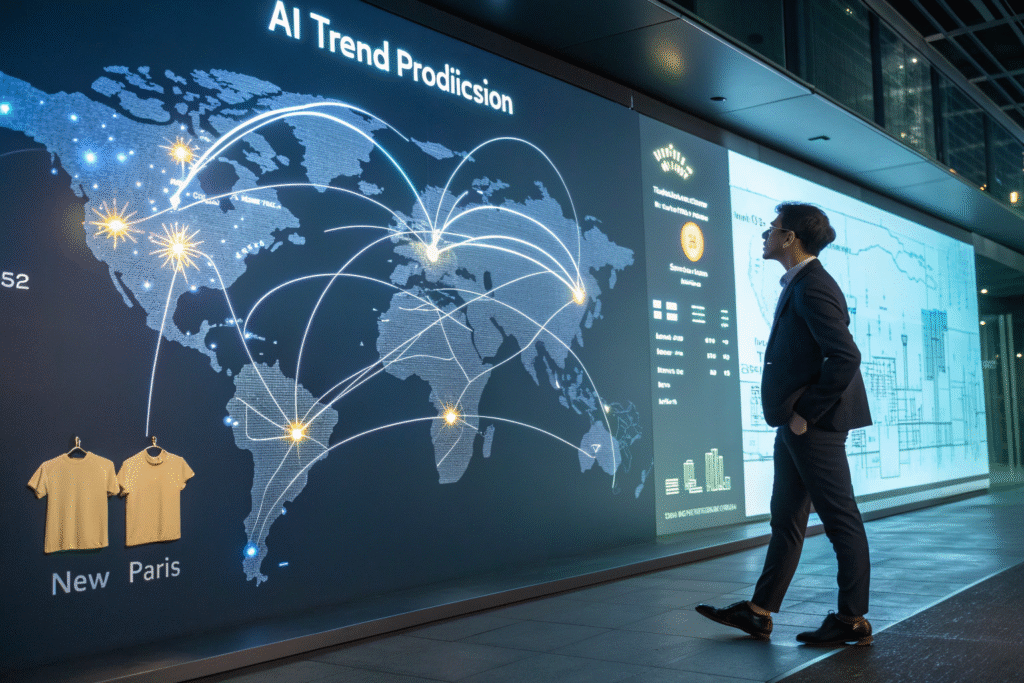
Traditional speculative trend forecasting methods have become obsolete. AI systems operate through analytical processing rather than conjecture. For business proprietors focused on quality assurance and competitive pricing structures, understanding these analytical processes is essential for optimized sourcing decisions. AI platforms process millions of data points from social media channels and search engines to identify emerging trends during their incubation phase.
This predictive capability relies on machine learning algorithms that process historical and current data to generate future projections. In fashion contexts, this involves computational analysis of visual content, textual data, and numerical information to identify evolving color palettes, pattern preferences, and stylistic directions. This methodology provides significantly enhanced accuracy compared to intuitive forecasting approaches.

What Data Sources Does AI Analyze?
AI systems demonstrate extensive data processing capabilities. Primary analysis focuses on visual content from social media platforms, examining style sharing frequencies and engagement metrics. Concurrently, natural language processing analyzes textual data from search engines, digital publications, and customer reviews. Additionally, real-time e-commerce sales data undergoes continuous evaluation. This multi-source analytical approach delivers comprehensive market intelligence. For example, correlated increases in search queries for specific print patterns alongside social media engagement spikes can indicate emerging trend development. Collaboration with manufacturing partners who comprehend these data dynamics, such as Fumao Clothing, ensures production alignment with market movements. Understanding global fashion trends remains essential, while implementing rigorous quality control protocols guarantees final product compliance with market expectations.
How Does Machine Learning Improve Accuracy?
Machine learning models demonstrate continuous improvement through expanded data exposure. These systems learn from previous forecasting outcomes, progressively enhancing their capability to differentiate between transient fads and sustainable trends. They identify complex pattern relationships beyond human perceptual capacity. For instance, algorithms might detect that specific color shades in children's apparel consistently gain popularity two seasons following their appearance in premium adult collections. These insights enable brands to develop collections with enhanced confidence and reduced financial risk. Our manufacturing facility's investment in these technological understandings ensures we function as strategic partners rather than mere production suppliers.
What Are The Best AI Tools For Trend Forecasting?
Recognizing AI's potential represents the initial step; identifying appropriate tools constitutes the practical implementation phase. The market offers diverse AI software solutions, ranging from enterprise-level platforms to accessible applications. Tool selection depends on budgetary parameters and specific operational requirements, with the objective being identification of platforms that deliver actionable insights without excessive implementation complexity.
These analytical tools simultaneously process runway presentation data, street style photography, and retail performance metrics. They present synthesized findings through intuitive reporting interfaces and data visualization formats. This enables comprehension of trend causation factors beyond superficial manifestations. These insights directly influence design development and manufacturing planning stages.
Are There Affordable AI Solutions For Startups?
The AI tool ecosystem has evolved toward greater accessibility. Multiple platforms now offer subscription-based services economically viable for emerging brands. These solutions typically specialize in specific data streams, such as social media analytics or web data extraction. They provide dashboard interfaces highlighting emerging color trends, fabric preferences, and silhouette developments. For cost-conscious businesses, these tools optimize product development investments by focusing on trends with demonstrated commercial potential. These analytical capabilities complement international sourcing activities through enhanced market intelligence preceding purchase commitments.
How Do I Integrate AI Insights With My Design Team?
Technological tools remain ineffective without organizational adoption. Successful integration requires structured implementation processes. Initial steps include regular distribution of AI-generated trend reports to design departments. Facilitated brainstorming sessions that combine data-driven insights with creative development establish powerful synergies between analytical and artistic disciplines. For manufacturing partners, this means receiving technically packaged designs validated by market analytics, streamlining our sampling process and enhancing development efficiency. This collaborative approach ultimately produces distinctive, quality-focused designs that achieve market differentiation.
How Does AI Enhance Supply Chain and Manufacturing?
AI applications extend significantly beyond design development into comprehensive supply chain optimization. For businesses experiencing logistical challenges and seasonal timing issues, these applications deliver measurable operational improvements. AI enables accurate demand forecasting, facilitating optimized raw material procurement and production scheduling.
Within our five-line manufacturing facility, we observe how data-informed planning prevents production bottlenecks. We provide clients with production quantity recommendations based on market analytics, minimizing both inventory surplus and deficit situations. This creates responsive manufacturing processes crucial for the dynamic children's apparel sector.
| AI Application | Brand Benefits | Fumao Implementation |
|---|---|---|
| Demand Forecasting | Inventory cost reduction and minimized markdowns | Client order quantity guidance based on market analytics |
| Production Planning | Delay prevention and delivery schedule adherence | Predictive modeling for five-line production scheduling |
| Quality Control | Early defect identification | AI-assisted inspection protocols for quality maintenance |
| Logistics Management | Shipping route and method optimization | Comprehensive DDP (Delivered Duty Paid) service solutions |

Can AI Prevent Production Delays?
AI systems demonstrate significant predictive capabilities regarding potential disruptions. By analyzing variables including meteorological patterns, port congestion metrics, and supplier reliability data, these systems enable proactive production timeline adjustments and logistics partner modifications when delays appear probable. For clients, this substantially reduces risks associated with missing critical selling season timelines. This proactive supply chain management methodology forms the foundation of our reliable partnership model.
How Does AI Assist With Quality Control?
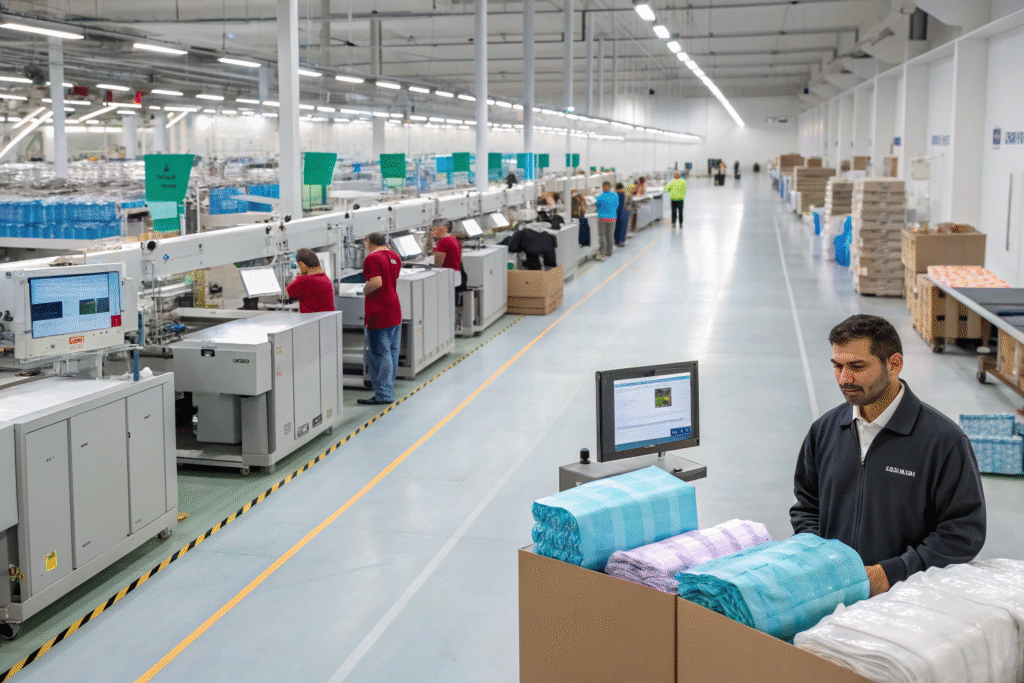
AI-powered visual inspection technologies represent substantial advancements in quality assurance. Production line imaging systems detect minute stitching irregularities, color inconsistencies, and fabric imperfections that might escape human detection. This ensures every garment exiting our manufacturing facility complies with international safety and durability standards required by premium brands. This dedication to quality assurance provides brand protection and reputation security.
What Are The Limitations of AI in Fashion Forecasting?
Despite significant capabilities, AI systems present certain limitations. Strategic business leadership requires comprehensive understanding of both technological strengths and constraints. While AI excels at pattern recognition within existing data parameters, it cannot replicate human creative capacity and cultural contextual understanding. Truly innovative concepts frequently originate from human creative processes.
Furthermore, AI model effectiveness depends entirely on training data quality. Biased or incomplete data sets produce flawed predictive outcomes. Therefore, the most effective approach combines AI analytical capabilities with human decision-making processes, where technological insights inform rather than replace human judgment.
Why Is Human Oversight Still Crucial?
Human expertise provides essential contextual interpretation. While AI might identify "oversized silhouettes" as an emerging trend, designers must translate this into wearable, comfortable, and safe children's apparel designs. Our Fumao team integrates creative vision with data-driven insights to develop products combining aesthetic appeal with practical functionality. This collaborative process ensures final garments demonstrate appropriate stylistic relevance and wearability characteristics.
How Can We Avoid Biased AI Predictions?
Bias mitigation requires utilization of AI tools processing diverse, globally-sourced data sets. Continuous analytical output evaluation remains essential. When predictions appear inconsistent, thorough investigation becomes necessary. Combining AI outputs with traditional market intelligence from trade exhibitions and direct customer feedback creates balanced forecasting approaches. This methodology maintains brand innovation while ensuring authentic market connections.
Conclusion
In summary, AI implementation for children's apparel trend forecasting has transitioned from competitive advantage to operational necessity. This technology enables informed, data-supported decisions throughout design, production, and sourcing processes. From emerging trend identification to delivery schedule adherence and quality assurance, AI integration enhances every operational phase. Maximum benefit realization occurs when combining technological capabilities with human creativity and expertise.
Through partnerships understanding both analytical and creative dimensions, businesses can significantly reduce operational risks while capitalizing on emerging opportunities. For organizations prepared to manufacture subsequent collections with partners emphasizing data-informed strategies and precise execution, we invite dialogue. Please contact our Business Director, Elaine, at elaine@fumaoclothing.com to discuss Shanghai Fumao's capabilities for actualizing your creative vision.