
Parents across the world face the same issue: babies grow very fast, and clothing that fits perfectly today may feel too tight within weeks. For families, this creates frustration and extra expense. For brands, it creates both a problem and an opportunity. If you can provide baby clothing with growth features, you will solve a real need, reduce waste, and create customer loyalty.
The best way to source baby clothing with growth features is to work with manufacturers that offer adjustable designs, certified stretch fabrics, and reliable customization. These suppliers make garments that adapt to a baby’s growth, last longer, and give parents more value.
Based on my experience exporting children’s clothing to the U.S. and Europe, I have seen that brands who source growth-friendly garments not only attract more buyers but also build stronger reputations. In the following sections, I will explain which features matter most, which fabrics work best, where to find trusted suppliers, and what questions to ask to avoid mistakes.
What Growth Features Do Parents Value Most?
The first step in sourcing is to understand what parents expect from growth-friendly clothing. Parents want garments that last longer, adapt easily, and reduce frequent replacements.
Why are fold-over cuffs so effective?
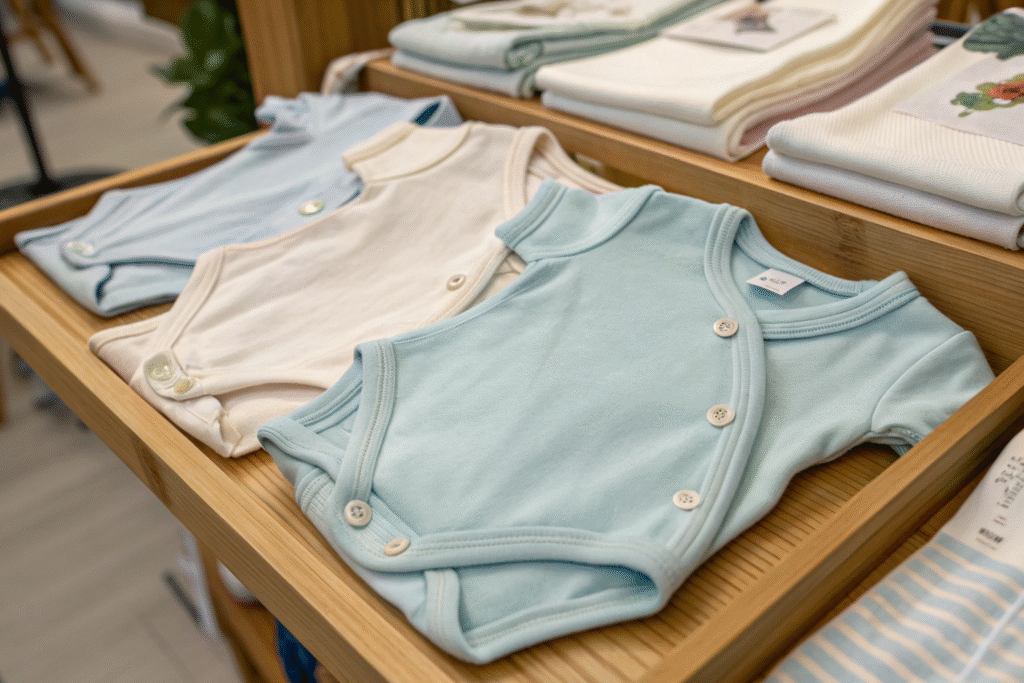
Fold-over cuffs at sleeves and ankles extend the life of baby clothing. At first, they cover hands and feet to provide warmth. Later, parents unfold them to add length as babies grow. Because of this simple design, one bodysuit can last for several growth stages, which saves parents money.
How do adjustable snaps improve usability?
Adjustable snaps at the crotch or shoulders allow parents to fit the same garment over a longer period. When combined with stretch fabrics, this ensures comfort without forcing parents to buy new clothes too quickly. Parenting communities such as BabyCenter highlight adjustable snaps as one of the most practical design innovations.
Which Fabrics Work Best for Growth-Friendly Clothing?
After identifying the right features, the next step is choosing fabrics that support them. Without proper fabrics, cuffs and snaps lose effectiveness. Therefore, the fabric decision is critical.
Why is organic cotton with elastane the top choice?
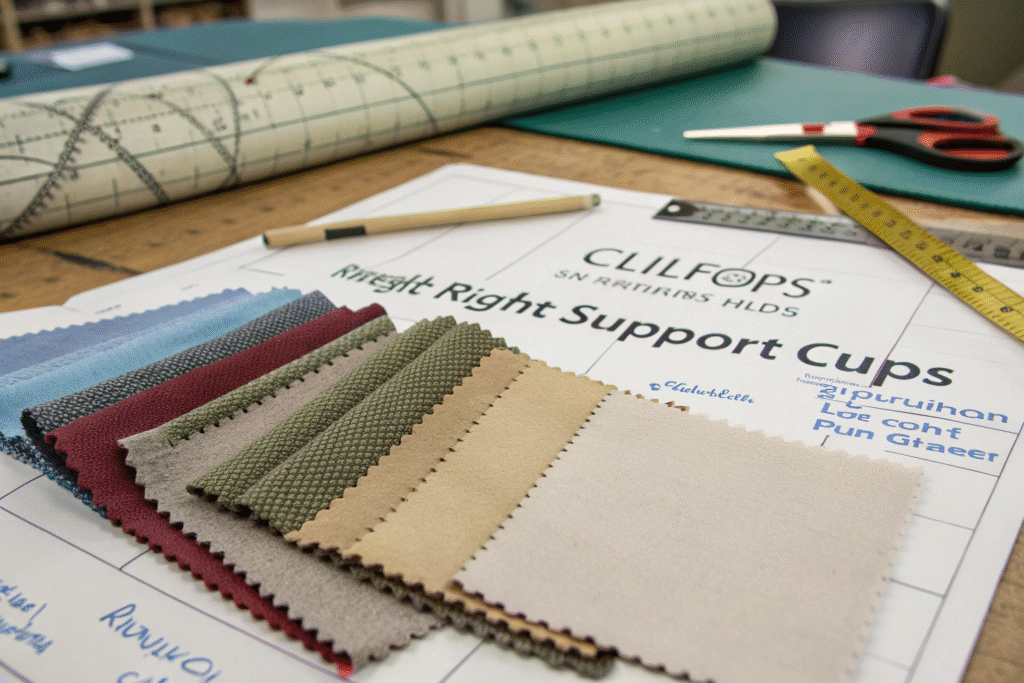
Organic cotton is gentle on delicate baby skin. When blended with elastane, it stretches to accommodate growth while maintaining softness. Certifications such as OEKO-TEX® Standard 100 and GOTS guarantee that the fabrics are safe and produced under ethical conditions. As a result, brands gain both credibility and customer trust.
Are bamboo and rib knits suitable alternatives?
Yes. Bamboo fabrics are naturally antibacterial and breathable, making them excellent for sensitive skin. Rib knits provide elasticity through structure alone, so they stretch without losing shape. Because of these properties, organizations like Textile Exchange encourage bamboo and rib-knit blends in sustainable babywear.
Where Can You Source These Products?
Once you know which features and fabrics to prioritize, you must decide where to source them. Each sourcing hub has unique advantages.

Why is China still the leading sourcing hub?
China combines advanced production technology with a wide range of certified fabrics. Many factories hold BSCI and Sedex certifications, which assure ethical labor practices. Platforms such as Alibaba make it easy to find verified babywear suppliers.
What about Vietnam and India?
Vietnam is well known for its compliance with U.S. and EU standards, making it a strong choice for consistent quality. India is famous for organic cotton production, which suits eco-conscious brands. Trade shows such as Canton Fair and Children’s Club NYC provide direct access to suppliers from these regions.
What Questions Should You Ask Suppliers?
Even if you find a promising supplier, you must confirm their ability to deliver growth-feature clothing. Asking the right questions avoids delays, poor quality, or false promises.

Which questions confirm growth-feature capability?
- “Do you produce bodysuits with adjustable snaps?”
- “Can you share samples of fold-over cuff designs?”
- “Which fabrics and certifications do you use for stretch babywear?”
Suppliers that provide quick and detailed answers are usually reliable. On the other hand, vague or delayed replies suggest risk. You can double-check claims through groups like the Sustainable Apparel Coalition.
Why should logistics questions be included?
Clothing delays can ruin seasonal sales. Therefore, it is important to ask about shipping terms. Suppliers who offer DDP shipping simplify customs and reduce risk. You should also ask about logistics partners, such as DHL Global Forwarding, to ensure reliable delivery timelines.
Conclusion
Sourcing baby clothing with growth features is more than a passing trend. It responds directly to parents’ concerns, extends product life, and reduces clothing waste. To succeed, brands must move step by step: first, identify the growth features parents value most; next, select fabrics that support those features; then, choose sourcing regions with proven strengths; and finally, ask suppliers precise questions to confirm capability and reliability.
At Shanghai Fumao Clothing, we produce babywear with fold-over cuffs, adjustable snaps, and certified stretch fabrics. With international certifications, strict quality control, and efficient logistics, we help brands create growth-friendly collections that parents appreciate.
📩 Contact our Business Director Elaine at elaine@fumaoclothing.com to start sourcing your next growth-feature babywear line today.