
Pricing strategy represents one of the most critical yet challenging aspects of building a successful children’s wear business. As a manufacturer serving American and European brands across various market segments, I’ve witnessed how strategic pricing decisions directly impact profitability, brand positioning, and long-term sustainability. Finding that sweet spot between market competitiveness and healthy margins requires careful analysis and strategic thinking.
Effective kids clothing pricing combines cost understanding, market positioning, value perception, and strategic psychology to maximize profitability while maintaining customer loyalty. The most successful approaches recognize that pricing communicates brand value beyond mere numbers, influencing how parents perceive quality, exclusivity, and overall worth of your children’s wear offerings.
Many children’s wear brands either underprice their products, leaving money on the table, or overprice relative to perceived value, limiting sales volume. The framework below has helped our partners establish pricing that supports business growth while delivering genuine value to customers.
What Cost Factors Must You Consider?
Understanding your complete cost structure forms the foundation of profitable pricing, ensuring all expenses are covered while generating adequate margin for business growth.
Many brands focus solely on manufacturing costs while overlooking critical expenses that impact overall profitability, leading to pricing that fails to sustain business operations long-term.

How Do Manufacturing Costs Impact Pricing?
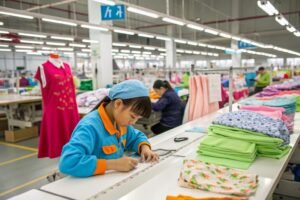
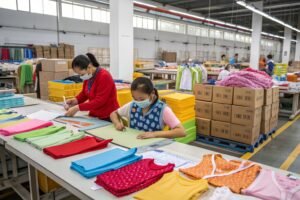
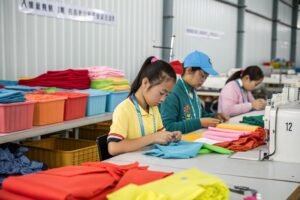
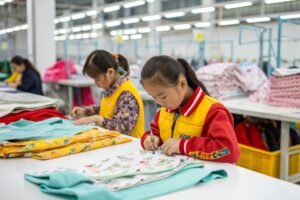
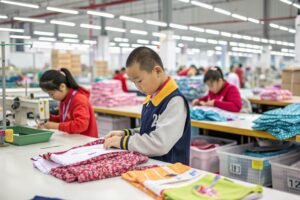
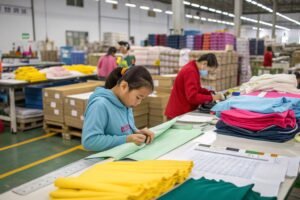
Manufacturing costs include fabric, trims, labor, and production overhead that vary significantly based on quantity, complexity, and quality level. At Fumao, we provide clients with transparent cost breakdowns that detail every component, enabling accurate pricing calculations. Remember that smaller production runs typically incur higher per-unit costs due to fixed setup expenses spread across fewer pieces, impacting your pricing flexibility.
What Hidden Costs Often Get Overlooked?
Beyond direct manufacturing, consider shipping and import duties, quality control expenses, packaging costs, payment processing fees, and operational overhead including marketing, photography, and staffing. These indirect costs typically represent 20-35% of total expenses but are frequently underestimated in initial pricing calculations. The Fashion Business Association recommends adding a 25% overhead buffer to direct costs to account for these often-missed expenses.
How Does Market Positioning Influence Pricing?
Your brand’s market position should directly influence pricing strategy, with different segments justifying premium pricing through distinct value propositions.
Understanding where your brand fits within the competitive landscape enables pricing that reflects your positioning while remaining credible to your target customers.
 –
–
What Pricing Tiers Exist in Children’s Wear?
The children’s wear market typically segments into budget (mass market), mid-range (specialty brands), premium (designer-inspired), and luxury (high-end designer) categories with corresponding price points. Research shows that the mid-to-premium segment has experienced the strongest growth recently, as parents seek quality and style between fast fashion and luxury extremes. Positioning within this range should reflect your quality, design originality, and brand story.
How Can You Justify Premium Pricing?
Brands commanding premium prices typically demonstrate exceptional quality, unique design aesthetic, strong brand storytelling, ethical manufacturing credentials, or specialized functionality. At our manufacturing facility, we’ve observed that brands highlighting specific value propositions like sustainable materials or adaptive designs can justify 20-40% price premiums over comparable conventional products. The key is ensuring your pricing aligns with demonstrable value that resonates with your target customers.
What Psychological Pricing Strategies Work Best?
Pricing psychology significantly influences purchasing decisions, with specific techniques proven to increase perceived value and purchase likelihood across consumer categories.
Strategic use of psychological pricing principles can enhance profitability without changing product costs, simply by understanding how customers perceive and respond to different price points.

Why Does Charm Pricing Remain Effective?
Ending prices with .99, .97, or .95 continues to outperform round numbers across most consumer categories, including children’s wear. Research from the Pricing Psychology Institute shows that charm prices can increase sales by up to 24% compared to rounded equivalents, as customers perceive them as significantly lower than they actually are. This strategy works particularly well in the mid-price range where parents are making considered but not luxury purchases.
How Can Tiered Pricing Maximize Revenue?
Offering good-better-best pricing tiers allows customers to self-select into appropriate price points based on their needs and budget. This approach typically increases overall revenue by capturing price-sensitive customers with entry-level options while allowing premium seekers to trade up. Successful implementation requires clear differentiation between tiers that justifies price increases through tangible value enhancements rather than arbitrary segmentation.
How Should You Approach Discounting and Promotions?
Strategic discounting can drive sales volume and customer acquisition, while poorly planned promotions can erode brand value and train customers to wait for sales.
The most profitable brands approach discounting as a strategic tool rather than a default response to slow sales, preserving margin while achieving business objectives.

What Discounting Strategies Protect Brand Value?
Time-limited promotions, member-exclusive discounts, and bundle offers typically preserve brand value better than continuous or store-wide discounts. The key is creating perceived scarcity or exclusivity that motivates purchase without establishing an expectation of ongoing discounts. According to Retail Promotion Research, strategic limited-time offers can increase sales by 35% without significantly impacting full-price purchasing behavior when executed thoughtfully.
How Can You Use Data to Optimize Pricing?
Tracking sales velocity, conversion rates, and customer response at different price points provides invaluable data for pricing optimization. Monitor which price points generate the highest profit (not just revenue) and adjust pricing accordingly. Our most successful brand partners implement pricing analytics systems that test different price points across styles and categories, using data rather than intuition to establish optimal pricing structures.
Conclusion
Profitable kids clothing pricing requires balancing comprehensive cost understanding, strategic market positioning, psychological principles, and data-driven optimization. The most successful approaches recognize that pricing communicates brand value while ensuring business sustainability, creating a virtuous cycle where adequate margins fund continued innovation and quality that justifies premium positioning.
At Shanghai Fumao Clothing, we provide our brand partners with detailed cost analysis and manufacturing insights that inform strategic pricing decisions, drawing on our experience across multiple market segments and price points. If you’re looking to optimize your children’s wear pricing strategy, contact our Business Director Elaine at elaine@fumaoclothing.com to discuss how our manufacturing perspective can support your profitability goals.