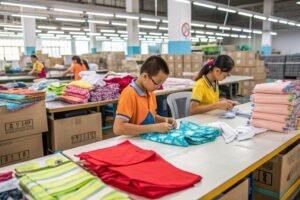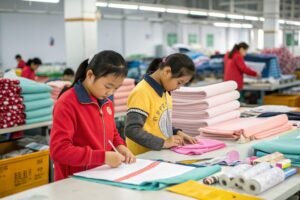

Pricing strategy represents one of the most critical business decisions for kids clothing brands, directly impacting both market positioning and financial sustainability. As manufacturers who have helped hundreds of brands find their pricing sweet spot, we understand the delicate balance between perceived value, market expectations, and actual profitability.
To price your kids clothing collection for profitability, you must calculate all costs accurately, understand your target market’s price sensitivity, position your brand appropriately within the competitive landscape, and implement strategic pricing structures that maintain margin while driving volume. Successful pricing goes beyond simply marking up costs—it requires a comprehensive approach that considers customer psychology, competitive positioning, and the unique dynamics of the children’s wear market where rapid growth and practical considerations influence purchasing decisions.
What Cost Factors Must You Include in Your Pricing Model?
Accurate cost calculation forms the foundation of profitable pricing, yet many brands underestimate their true costs, resulting in eroded margins despite apparent sales success.
Your pricing must account for both direct costs (materials, manufacturing, labor) and indirect costs (design, marketing, overhead, operational expenses). Additionally, children’s clothing has specific cost considerations like safety testing, size grading complexity, and durability requirements that impact production costs. The most successful brands maintain detailed cost sheets that capture every expense associated with bringing each item to market, ensuring no hidden costs undermine their profitability.

How Do You Calculate True Product Costs?
True cost calculation extends beyond manufacturing to include all expenses associated with product development and delivery. This includes fabric and trims, manufacturing costs, quality control, import duties, shipping, packaging, and the proportional allocation of design, sampling, and development expenses. According to Fashion Incubator’s costing guidelines, most brands underestimate their true costs by 15-25% by failing to properly allocate indirect expenses. For children’s wear specifically, additional costs might include safety certification, specialized testing for chemical compliance, and the complexity of producing across multiple size ranges with proper proportional grading.
Why Must You Factor in Operational Overheads?
Beyond product-specific costs, your pricing must contribute to covering operational overheads like rent, utilities, salaries, marketing, software subscriptions, and professional services. The Small Business Administration recommends calculating your overhead allocation per product by dividing total annual overhead by projected unit sales. For example, if annual overhead is $100,000 and you plan to sell 10,000 units, each item must contribute $10 toward overhead. Children’s clothing brands often carry higher overhead percentages due to the complexity of managing multiple sizes, safety compliance, and seasonal inventory planning.
How Does Brand Positioning Influence Pricing Strategy?
Your brand’s market position should directly inform your pricing approach, as customer expectations and perceived value vary significantly across different segments of the children’s wear market.
Brand positioning encompasses your target demographic, quality level, design aesthetic, and brand story—all of which influence what customers will pay. Luxury brands targeting affluent parents can command premium prices by emphasizing craftsmanship, exclusive designs, and superior materials, while mass-market brands compete on value and accessibility. Understanding where your brand fits within this spectrum is essential for setting prices that align with customer expectations while delivering adequate margins.

What Pricing Strategies Work for Different Market Segments?
Different market segments respond to distinct pricing approaches. Luxury brands typically use prestige pricing, maintaining high prices to reinforce exclusivity and quality perception. Mid-market brands often employ value-based pricing, setting prices according to perceived customer value rather than strict cost-plus calculations. Mass-market brands frequently use competitive pricing, aligning with similar products while seeking cost efficiencies. Research from Harvard Business Review indicates that companies with sophisticated pricing strategies outperform their competitors by 5-15% on profitability. For children’s wear, successful brands often combine elements of multiple approaches—maintaining premium pricing for signature items while offering accessible price points for basics.
How Can You Determine Your Brand’s Price Ceiling?
Understanding the maximum price your target customers will pay requires market research, competitor analysis, and testing. Analyze comparable products from direct competitors, noting their features, quality, and pricing. Conduct customer surveys or focus groups to gauge price sensitivity. The Journal of Pricing Strategy & Practice recommends using price laddering techniques to identify the point where perceived value declines sharply. For children’s clothing, practical considerations like durability, washability, and growth accommodation often justify price premiums that parents wouldn’t pay for adult clothing, creating opportunities for brands that effectively communicate these practical benefits.
What Role Do Psychological Pricing Tactics Play?
The psychology of pricing significantly influences purchasing decisions, with specific price points and structures affecting perception of value and purchase likelihood.
Psychological pricing strategies leverage cognitive biases to make prices seem more attractive without significantly reducing margins. These approaches are particularly effective in children’s wear, where parents often make emotional purchasing decisions balanced against practical budget considerations.

How Does Charm Pricing Impact Children’s Wear Sales?
Charm pricing (ending prices with .99 or .95) remains effective despite consumer awareness of the tactic. Studies published in the Journal of Consumer Research show that charm prices can increase sales by up to 24% compared to rounded prices. For children’s clothing, where parents are often purchasing multiple items and comparing options, the perceived savings from charm pricing can tip decisions toward your products. However, luxury children’s brands often avoid charm pricing as it can undermine premium positioning, instead using whole numbers to convey quality and confidence.
What Is the Optimal Price Architecture for Collections?
Strategic price architecture within your collection can increase average order value by creating natural upgrade paths. Establish clear price tiers that segment your collection into entry-level, core, and premium categories. According to McKinsey pricing research, effective price architecture can improve margins by 2-7% without reducing volume. For children’s clothing brands, this might mean pricing basic tees and leggings as accessible entry points while positioning special occasion wear, technical outerwear, or complex designs at premium price points that customers will pay once they trust your brand’s quality and fit.
How Should You Plan for Strategic Discounting and Promotions?
A thoughtful discount strategy protects your brand positioning while driving sales during key periods, whereas reactive discounting can erode brand value and condition customers to wait for sales.
Strategic discounting should be planned as part of your overall pricing strategy rather than implemented as a reaction to slow sales. For children’s wear brands, this means aligning promotions with natural purchasing cycles like back-to-school, holiday shopping, and seasonal transitions when parents are already planning wardrobe updates.

What Discount Timing Maximizes Impact Without Damaging Brand Value?
The most effective discount timing aligns with customer expectations and inventory needs. End-of-season sales help clear inventory while meeting parent expectations for value. According to the National Retail Federation, strategic discounting during known peak shopping periods can increase sales volume by 30-50% without significantly damaging full-price selling. For children’s brands, promoting "size-up" discounts before growth spurts or offering "sibling matching" bundles can drive volume while maintaining healthier margins than across-the-board percentage discounts.
How Can You Use Tiered Discounts to Protect Margin?
Tiered discount structures encourage larger purchases while minimizing margin erosion. Instead of blanket discounts, offer increasing savings thresholds at specific spending levels (e.g., 15% off $100, 20% off $150, 25% off $200). Research from Price Intelligently shows that tiered approaches can increase average order value by 15-30% while maintaining stronger overall margins than flat discounts. For children’s clothing, where parents often purchase multiple items or sizes, tiered discounts feel more rewarding while protecting your profitability better than item-specific markdowns.
Conclusion
Profitable pricing for kids clothing collections requires a comprehensive approach that balances accurate cost calculation, strategic brand positioning, psychological pricing principles, and planned discount strategies. The most successful brands view pricing as an ongoing strategic process rather than a one-time decision, continuously refining their approach based on market feedback, cost changes, and sales data.
Remember that pricing communicates value beyond just numbers—it signals quality, positions your brand in the market, and ultimately determines your business’s sustainability. If you’re developing a children’s clothing collection and need manufacturing partnership that helps you achieve the right balance between cost, quality, and market positioning, contact our Business Director, Elaine, at elaine@fumaoclothing.com. Let’s discuss how we can help you build a profitable pricing structure that supports your brand vision while meeting market expectations.