In apparel manufacturing, quality control (QC) is not optional—it is fundamental. A well-structured QC system ensures that garments comply with buyer specifications, international safety standards, and market expectations. For children’s clothing in particular, QC safeguards both product integrity and consumer trust.
Effective QC in clothing production requires defining specifications, conducting raw material inspections, implementing in-line monitoring, verifying finished products, and building continuous training programs.
Establishing Quality Standards and Specifications
The foundation of QC lies in documented standards. These include tolerance levels for measurements, fabric GSM, seam density, and finishing criteria.
Technical specification sheets (tech packs) align buyers, merchandisers, and factories around consistent benchmarks.

Why are specifications critical?
They eliminate ambiguity. Standards such as ISO 9001 formalize quality systems across production environments.
How do leading brands apply them?
Retailers like H&M provide suppliers with detailed tech packs to ensure uniform product execution.
Raw Material and Trim Inspection
Material quality dictates garment quality. Fabric inspection protocols address defects such as shading, bowing, or slubs, while trims undergo pull testing and dimensional checks.
Pre-production inspection prevents defect propagation and minimizes downstream rejection rates.
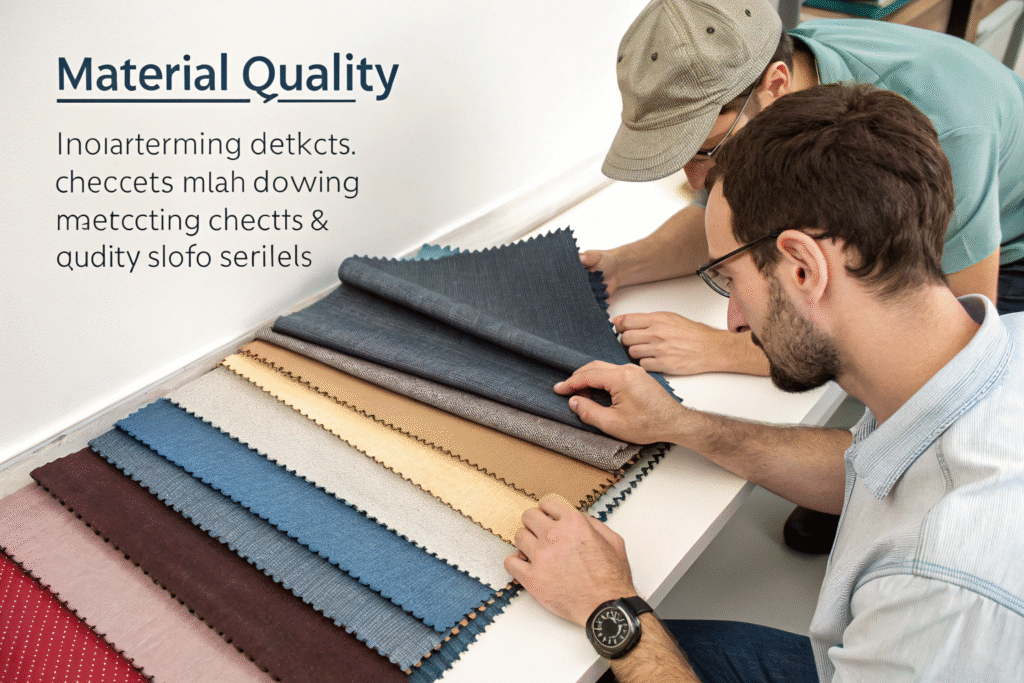
Why is material inspection mandatory?
Defective input leads to systemic production faults. AATCC defines textile testing standards for global use.
What about trims for children’s wear?
Fasteners, snaps, and zippers must comply with CPSIA requirements to avoid choking hazards.
In-Line Process Monitoring
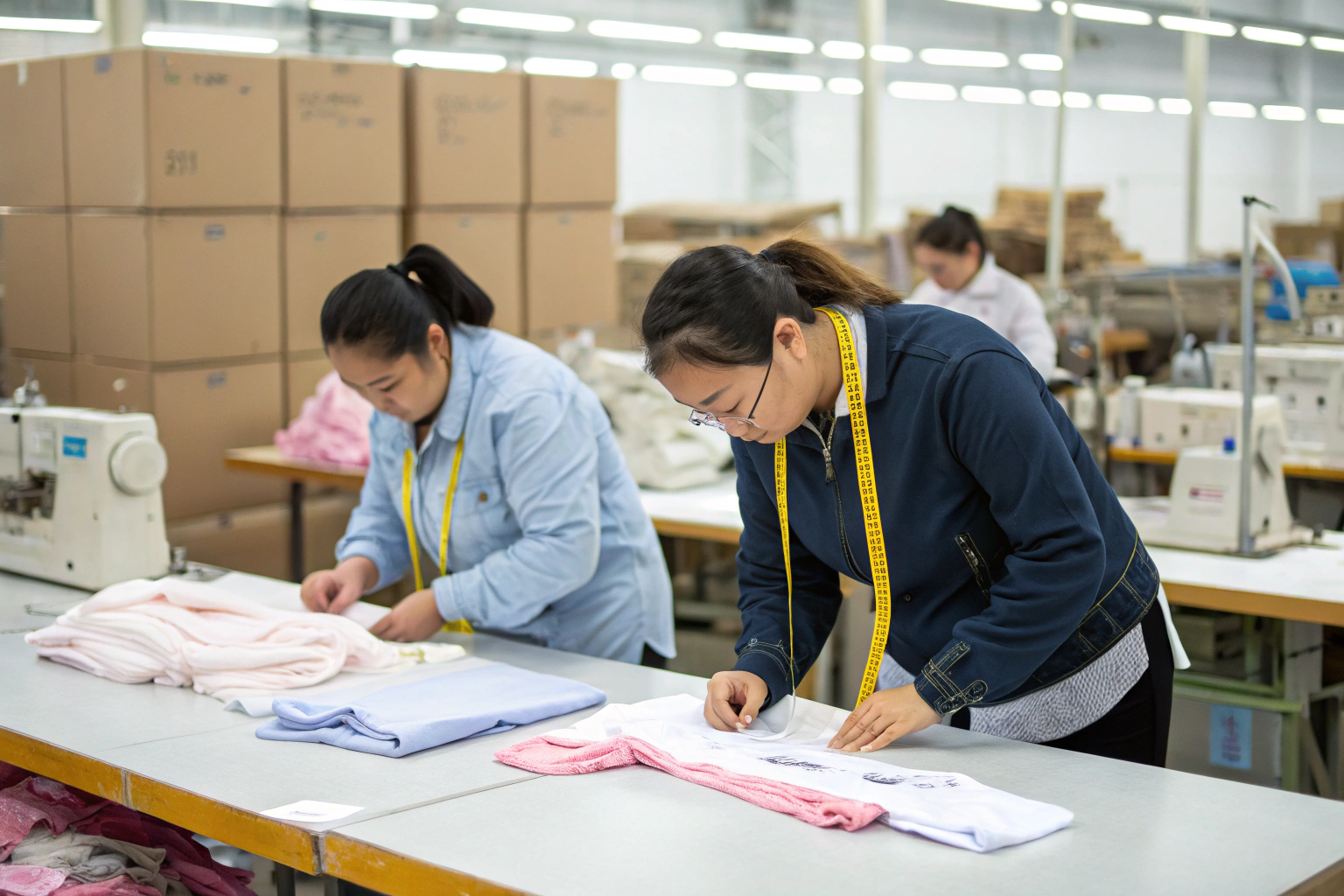
In-line inspection ensures that deviations are identified in real time. Parameters such as seam strength, stitch count per inch (SPI), and label placement are closely monitored.
In-process QC reduces rework, stabilizes line efficiency, and enforces consistency across SKUs.

Why is in-line QC superior to only end-line checks?
It integrates defect prevention into the workflow. Lean manufacturing emphasizes in-process correction rather than late-stage rejection.
What tools support line QC?
Digital defect tracking and inline audit sampling (AQL-based) enable systematic monitoring.
Finished Garment Testing and Verification
Final inspection validates compliance before shipment. This includes dimensional verification, shrinkage tests, colorfastness to washing, and tensile strength checks.
Finished goods testing ensures regulatory conformity and brand reputation protection.
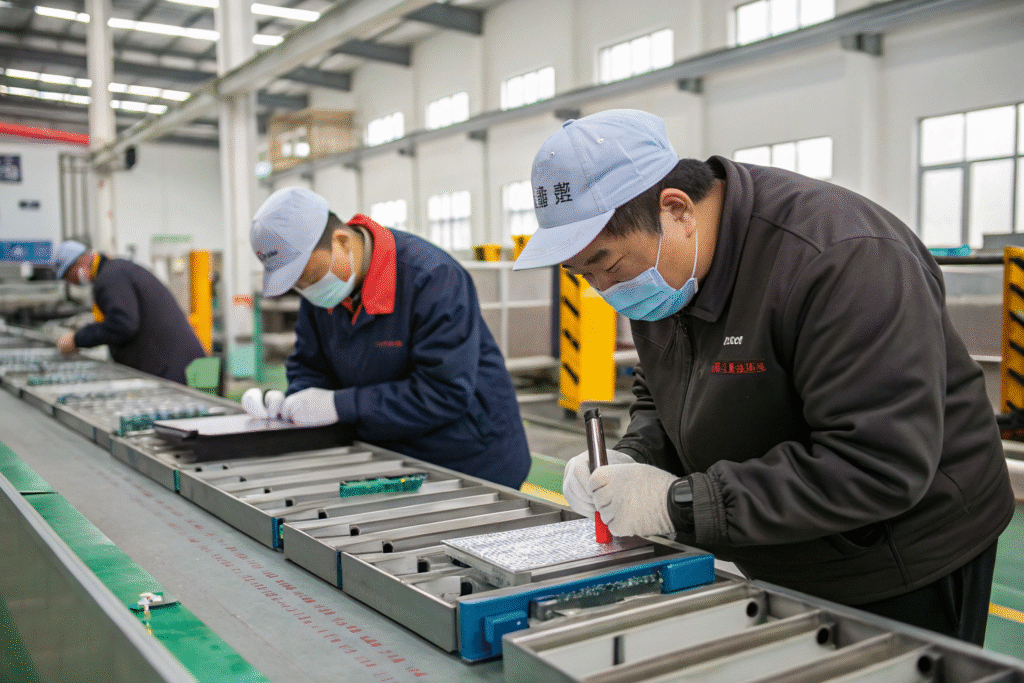
Why is final testing essential?
It certifies durability and safety. Independent labs such as SGS conduct standardized evaluations for apparel.
What tests are critical for kidswear?
ASTM protocols specify shrinkage tolerance, seam slippage thresholds, and flammability requirements for children’s apparel. See ASTM.
Training and Continuous Improvement
QC is not static; it evolves with training and process optimization. Workforce development ensures defect detection skills and reinforces compliance culture.
Continuous improvement models such as Kaizen embed defect prevention and operational excellence into factory routines.

Why is training a long-term investment?
Skilled operators reduce variability and defect rates. The Kaizen framework promotes incremental efficiency gains.
How do brands assess supplier QC maturity?
Buyers prefer factories certified under WRAP or ISO frameworks that institutionalize continuous improvement.
Conclusion
Implementing QC in apparel production requires technical rigor, structured inspections, and workforce engagement. For children’s clothing, compliance with safety and durability standards is essential. A robust QC system not only prevents defects but also sustains brand equity in competitive markets.
At Shanghai Fumao, we integrate ISO-based QC protocols into every production stage, from fabric sourcing to final inspection. Our system ensures that each shipment of children’s wear meets international safety and quality benchmarks.
👉 To strengthen your supply chain with reliable QC practices, contact our Business Director Elaine at elaine@fumaoclothing.com. We provide end-to-end solutions for brands seeking consistent, compliant, and high-quality apparel production.