
As a children's clothing manufacturer working with American and European brands, I understand that inconsistent sizing between production batches creates significant problems for brands and frustrates customers. Nothing damages brand loyalty faster than parents discovering that the same size fits differently from one purchase to the next. Achieving consistent sizing requires a systematic approach throughout the entire production process.
Ensuring consistent sizing across different kids clothing batches requires implementing standardized grade rules, maintaining fabric consistency, using precise pattern engineering, establishing clear quality control checkpoints, and conducting regular production audits. The foundation lies in creating comprehensive tech packs with detailed specifications and maintaining them throughout your manufacturing relationship.
Consistent sizing isn't accidental—it's the result of deliberate systems and constant vigilance. From our experience serving major brands, we've identified specific strategies that prevent sizing variations between production runs.
What technical specifications prevent sizing variations?
Technical specifications form the foundation of sizing consistency. Without precise, comprehensive specifications, every production batch becomes subject to interpretation, leading to inevitable variations in final garment dimensions.
The most effective technical specifications go beyond basic measurements to encompass fabric properties, construction methods, and tolerance ranges. These documents serve as the manufacturing blueprint that remains constant even when production occurs months or years apart.

How do detailed tech packs ensure sizing consistency?
Detailed tech packs provide the manufacturing roadmap that prevents interpretation errors and sizing deviations. Comprehensive tech packs include fully graded spec sheets with precise point-of-measurement (POM) specifications for every size in your range. These should include both key body measurements and garment finished measurements with clear ASTM tolerance standards for acceptable variations. Technical flat sketches with construction callouts specify exact seam types, stitch densities, and finishing methods that affect final dimensions. Fabric specification sheets with exact composition, weight, stretch percentage, and shrinkage requirements prevent material variations from affecting sizing. Trim and component specifications ensure consistent findings like elastics, zippers, and interfacings that influence fit. Additionally, reference photos of approved samples with callouts for critical fit areas provide visual guidance beyond numerical measurements. This comprehensive approach eliminates guesswork and ensures every production batch starts from identical parameters.
What role do standardized grade rules play?
Standardized grade rules establish the mathematical progression between sizes that remains consistent across all production batches. Grade rules define how much each key measurement point increases or decreases between consecutive sizes, creating proportional sizing throughout your range. Consistent grade rules prevent the "vanishing grade" problem where sizing becomes inconsistent at the extremes of your size range. They ensure that a size 6T consistently measures 1.5-2 inches larger than a 5T at key points like chest, waist, and hip. Establishing these rules with your manufacturer and documenting them in your tech pack prevents different pattern makers from applying different grading logic. Additionally, validating grade rules through fit sessions with multiple sizes ensures the progression works practically across your entire range, not just in your base size. This systematic approach to sizing progression creates reliable consistency that parents can trust.
How does fabric management affect sizing consistency?
Fabric properties significantly impact final garment dimensions, often in ways that measurement specifications alone cannot control. Proper fabric management ensures that material variations don't undermine your sizing consistency between production batches.
Even with identical fiber content, fabrics can behave differently based on finishing treatments, dyeing processes, and production variations. Addressing these variables systematically prevents them from affecting your final product dimensions.

Why is fabric shrinkage control critical?
Fabric shrinkage control is perhaps the most critical factor in sizing consistency, as even minimal shrinkage can render precise measurements irrelevant. Comprehensive shrinkage management begins with requiring pre-shrunk fabrics from your mills, verified through standardized testing methods like ISO 3759. Implementing consistent washing protocols for sample-making and production ensures shrinkage occurs predictably before final measurements are taken. Establishing maximum shrinkage allowances in your fabric specifications (typically 3-5% for woven fabrics, 5-8% for knits) provides measurable standards for fabric approval. Conducting pre-production shrinkage tests on every fabric lot identifies variations before cutting. Additionally, maintaining consistent washing formulas and equipment across production batches prevents process-induced variations. This multi-layered approach to shrinkage management ensures that the dimensions you specify are the dimensions customers receive, even after multiple home launderings.
How do fabric weight and stretch impact sizing?
Fabric weight and stretch properties directly influence how garments fit on children's bodies, making consistency in these areas essential. Even with identical measurements, a heavier fabric will drape differently than a lighter one, affecting perceived fit. Stretch percentage and recovery significantly impact comfort and functional fit, particularly in activewear and close-fitting styles. Maintaining consistent fabric weight within specified tolerances (typically ±5%) ensures uniform drape and fit across production runs. Verifying stretch percentage and recovery through laboratory testing prevents substitutions that would alter fit characteristics. Additionally, controlling fabric gauge for knits and thread count for wovens maintains consistent hand feel and flexibility. Establishing clear reference standards for these properties and testing against them for every fabric lot prevents subtle variations that undermine sizing consistency despite identical measurement specifications.
What production processes maintain sizing accuracy?
Consistent sizing requires control throughout the manufacturing process, not just in planning and specification. Production introduces multiple variables that can subtly alter garment dimensions if not properly managed.
The most precise patterns and specifications can be undermined by production variations. Implementing systematic controls at each manufacturing stage ensures that sizing consistency is maintained from cutting through finishing.
| Production Stage | Key Controls for Sizing Consistency | Monitoring Methods |
|---|---|---|
| Pattern Making | Digital pattern files, consistent seam allowances | Pattern verification against master, notch placement checks |
| Fabric Spreading | Tension control, alignment precision | Tension monitoring, selvage alignment verification |
| Cutting | Sharp blade maintenance, pattern piece accuracy | Cut piece measurement, layer-to-layer consistency checks |
| Sewing | Consistent seam allowances, stitch tension | Seam allowance gauges, regular operator training |
| Finishing | Standardized pressing, controlled folding | Final measurement audits, trim application consistency |

How does cutting precision affect garment dimensions?
Cutting precision establishes the foundation for garment dimensions, making it the first critical control point in production. Computer-controlled cutting systems provide more consistent results than manual cutting, particularly for complex shapes and small pieces. Regular blade maintenance ensures clean cuts without fabric distortion that can alter piece dimensions. Controlled fabric spreading with consistent tension prevents stretching or compression that would change cut piece sizes. Marker optimization that maintains grainline alignment ensures pieces are cut with proper fabric orientation for intended fit. Additionally, implementing layer-to-layer measurement checks verifies that every piece in a cutting lot matches specifications. Even minor variations in cutting—as small as 1/8 inch—can accumulate through construction to create significant fit issues in finished garments. This makes cutting precision not just the first step, but one of the most crucial for sizing consistency.
Why are consistent seam allowances essential?
Consistent seam allowances might seem like a minor detail, but they profoundly impact final garment dimensions and fit. Variation in seam allowances directly changes finished measurements—for example, a 1/4 inch variation on four seams of a bodice can create a full inch difference in circumference. Standardized seam allowances specified in your tech pack (typically 3/8 inch for knits, 1/2 inch for wovens) provide the manufacturing benchmark. Seam allowance guides on sewing machines ensure operators maintain consistency throughout production. Regular verification of actual seam allowances against specifications catches deviations early. Additionally, consistent stitch density and tension prevent seam puckering or stretching that effectively changes seam allowance dimensions. This attention to seemingly minor construction details separates manufacturers who deliver consistent sizing from those who create fit variations between batches.
How can quality assurance systems prevent sizing variations?
Robust quality assurance systems provide the final safeguard against sizing variations by catching deviations before they reach customers. These systems should operate at multiple points throughout production rather than relying solely on final inspection.
Effective quality assurance for sizing involves both prevention through process control and verification through measurement auditing. This dual approach addresses both the causes and symptoms of sizing inconsistency.
What in-process checks catch sizing deviations early?
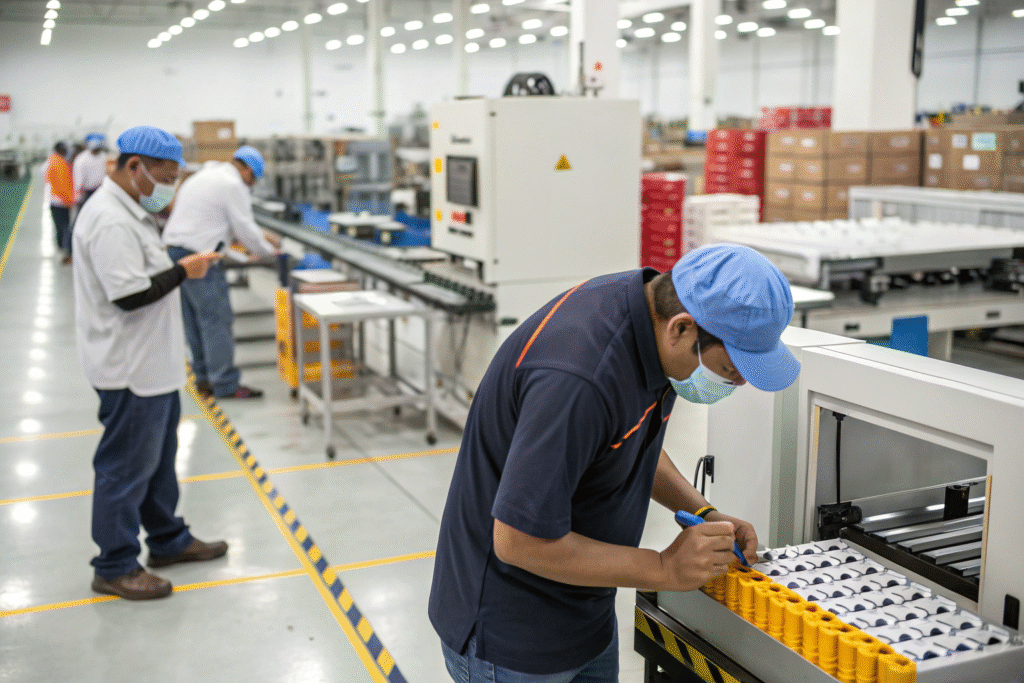
In-process checks identify sizing issues when they're easiest and least expensive to correct. First-piece inspection verifies that the initial garment off each production line matches specifications before full production begins. Spot checks during sewing operations monitor critical measurement points like shoulder width, armhole depth, and inseam length. Seam allowance audits using templates or gauges ensure construction consistency throughout the run. Pattern piece verification during cutting confirms that pieces match approved dimensions before sewing. Additionally, fit checks on production samples at key intervals (after first pieces, after 50 units, etc.) provide ongoing verification. These distributed checkpoints create multiple opportunities to catch and correct deviations before they affect entire production batches, significantly reducing the risk of sizing inconsistencies reaching customers.
How should final inspection verify sizing consistency?
Final inspection should systematically verify sizing consistency through statistical sampling and precise measurement protocols. The AQL (Acceptable Quality Level) sampling method provides a standardized approach for inspecting random garments from completed production lots. Detailed measurement checks of critical dimensions against the approved spec sheet catch variations outside tolerance ranges. Fit verification on live models or mannequins identifies issues that measurements alone might miss, particularly regarding ease and mobility. Fabric hand feel assessment ensures consistency with previous batches that might affect perceived fit. Additionally, comparison against approved sealed samples provides a physical benchmark for overall proportions and fit. This comprehensive final verification, when combined with in-process controls, creates a robust system that delivers the sizing consistency that builds brand trust and customer loyalty.
Conclusion
Ensuring consistent sizing across different kids clothing batches requires a systematic approach that addresses technical specifications, fabric management, production controls, and quality assurance. The foundation lies in comprehensive tech packs with detailed measurements and grade rules, supported by rigorous fabric testing and shrinkage control. Production consistency comes from precision cutting, standardized construction methods, and in-process quality checks, while final inspection provides verification through statistical sampling and measurement audits. This multi-layered approach transforms sizing consistency from hopeful expectation to predictable outcome.
At Fumao Clothing, we've implemented these precise systems to deliver the sizing consistency that major American and European children's wear brands require. Our technical team understands that consistent fit builds brand loyalty while sizing variations destroy it. If you're looking for a manufacturing partner who treats sizing consistency with the seriousness it deserves, contact our Business Director, Elaine, at elaine@fumaoclothing.com to discuss how our systematic approach to sizing can ensure your customers receive the same reliable fit with every purchase, building the trust that turns first-time buyers into lifelong brand advocates.