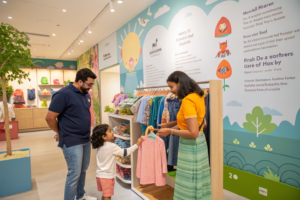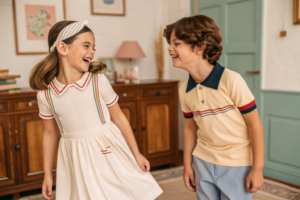
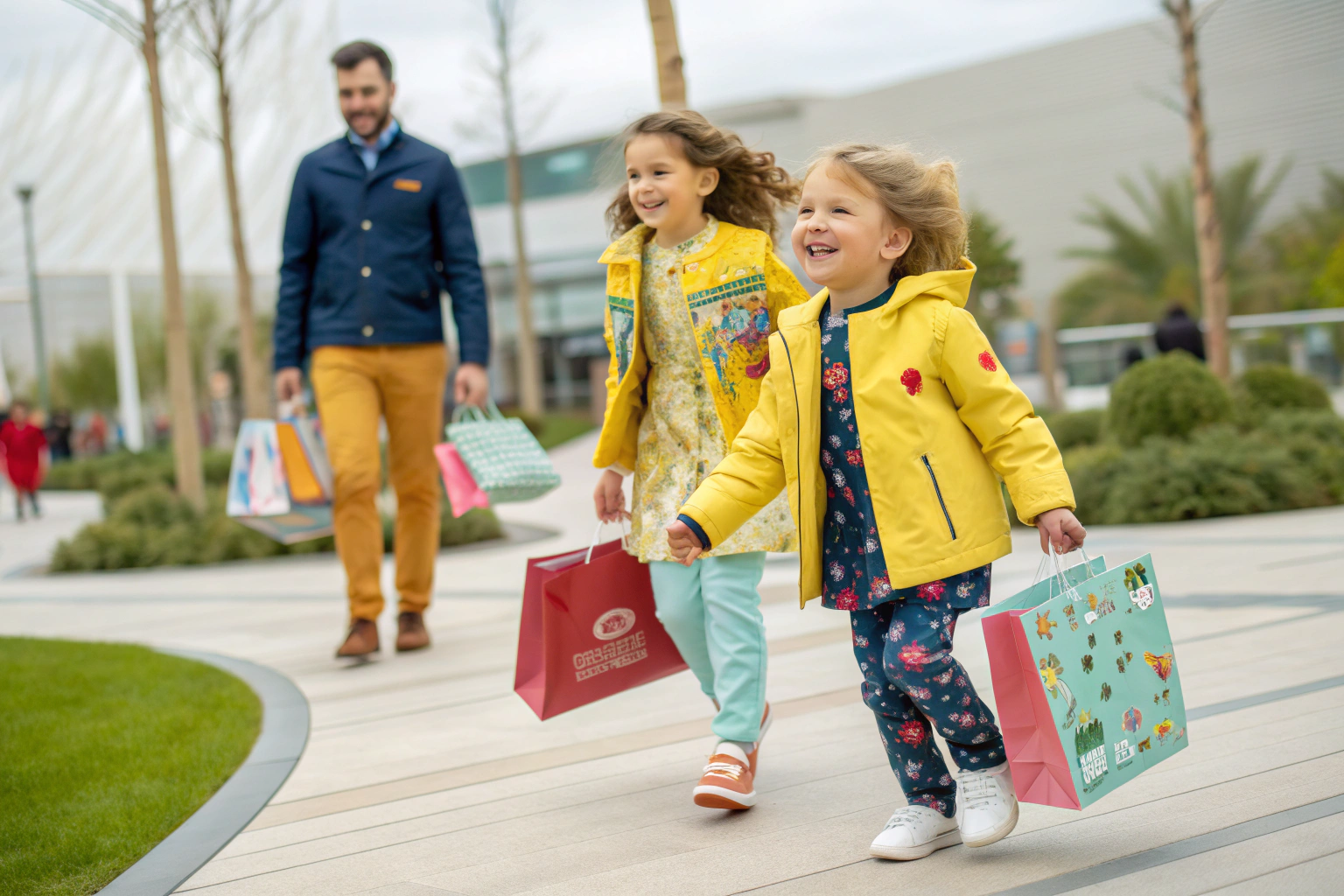
As a children's clothing manufacturer with decades of experience serving American and European brands, I understand the delicate balance required to create clothing that satisfies both the practical parent and the opinionated child. The secret lies in understanding that you're designing for two distinct audiences with different priorities, yet finding the sweet spot where their needs intersect.
Successful kids wear design must balance parental concerns about safety, durability, and value with children's desires for comfort, self-expression, and fun. The key is integrating safety features and quality materials in ways that don't compromise style, while incorporating engaging elements that don't sacrifice practicality. This dual-focused approach ensures clothing meets approval at both the checkout counter and in the morning dressing routine.
The most commercially successful children's clothing lines understand this dynamic and design accordingly, creating pieces that children love to wear and parents feel good about purchasing.
Why is understanding your dual audience crucial?
Designing for both parents and children requires recognizing they have different motivations and priorities. Parents focus on practical concerns, while children respond to emotional and sensory appeals.
Parents typically evaluate clothing based on safety, durability, ease of care, value, and appropriateness. They're asking: Will this hold up through multiple washes? Is it safe for my child? Does it represent good value? Meanwhile, children care about comfort, color, characters, textures, and what their friends are wearing. They're asking: Is this fun? Does it feel good? Will I feel cool wearing this? The most successful designs address both sets of concerns simultaneously, creating what we call the "double win" in children's product development.
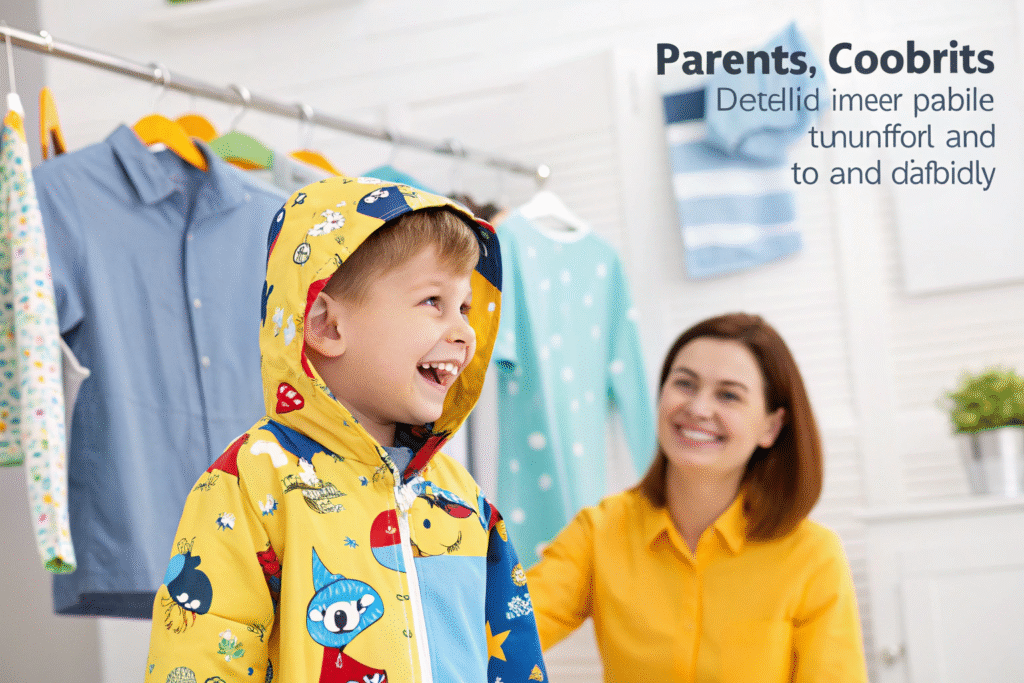
What are parents' primary concerns when selecting clothing?
Parents prioritize several key factors that directly impact their purchasing decisions. Safety tops the list, including concerns about choking hazards, flammability, and chemical treatments. Durability and washability follow closely, as parents need clothing to withstand active play and frequent laundering. Value perception is crucial, with parents weighing price against expected lifespan and quality. Practical considerations like ease of dressing, stain resistance, and age-appropriateness significantly influence choices. Increasingly, parents also consider ethical production and sustainability credentials, looking for OEKO-TEX certified fabrics and transparent supply chains.
What elements immediately attract children to clothing?
Children respond to specific visual and tactile cues that make clothing appealing to them. Bright, saturated colors and bold patterns consistently attract younger children's attention. Characters from favorite media franchises create immediate connection and desirability. Textural interest like ruffles, sequins, or embossed patterns engages children's senses. Interactive elements such as pockets, zippers, or reversible features provide entertainment value. As children approach school age, they become increasingly influenced by peer trends and seek clothing that helps them express their emerging identities, making "cool factor" increasingly important in design considerations.
How can you balance safety with style?
Safety requirements don't have to mean sacrificing style. The most successful designs integrate safety features so seamlessly that they become part of the aesthetic appeal rather than detracting from it.
Modern children's wear design has evolved to where safety and style complement rather than compete with each other. By thinking creatively about how to meet safety standards while enhancing visual appeal, designers can create clothing that satisfies the most safety-conscious parent while delighting style-aware children. This approach transforms potential limitations into opportunities for innovation.
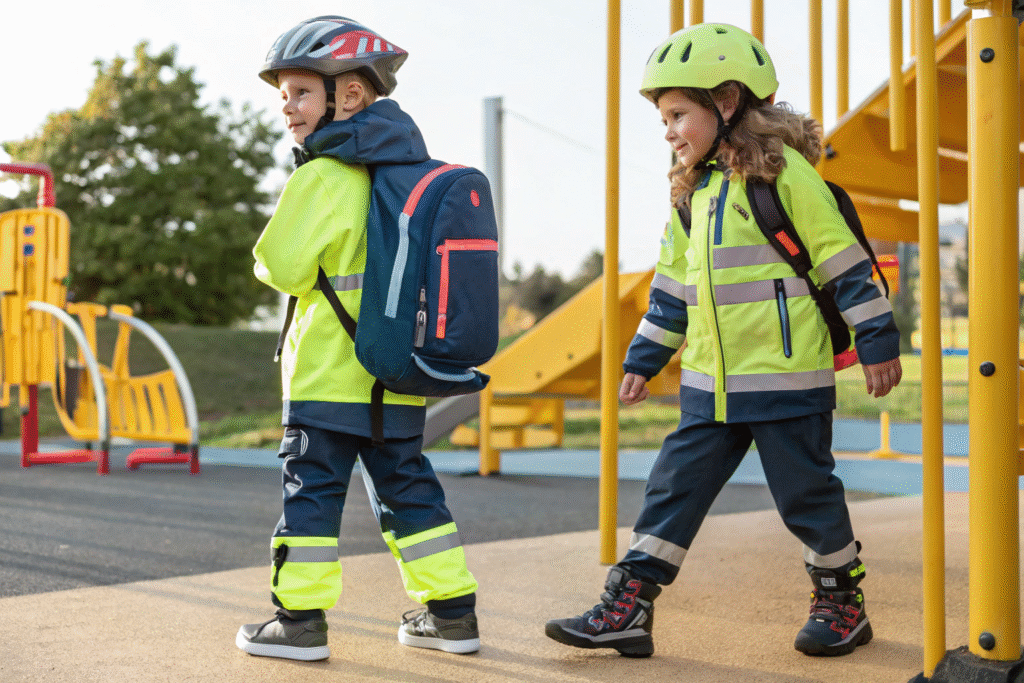
What safety features can be stylishly integrated?
Many safety elements can be designed to enhance rather than detract from aesthetics. Smooth, flat snap closures can be color-coordinated with garments to become design features rather than mere functional elements. Reinforced knees can be cut in contrasting colors to create visual interest while adding durability. Reflective elements can be woven into patterns or placed along seam lines in attractive designs that look intentional rather than merely functional. Drawcord toggles can be crafted in shapes that complement the garment's theme. Even sun protection features like UPF-rated fabrics now come in vibrant prints and textures that children find appealing, moving beyond the clinical look of earlier protective wear.
How can you ensure durability without compromising design?
Durability features can be strategically incorporated to enhance both longevity and visual appeal. Bar tacking at stress points can be done in contrasting thread colors to create subtle pattern elements. Double-stitched seams can follow interesting seam lines that become design features. Reinforced elbows and knees can be cut as stylish patches that complement the garment's color story. Quality zippers with large pulls can be selected in colors that coordinate with the overall design. By selecting better-quality materials from the start, like GOTS-certified organic cotton, designers create garments that maintain their appearance through multiple washes while meeting parental expectations for longevity.
What makes clothing both comfortable and cool?
Comfort is non-negotiable for children, while "cool factor" drives their enthusiasm for wearing certain items. The best designs achieve both simultaneously through thoughtful fabric selection and design details.
Children will resist wearing even the most stylish clothing if it doesn't feel good against their skin or restricts their movement. Meanwhile, parents appreciate comfortable clothing that doesn't require battles to get dressed. The intersection where superior comfort meets peer-approved style represents the sweet spot for commercial success in children's wear.
| Comfort Feature | Style Integration | Dual Appeal |
|---|---|---|
| Soft, breathable fabrics | Premium materials with rich colors | Feels good, looks expensive |
| Tagless labeling | Printed brand information | No itch, cleaner look |
| Flexible waistbands | Hidden stretch panels | Easy dressing, maintained silhouette |
| Raglan sleeves | Color-blocked design | Better mobility, sporty aesthetic |
| Flat-lock seams | Contrast stitching | No chafing, technical appearance |
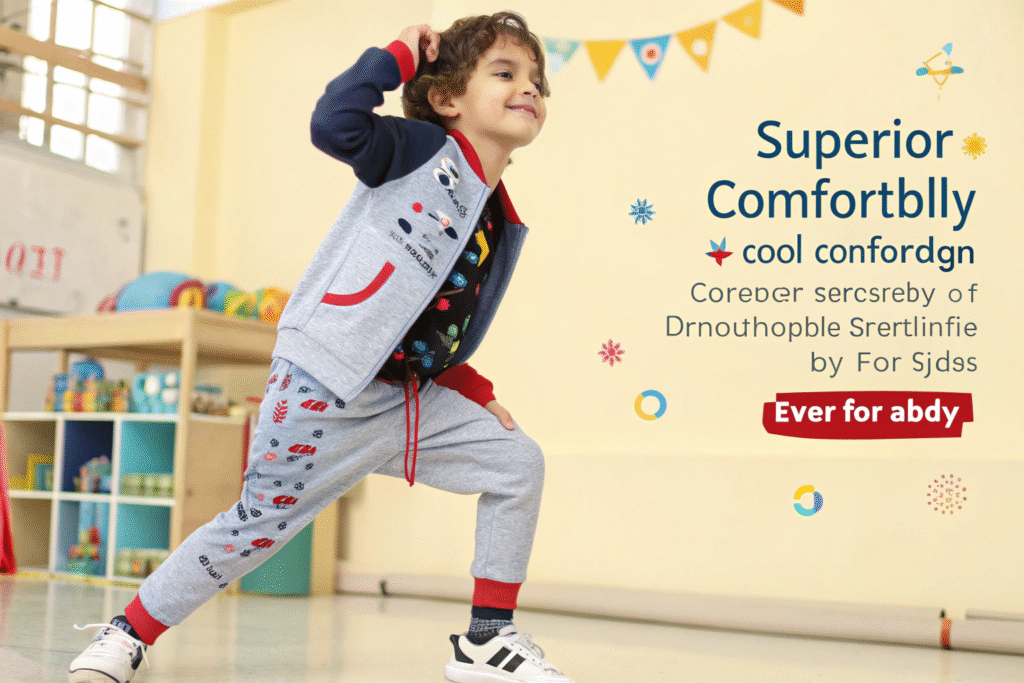
Which fabrics satisfy both comfort and durability needs?
Certain fabrics consistently deliver both the comfort children demand and the durability parents expect. High-quality combed cotton with a soft finish maintains comfort while offering better durability than standard cotton. Cotton-polyester blends provide wrinkle resistance and color retention while remaining soft against skin. French terry offers stretch and breathability perfect for activewear. Brushed twill combines a soft hand with exceptional durability for school wear. Performance fabrics with moisture-wicking properties work well for sportswear, keeping children comfortable during activity while satisfying parents' practical concerns. Each of these can be certified to international safety standards to address parental safety concerns.
How can designs accommodate active movement while maintaining style?
Designing for active movement requires specific construction techniques that can be integrated stylishly. Raglan and dolman sleeves allow greater arm movement while creating a contemporary, sporty silhouette. Gussets in underarms and crotches provide extra ease without adding bulk throughout the garment. Strategic stretch panels in side seams or knees offer flexibility where most needed while maintaining the garment's overall shape. A-line shapes and pleating provide room for movement while creating visual interest. These technical solutions can be designed as fashion features rather than hidden compromises, resulting in clothing that moves with children throughout their day while maintaining its style integrity.
How can you incorporate educational and interactive elements?
Educational and interactive elements represent a powerful opportunity to create added value that appeals to both parents and children, transforming ordinary clothing into engaging experiences.
Parents appreciate clothing that offers developmental benefits, while children enjoy the entertainment and engagement these elements provide. The most successful implementations integrate these features so they feel organic to the garment rather than tacked on, creating products that are both fun and purposeful.
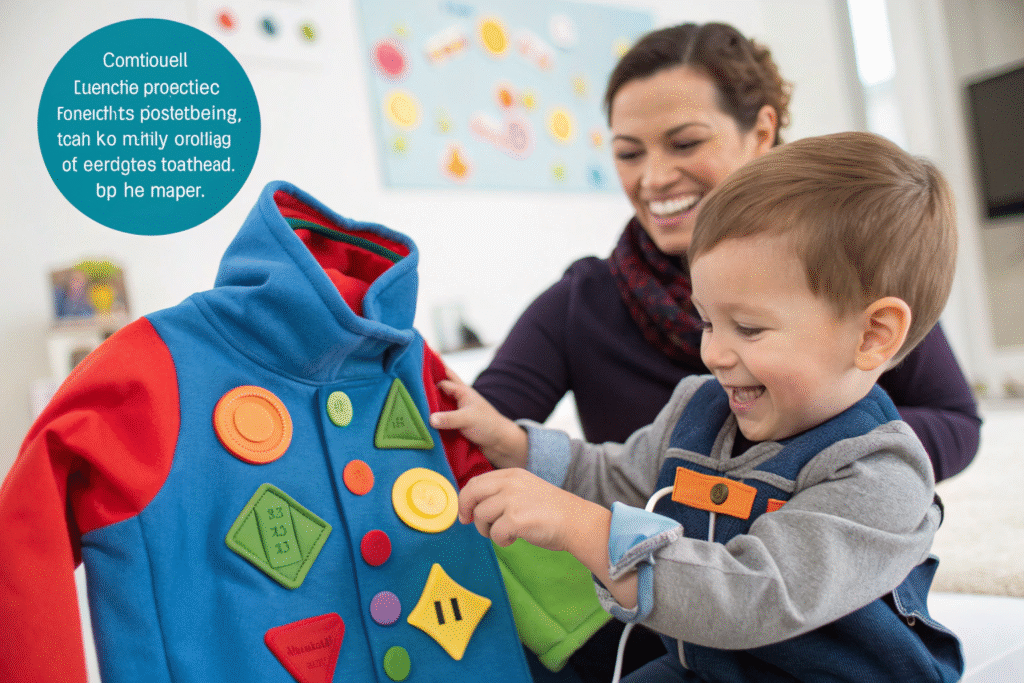
What learning elements can be woven into designs?
Educational components can be subtly integrated into clothing in ways that feel natural and engaging. Pattern mixing can introduce basic mathematical concepts like sequencing and geometry. Color gradations can teach color theory in an intuitive way. Prints can feature animals, plants, or vehicles with accurate labeling to build vocabulary. Text in multiple languages can introduce early literacy and cultural awareness. Textural contrasts can help develop sensory discrimination. Even practical skills like buttoning, zipping, and tying can be incorporated as developmental features when designed with learning in mind, creating what parents perceive as "smart clothing" that supports their child's growth.
How can interactive features enhance engagement without compromising wearability?
Interactive elements should enhance rather than dominate the wearing experience. Detachable components like reversible appliqués or mix-and-match patches allow children to customize their look without altering the garment's core structure. Strategically placed pockets for collecting treasures add play value without affecting comfort. Subtle sensory elements like varied textures along cuffs or hemlines provide interest without overwhelming. Hidden details like contrasting inner prints or embroidered messages create discovery moments that children love. These features add layers of engagement while maintaining the clothing's primary function as comfortable, practical wear that stands up to active use and meets parental expectations for durability and appropriateness.
Conclusion
Designing children's wear that successfully appeals to both parents and children requires a nuanced understanding of two different sets of needs and desires. The most successful approaches integrate safety, durability, and practicality in ways that enhance rather than compromise style, comfort, and engagement. By finding the intersection where parental concerns meet children's preferences, designers create clothing that satisfies at point of purchase and continues to delight through wear.
At Fumao Clothing, we've mastered this balance through decades of partnership with leading children's brands. Our design and production capabilities specialize in creating clothing that meets the highest standards of safety and quality while capturing the fun and style that children love. If you're looking for a manufacturing partner who understands this crucial dynamic, let's discuss how we can bring your vision to life. Contact our Business Director, Elaine, at elaine@fumaoclothing.com to begin creating children's wear that wins approval from both your customers and their children.