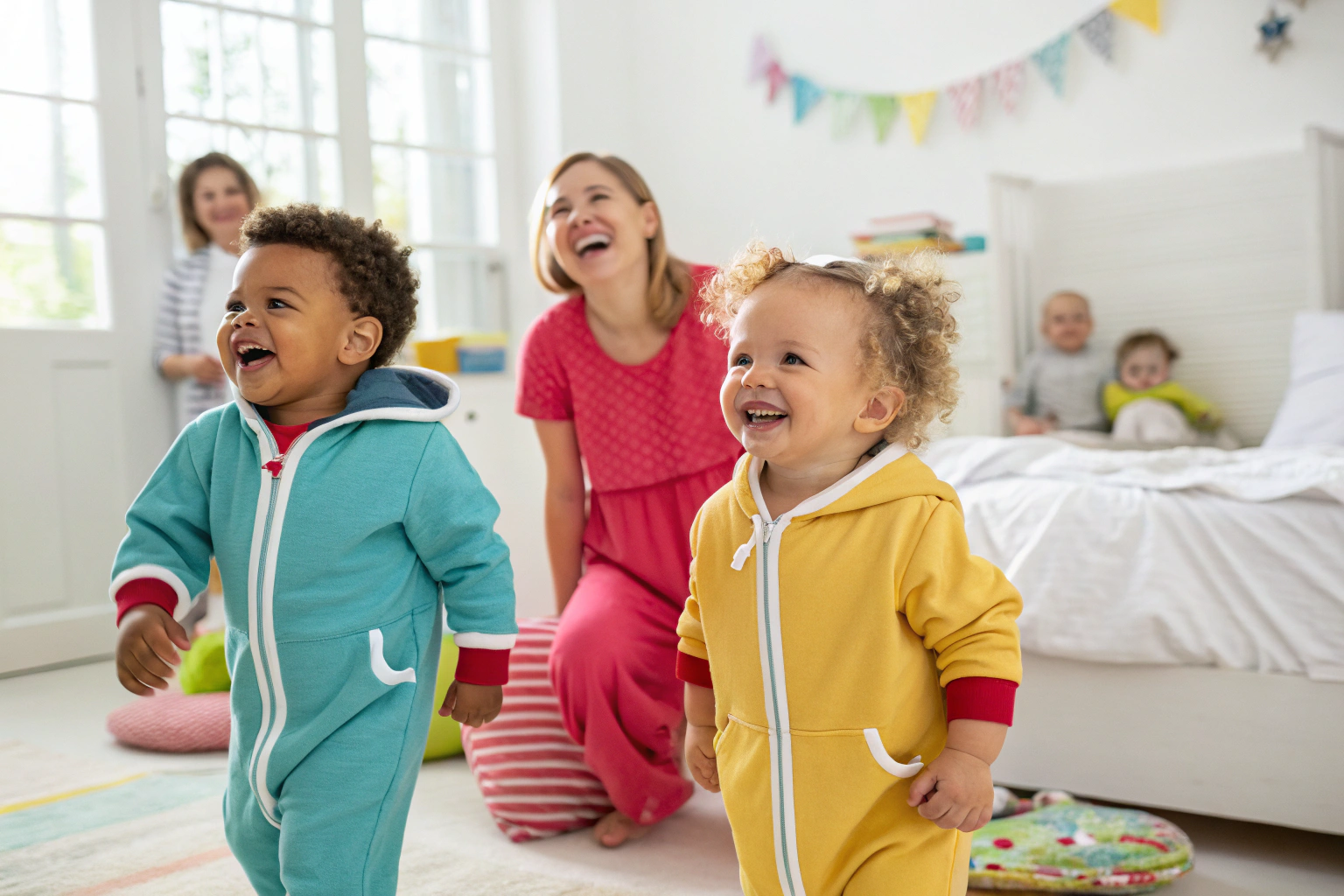
Designing clothing for toddlers requires understanding their unique developmental stage, where emerging independence meets physical limitations. As manufacturers specializing in toddler apparel, we’ve identified key design principles that balance children’s growing autonomy with parents’ practical needs.
To design kids clothes that are easy for toddlers to wear, focus on accessible closures, comfortable fabrics, practical sizing, and designs that support self-dressing skills. The most successful toddler clothing combines durability for active play with features that encourage independence while minimizing frustration for both children and parents. This approach requires thoughtful consideration of everything from closure placement to fabric selection and silhouette design.
What Clothing Features Support Toddler Independence?
Toddlers are developing their self-dressing skills and desire autonomy, making clothing design that supports these milestones crucial for both developmental progress and daily practicality.
The most effective designs incorporate features that allow toddlers to participate in dressing themselves while ensuring the process isn’t frustrating. This includes strategic closure placement, easy-on silhouettes, and clear front/back differentiation. Clothing that toddlers can manage independently builds confidence and reduces power struggles during dressing, making the experience positive for both children and caregivers. These features should accommodate their still-developing fine motor skills while providing enough challenge to build competence.

How Do Strategic Closures Promote Self-Dressing?
Closures represent the biggest hurdle in toddler self-dressing. Elastic waistbands, stretchy necklines, and large, easy-grip zippers allow toddlers to manage their clothing independently. According to child development experts, between ages 2-3, children begin showing interest in dressing themselves but lack the fine motor skills for small buttons or tricky snaps. Magnetic closures, large hook-and-loop tabs, and pull-on designs with plenty of stretch enable success while building confidence. The placement of closures—front rather than back, within easy reach—significantly impacts whether toddlers can use them independently.
Why Do Simple Silhouettes Work Best?
Complicated clothing designs frustrate toddlers and discourage self-dressing attempts. Simple silhouettes with minimal components, clear orientation (obvious front/back), and generous ease for movement support independent dressing success. The American Occupational Therapy Association emphasizes that clothing should not require advanced problem-solving skills or complex motor planning. Raglan sleeves, A-line shapes, and minimal layers allow toddlers to focus on the basic mechanics of dressing without becoming overwhelmed by complicated steps or orientations.
How Does Fabric Choice Impact Ease of Wear?
Fabric selection directly affects how easily toddlers can manage their clothing, influencing everything from dressing independence to comfort during all-day wear.
The ideal toddler fabrics combine stretch for easy dressing, durability for active play, and comfort for sensitive skin. Fabrics should have enough mechanical stretch to pull over heads and limbs easily yet maintain their shape through rough play and frequent washing. Additionally, fabric weight and texture affect how clothing feels during movement and whether it causes sensory issues for particular children.

What Fabric Properties Support Easy Dressing?
Four-way stretch fabrics with good recovery make dressing significantly easier for both toddlers and parents. Jersey knits, interlock fabrics, and stretch wovens accommodate the "pull-on" motion that toddlers naturally use when dressing. According to textile testing standards, recovery percentage (how well fabric returns to its original shape after stretching) is particularly important for maintaining fit after repeated dressing. Fabrics with at least 20-30% horizontal stretch typically work best for pull-on styles, while vertical stretch helps with reaching and bending motions during play.
Why Are Breathable, Soft Fabrics Essential?
Toddlers have sensitive skin and regulate body temperature differently than adults, making fabric breathability and softness crucial. Natural fibers like cotton and bamboo provide excellent breathability, while brushed finishes create softness against skin. The American Academy of Pediatrics recommends avoiding rough textures, seams, or tags that might irritate sensitive skin. Fabrics should withstand frequent washing without becoming stiff or scratchy, maintaining their comfort properties throughout the garment’s lifespan while preventing overheating during active play.
What Design Elements Accommodate Toddler Development?
Toddlers experience rapid physical development and engage in constant movement, requiring clothing designs that accommodate their unique body proportions and activity levels.
Successful toddler clothing considers their specific physical characteristics: proportionally larger heads compared to necks, developing potty-training needs, and constant motion requiring unrestricted movement. Designs must accommodate these factors while remaining easy to put on and take off, particularly during urgent bathroom breaks or messy mealtimes that require quick changes.

How Should Necklines Accommodate Toddler Proportions?
Toddlers have proportionally larger heads than older children, making neckline design critical for easy dressing. Wide, stretchy necklines or envelope shoulders that open completely prevent struggling during dressing. According to anthropometric data on child development, the head circumference to neck ratio changes significantly during toddler years. Designs should accommodate this proportion without being so loose that they slip off shoulders during play. Strategic reinforcement at necklines prevents stretching out over time while maintaining the easy-on, easy-off functionality parents value.
Why Do Potty-Training Considerations Matter in Design?
During potty-training periods, clothing that facilitates quick, independent bathroom use becomes essential. Elastic waistbands, simple pull-on styles, and avoiding complicated layers support potty-training success. The American Academy of Pediatrics potty-training guidelines emphasize that clothing should not present obstacles during this learning phase. Designs that allow toddlers to manage their own pants without assistance build confidence and prevent accidents caused by difficult clothing. This consideration extends to avoiding back closures, complicated belts, or overalls that require complete undressing for bathroom use.
How Can You Balance Durability with Easy Wear?
Toddler clothing must withstand rigorous activity while remaining easy to wear, requiring thoughtful construction that doesn’t sacrifice functionality for durability.
The most successful designs reinforce high-stress areas without adding bulk or complexity that interferes with easy dressing. This involves strategic seam placement, reinforced stitching in key areas, and durable yet flexible materials that maintain their easy-wear properties through months of active use and frequent washing.

What Construction Techniques Enhance Both Durability and Ease?
Flatlock seams prevent chafing while providing strong construction that withstands active play. Reinforced knees and seats add durability without compromising comfort or ease of dressing. According to apparel construction standards, seam strength should be balanced with flexibility in children’s wear. Gussets in underarms and crotches provide additional movement ease without adding complicated construction elements. These techniques ensure clothing lasts through multiple children while maintaining the easy-wear characteristics that make dressing simpler for both toddlers and parents.
How Do You Select Trims That Withstand Use Without Compromising Function?
Trims and decorations should enhance rather than hinder functionality. Avoid small, delicate trims that can catch or tear during dressing or play. Instead, use screen printing, embroidered patches, or appliqués secured with flexible stitching. The Consumer Product Safety Commission guidelines emphasize that decorations should not create choking hazards or impede function. Trims should withstand repeated stretching during dressing without peeling, cracking, or becoming loose, maintaining both safety and appearance through the garment’s lifespan.
Conclusion
Designing toddler clothing that’s easy to wear requires balancing multiple considerations: supporting emerging independence through accessible closures, selecting fabrics that facilitate easy dressing, accommodating unique physical development needs, and ensuring durability without sacrificing functionality. The most successful designs respect toddlers’ desire for autonomy while recognizing their physical and cognitive limitations, creating clothing that builds confidence and reduces dressing frustration.
When clothing supports rather than hinders self-dressing skills, it transforms daily routines into opportunities for growth and independence. If you’re developing a toddler clothing line and want to work with a manufacturer who understands these specific design requirements, contact our Business Director, Elaine, at elaine@fumaoclothing.com. Let’s discuss how we can help you create clothing that supports toddler development while making daily life easier for both children and their caregivers.