Designing a children's clothing collection for the European market can feel like a complex puzzle. You need to balance style, safety, and strict regulations. Many brands struggle to create collections that are both commercially successful and fully compliant. The process involves more than just cute designs; it requires a deep understanding of the market's unique demands.
Creating a high-quality children's clothing collection for Europe requires a strategic focus on three core pillars: stringent compliance with EU safety standards, the selection of premium, certified materials, and designs that reflect contemporary European aesthetics and functionality. Success hinges on partnering with a manufacturer that has proven expertise in navigating the complex European regulatory landscape and consumer preferences.
This guide will break down the entire process into actionable steps. We will move from understanding the legal framework to the final product landing on European shelves. By the end, you will have a clear blueprint for designing a collection that resonates with European parents and stands up to rigorous scrutiny.
What Are The Key EU Safety Standards For Kids' Apparel?
Navigating the regulatory landscape is the first and most critical step. Ignorance here can lead to costly recalls and reputational damage. The EU has some of the world's most rigorous safety requirements for children's products, designed to protect vulnerable users.
The key EU safety standards for kids' apparel are primarily governed by the REACH regulation for chemical safety, the OEKO-TEX Standard 100 for textile certifications, and the EN 14682 standard for physical safety, which specifically addresses drawstrings and cords in children's clothing. Compliance is not optional; it is a legal requirement for market access.
Understanding these standards inside and out is fundamental to your collection's success. Let's dive deeper into what each of these entails and how they impact your design choices.
Why is chemical compliance under REACH crucial?
REACH (Registration, Evaluation, Authorisation and Restriction of Chemicals) is a cornerstone of EU safety. It restricts the use of specific hazardous substances in apparel and textiles to protect both children and the environment. For children's clothing, restrictions on substances like Azo dyes, formaldehyde, and heavy metals are particularly stringent. Children have more sensitive skin and a tendency to put things in their mouths, making them more vulnerable to harmful chemicals. As a manufacturer, we conduct thorough lab testing for every batch of fabric to ensure full REACH compliance, providing you with the necessary documentation and peace of mind.
How does EN 14682 impact clothing design?
The EN 14682 standard focuses on physical safety, specifically regulating the use of cords and drawstrings in children's clothing to prevent strangulation risks. This standard directly influences your design process. For example, it prohibits drawstrings in the hood and neck area for sizes for young children. Instead, you must use safer alternatives like elastic or touch-fastening closures. Adhering to this standard requires careful planning during the tech pack development phase. We help our clients redesign elements to be both stylish and safe, ensuring their collections meet these critical physical safety requirements without compromising on aesthetics.
How To Select Premium Fabrics For European Kids' Wear?
The choice of fabric is where quality is truly tangible. European consumers are increasingly discerning, seeking out materials that are not only soft and durable but also ethically and sustainably produced.
Selecting premium fabrics for European kids' wear involves prioritizing certified organic materials like GOTS-certified cotton, which guarantees environmental and social responsibility, and TENCEL™ Lyocell, known for its exceptional softness and sustainability. The focus should be on natural, breathable, and hypoallergenic fibers that can withstand frequent washing while maintaining comfort and color vibrancy.
Moving beyond the basic fiber content, let's explore the specific certifications and performance characteristics that define a premium fabric in this market.

What are the benefits of GOTS-certified organic cotton?
GOTS (Global Organic Textile Standard) is the world's leading standard for organic textiles. It covers the entire supply chain, from harvesting raw materials to environmentally and socially responsible manufacturing. For your collection, using GOTS-certified cotton signals a commitment to sustainability that resonates powerfully with European parents. The fabric is grown without toxic pesticides, making it safer for the farmers, the children wearing the clothes, and the planet. Furthermore, it is exceptionally soft, breathable, and less likely to cause skin irritation, making it ideal for a baby's delicate skin. We stock a wide range of GOTS-certified fabrics to make sourcing easier for our partners.
Why consider TENCEL™ Lyocell for active children?
TENCEL™ Lyocell is a game-changer for children's wear. This fiber is derived from sustainably sourced wood and produced in an environmentally friendly closed-loop process that recycles water and solvents. Its benefits are perfect for active kids: it is incredibly soft, highly absorbent (even more than cotton), and has excellent moisture-wicking properties to keep children dry and comfortable. The fibers are also exceptionally strong, both wet and dry, resulting in durable clothing that lasts longer. Incorporating TENCEL™ into knitwear or jersey collections enhances the premium feel and functional performance of your line, aligning with the European demand for smart, sustainable materials.
What Are The Current European Children's Fashion Trends?
Understanding trends is about more than just being fashionable; it's about connecting with the cultural and lifestyle needs of your target audience. European children's fashion balances practicality with a sophisticated, often minimalist, aesthetic.
The current European children's fashion trends are characterized by a "less is more" philosophy, with a strong emphasis on unisex styles, earthy and muted color palettes, and functional, versatile pieces that can be mixed and matched. Sustainability is not just a material choice but a design ethos, leading to a rise in timeless styles and durable, heirloom-quality garments.
To successfully integrate these trends, we need to dissect them further and understand their practical application in your collection.
How to successfully implement a unisex design strategy?
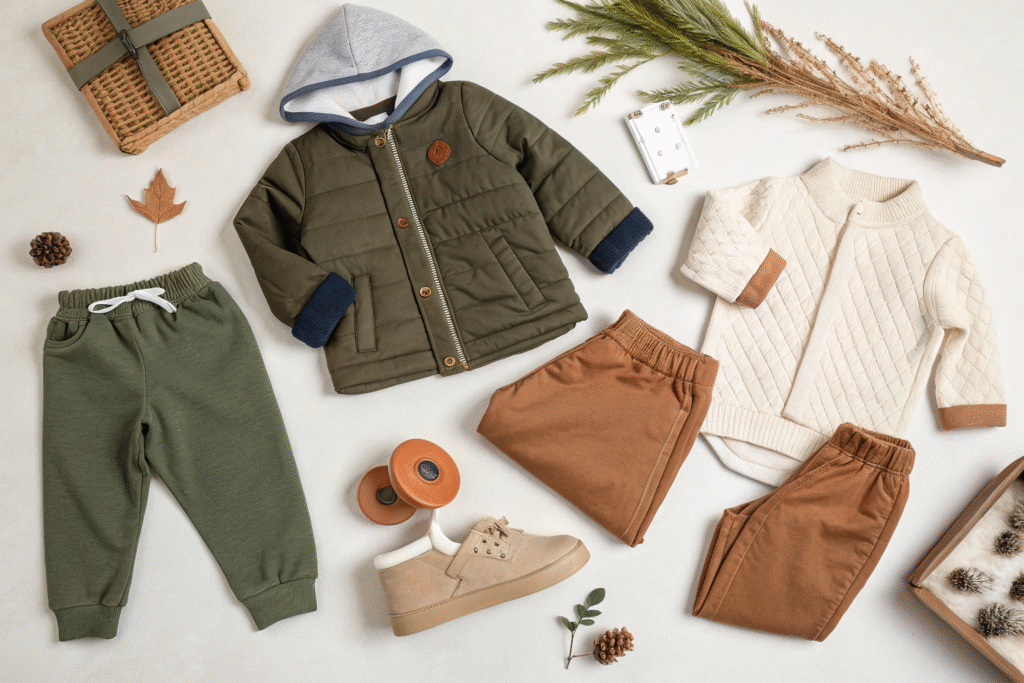
Unisex design is a dominant trend that also makes practical business sense. It simplifies inventory and appeals to a broader customer base. The key is to focus on silhouettes, colors, and prints that are not gender-specific. Think relaxed-fit trousers, classic sweatshirts, and comfortable t-shirts. Color palettes should move beyond traditional pinks and blues to encompass olives, mustards, grays, and navies. Prints can include geometric patterns, animals, and nature-inspired motifs. The goal is to create versatile pieces that any child would feel comfortable and stylish wearing. We help our clients develop tech packs that emphasize these neutral, functional elements from the outset.
Why is functionality key in modern children's wear?
European parents value practicality. Clothing must facilitate play and movement while being easy for parents to manage. This trend translates into design features like reinforced knees, stretchy waistbands, and easy-access openings. The concept of "layerability" is also crucial, especially for seasonal collections. Designing pieces that work together—such as a lightweight base layer under a sweater and a weather-resistant shell—adds value for the consumer. We specialize in manufacturing these complex, functional garments, ensuring that features like zippers, seams, and elastics are durable and comfortable for all-day wear.
How To Ensure Timely Delivery From China To Europe?
A beautifully designed collection is worthless if it misses the selling season. Reliable logistics are the final, critical link in the supply chain, especially when shipping from China to Europe.
Ensuring timely delivery from China to Europe requires a proactive, multi-faceted strategy that includes consolidating production schedules, leveraging strategic partnerships with reliable freight forwarders, and utilizing DDP (Delivered Duty Paid) Incoterms to streamline customs clearance and avoid unexpected delays or costs.
Let's explore the specific operational steps that can safeguard your delivery timeline.

What are the advantages of using DDP shipping terms?
DDP, or Delivered Duty Paid, is a model we strongly recommend for our European clients. Under DDP, we, the supplier, take full responsibility for shipping, insurance, and, most importantly, all import duties and taxes until the goods are delivered to your warehouse. This simplifies the process for you dramatically. You get a single, all-inclusive price and are shielded from the complexities of EU customs clearance. This transparency prevents unexpected charges and administrative hurdles, ensuring a smoother, more predictable delivery. Our in-house logistics team manages the entire process, providing you with real-time tracking and peace of mind.
How does production planning prevent delays?
A well-managed production timeline is the foundation of on-time delivery. We mitigate risks by implementing a detailed schedule with built-in buffer times for each stage: fabric sourcing, cutting, sewing, quality control, and packing. We communicate this timeline transparently with you from day one. Our factory, with its five dedicated production lines, allows for better capacity planning and reduces the risk of overbooking. Furthermore, by conducting in-line inspections throughout the manufacturing process, we identify and correct issues early, preventing a last-minute scramble that could delay the final shipment. This disciplined approach is how we maintain our 98% on-time delivery rate.
Conclusion
Designing a successful children's clothing collection for Europe is a detailed journey. It requires a steadfast commitment to safety, a keen eye for material quality and trends, and a reliable supply chain partner. By focusing on EU standards, selecting certified premium fabrics, aligning with contemporary aesthetics, and securing your logistics, you build a solid foundation for a collection that will thrive in a competitive market.
This process is complex, but you don't have to navigate it alone. Our expertise is rooted in decades of serving brands exactly like yours. We understand the nuances of the European market and are equipped to guide you from concept to delivery. If you are ready to develop a high-quality, compliant, and profitable children's wear collection, let's connect. For a direct conversation about your production needs, please reach out to our Business Director, Elaine, at elaine@fumaoclothing.com. We are here to be your trusted partner in growth.