
In the competitive children's apparel market, your line sheet serves as the critical bridge between your collection and potential buyers. As a manufacturer who has reviewed thousands of line sheets from both emerging and established brands, I've identified the key elements that separate converting documents from those that get immediately filed away. A well-crafted line sheet does more than display products—it tells a compelling brand story while providing all the technical information buyers need to make confident purchasing decisions.
To create a kids clothing line sheet that converts, focus on combining compelling visual storytelling with comprehensive technical specifications. The most effective line sheets feature professional product photography, clear size ranges, detailed fabric information, pricing structures, and straightforward ordering instructions—all presented in a clean, brand-consistent layout that makes the buying process effortless for retailers and distributors.
A converting line sheet addresses both the emotional and practical aspects of the buying decision. It should excite buyers about your collection while simultaneously answering all their practical questions. Let's explore how to build a line sheet that drives orders and builds lasting wholesale relationships.
What essential elements must every line sheet include?
The foundation of a high-converting line sheet lies in including all the information buyers need to place orders without requiring additional research or clarification. Missing information is one of the most common reasons buyers abandon a line sheet and move on to competitors. Your document should serve as a comprehensive resource that anticipates and answers every possible question.
Essential elements include clear product identification, professional imagery, detailed specifications, transparent pricing, and straightforward ordering information. Buyers typically review line sheets quickly, so information must be immediately accessible and logically organized. The most successful line sheets balance aesthetic appeal with practical functionality, making the purchasing process seamless for time-pressed buyers.

Why is professional photography non-negotiable?
Professional photography is non-negotiable because it directly influences buyers' perception of your brand's quality and market positioning. In children's wear specifically, images must showcase not only the aesthetic appeal but also the fit, drape, and practical wearability of each garment. According to visual marketing research, high-quality product images can increase conversion rates by up to 30%. For kids clothing, this means showing garments on appropriate-aged models in natural settings that help buyers visualize the items in their own stores and understand how they'll appeal to parents.
What technical specifications do buyers need most?
Buyers require comprehensive technical specifications to assess quality, compliance, and suitability for their customer base. Essential information includes detailed fabric composition (including percentages of each fiber), Oeko-Tex or GOTS certifications, country of origin, care instructions, and precise measurements for each size. For children's wear specifically, safety compliance information (such as CPSIA certification for US markets) is crucial. Additionally, buyers need clear size charts with actual garment measurements—not just age ranges—as sizing varies significantly between brands and markets.
How should you organize information for maximum impact?
The organization of your line sheet directly impacts how easily buyers can navigate your collection and make purchasing decisions. Information should flow logically from broad brand storytelling to specific product details, following the natural decision-making process of your wholesale partners. A confused buyer is unlikely to place orders, no matter how strong your collection might be.
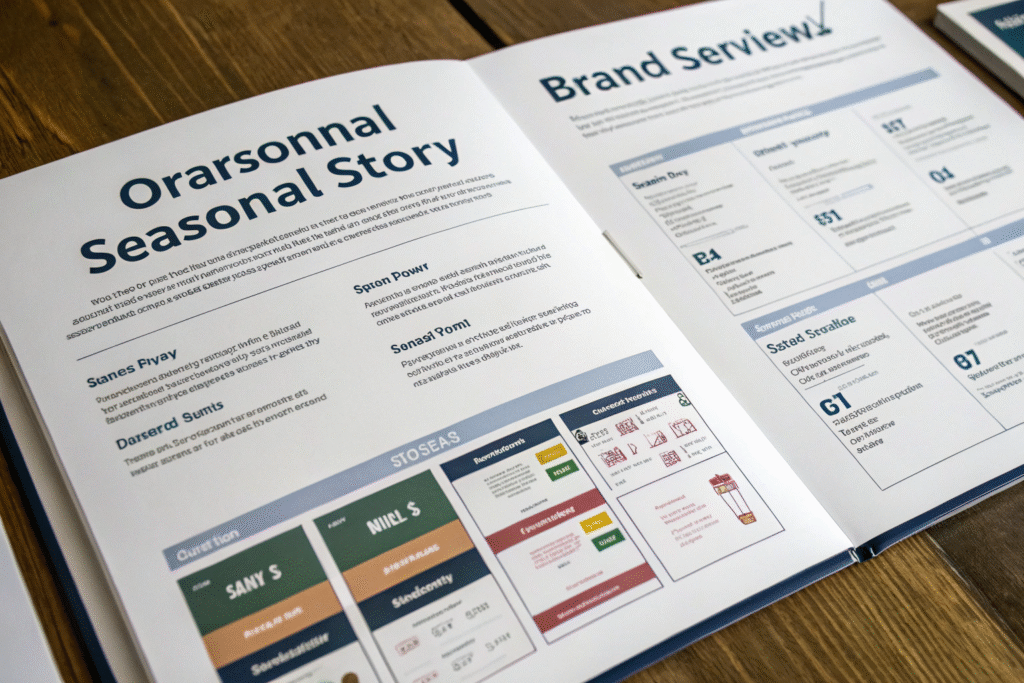
The most effective organizational structures begin with brand overview and seasonal story, then progress to collection overview, individual product pages, and finally ordering information. Each section should build upon the previous one, creating a compelling narrative that guides buyers toward placing orders. Clear section dividers, consistent layouts, and intuitive navigation are essential for maintaining engagement throughout the document.
What is the ideal flow for a converting line sheet?
The ideal flow for a converting line sheet follows this sequence: brand introduction, seasonal inspiration, collection overview, individual product pages, size charts, pricing, and ordering instructions. This progression mirrors the buyer's decision-making process, beginning with emotional connection (brand story) and moving toward practical considerations (pricing and ordering). The National Retail Federation emphasizes that buyers typically make initial screening decisions within the first 30 seconds of reviewing a line sheet, making those opening sections critically important for capturing attention and interest.
How can grouping strategies improve buyer experience?
Strategic grouping significantly improves buyer experience by reducing cognitive load and making patterns within your collection immediately apparent. Group products by category (tops, bottoms, dresses), by collection story (adventure theme, garden party), or by customer age (newborn, toddler, kids). This organization helps buyers quickly identify the products most relevant to their specific needs. Additionally, grouping complementary items together can increase average order value through natural cross-selling opportunities, as buyers easily visualize complete outfits rather than isolated pieces.
What pricing and ordering information converts best?
Transparent, easy-to-understand pricing and ordering information significantly increases conversion rates by reducing friction in the purchasing process. Buyers need clear guidance on pricing tiers, minimum order quantities, payment terms, and shipping information to feel confident placing orders. Ambiguity in any of these areas creates hesitation and often results in abandoned opportunities.
The most effective pricing strategies include tiered pricing that rewards larger orders, clear minimum order requirements, and straightforward payment terms. Additionally, providing multiple contact methods and designating a specific wholesale representative streamlines the ordering process. The table below outlines key pricing and ordering elements that drive conversions:
| Element | Why It Converts |
|---|---|
| Tiered Pricing | Incentivizes larger orders with better margins |
| Clear MOQs | Sets realistic expectations for new partnerships |
| Multiple Contact Methods | Accommodates different buyer preferences |
| Dedicated Representative | Provides personalized service and accountability |

Why do tiered pricing structures increase order size?
Tiered pricing structures increase order size by creating natural incentives for buyers to purchase more units to achieve better wholesale pricing. When buyers see they can improve their profit margins by ordering 24 units instead of 12, they're more likely to stretch their initial order. This approach aligns with wholesale pricing psychology that demonstrates how clearly presented progression toward better value motivates increased purchasing. For children's wear specifically, tiered pricing works particularly well when aligned with prepack assortment options (such as size packs) that simplify buying decisions.
How can you make ordering instructions foolproof?
Making ordering instructions foolproof involves eliminating all potential confusion points through clear, step-by-step guidance. Provide a dedicated order form with pre-filled product information, SKUs, and pricing to minimize manual entry errors. Include visual examples of how to complete the form, specify acceptable payment methods with any associated fees, and provide exact shipping cost calculations or DDP terms clarification. The most successful line sheets treat the ordering process as a guided experience rather than an assumption of buyer knowledge, resulting in higher conversion rates and fewer administrative errors.
How can you tailor line sheets for different buyer types?
Different buyer types have distinct informational priorities and purchasing processes, making tailored line sheets significantly more effective than generic approaches. A boutique children's store owner needs different information than a national chain buyer or an online marketplace curator. Understanding these differences allows you to highlight the most relevant aspects of your collection for each audience.
The most common buyer types include independent boutiques, department stores, online retailers, and international distributors. Each has unique requirements regarding assortment planning, pricing expectations, and compliance documentation. Creating slightly modified versions of your core line sheet for these different audiences demonstrates professionalism and understanding of their specific business needs.

What do boutique buyers prioritize in a line sheet?
Boutique buyers typically prioritize unique designs, brand story, and product quality over mass-market appeal and deep discounts. They're looking for collections that align with their store's aesthetic and provide differentiation from larger competitors. Boutique buyers particularly value exclusive arrangements, limited distribution in their geographic area, and flexibility around minimum orders. Highlighting your manufacturing craftsmanship, unique design details, and brand values typically resonates more strongly with this audience than emphasizing volume pricing alone.
How do large retailers' line sheet needs differ?
Large retailers require more comprehensive data, stricter compliance documentation, and clearer scalability information than smaller buyers. Their line sheet needs typically include detailed RFQ documentation, volume pricing tiers, proven compliance with all relevant safety standards, and evidence of production capacity to fulfill larger orders. Additionally, large retailers often require specific formatting to integrate with their buying systems and more detailed information about packaging, labeling, and shipping requirements. Addressing these needs directly in your line sheet demonstrates your capability to handle significant wholesale partnerships.
Conclusion
Creating a converting kids clothing line sheet requires balancing compelling brand storytelling with comprehensive technical information and straightforward ordering processes. The most successful line sheets anticipate buyer questions, address different audience needs, and make the wholesale purchasing process as seamless as possible.
Remember that your line sheet often serves as the first substantial interaction with potential stockists, making its quality reflective of your brand's overall professionalism. If you're developing a children's collection and need manufacturing support for products that will shine in your line sheets, contact our Business Director Elaine at elaine@fumaoclothing.com. Let Shanghai Fumao help you create high-quality children's wear that converts at first sight.