
Quality verification in children's wear requires a comprehensive, multi-layered approach that addresses both aesthetic concerns and critical safety requirements. As a manufacturer with decades of experience producing children's clothing for international markets, I've developed rigorous quality assurance protocols that ensure every shipment meets the highest standards.
Verifying quality in children's wear before shipping involves implementing a multi-stage inspection process that includes pre-production material testing, in-process quality checks, detailed pre-shipment inspections, and final random sampling. This systematic approach combines visual inspection, physical testing, measurement verification, and safety compliance checks to identify and address potential issues before products leave the factory.
Effective quality verification transforms subjective assessment into objective measurement, ensuring consistency and reliability across all shipments while protecting children's safety and your brand reputation.
What Pre-Production Quality Checks Are Essential?
Quality verification begins long before production starts, with thorough evaluation of materials and components that form the foundation of your children's wear.
Establishing quality standards at the material level prevents issues that cannot be corrected during later production stages.
How Do You Verify Fabric Quality and Safety?
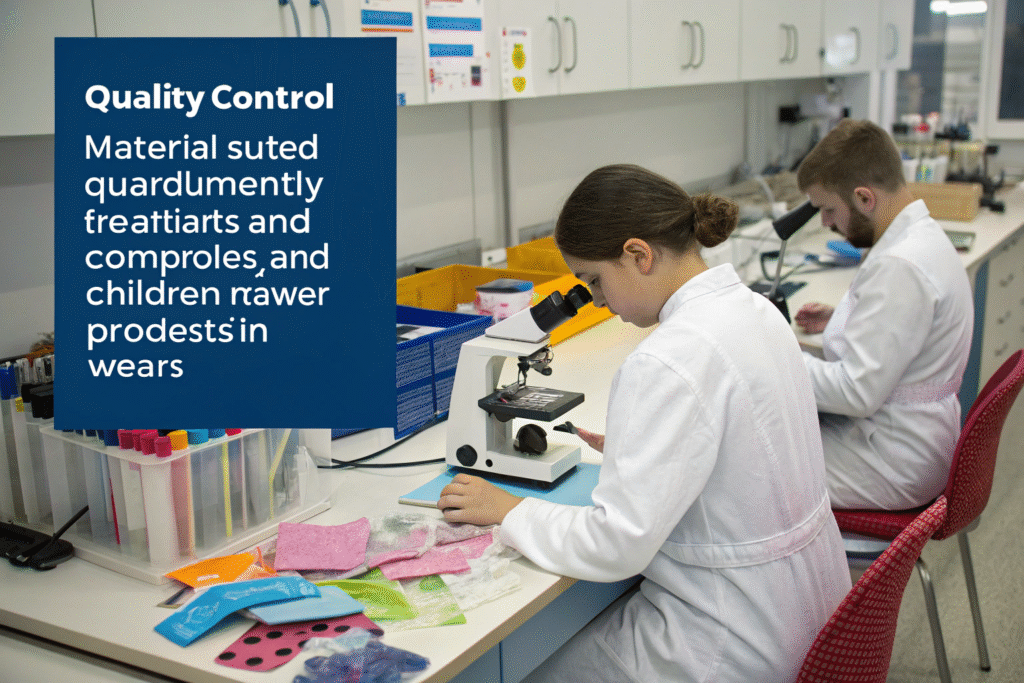
Conduct comprehensive fabric testing and certification before cutting begins. This includes testing for colorfastness, shrinkage, pilling resistance, and fabric strength. For children's wear, particularly verify compliance with safety standards regarding chemical content, flammability, and physical properties. At our facility, we maintain a fabric library with pre-tested materials and require new fabric lots to pass the same rigorous testing before being approved for production. This proactive approach prevents quality issues related to material performance.
What Component Quality Standards Matter?
Evaluate all trims, fastenings, and components for safety and durability. Buttons must pass pull tests to ensure secure attachment, zippers should be tested for smooth operation and strength, and elastic must maintain recovery after repeated stretching. For children's wear, pay particular attention to small parts safety, ensuring no components can detach and become choking hazards. Document all component specifications and maintain samples for comparison throughout production.
| Pre-Production Check | Quality Standard | Testing Method | Acceptance Criteria |
|---|---|---|---|
| Fabric Composition | As specified in tech pack | Laboratory testing | Within 3% tolerance |
| Color Fastness | No bleeding or fading | Wash and rub tests | Grade 4 or higher |
| Dimensional Stability | Minimal shrinkage | Multiple wash cycles | Under 5% shrinkage |
| Component Safety | Secure attachment | Pull test equipment | Withstands 50N force |
What In-Process Quality Controls Prevent Defects?
Monitoring quality during production allows for immediate correction of issues before they affect entire production runs, significantly reducing waste and rework costs.
In-process quality control catches problems when they're easiest and least expensive to fix.

How Does First Article Inspection Work?
Implement first article inspection protocols where the first completed garment from each production run undergoes comprehensive evaluation. This includes verifying measurements against specification sheets, checking construction quality, testing all functions, and confirming aesthetic details. Any deviations from standards are immediately addressed with the production team before continuing the run. This approach prevents the replication of errors throughout the production batch.
What Are Key In-Line Check Points?
Establish quality checkpoints at critical production stages including after cutting, during assembly, and before finishing. Cutting inspection verifies pattern alignment and piece accuracy. Sewing inspection monitors stitch quality, seam strength, and construction accuracy. finishing inspection checks pressing, trimming, and final appearance. For children's wear, pay particular attention to secure stitching at stress points, proper application of labels, and overall workmanship quality.
What Does Comprehensive Pre-Shipment Inspection Involve?
Pre-shipment inspection represents your final opportunity to verify quality before products leave the factory, combining multiple verification methods to assess the complete finished product.
This comprehensive evaluation ensures the shipment meets all quality, safety, and specification requirements.
How Do You Conduct AQL Sampling?
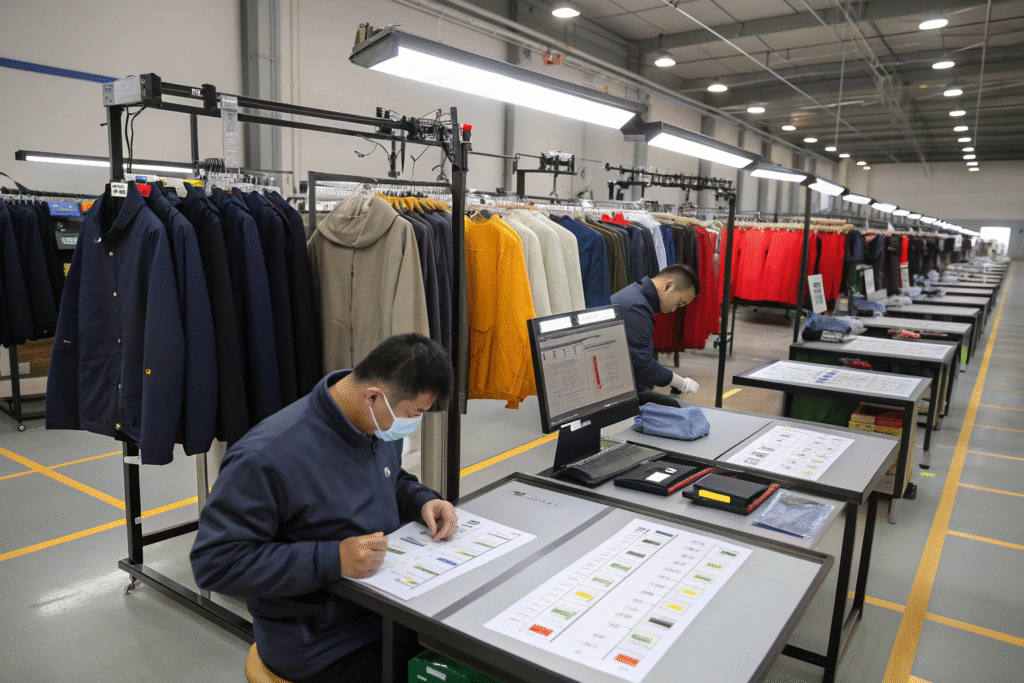
Implement AQL (Acceptable Quality Level) sampling based on international standard ANSI/ASQ Z1.4. This statistical approach determines sample size based on order quantity and inspection level. For children's wear, we typically use Inspection Level II with AQL 1.5 for critical defects, AQL 2.5 for major defects, and AQL 4.0 for minor defects. This balanced approach provides reliable quality assessment while remaining practical for production timelines. Document all findings with photographs and detailed descriptions for clear communication with production teams.
What Specific Children's Wear Checks Are Crucial?
Children's wear requires specialized safety and quality checks beyond standard apparel inspection. Verify that all decorative elements are securely attached, drawstrings meet safety requirements, sleepwear complies with flammability standards, and care labels provide accurate instructions. Check for potential skin irritants like rough seams, scratchy labels, or exposed elastic. For infants and toddlers, pay extra attention to neck opening sizes, closure security, and overall comfort factors that affect wearability.
How Do You Document and Communicate Quality Findings?
Effective quality verification requires clear documentation and communication systems that ensure findings lead to corrective actions and continuous improvement.
Proper documentation transforms quality assessment from subjective opinion to objective business intelligence.

What Reporting Systems Support Quality Verification?
Develop comprehensive reporting systems that capture both quantitative measurements and qualitative observations. Digital checklists with photo documentation provide clear evidence of any issues found. Categorize defects by type, severity, and frequency to identify patterns and root causes. For children's wear, include specific safety compliance verification in all reports and maintain certificates for all required testing. These reports become valuable references for future production and help build consistent quality standards over time.
How Should You Handle Quality Discrepancies?
Establish clear communication protocols for addressing quality issues. Immediate concerns should be escalated to production managers with specific examples and recommended solutions. Maintain a defect library with actual samples to ensure consistent understanding of quality standards across all teams. For recurring issues, conduct root cause analysis and implement preventive measures in future production. The most effective quality systems focus on problem prevention rather than just defect detection.
Conclusion
Verifying quality in children's wear before shipping requires a systematic, multi-stage approach that begins with material selection and continues through final inspection. By implementing rigorous pre-production testing, in-process monitoring, and comprehensive pre-shipment evaluation, you can ensure that every garment meets both quality standards and safety requirements. The most successful quality verification systems combine technical measurement with practical assessment, clear documentation with effective communication, and problem detection with continuous improvement.
At Shanghai Fumao Clothing, we've built our quality verification systems around the specific requirements of children's wear, combining international standards with practical manufacturing experience. Our multi-layered inspection process, specialized testing protocols, and detailed documentation ensure that every shipment meets the highest expectations for quality and safety. If you're looking for a manufacturing partner with rigorous quality verification processes, contact our Business Director, Elaine, at elaine@fumaoclothing.com. Let's create children's wear that exceeds quality expectations and builds trust with your customers.