In today’s competitive children’s fashion industry, brands are looking for more than just wholesale suppliers. They need partners who can take a design concept and transform it into finished products that meet international standards. As a children’s clothing manufacturer, I want to share how our factory supports brands at every stage of the process, from initial sketches to bulk production and delivery.
How Do Brands Start the Kidswear Customization Process?
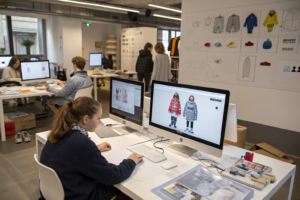
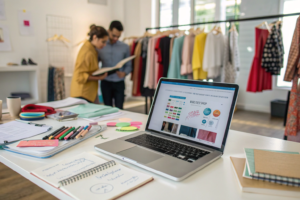
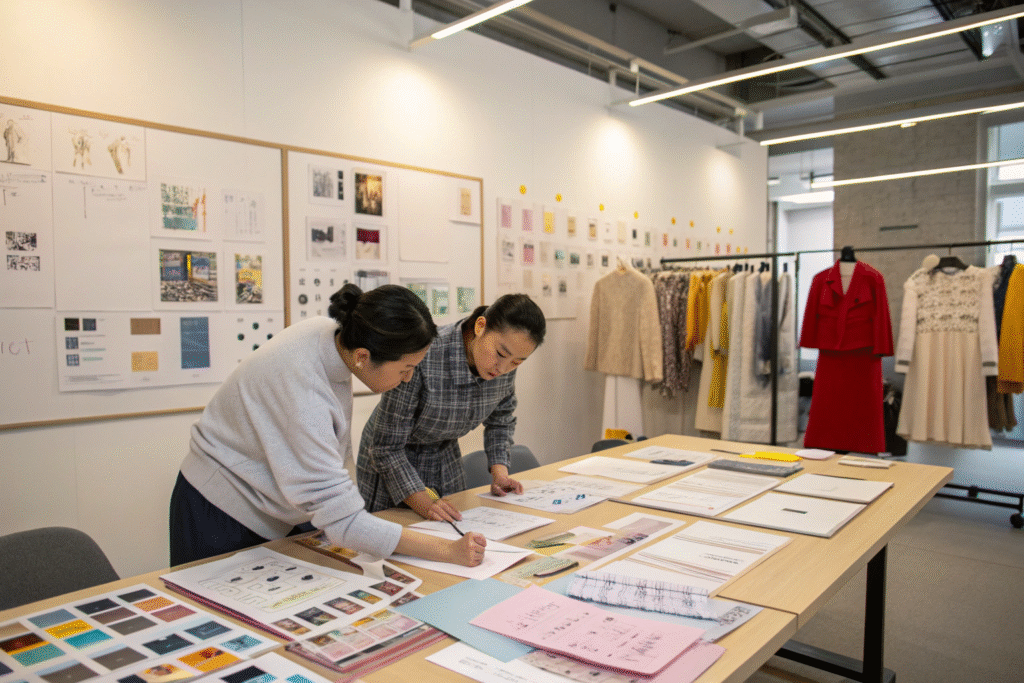
Every successful kidswear collection begins with design collaboration. Brands provide mood boards, sketches, or inspirations, and our design team refines them into production-ready concepts.
From my experience, many American and European buyers want unique details that reflect their brand DNA. We start by understanding their vision through online meetings, fabric discussions, and sample reviews. Then, our design department creates digital mock-ups before moving to physical samples. This ensures alignment before production begins.
What Role Do Samples Play in Kidswear Development?
Samples are the foundation of trust. According to Fibre2Fashion, 80% of apparel sourcing decisions rely on sample approval. We produce prototypes that showcase fabric quality, stitching accuracy, and finishing details. This step helps buyers check compliance with safety standards like CPSC regulations and make adjustments before bulk production.
How Can Brands Ensure Their Designs Stay Unique?
Brands often worry about designs being copied. Partnering with reliable manufacturers that respect intellectual property is key. As noted by Just Style, professional suppliers have clear confidentiality agreements to protect clients. At Fumao, we maintain strict NDA policies and only use brand-specific molds and fabrics for custom orders.
What Fabrics and Techniques Work Best for Custom Kidswear?
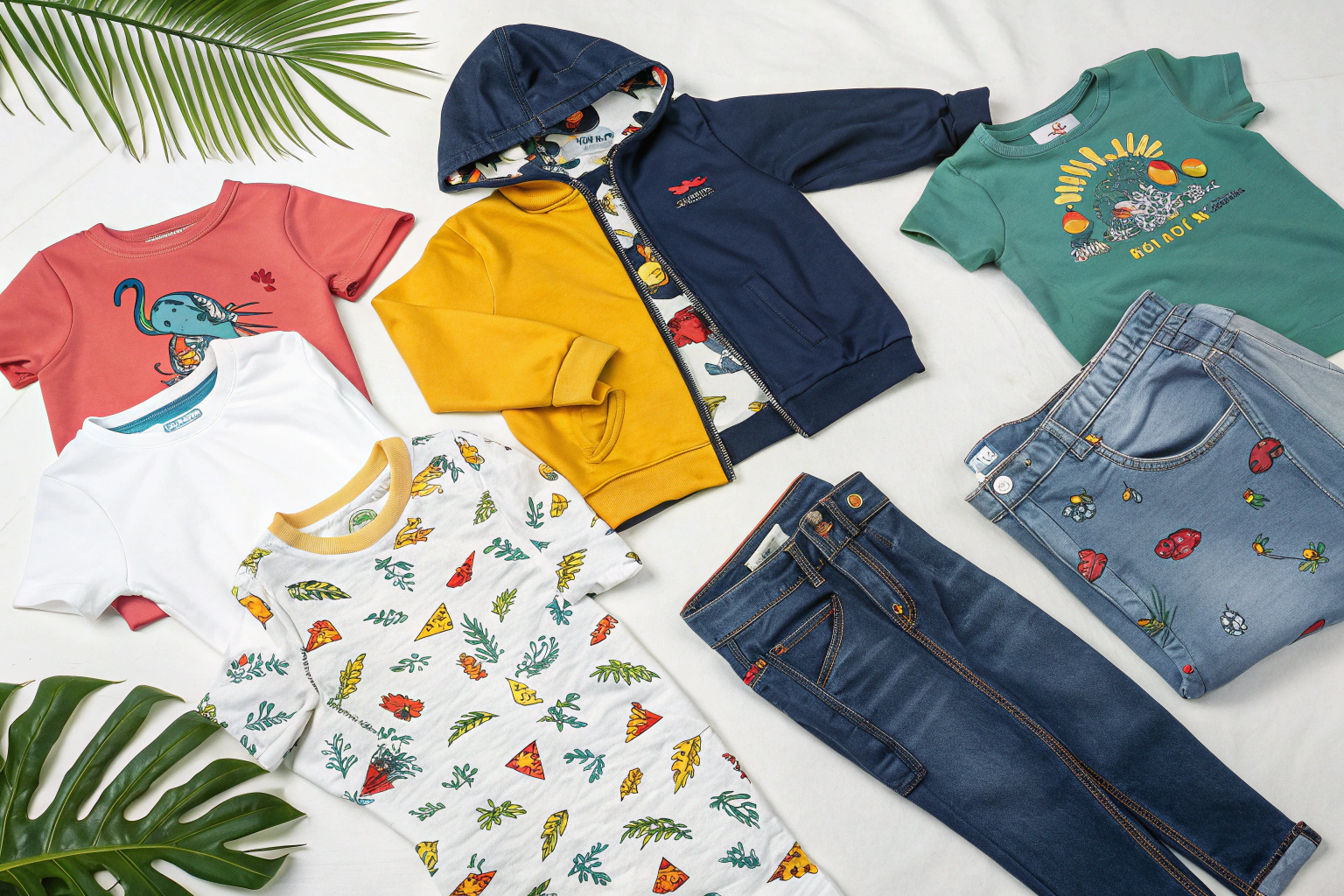
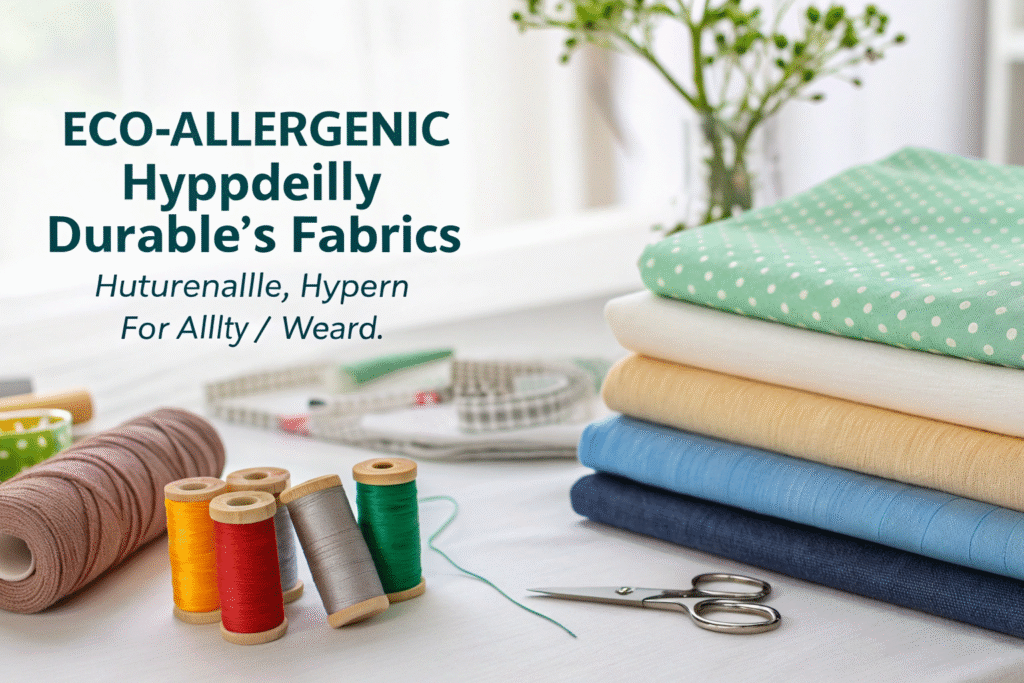
Fabric choice determines comfort and durability, while stitching techniques ensure safety. We guide buyers in selecting eco-friendly, hypoallergenic, and durable materials suited for kids’ daily wear.
Parents increasingly prefer fabrics like organic cotton, linen, and bamboo blends. These materials provide breathability and reduce risks of irritation. However, each fabric behaves differently during sewing. Our skilled workers use flatlock seams for comfort and reinforced overlock stitching for durability.
Which Fabrics Are Trending in Premium Kidswear?
Trends show a strong shift toward sustainability. According to OEKO-TEX, demand for certified organic fabrics in kidswear has grown 25% in recent years. Linen and bamboo blends are also popular due to their eco-friendly production and skin-friendly texture.
How Do Stitching Techniques Impact Safety?
Precision stitching prevents hazards like seam slippage or loose buttons. Textile World reports that reinforced seams reduce safety risks by over 30%. For example, we use double-needle stitching in areas subject to high stress, ensuring garments meet ASTM durability standards.
How Do International Standards Influence Custom Production?
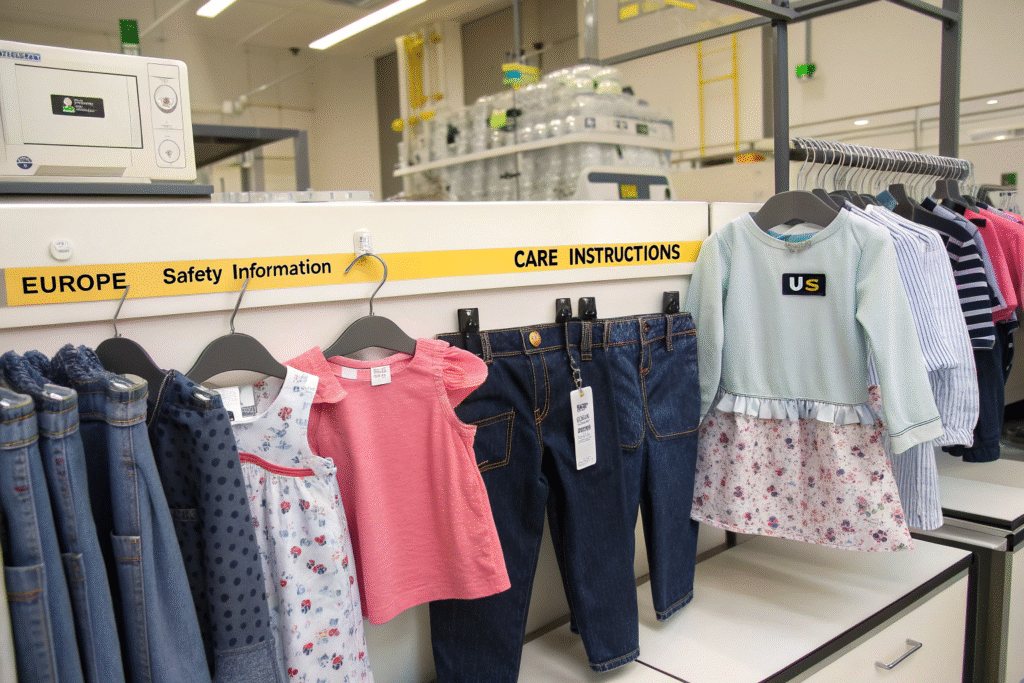
Children’s clothing must meet strict regulations for safety, labeling, and durability in Europe and the US. Compliance is non-negotiable, and precision in production ensures every garment passes testing.
In my career, I have seen brands face recalls due to missed safety checks. To prevent this, we follow EN 14682 guidelines for drawstrings, CPSIA rules for lead content, and OEKO-TEX certifications for chemical safety. Each order goes through internal testing before shipment.
Why Should Brands Demand Certifications?
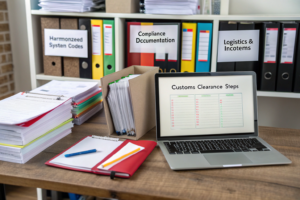
Certifications like ASTM F1816 or OEKO-TEX Standard 100 provide proof of safety and quality. Retailers in the US and Europe often require these documents before approving suppliers. For brands, it reduces legal risks and strengthens customer trust.
How Do Standards Affect Production Planning?
Compliance influences fabric sourcing, stitching methods, and labeling. For example, flame-resistant fabrics are required for sleepwear in the US. This impacts cost, delivery times, and supplier selection. As explained by Apparel Resources, brands that integrate standards early in design avoid costly last-minute changes.
Why Is Reliable Manufacturing the Key to Scaling Kidswear Brands?
Production is more than sewing—it is about efficiency, quality checks, and timely delivery. Partnering with an experienced manufacturer ensures smooth scaling from small batches to large wholesale orders.
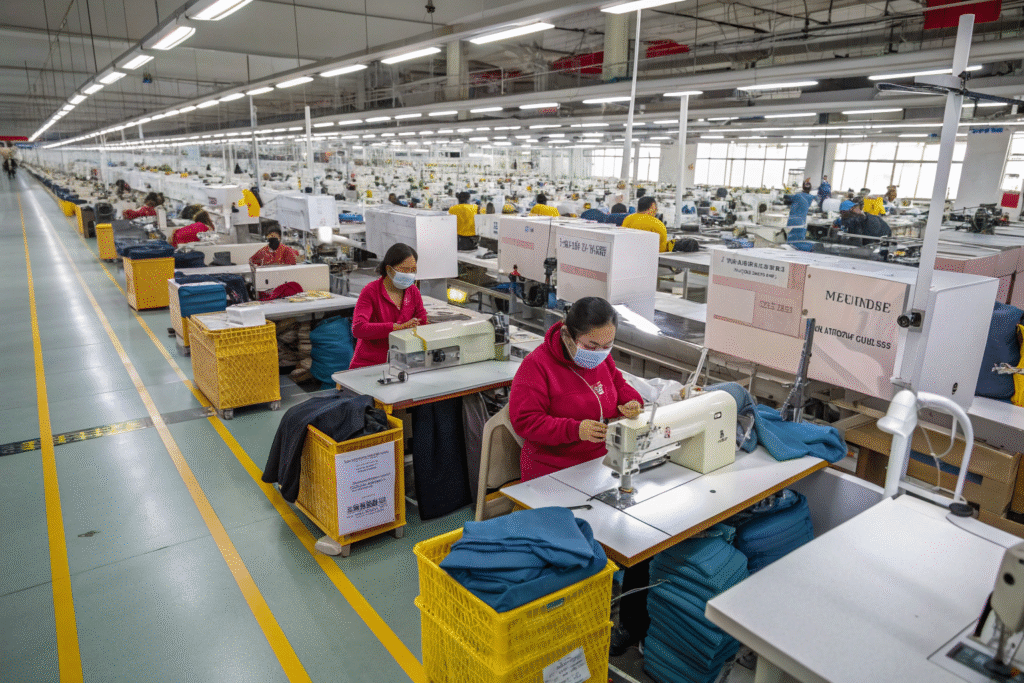
Our factory runs five production lines dedicated to kidswear, allowing flexibility in order size. We use Japanese sewing machines and automated cutting systems to minimize errors. Each stage—from fabric inspection to final packaging—follows strict quality protocols.
How Do Timely Deliveries Impact Brand Growth?
Missing selling seasons can hurt profits. According to Fibre2Fashion, delays reduce apparel margins by up to 25%. We maintain DDP shipping solutions that simplify logistics and help buyers meet deadlines in North America and Europe.
What Role Does Communication Play in Custom Production?
Clear communication ensures alignment on fabrics, stitching, and compliance. Trade Ready highlights that poor supplier communication is one of the top reasons for sourcing failures. At Fumao, we provide weekly progress updates and digital tracking so buyers always know their order status.
Conclusion
Custom kidswear production requires more than fabric and stitching—it demands design expertise, compliance with global standards, and reliable delivery. From concept to completion, every step matters in building trust between brands and manufacturers.
If you are ready to create your own kidswear collection with professional design-to-production support, we invite you to partner with us at Shanghai Fumao Clothing. Contact our Business Director, Elaine, at elaine@fumaoclothing.com to start your custom apparel journey today.