
Recycled polyester, also called rPET, is increasingly used in children’s apparel because of its sustainability benefits. It is made by converting post-consumer PET bottles or textile waste into new fibers, reducing dependence on virgin polyester. While its environmental advantages are clear, safety remains the most important concern in babywear.
Recycled polyester fabrics can be safe for babies if they come from certified supply chains, undergo strict testing, and meet international infant apparel safety standards.
Material Origin and Processing
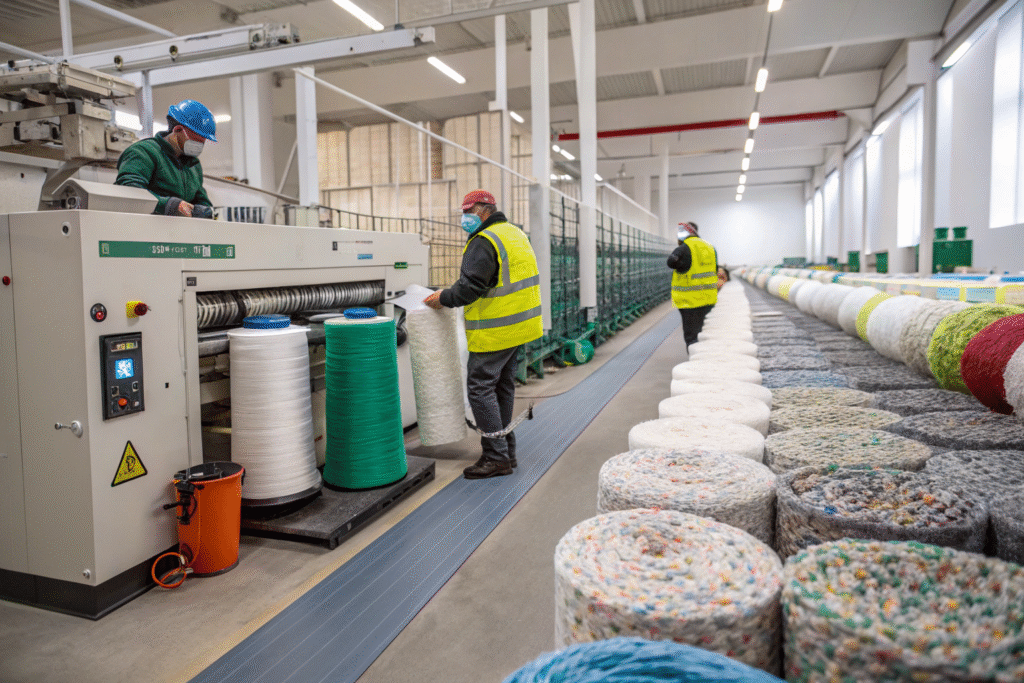
The safety of rPET starts with its source. Recycled polyester is produced by cleaning, shredding, melting, and extruding plastic waste into fibers.
When this process is managed under certified systems, rPET achieves quality comparable to virgin polyester.
Why is traceability important?
Not all recycling methods guarantee safe outcomes. Certifications like the Global Recycled Standard (GRS) confirm proper processing and controlled chemical use.
What does this mean for babywear?
Traceable and certified inputs minimize contamination risks and ensure material reliability.
Safety Testing and Certification
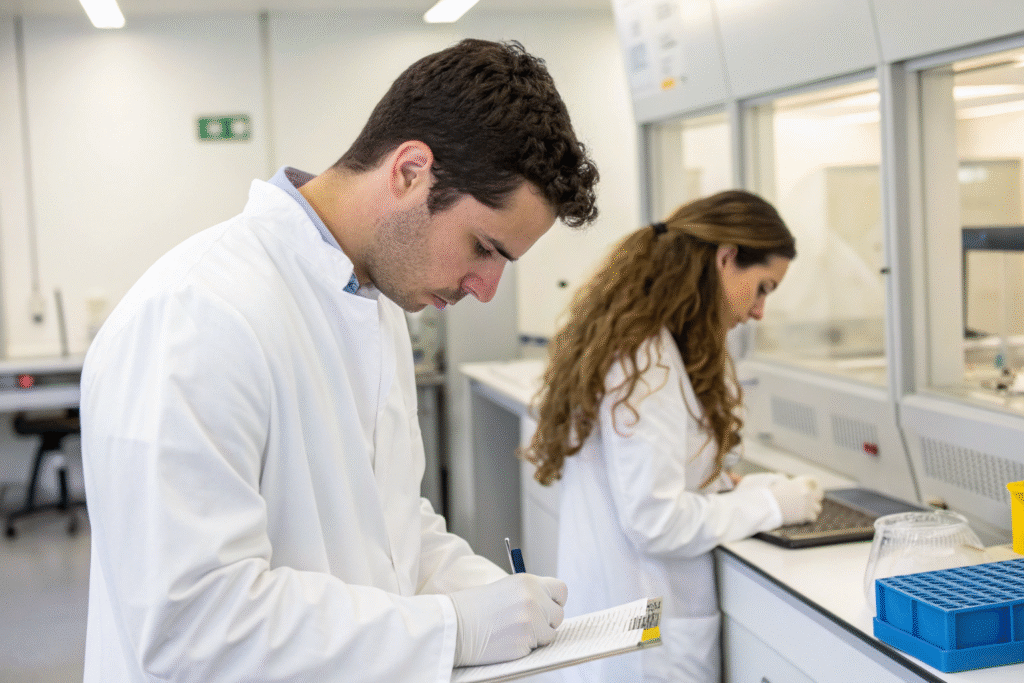
Children’s apparel is subject to stricter safety checks than adult garments. For rPET, safety depends on testing for residual chemicals, heavy metals, and restricted substances.
The most trusted benchmark is OEKO-TEX® Standard 100 (Class I), which certifies fabrics for use in infant clothing up to 36 months.

Why is certification essential?
Independent certification verifies that fabrics are free from harmful levels of chemicals. OEKO-TEX maintains databases for buyers to confirm certificate numbers.
What about regulatory requirements?
U.S. CPSIA and EU REACH regulations require compliance for all children’s clothing, including items made from recycled fibers.
Performance in Baby Clothing
Performance is another factor to consider. Polyester is strong, quick-drying, and shrink-resistant, but it is less breathable than natural fibers.
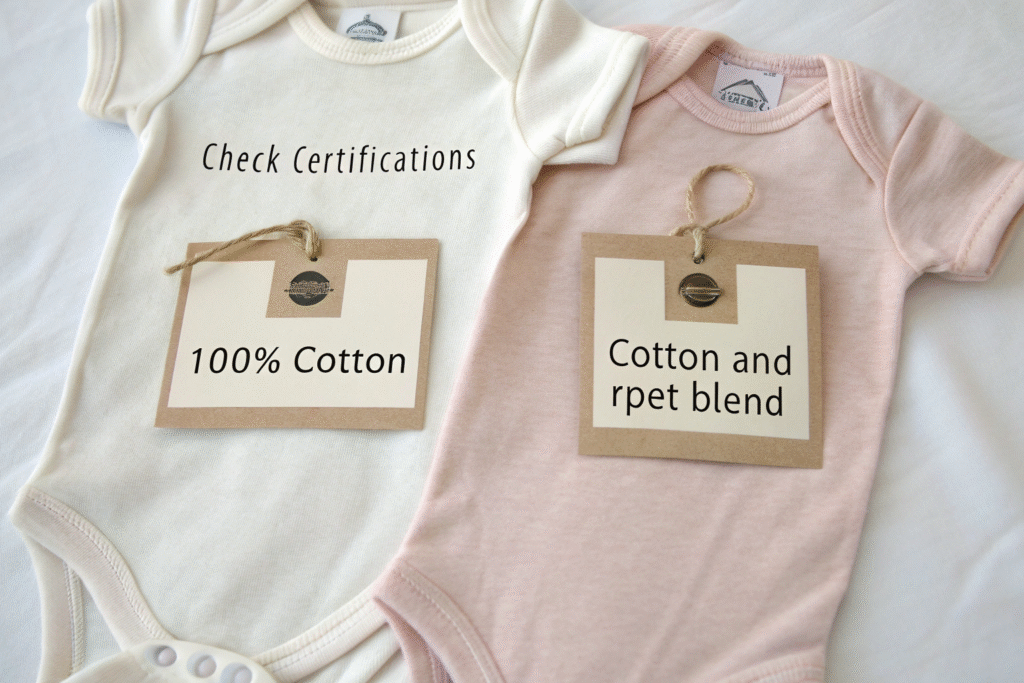
For babywear, rPET is often blended with cotton or bamboo to improve softness, air circulation, and comfort.
Where is rPET commonly used?
It is most often applied in outerwear, fleece pajamas, and blended knits. Direct skin-contact essentials for newborns usually rely on cotton or bamboo, unless rPET fabrics carry strict Class I certification.
What are key considerations?
Breathability and softness remain critical for comfort. Certified blends often perform better than 100% polyester fabrics.
Limitations and Considerations
Despite benefits, rPET has limitations. Concerns include microfiber shedding, lower breathability, and potential contamination in uncertified fabrics.
Buyers and brands must ensure strict QC systems, certification checks, and reliable sourcing before approving rPET for infant apparel.
Why can uncertified fabrics be risky?
Unverified rPET may contain residues from non-textile plastics or harmful dyes.
How do brands reduce risks?
They source only from GRS-certified mills and require OEKO-TEX® Class I certificates for babywear applications.
Conclusion
Recycled polyester fabrics can be safe for babies when they are sustainably sourced, certified, and properly tested. Their durability and sustainability make them valuable, but they are best used in blended fabrics to balance comfort and breathability. Compliance with certifications such as OEKO-TEX®, GRS, CPSIA, and REACH is essential.
At Shanghai Fumao, we supply babywear made from certified fabrics, including OEKO-TEX® Class I rPET blends. Our compliance-driven sourcing ensures safety while supporting sustainable practices.
👉 To source certified and sustainable fabrics for your children’s apparel collections, contact our Business Director Elaine at elaine@fumaoclothing.com. We provide GRS-certified rPET fabrics with full traceability and strict quality validation.