How to Prevent Dye Bleeding in Baby Clothes?
When I first began combining my academic research in textile chemistry with the daily practice of children’s clothing manufacturing, I realized one common and overlooked issue: dye bleeding. Parents often complain that brightly colored baby clothes stain their baby’s skin or transfer color onto other garments. For brands, this can lead to costly returns, safety concerns, or even recalls.
The most effective way to prevent dye bleeding in baby clothes is to use certified safe dyes, apply standardized fixation and after-treatment methods, and verify performance through international testing protocols. This guarantees both safety for babies and compliance for global buyers.
In this article, I will explain dye bleeding from both a scientific and manufacturing perspective, offering solutions that merge academic standards with practical factory methods.
Why Does Dye Bleeding Occur in Baby Clothes?
Dye bleeding happens when unfixed dye molecules migrate out of fabric fibers under the influence of water, sweat, or friction.
In baby clothing, this is especially dangerous because infants’ skin is thinner and more sensitive than adults’.

What Are the Scientific Causes?
- Low dye fixation efficiency: Poor bonding between fiber and dye molecules.
- Residual unfixed dyes: Lack of thorough washing after dyeing.
- Improper dye classes: Use of unstable or uncertified colorants.
According to the OEKO-TEX Standard 100, harmful azo dyes are banned from baby clothing due to their risk of releasing carcinogenic amines.
Which Fibers Are More Prone?
Natural fibers like cotton and viscose absorb dyes easily but are more prone to bleeding if not fixed properly. Synthetic fibers like polyester use disperse dyes, which are generally more stable, but can still release particles without proper treatment.
What Dyeing and Finishing Practices Prevent Bleeding?
Through academic research and industrial experiments, we know that proper dyeing and after-treatment significantly improve colorfastness.
The key practices include selecting safe dye types, using proper fixation chemistry, and applying post-dyeing washes and resins.

Which Dyes Are Most Suitable?
- Reactive dyes: Strong chemical bond with cotton, ensuring excellent wash fastness.
- Disperse dyes: Preferred for polyester blends, stable under wash and wear.
- Certified eco-dyes: Those compliant with GOTS for organic textile processing.
What Role Do After-Treatments Play?
- Soaping and steaming: Remove surface dyes that cause staining.
- Cationic fixing agents: Improve dye-fiber bonding.
- Resin or polymer coatings: Add protective layers to fabrics.
These steps transform unstable fabrics into baby-safe garments ready for export.
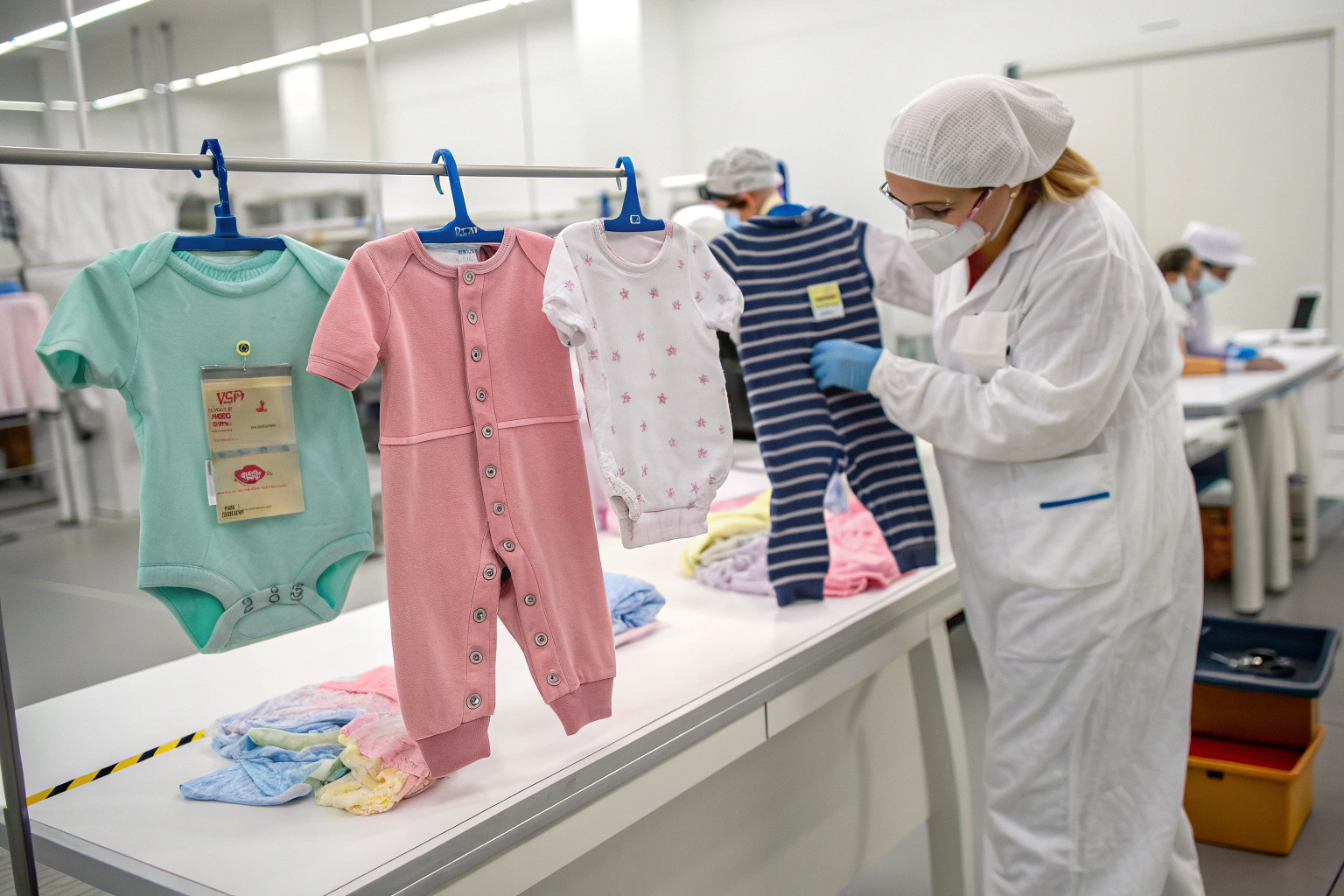
How Do We Test Dye Safety in Baby Clothing?
Testing bridges academic theory and industrial application. Without testing, no claim of safety can be trusted.
Factories must conduct standard fastness tests for washing, rubbing, saliva, and perspiration.

What International Tests Apply?
- ISO 105-C06 (Wash Fastness): Simulates repeated laundering.
- ISO 105-X12 (Rubbing Fastness): Tests friction resistance.
- EN 71-3 (Saliva & Sweat Test): Mandatory in the EU for baby textiles.
Independent labs such as SGS and Intertek provide globally recognized testing and certification.
Why Third-Party Verification Matters?
Third-party reports are unbiased proof for buyers. They protect brands against recalls and provide marketing credibility by showing compliance with international standards.
What Steps Can Brands and Parents Take?
While dye safety starts in the factory, both brands and parents play a role in preventing dye bleeding issues.
Brands must demand certifications, while parents should adopt safe garment care practices.

What Should Brands Require?
- OEKO-TEX and GOTS certifications.
- ISO and EN testing reports.
- Supplier transparency on dyeing processes.
Platforms like Fibre2Fashion connect buyers with certified suppliers.
What Should Parents Do at Home?
- Wash new clothes before first use.
- Use cold water and mild detergents.
- Separate darks and lights.
Guidelines from HealthyChildren.org advise avoiding overly dark or strongly dyed garments for newborns.
Conclusion
Preventing dye bleeding in baby clothing is not a single action but a full supply chain responsibility. By combining certified safe dyes, professional fixation methods, international testing, and consumer education, we can guarantee safety and trust.
At Shanghai Fumao Clothing, we integrate academic research and manufacturing expertise to ensure every garment meets OEKO-TEX, GOTS, and ISO standards. Our production includes advanced dye fixation and third-party lab testing. If you are ready to develop baby clothing that is safe, durable, and compliant, please contact our Business Director Elaine at elaine@fumaoclothing.com.