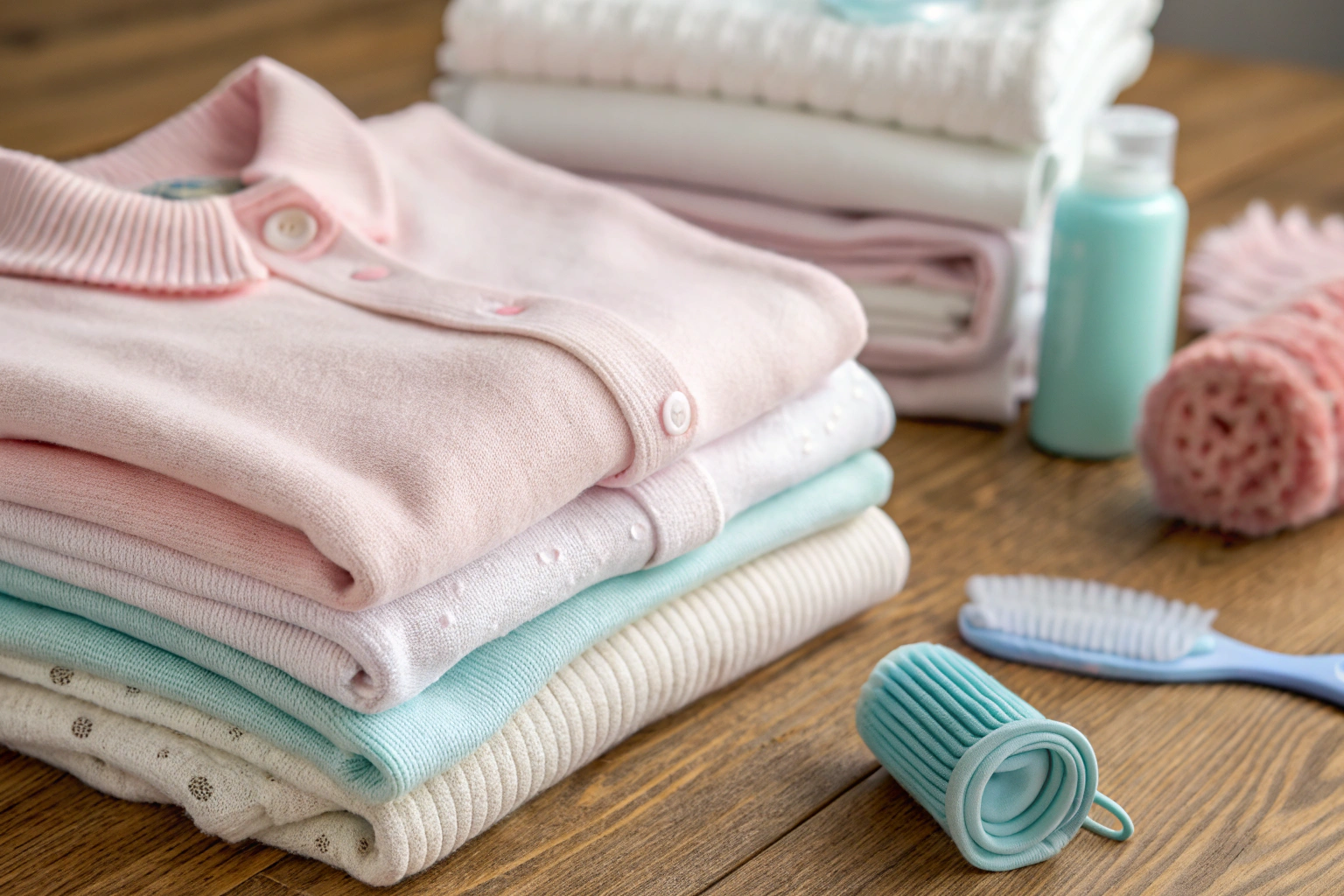
Pilling is a common issue in knitwear. It appears when fibers break and form small balls on the surface. Baby clothes are more likely to pill because they are washed and worn often. Parents want knitwear that stays smooth. Brands also want garments that look new for longer.
The best way to prevent pilling in baby knitwear is to choose better fibers, use strong yarns, apply good finishing, and follow proper care steps.
These methods keep knitwear soft, safe, and durable. Let us look at each in detail.
Choosing the Right Fibers
Fibers affect how fabrics perform. Short fibers pill faster. Long fibers create smoother yarns and resist wear. Natural and blended fabrics can both work well.
Long-staple cotton, bamboo, and certain blends resist pilling better than short fiber fabrics.

Why do short fibers pill more easily?
Short fibers slip out of the yarn and form balls. Cotton staple length shows how longer cotton fibers make stronger fabrics.
Which fibers work best for baby knitwear?
Organic cotton and bamboo blends are soft and safe. They are gentle on baby skin and hold up better in daily use.
Improving Yarn Quality
The quality of yarn decides how strong the knitwear will be. Loose yarns shed fibers quickly. Tight yarns keep fibers in place.
Yarns that are tightly spun with fewer loose ends reduce pilling.

Why does spinning quality matter?
Loose spinning causes weak yarns. Ring-spun yarn is smoother and stronger than open-end yarn.
How can brands improve yarn quality?
They can choose suppliers who use combed cotton. Combed cotton removes short fibers and creates stronger yarn for children’s wear.
Using Proper Finishing Techniques
Finishing adds protection to fabrics. Processes like brushing, enzyme washing, or anti-pilling treatments make surfaces stronger.
Finishing reduces loose fibers and keeps baby knitwear smooth after many washes.

What finishing methods help prevent pilling?
Enzyme washing removes weak fibers from the fabric. Anti-pilling finishes create a smoother surface.
Why is finishing important for baby knitwear?
It protects softness and shape. Parents expect knitwear to look neat, like the products sold at Baby Gap.
Following Correct Care Instructions
Care affects fabric life as much as design. Even strong yarns and good finishing cannot resist poor washing habits.
Gentle washing and drying reduce friction and prevent pilling.

How should parents wash baby knitwear?
Wash inside out with mild detergent. Use cold water. Wool wash products are safer for delicate fabrics.
How does drying affect pilling?
High heat weakens fibers. Air-drying is better than machine drying. Stores like Marks & Spencer advise parents to dry baby clothes gently.
Conclusion
Pilling in baby knitwear can be prevented. The key is to choose the right fibers, use strong yarns, apply good finishing, and give clear care instructions. These steps protect comfort and extend garment life.
At Shanghai Fumao, we make baby knitwear using anti-pilling fabrics and advanced finishing methods. We help brands deliver products that remain smooth and beautiful.
👉 To begin your custom knitwear project, contact our Business Director Elaine at elaine@fumaoclothing.com. We are ready to produce safe and durable baby knitwear for your brand.