
Gone are the days when trend forecasting was solely an intuitive art form, dictated by a handful of designers in fashion capitals. In today’s hyper-connected, data-rich world, predicting what children will wear is increasingly a science—a discipline of pattern recognition, behavioral analysis, and predictive modeling. As a manufacturer at the intersection of data and production, I’ve seen that brands who leverage data not only mitigate risk but also discover underserved niches and innovate with confidence. Data transforms guesswork into strategy.
To use data to predict kids fashion trends, you must systematically analyze search and social media data for emerging patterns, track real-world sales and inventory metrics, monitor cultural and demographic shifts, and synthesize these quantitative signals with qualitative human insight to identify commercially viable trends before they peak.
This process creates a competitive intelligence loop, allowing you to move from reactive to proactive, from chasing trends to anticipating or even shaping them. Let’s break down the actionable data sources and analytical frameworks.
What Are the Key Data Sources for Trend Prediction?
Effective trend prediction relies on triangulating data from multiple, distinct sources. Each source provides a different piece of the puzzle: consumer intent, cultural conversation, and commercial reality.
The three pillars are: 1) Search & Social Intent Data (what people are looking for and talking about), 2) Sales & Market Performance Data (what is actually selling), and 3) Cultural & Demographic Data (the broader context shaping preferences). Ignoring any one pillar leads to an incomplete and risky picture.

How to Mine Search Data for Early Signals?
Search engines are crystal balls for intent. Parents and gift-givers research solutions months ahead of a season.
- Google Trends: This free, powerful tool is indispensable. Track the relative search volume for terms like "toddler cargo pants," "organic baby pajamas," or "kids tie-dye" over time and by region. A sustained upward trajectory over 3-6 months is a strong signal. Compare terms (e.g., "kids linen" vs. "kids cotton") to see which is gaining momentum.
- Pinterest Trends: Pinterest is a visual search engine for future planning. Its Pinterest Predicts report and internal keyword tools show what users are saving for later, often 6-12 months before a trend hits retail. Rising pins for "kids mushroom print" or "sensory-friendly swimwear" are golden early warnings.
- Amazon & E-commerce Search: Analyze auto-complete suggestions and "related searches" on major retail platforms. These reflect real-time, high-intent shopping behavior.
Why is Social Media Sentiment and Engagement Analysis Crucial?
Social platforms are where trends are validated and amplified. Analysis goes beyond follower counts to deep engagement metrics.
- Image Recognition & Hashtag Volume: Use tools to track the volume and growth of specific hashtags (e.g., #cottagecorekids, #genderneutralfashion). Analyze which outfit photos get the most saves and shares, not just likes.
- Influencer & Micro-Community Monitoring: Don’t just look at mega-influencers. Niche micro-influencers and specific parenting communities on Instagram, TikTok, or Reddit often bubble up trends long before the mainstream. A spike in UGC (User-Generated Content) around a specific style is a powerful validation.
- Sentiment Analysis: Tools can gauge the emotional tone (positive, negative) of conversations around specific brands or styles, helping you understand why something is resonating.
How to Analyze Sales Data for Validation and Insight?
Search data shows interest; sales data shows commitment. Your own sales data and broader market reports tell you what consumers are actually voting for with their wallets, providing a critical reality check on social hype.
Analyze Sell-Through Rates (STR), Average Order Value (AOV) by category, Return Rates (high returns on a "trendy" item can signal a fad), and Cart Abandonment data. Benchmark this against syndicated retail data from services like NPD Group or Edited which track sell-out performance across thousands of retailers.

What Do Sell-Through Rates Tell You About a Trend’s Longevity?
A high Sell-Through Rate (STR) at full price is the ultimate indicator of a healthy, in-demand trend. If "embroidered denim jackets" sell out in weeks at full price, it’s a strong trend. If they sell slowly and require deep discounts, they may be a passing fad or poorly executed. Tracking STR by region and channel also reveals geographic and demographic nuances—a trend might be hot in coastal cities but not in the heartland, informing your distribution strategy.
How Can Basket Analysis Reveal Complementary Trends?
Market basket analysis examines what products are frequently purchased together. This data uncovers latent trends and styling preferences. For example, if data shows that customers buying "kids graphic tees" often add "colorful striped socks" to their cart, it signals a trend towards playful, mix-and-match styling. This can inspire curated product bundles or inform collection planning, ensuring new items have logical companions that drive higher AOV.
How to Integrate Cultural and Demographic Data?
Fashion doesn’t exist in a vacuum. It’s a reflection of broader societal shifts—in parenting philosophies, environmental concerns, economic conditions, and pop culture. This macro-data provides the "why" behind the "what."
Track data on: Birth Rates & Generational Cohorts (e.g., the values of Millennial vs. Gen Z parents), Sustainability Metrics (growth in searches for "circular fashion"), Economic Indicators (during recessions, demand for durable, multi-functional clothing often rises), and Children’s Media & Entertainment (a hit animated film can drive color and character trends for years).

How Do Generational Parenting Shifts Create Macro-Trends?
Data from sources like the Pew Research Center clearly shows Millennial and Gen Z parents prioritize experiences, sustainability, and digital native shopping differently than previous generations. This isn’t anecdotal; it’s quantifiable. The rising search volume for "GOTS certified" and the growth of DTC (Direct-to-Consumer) kid’s brands are data points reflecting this shift. Predicting trends means understanding that a color or silhouette isn’t just a style—it’s a vector for expressing these core parental values.
Why is Pop Culture Data a Leading Indicator for Kids’ Fashion?
Children’s fashion is intensely influenced by media. Use data to track:
- Streaming Viewership Data: A surge in viewership for a show like Bluey can drive demand for its color palette and casual, playful aesthetic.
- Toy Sales & Licensing Data: Hot toy categories (dinosaurs, unicorns, space exploration) directly translate into apparel print trends.
- Character Popularity Rankings: Data on the most-searched or most-purchased characters informs licensing decisions or inspires original designs in a similar thematic vein.
This data helps you ride a wave of existing cultural enthusiasm rather than creating demand from scratch.
How to Build a Predictive Framework and Test Hypotheses?
Data is meaningless without a framework for interpretation. The goal is to move from observing correlations to forming testable hypotheses about future demand, and then to validate those hypotheses with low-risk experiments.
Create a trend dashboard that consolidates key metrics from your data sources. Develop a scoring system to rank potential trends based on Velocity (speed of growth), Volume (size of the conversation), Validation (commercial sales proof), and Viability (alignment with your brand and production capabilities).

What is the "Test and Learn" Approach with Small-Batch Production?
Even the best data has uncertainty. The solution is to de-risk trend adoption through agile, small-batch production. Instead of committing 10,000 units to a new trend, use your data hypothesis to produce 500-1,000 units as a market test.
- Method: Launch the style as a limited-edition "drop" or as part of a pre-order campaign.
- Measurement: Closely monitor the sell-through rate, customer feedback, and return rate on this batch.
- Decision: If the data confirms the hypothesis, you can quickly reorder. If it underperforms, you have limited exposure and gained invaluable insight.
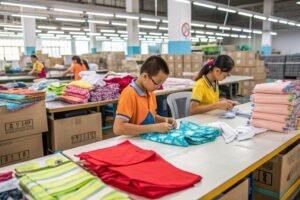
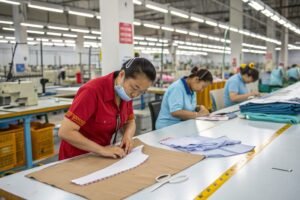
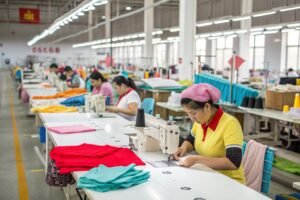
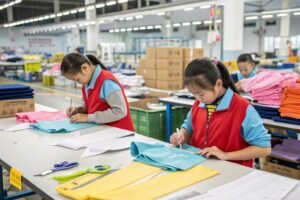
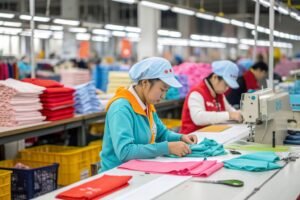
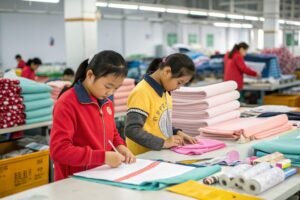
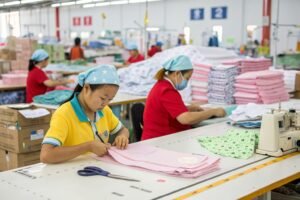
This approach requires a manufacturing partner, like Fumao, that offers low minimum order quantities (MOQs) and fast turnaround times for re-orders.
How to Use Pre-Orders as a Predictive Tool?
Pre-orders are a direct vote of consumer intent and a powerful forecasting tool. By announcing a forthcoming product and taking orders for it, you gather concrete demand data before committing to full production. A strong pre-order response validates your trend hypothesis and tells you exactly how much to make. A weak response signals a need to pivot. This turns your customer base into a co-creative forecasting panel.
Conclusion
Predicting kids’ fashion trends with data is a continuous cycle of listening, measuring, hypothesizing, and validating. It democratizes insight, moving beyond gut feeling to a scalable, evidence-based process. By systematically analyzing search intent, social engagement, sales performance, and cultural shifts, brands can identify the signal within the noise, anticipate the next wave of demand, and allocate resources with precision. In a fast-paced market where seasons are short and competition is fierce, data is not just an advantage—it’s a necessity for survival and growth.
For manufacturers, this data-driven future means partnering with brands that operate with this intelligence. At Fumao Clothing, we are equipped to support this agile, test-and-learn model with flexible production lines, rapid sampling, and small-batch capabilities that turn data-driven hypotheses into tangible products quickly and efficiently. If you’re ready to build your brand on the bedrock of data, let’s connect. Contact our Business Director, Elaine, at elaine@fumaoclothing.com to produce collections that are as smart as they are stylish.