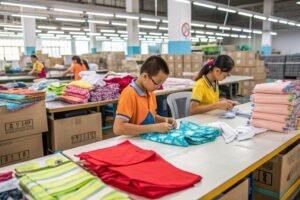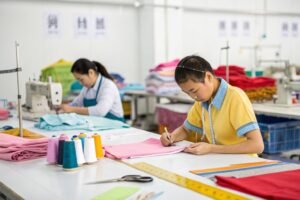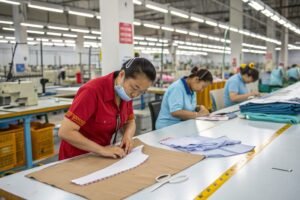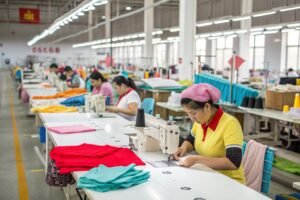
Producing children’s clothing is a discipline that demands a unique balance of artistry, engineering, and ethics. It’s far more complex than simply scaling down adult designs. Every decision, from the initial fiber selection to the final stitch, carries weight because the end user is vulnerable, active, and growing. As a manufacturer with decades in this specialized field, I’ve seen that success and safety hinge on a core set of non-negotiable factors that go beyond aesthetics and cost.
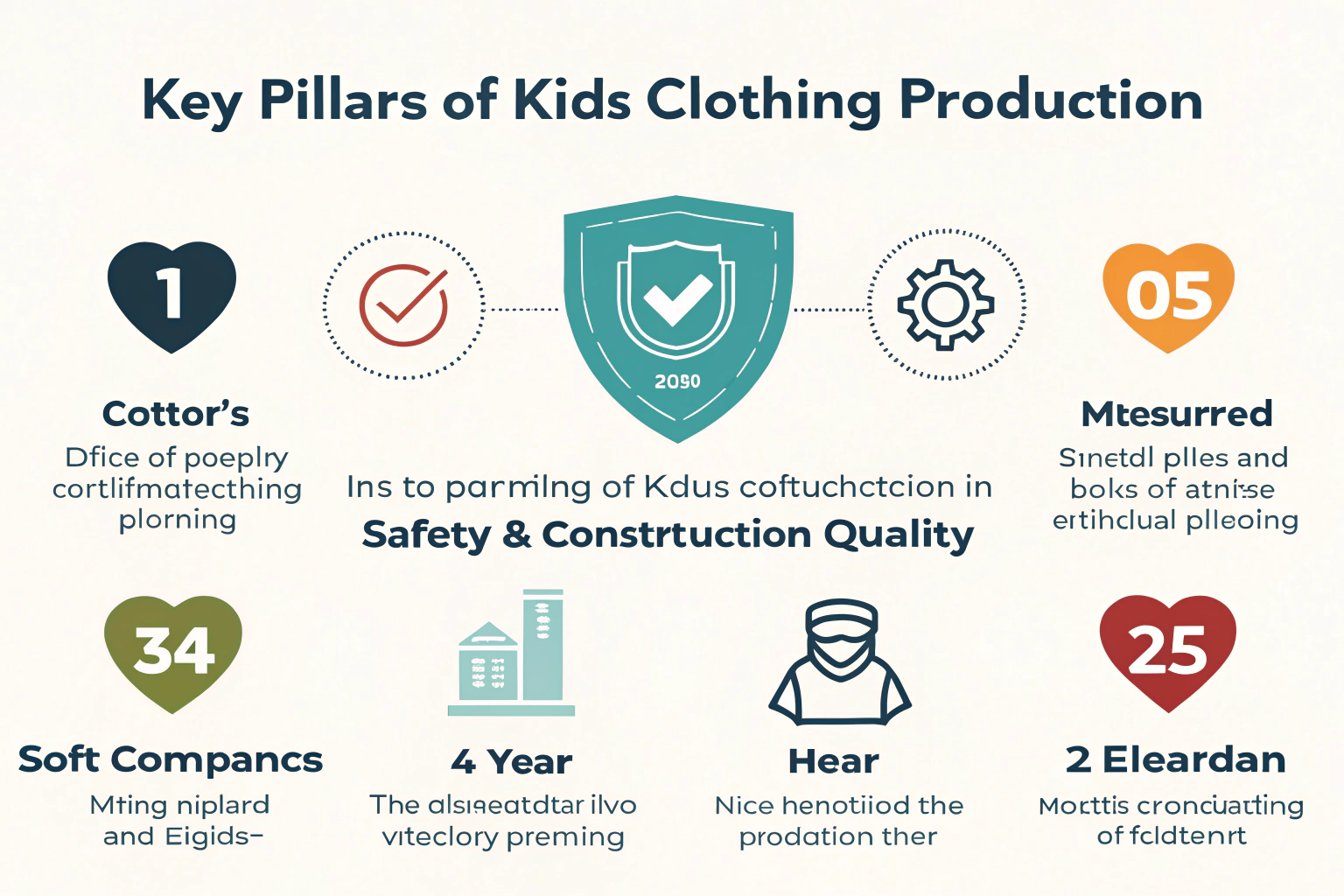
The most important factors in kids clothing production are uncompromising safety and compliance with international regulations, the selection of high-quality and skin-friendly materials, precision in fit and construction for durability, ethical and transparent manufacturing practices, and agile production planning that respects the rapid pace of both child development and fashion trends.
Mastering these pillars transforms production from a mere cost center into the foundation of a trustworthy, successful brand. Let’s delve into each critical factor that separates exceptional kids’ wear from the merely adequate.
Why Are Safety and Compliance the Non-Negotiable Foundation?
In kids’ apparel, safety is not a feature; it’s the prerequisite. Regulatory bodies worldwide have stringent rules because children are at higher risk from choking hazards, chemical exposure, and flammable materials. A single oversight can lead to catastrophic recalls, legal liability, and irreversible brand damage. Compliance is the bedrock upon which all other production factors are built.
This encompasses chemical safety (azo dyes, formaldehyde, heavy metals), physical safety (no small parts, secure fastenings, regulated drawstrings), flammability standards (especially for sleepwear), and stringent labeling requirements. Production must be designed to meet these standards from the outset, not tested for later.

What Are the Critical Global Safety Standards You Must Meet?
A professional manufacturer must be fluent in the regulations of your target market. The key standards include:
- USA: The Consumer Product Safety Improvement Act (CPSIA) mandates testing for lead and phthalates. Flammability standards (16 CFR Part 1610/1615) are critical for sleepwear.
- European Union: The REACH regulation restricts hazardous chemicals. EN 14682 specifically governs the safety of children’s clothing, particularly cord and drawstring designs.
- General Certifications: Oeko-Tex Standard 100 is a globally recognized benchmark for testing harmful substances in textiles at all production stages.
Production must be accompanied by valid, batch-specific test reports from accredited laboratories like Intertek or SGS. Never proceed without this documentation.
How is Safety Engineered into the Design and Production Process?
Safety is proactive, not reactive. It starts with design for safety (DfS). This means avoiding drawstrings at the hood for young children, using snap-fasteners instead of buttons for infants, ensuring prints and embellishments are permanently bonded and cannot be swallowed, and selecting inherently flame-retardant fabrics for relevant categories. During production, rigorous quality control (QC) checkpoints must verify that safety features are correctly executed, such as the strength of bar tacks at stress points and the security of all fastenings.
How Does Material Selection Dictate Quality and Comfort?
The fabric is the child’s second skin. For children, whose skin is more sensitive and permeable, material choice directly impacts comfort, health, and the garment’s performance. The best designs fail if the fabric is itchy, non-breathable, or pills after one wash.
Priority must be given to natural, breathable fibers like GOTS-certified organic cotton, linen, and Tencel™, or high-quality, skin-safe synthetics with moisture-wicking properties for activewear. Beyond fiber, the fabric construction (knit vs. weave, weight, finish) determines durability, stretch, and ease of care.

What Makes Organic Cotton and Other Natural Fibers Superior for Kids?
Organic cotton is the gold standard for everyday wear. Grown without toxic pesticides and processed with fewer harsh chemicals, it significantly reduces the risk of skin irritation and allergic reactions. Its natural breathability helps regulate body temperature. Beyond cotton, linen is highly absorbent and cool, perfect for summer. Bamboo viscose (from responsibly managed sources) is exceptionally soft and antibacterial. These sustainable materials are not just marketing terms; they are conscious choices that prioritize child well-being and environmental stewardship from the very first link in the supply chain.
How to Evaluate Fabric for Durability and Performance?
Quality is tested in the laundry and on the playground. Before production, fabrics should be evaluated for:
- Colorfastness: Resistance to fading from washing and sunlight.
- Dimensional Stability (Shrinkage): Measured after laundering to ASTM or ISO standards.
- Pilling Resistance: How the fabric surface holds up to abrasion.
- Tensile and Tear Strength: Especially important for activewear and pants.
A reputable manufacturer will conduct or source these fabric lab tests and share the results. They understand that a durable fabric reduces returns, enhances brand reputation for quality, and ensures the garment lasts through multiple children—a key value proposition for parents.
Why Are Fit, Construction, and Durability Inseparable?
A perfect fit ensures comfort and freedom of movement, but it is meaningless without construction that holds the fit through wear and wash. Kids are brutal on clothes; seams must withstand pulling, stretching, and frequent laundering. Precision in pattern-making and sewing is paramount.
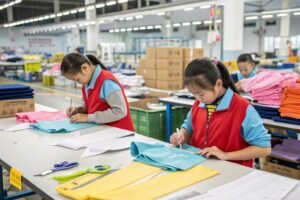
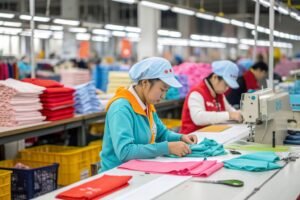
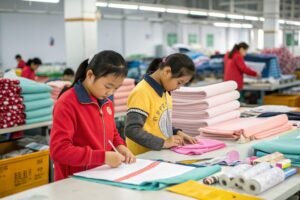
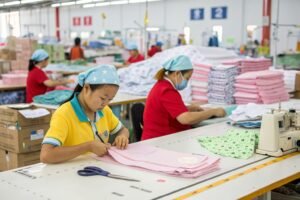
This involves creating size specifications based on real child anthropometric data (not just scaled-down adult sizes), using reinforced stitching at all stress points (knees, seams, pockets), selecting appropriate seam types (flatlock for activewear to prevent chafing), and implementing strict in-process quality checks to catch construction flaws early.

How is Precision Fit Developed for Different Age Groups?
Infants, toddlers, and older children have profoundly different proportions. Pattern grading for kids is a specialized skill. For babies, room for diaper bulk and easy neck openings are crucial. For toddlers, patterns must allow for a protruding belly and provide ease for constant motion. A manufacturer should have a library of base patterns refined over years and should produce multiple fit samples on live child models (or accurate mannequins) to ensure real-world comfort. This attention to ergonomic design is what makes a garment truly functional, not just decorative.
What Construction Techniques Maximize Garment Lifespan?
Durability is engineered through technique:
- Reinforced Stitching: Using bar tacks at the crotch, pocket corners, and belt loops.
- Quality Thread & Stitch Density: Using high-tensile thread and an appropriate number of stitches per inch (SPI).
- Secure Fastenings: Ensuring buttons are tightly sewn with a shank, snaps are properly riveted, and zippers have top and bottom stops.
- Fabric Grain Alignment: Cutting patterns precisely on the fabric grain to prevent twisting after washing.
These details, often invisible to the consumer, are the hallmarks of a manufacturer committed to garment longevity, reducing waste and increasing customer satisfaction.
How Do Ethical and Transparent Practices Build Brand Trust?
Modern parents increasingly vote with their wallets for brands that reflect their values. Ethical production is no longer a niche concern but a mainstream demand. It encompasses fair wages, safe working conditions, environmental responsibility, and transparency throughout the supply chain.
This means partnering with manufacturers who hold social accountability certifications (like WRAP or SA8000), who are transparent about their factory locations and practices, and who can provide evidence of their ethical commitments. The story of how a garment is made is becoming as important as the garment itself.

What Certifications Verify Ethical Manufacturing?
Audits and certifications provide objective verification. Look for:
- WRAP (Worldwide Responsible Accredited Production): Focuses on humane, legal, and ethical manufacturing.
- SA8000: An international social accountability standard.
- Fair Trade Certification: Ensures fair prices and working conditions for farmers and workers.
- B Corp Certification: Measures a company’s entire social and environmental performance.
A manufacturer’s willingness to be audited and certified demonstrates a commitment to corporate social responsibility (CSR) that extends beyond your order, ensuring your brand is built on a solid ethical foundation.
Why is Supply Chain Transparency Crucial for Modern Brands?
Transparency is the antidote to greenwashing and ethical ambiguity. It involves mapping and disclosing the journey from raw material to finished product. Brands should ask their manufacturer: Where is the fabric mill? Where is the dye house? Can you share audit reports? Technologies like blockchain are emerging for supply chain traceability. By being transparent, a brand empowers consumers to make informed choices and builds a fortress of trust that competitors cannot easily breach.
How Does Agile Production Planning Mitigate Risk?
The kids’ market is defined by short product lifecycles (due to growth and fast trends) and seasonal peaks. Traditional, rigid production planning leads to overstock or stockouts. Agile planning allows for responsiveness to sales data, trend shifts, and unforeseen disruptions.
This involves strategies like small-batch production to test the market, flexible minimum order quantities (MOQs), shorter lead times through localized or efficient supply chains, and strong communication protocols that allow for quick adjustments to orders based on real-time demand.

How Can Small-Batch Production and On-Demand Models Help?
Producing large quantities upfront is risky. Small-batch production allows a brand to launch a style, gauge demand, and then re-order quickly if successful, minimizing deadstock. More advanced is the on-demand manufacturing model, where items are produced only after a customer order is placed. While challenging for complex items, it represents the ultimate in inventory risk reduction and aligns with sustainable "make-what’s-needed" principles. A forward-thinking manufacturer will offer low-MOQ options and have systems in place for rapid turnaround on re-orders.
Why is a Collaborative Manufacturer Relationship Key to Agility?
Agility is a partnership. It requires a manufacturer that acts as an extension of your team, providing regular production updates, being proactive about potential delays, and having the flexibility to adjust schedules or priorities when necessary. This collaborative relationship, built on clear communication and project management, is more valuable than a marginally lower unit cost from a rigid, uncommunicative supplier. In a fast-paced market, a responsive partner is a critical competitive advantage.
Conclusion
The production of children’s clothing is a profound responsibility and a complex symphony of interrelated factors. Prioritizing safety, selecting superior materials, engineering for fit and durability, upholding ethical standards, and planning with agility are not isolated steps but interconnected pillars that support a brand’s integrity, quality, and longevity. In an industry where trust is paramount, excellence in production is the most powerful marketing tool a brand can possess.
At Fumao Clothing, these factors are not just a checklist; they are the DNA of our operation. We build partnerships based on a shared commitment to these principles, ensuring that every garment we produce meets the highest possible standards for the child who wears it and the brand that trusts us. If you are looking for a manufacturing partner who views production through this critical, holistic lens, let’s build something exceptional together. Contact our Business Director, Elaine, at elaine@fumaoclothing.com.