
Launching a kids’ clothing brand today without considering its environmental and social impact is a significant strategic miss. Modern parents are not just looking for cute clothes; they are seeking brands that align with their values of health, sustainability, and ethical responsibility. Building an authentically eco-conscious brand goes far beyond using organic cotton—it requires a holistic commitment that touches every aspect of your business, from material sourcing to end-of-life. As a manufacturer working with leading sustainable brands, I’ve seen that authenticity and transparency are the true currencies of success in this space.
To create an authentically eco-conscious kids clothing brand, you must build your entire supply chain on verified sustainable materials, adopt transparent and ethical manufacturing practices, design for durability and circularity, and communicate your mission with radical honesty to build unwavering consumer trust.
This journey is complex but deeply rewarding. Let’s map out the foundational steps to build a brand that is good for children and the planet they will inherit.
How to Source and Verify Truly Sustainable Materials?
Your material choice is your brand’s environmental footprint. "Greenwashing" is rampant, so relying on vague claims is dangerous. You must build traceability from the very first fiber, using certifications and direct relationships as your guide.
Truly sustainable sourcing prioritizes certified organic or regenerative fibers (like GOTS cotton), recycled materials (rPET, recycled cotton), low-impact natural fibers (linen, hemp), and biodegradable options. Verification comes from respected third-party certifications and, whenever possible, direct partnerships with mills and farms that can share their practices.

What Certifications Should You Look For in Fabrics and Dyes?
Certifications are your objective proof. The gold standard for organic textiles is the Global Organic Textile Standard (GOTS), which covers the entire processing chain from harvest to finished garment, including social criteria. For recycled content, the Global Recycled Standard (GRS) is essential. For chemical safety, look for the OEKO-TEX Standard 100, which tests for harmful substances. For dyes, certifications like EU Ecolabel or the Bluesign® system for the entire manufacturing process are strong indicators of reduced environmental impact. Never accept a supplier’s word alone—always ask for the actual certificate and verify its validity online.
How to Build a Transparent Supply Chain from Farm to Factory?
Transparency is your shield against greenwashing. Start by asking your manufacturer for a detailed breakdown of their fabric sources. Can they tell you which mill supplied the yarn? Better yet, can they connect you to a farm group? While full traceability is challenging, striving for it demonstrates commitment. Platforms like the Fashion Revolution Transparency Index push for this norm. Work with manufacturers who are open about their tier-1 and tier-2 suppliers. Visit factories if possible. This due diligence not only ensures integrity but also becomes a powerful part of your brand story, showing customers you have "nothing to hide."
How to Implement Ethical and Low-Impact Manufacturing?
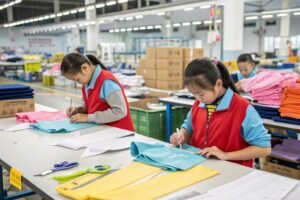
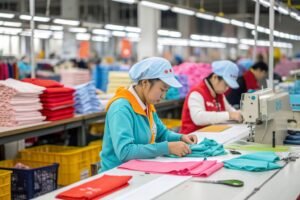
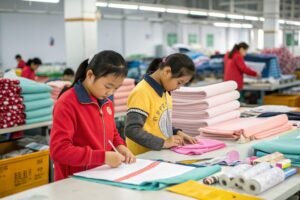
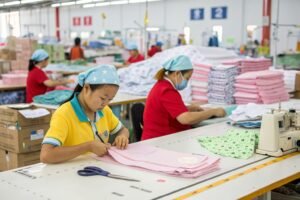
Sustainability extends beyond materials to how the garment is made. Ethical manufacturing ensures fair wages and safe conditions for workers, while low-impact production focuses on reducing water, energy, and chemical use during cutting, sewing, and finishing.
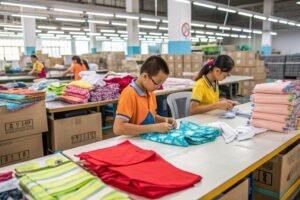
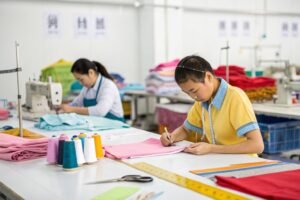
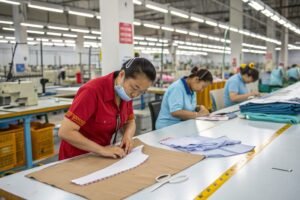
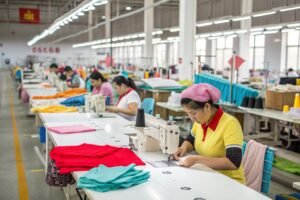
Implement ethical manufacturing by partnering with factories audited for social compliance (like WRAP or SA8000). Achieve low-impact production by using energy-efficient machinery, recycling fabric scraps, treating wastewater, and minimizing plastic in packaging and polybags.

What Are the Key Indicators of an Ethical Factory Partner?
An ethical factory’s practices are verifiable. Look for:
- Social Certifications: WRAP Certification or SA8000 are rigorous standards for social accountability covering child labor, forced labor, health and safety, and fair wages.
- Audit Reports: Request recent third-party social audit reports (like SMETA). A reputable factory will share them.
- Direct Communication: Ask about worker turnover, training programs, and grievance mechanisms. During a visit, observe the working environment—is it clean, well-lit, and safe? Your manufacturer should be a partner you are proud to associate with, as their ethics become an extension of your brand’s ethics.
How Can Production Processes Reduce Water and Energy Use?
The "wet processing" stages (dyeing, washing, finishing) are the most resource-intensive. Ask your manufacturer about their initiatives:
- Water: Do they use water-saving dyeing technologies like air dyeing, digital printing, or low-liquor ratio machines? Do they have a water treatment and recycling plant?
- Energy: Are sewing machines and lighting energy-efficient? Is there a shift towards renewable energy sources (solar, wind)?
- Waste: What percentage of fabric scraps are recycled? Some factories bale scraps for use in insulation or industrial wiping cloths.
Choosing a manufacturer that invests in these technologies significantly reduces your product’s hidden environmental cost.
How to Design for Durability, Longevity, and Circularity?
Eco-conscious design thinks about the entire lifecycle of a garment. It aims to create pieces that are loved for longer, can be passed down, and eventually re-enter the system instead of going to landfill.
Design for durability by using high-quality construction (reinforced seams, bar tacks), timeless styles that outlast trends, and gender-neutral colors to maximize hand-me-down potential. Design for circularity by using mono-materials (100% organic cotton, not blends), incorporating repair or take-back programs, and ensuring garments can be easily disassembled or composted at end-of-life.

Why is "Timeless Design" a Core Principle of Sustainability?
Fast fashion’s enemy is durability and timeless style. For kids, this means avoiding overly trendy graphics or silhouettes that will look "dated" in six months. Focus on classic cuts, simple stripes, subtle prints, and a cohesive color palette that mixes and matches effortlessly. Create "capsule wardrobe" pieces—a perfect pair of joggers, a versatile dress, a sturdy jacket. Educate your customers on building a smaller, better wardrobe that lasts through multiple seasons and siblings. This approach directly counters disposable consumption and builds a brand known for thoughtful design.
How to Implement a Take-Back or Recycling Program?
Closing the loop is the ultimate goal. Start by educating customers on garment care to extend life. Then, offer solutions for the end:
- Take-Back Schemes: Offer a discount on a future purchase when customers return old garments (any brand) in good condition. You can then resell them as "pre-loved" or donate them.
- Recycling Partnerships: For worn-out items, partner with a textile recycling platform that can break down fibers for new uses. Be transparent about what happens to the garments.
- Repair Guides: Provide simple online tutorials for fixing a loose button or a small seam tear.
These programs, while logistically challenging, demonstrate a genuine commitment to the circular economy and create immense brand loyalty.
How to Communicate Authenticity and Build Trust?
In a skeptical market, your communication must be as transparent as your supply chain. Avoid vague terms like "eco-friendly" or "green." Use specific data, tell stories about your partners, and openly discuss your challenges and goals. Trust is built through honesty, not perfection.
Build trust by showcasing your certifications and explaining what they mean, sharing behind-the-scenes stories of your factory and farms, being transparent about your pricing breakdown, and publishing an annual sustainability report, even if it’s simple, that tracks your progress and areas for improvement.

What Storytelling Techniques Make Your Mission Relatable?
Parents connect with stories, not spreadsheets. Use your "About Us" page and social media to tell the story of why you started. Introduce the people behind your products: the farmer, the dyer, the seamstress. Share videos of the factory floor and the organic cotton fields. When you launch a new fabric, explain its benefits and journey in simple terms. Talk about your own journey as a founder—what have you learned? This human-centric content marketing makes your mission tangible and emotionally resonant.
How to Be Transparent About Challenges and "Green Goals"?
No brand is 100% sustainable from day one. Honesty about your journey is powerful. Publish a "Our Roadmap" page outlining your current status (e.g., "All our cotton is GOTS-certified") and your future goals (e.g., "By 2025, we aim to use 100% recycled packaging and achieve carbon-neutral shipping"). If you face a setback—like a supply issue forcing a temporary material switch—explain it to your customers. This level of corporate transparency builds credibility far more than pretending to be perfect. It shows you are committed to continuous, measurable improvement.
Conclusion
Creating an eco-conscious kids clothing brand is a profound commitment to a new way of doing business. It requires deep research, investment in certified materials and ethical partners, a design philosophy rooted in longevity, and a communication strategy built on radical transparency. The path is more complex and often has higher upfront costs, but it builds a defensible brand, deep customer loyalty, and a positive legacy.
At Fumao Clothing, we partner with brands on this journey, providing access to certified sustainable materials, ethical manufacturing processes, and the transparency needed to tell an authentic story. If you are ready to build a brand that matters, let’s work together to turn your vision into a reality that parents can trust. Contact our Business Director, Elaine, at elaine@fumaoclothing.com to begin building your conscious collection.