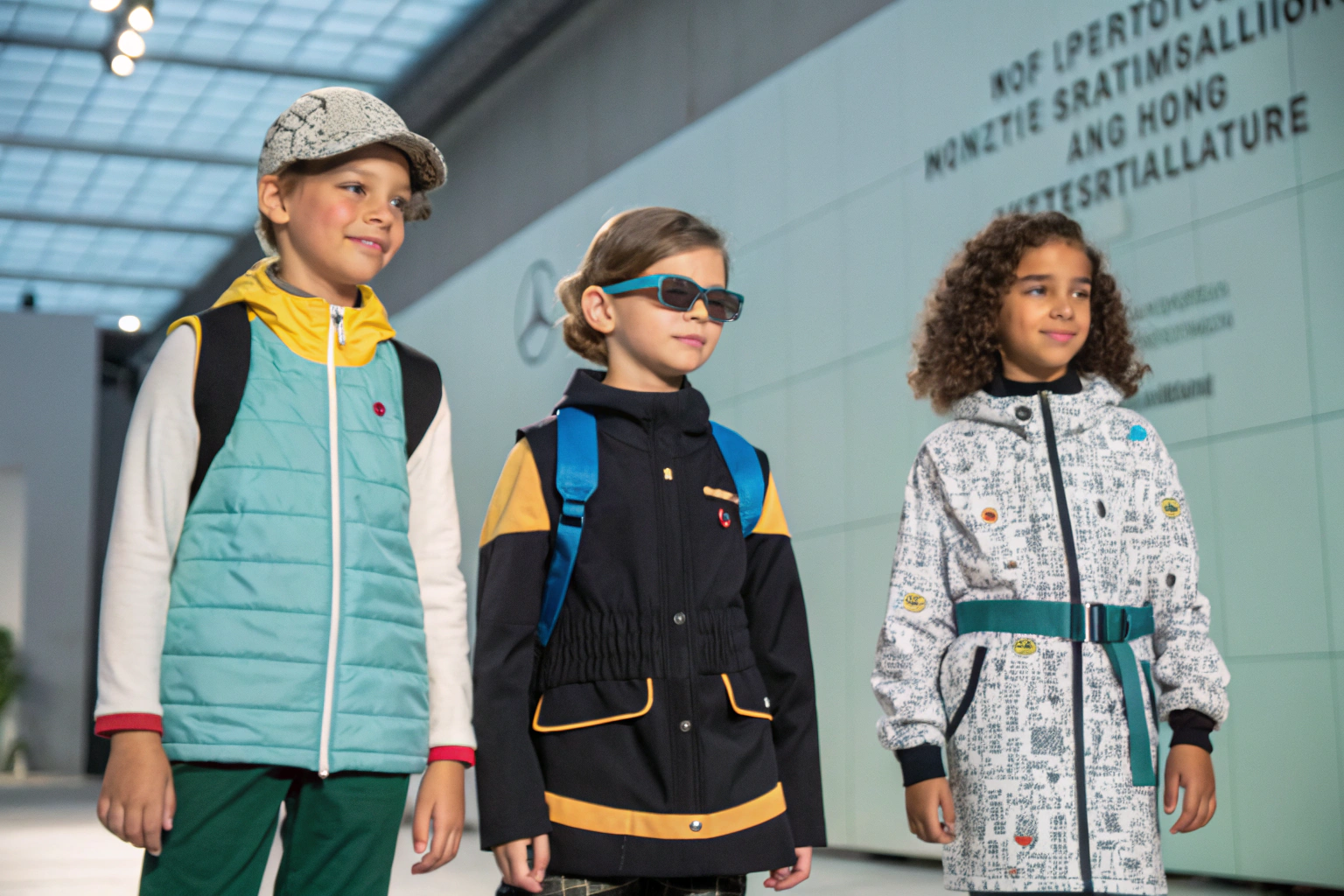
Forecasting children’s fashion trends for 2026 requires analyzing evolving societal values, technological advancements, and generational shifts in parenting approaches. As a manufacturer supplying American and European markets, I’m observing emerging patterns that will define the coming years, blending continued sustainability emphasis with new technological integrations and evolving concepts of childhood expression. These trends reflect broader cultural movements while addressing the practical realities of dressing growing, active children.
The key trends in kids fashion for 2026 include adaptive smart clothing, hyper-sustainable circular systems, neo-nostalgia reinterpretations, augmented reality integration, and wellness-focused designs that support physical and mental health. These directions represent both evolutionary progress from current movements and revolutionary approaches that will redefine how we think about children’s clothing.
Successful brands will balance these forward-looking trends with timeless considerations of comfort, safety, and value—creating clothing that feels both innovative and appropriate for childhood’s unique needs.
How Will Adaptive Smart Clothing Evolve?
Smart clothing will move beyond basic tracking features to become truly adaptive systems that respond to children’s needs, environments, and developmental stages.
These technological integrations will prioritize subtlety, educational value, and genuine utility over mere novelty, creating clothing that grows and learns with the child.

What Forms Will Smart Integration Take?
Subtle biometric monitoring for wellness tracking, temperature-regulating phase-change materials, growth-adjustable features that extend wearable life, and interactive educational elements will characterize 2026 smart clothing. These features will be integrated seamlessly rather than as obvious tech add-ons, maintaining clothing’s primary function while adding valuable secondary benefits. According to Smart Textile Research, the children’s smart clothing segment is projected to grow 300% between 2024-2026 as costs decrease and applications expand.
How Will Data Privacy Concerns Be Addressed?
Parental control over data collection, local rather than cloud-based data processing, and clear value exchange for any collected information will be essential for smart clothing adoption. Brands that transparently address privacy concerns while demonstrating genuine benefits will lead this category. The most successful approaches will position technology as enhancing rather than replacing traditional clothing values.
What Defines Hyper-Sustainable Circular Systems?
Sustainability will evolve from material-focused approaches to comprehensive circular systems encompassing design, production, use, and post-use phases.
2026 will see brands implementing complete circular ecosystems rather than isolated sustainable initiatives, with clothing designed for multiple lifecycles from inception.

How Will Circular Design Principles Manifest?
Modular construction for easy repair and updating, standardized components for interchangeability between garments, and disassembly-friendly construction will become design priorities. These approaches extend usable life while facilitating material recovery at end-of-life. Brands will increasingly adopt circular design frameworks that consider entire product lifecycles during initial design phases rather than as afterthoughts.
What Role Will Digital Product Passports Play?
Blockchain-based digital passports tracking materials, manufacturing conditions, ownership history, and care instructions will enable true circularity. These passports will facilitate resale, rental, repair, and ultimately recycling by providing verified information throughout the garment’s lifecycle. This traceability addresses growing consumer demand for transparency while enabling practical circular business models.
Why Will Neo-Nostalgia Reinterpretations Dominate?
Reimagined vintage styles will blend nostalgia with contemporary values, creating fresh interpretations that honor the past while addressing modern needs.
This trend will move beyond direct vintage reproduction to thoughtful updates that maintain nostalgic appeal while improving comfort, inclusivity, and sustainability.

Which Eras Will Inspire 2026 Collections?
1990s minimalism, 1970s earthy tones and natural fabrics, and early 2000s playful details will be particularly influential, filtered through contemporary sensibilities about comfort, gender neutrality, and sustainability. These reinterpretations will appeal to millennial parents’ nostalgia while aligning with their current values. The Nostalgia Marketing Institute projects that neo-nostalgic styles will represent 40% of children’s fashion by 2026 as generational nostalgia cycles continue.
How Will Modern Updates Enhance Vintage Styles?
Contemporary stretch fabrics in classic silhouettes, improved size inclusivity in vintage-inspired cuts, and sustainable material substitutions will make nostalgic styles more wearable and responsible. These updates demonstrate respect for the past while refusing to replicate its limitations. The most successful approaches will maintain recognizable nostalgic elements while eliminating outdated constraints.
How Will Augmented Reality Integration Expand?
AR will evolve from marketing gimmick to integrated design element, enhancing both the purchasing experience and the clothing’s functional value.
This technology will bridge physical and digital play while providing practical benefits like fit visualization and educational content.

What Functional AR Applications Will Emerge?
Virtual try-on technology using accurate child avatars, interactive care instruction demonstrations, growth prediction visualization, and personalized styling suggestions will provide genuine utility. These applications will help parents make better purchasing decisions while creating engaging experiences for children. According to Fashion Technology Forecast, functional AR applications will influence 35% of children’s wear purchases by 2026.
How Will AR Enhance Play and Learning?
Clothing with AR triggers that unlock educational games, interactive stories, or creative activities will extend product value beyond physical wear. These experiences will be designed to encourage movement, creativity, and learning rather than passive screen time. The most thoughtful implementations will align with developmental stages and parental values about technology use.
Why Will Wellness-Focused Designs Gain Prominence?
Clothing designed to support physical and mental wellbeing will become increasingly important as parents prioritize holistic health approaches.
Wellness integration will encompass ergonomic support, sensory considerations, emotional comfort, and developmental appropriateness.

How Will Physical Wellness Be Addressed?
Ergonomic designs supporting proper posture and movement, breathable temperature-regulating fabrics, and sensory-friendly construction minimizing irritants will become standard expectations. These features will be integrated seamlessly rather than marketed as special accommodations, reflecting universal design principles. Our manufacturing is already incorporating wellness-informed design principles that benefit all children rather than just those with specific needs.
What Role Will Emotional Wellness Play?
Colors and textures scientifically shown to influence mood, designs that support autonomy and self-expression, and clothing that helps children identify and communicate emotions will gain importance. This emotional dimension represents an evolution from purely physical considerations to holistic wellbeing approaches. Brands that understand these connections will create deeper emotional resonance with both children and parents.
Conclusion
The key kids fashion trends for 2026 represent a convergence of technological innovation, environmental responsibility, emotional resonance, and holistic wellbeing considerations. The most successful brands will integrate these trends thoughtfully rather than superficially, creating clothing that genuinely enhances children’s lives while addressing parental values and practical realities.
At Shanghai Fumao Clothing, we’re preparing for these trends through investments in smart textile capabilities, circular production systems, and wellness-informed manufacturing approaches. If you’re developing collections for 2026 and beyond, contact our Business Director Elaine at elaine@fumaoclothing.com to discuss how our forward-looking manufacturing expertise can support your vision for the future of children’s fashion.