
Shipping children’s clothing to European markets requires navigating complex logistics, customs regulations, and consumer expectations while maintaining cost efficiency and delivery reliability. As a manufacturer with extensive experience supplying American and European children’s wear brands, I’ve developed shipping strategies that balance speed, cost, and compliance to ensure products reach their destinations efficiently while preserving quality and meeting customer expectations.
The best shipping methods for kids clothing to Europe combine strategic carrier selection, optimized packaging, thorough customs preparation, and destination-specific considerations that address VAT requirements, labeling regulations, and consumer delivery preferences. The optimal approach varies based on shipment volume, speed requirements, and product characteristics, with different solutions serving different business needs.
Successful European shipping requires understanding that this isn’t a single market but a collection of countries with varying regulations, infrastructure, and consumer expectations that must be addressed through tailored logistics approaches.
How Should You Select Shipping Methods Based on Volume?
Shipping method selection should align with shipment volume, urgency, and budget constraints, with different approaches optimal for samples, wholesale orders, and e-commerce direct-to-consumer shipments.
Understanding the trade-offs between air freight, sea freight, and courier services ensures you select the most appropriate method for each shipment type and business requirement.
When Is Air Freight Most Appropriate?
Air freight provides the fastest transit times (typically 3-8 days) and is ideal for time-sensitive shipments, high-value goods, and smaller volumes where speed justifies higher costs. For children’s wear, this method works well for seasonal collections with tight delivery windows, sample shipments for buyer approvals, and replenishment of fast-moving styles. According to Air Cargo Research, air transport typically costs 4-5 times more than sea freight but can be economically justified when considering reduced inventory carrying costs and missed sales opportunities.
What Are the Advantages of Sea Freight?
Sea freight offers significantly lower costs for large volumes (typically 60-80% savings compared to air) but involves longer transit times (4-6 weeks). This method suits bulk shipments of core collections, basic items without seasonality pressure, and high-volume orders where cost efficiency outweighs speed considerations. Our logistics data shows that sea freight becomes cost-effective at approximately 500kg, with advantages increasing substantially beyond 1,000kg.
What Packaging Considerations Protect Kids Clothing?
Proper packaging preserves product quality during extended transit while meeting European retailer requirements and consumer unboxing expectations.
Packaging must balance protection, cost efficiency, and sustainability while accommodating European preferences and regulatory requirements.
How Can You Prevent Transit Damage?
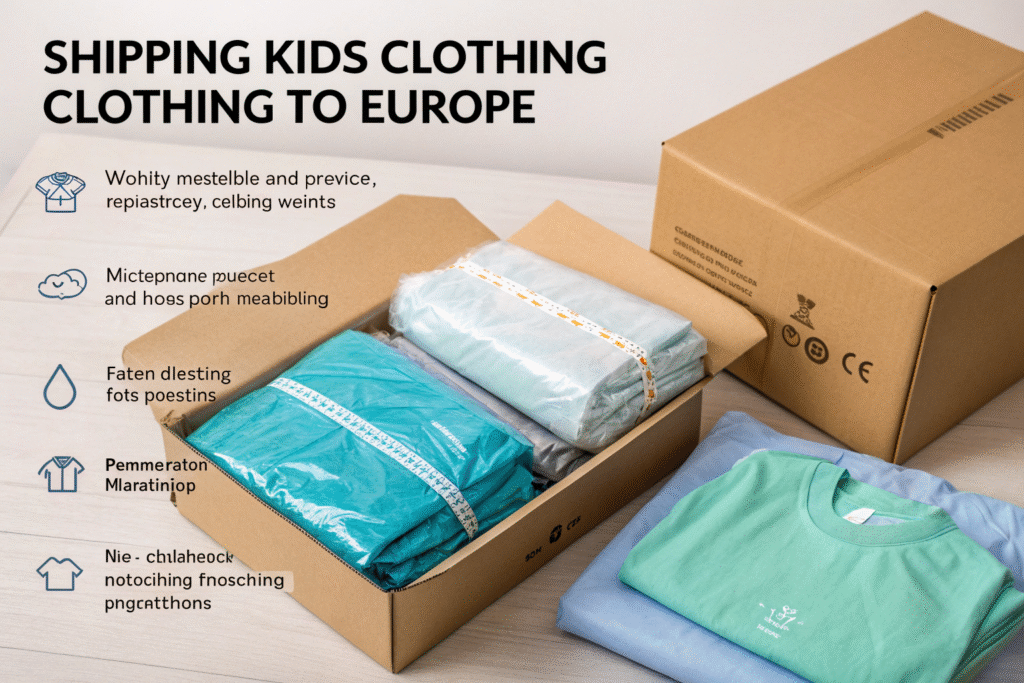
Moisture-resistant packaging, proper folding to prevent permanent creases, and adequate carton strength prevent the most common shipping damages. Children’s wear often includes delicate details like embroidery, appliques, and special fastenings that require extra protection. Using corrugated dividers between garments and avoiding overpacking cartons significantly reduces damage rates, which typically run 3-5% for improperly packaged children’s wear shipments.
What Sustainability Considerations Matter in Europe?
European markets increasingly expect minimal, recyclable, and plastic-free packaging that aligns with environmental values. Using recycled cardboard, paper tape instead of plastic, and avoiding unnecessary individual poly bags demonstrates environmental responsibility that resonates with European consumers. According to European Packaging Research, 68% of European consumers consider packaging sustainability when making purchasing decisions, making this an important brand consideration beyond pure logistics.
How Should You Handle Customs and Import Regulations?
Thorough customs preparation prevents delays, additional costs, and compliance issues that can disrupt supply chains and impact customer relationships.
European customs procedures require accurate documentation, proper classification, and understanding of varying national requirements within the EU framework.
What Documentation Is Essential?
Commercial invoices with accurate product descriptions and values, packing lists, certificates of origin, and safety compliance documentation form the foundation of smooth customs clearance. For children’s wear, specifically include testing certificates (like Oeko-Tex or CE marks) that demonstrate compliance with European safety standards. Incomplete documentation causes approximately 30% of customs delays according to Customs Compliance Research, making thorough preparation essential.
How Should You Handle VAT and Import Duties?
Understanding VAT registration requirements, duty rates specific to children’s wear (typically 4-12% in EU countries), and import declaration procedures prevents unexpected costs and delays. Many businesses benefit from working with customs brokers who understand the nuances of textile import regulations across different European countries. Proper VAT management is particularly important since July 2021 changes eliminated the low-value consignment threshold for imports into the EU.
What Last-Mile Delivery Considerations Matter?
The final delivery experience significantly impacts customer satisfaction, with European consumers expecting reliable, trackable, and flexible delivery options.
Last-mile delivery strategies should align with country-specific expectations while managing costs and providing positive brand experiences.
Which Carrier Networks Work Best in Europe?
National postal services, integrated carriers like DHL/UPS/FedEx, and regional specialists offer different advantages across European markets. The optimal choice depends on destination country, delivery speed requirements, and cost considerations. For example, DHL Parcel works well for German deliveries, while Colissimo serves French markets efficiently. According to European Logistics Research, using country-appropriate carriers can improve on-time delivery rates by 15-20% compared to one-size-fits-all approaches.
How Can You Optimize Returns Management?
European consumers expect hassle-free returns, making returns management a crucial consideration in shipping strategy. Including prepaid returns labels, clear multilingual instructions, and partnership with returns processing centers in Europe improves the customer experience while managing costs. The European E-commerce Association reports that easy returns processes increase conversion rates by 25% while properly managed returns typically see 85-90% of items resold rather than liquidated at a loss.
How Does Shipping Strategy Impact Total Cost?
Viewing shipping expenses as part of total delivered cost rather than isolated logistics expenses reveals opportunities for optimization across the supply chain.
Strategic shipping decisions consider not just direct transportation costs but inventory carrying costs, opportunity costs of stockouts, and customer lifetime value impacts.
What Hidden Costs Should You Consider?
Beyond obvious freight charges, consider customs brokerage fees, insurance, packaging materials, warehousing costs if using consolidation, and currency exchange impacts. These additional expenses typically add 15-25% to base shipping costs but are often overlooked in initial calculations. Proper total cost analysis helps identify the truly most economical shipping methods rather than those with the lowest surface rates.
How Can Consolidation Reduce Costs?
Consolidating multiple shipments or working with consolidation services that combine goods from multiple shippers significantly reduces per-unit costs. This approach works particularly well for smaller brands that don’t fill full containers or achieve volume discounts individually. Consolidation typically reduces costs by 20-40% for LCL (less than container load) shipments while maintaining reasonable transit times.
Conclusion
Shipping kids clothing to Europe successfully requires balancing cost, speed, reliability, and compliance through strategic method selection, thorough preparation, and understanding of destination-specific requirements. The most effective approaches treat shipping as an integral component of business strategy rather than just a logistical necessity, recognizing that delivery experience directly impacts customer satisfaction and brand perception.
At Shanghai Fumao Clothing, we’ve developed streamlined shipping processes for our European clients that navigate these complexities while maintaining our commitment to quality and timeliness. If you’re looking to optimize your European shipping strategy for children’s wear, contact our Business Director Elaine at elaine@fumaoclothing.com to discuss how our logistics expertise can support your market expansion while controlling costs and ensuring compliance.