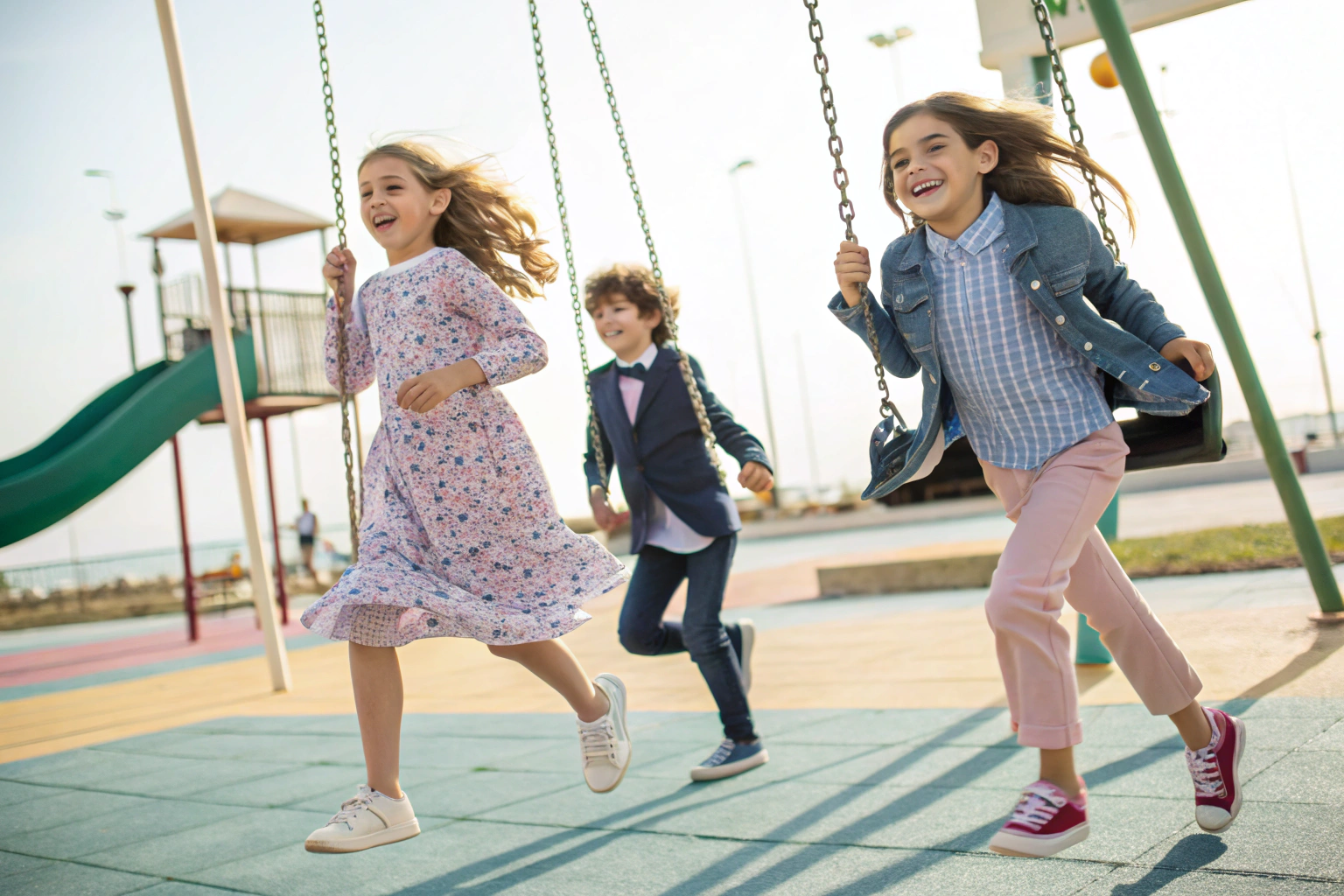
The debate between comfort and style in children’s fashion represents one of the most fundamental considerations for parents, designers, and manufacturers. As a children’s clothing manufacturer working with brands worldwide, I’ve observed how the most successful collections masterfully balance these seemingly competing priorities to create clothing that children love to wear and parents feel good about purchasing.
Comfort and style are equally important in kids fashion because they address different but equally crucial aspects of childhood development. Comfort supports physical wellbeing, freedom of movement, and sensory development, while style fosters self-expression, confidence, and social connection. The most successful children’s clothing seamlessly integrates both elements to support holistic child development.
The most forward-thinking children’s fashion brands recognize that comfort and style aren’t opposites but complementary qualities that, when balanced correctly, create clothing that truly serves children’s needs. Let’s explore why this balance matters and how to achieve it.
How does comfort impact physical development?
Comfort in children’s clothing directly influences physical development by allowing natural movement, supporting healthy posture, and preventing distractions that can hinder activity and exploration. When clothing feels good against the skin and moves with the body, children are free to focus on developmentally crucial activities rather than their attire.
Key comfort considerations include fabric breathability, ease of movement, temperature regulation, and absence of irritants. Each element contributes to an environment where physical development can proceed without clothing-related limitations or discomfort.

Why does unrestricted movement matter for growth?
Unrestricted movement matters for growth because childhood physical development occurs through constant motion, exploration, and activity that builds coordination, strength, and body awareness. According to American Academy of Pediatrics guidelines, clothing that restricts movement can inadvertently limit the variety and quality of physical experiences children need for optimal development. Properly fitting clothing with strategic ease at key movement points—shoulders, knees, hips—allows children to run, jump, climb, and explore their physical capabilities fully. This freedom is particularly crucial during growth spurts when children are adapting to rapidly changing bodies and developing new motor skills that form the foundation for lifelong physical competence.
How do sensory considerations affect learning and behavior?
Sensory considerations significantly affect learning and behavior because uncomfortable clothing can create constant distractions that reduce a child’s ability to focus on cognitive tasks and social interactions. Research from the Journal of Child Psychology and Psychiatry indicates that sensory discomfort can manifest as irritability, restlessness, or withdrawal in children who lack the vocabulary to articulate their discomfort. Scratchy tags, tight elastic, stiff fabrics, or uncomfortable seams create what occupational therapists call "sensory noise" that competes for a child’s attention. By eliminating these irritants through thoughtful design—tagless labels, flatlock seams, soft elastic, and breathable fabrics—clothing becomes a supportive background rather than a distracting foreground, allowing children to fully engage with learning and social opportunities.
How does style influence psychological development?
Style in children’s clothing plays a crucial role in psychological development by supporting identity formation, self-expression, and social confidence. The clothing choices available to children directly influence how they see themselves and how they believe others perceive them, making style far more than superficial aesthetics.
Key style considerations include self-expression opportunities, age-appropriate trends, cultural relevance, and personal choice. Each element contributes to a child’s developing sense of identity and place in their social world.

Why does self-expression through clothing build confidence?
Self-expression through clothing builds confidence by giving children agency over their appearance and validating their emerging identities. When children can choose clothing that reflects their personalities, interests, and preferences, they receive the powerful message that their individual tastes matter. According to child development research, clothing serves as one of the first tools children use to communicate "who I am" to the world, making it a crucial component of identity development. This self-expression becomes particularly important during the preschool and elementary years when children are developing a stable sense of self separate from their parents. Clothing that allows this expression—through color choices, character preferences, or style selections—supports this developmental milestone in tangible ways.
How does social belonging impact emotional wellbeing?
Social belonging impacts emotional wellbeing because fitting in with peers provides children with security and acceptance that forms the foundation for healthy social development. The table below illustrates how clothing influences social experiences at different developmental stages:
| Age Group | Social Clothing Needs | Emotional Impact |
|---|---|---|
| Toddlers (2-4) | Recognition of familiar characters, bright colors | Security through familiarity |
| Early Elementary (5-8) | Age-appropriate trends, peer-approved styles | Belonging within peer group |
| Tweens (9-12) | Brand awareness, individual style expression | Identity formation and social positioning |
Research from the Journal of Experimental Child Psychology demonstrates that children as young as five recognize clothing as social signals and make friendship decisions based on these cues. While parents shouldn’t capitulate to every trend, providing style options that align with a child’s social context helps prevent unnecessary social stress while teaching children to navigate the complex relationship between individuality and belonging.
What happens when comfort and style are imbalanced?
When comfort and style become imbalanced in children’s fashion, the results can negatively impact both physical wellbeing and psychological development. Understanding these consequences helps designers and parents make more informed choices about children’s clothing.
Common imbalance scenarios include stylish but restrictive clothing, comfortable but socially problematic outfits, and age-inappropriate styling that either infantilizes or prematurely ages children. Each scenario creates different challenges for developing children.

What are the consequences of stylish but uncomfortable clothing?
The consequences of stylish but uncomfortable clothing include limited physical activity, distracted learning, negative associations with getting dressed, and potential physical irritations. When children must choose between participating in activities and avoiding clothing discomfort, they often limit their experiences in ways that can affect development. For example, a child might avoid the sandbox because they’re wearing a delicate outfit, or skip running games because their jeans are too tight. According to early childhood education research, clothing discomfort ranks among the top reasons children resist preschool activities. Additionally, uncomfortable stylish clothing often requires special care that limits its practical usability, reducing its value despite higher costs and creating frustration for both children and parents.
How does comfortable but unstylish clothing affect social experiences?
Comfortable but unstylish clothing affects social experiences by potentially marking children as "different" in ways that can impact social acceptance and self-perception. While comfort should never be sacrificed entirely for style, completely ignoring aesthetic considerations can create social challenges, particularly as children become more aware of peer norms. Research from Child Development Perspectives indicates that children who feel they dress differently from peers may experience increased social anxiety and decreased participation in group activities. This doesn’t mean chasing every trend, but rather finding a middle ground where comfortable clothing also respects a child’s desire to fit in with their social group. The most successful approach involves identifying which style elements matter most to a child’s particular social context while maintaining non-negotiable comfort standards.
How can designers balance both priorities?
Balancing comfort and style requires thoughtful design strategies that integrate both considerations from the earliest concept stages rather than treating them as competing priorities. The most successful children’s wear designers approach this challenge through specific techniques that honor both physical and psychological needs.
Key balancing strategies include selecting dual-purpose materials, incorporating design elements that serve both aesthetics and function, understanding age-appropriate styling, and creating versatile pieces that work across multiple contexts.

What fabric technologies support both comfort and style?
Fabric technologies that support both comfort and style include advanced natural blends, technical knits with aesthetic appeal, and innovative treatments that enhance both look and feel. Modern fabric developments allow designers to move beyond the traditional comfort-style tradeoff by creating materials that offer multiple benefits simultaneously. For example, technical jerseys with four-way stretch provide complete freedom of movement while maintaining a sleek, modern appearance that appeals to style-conscious parents and children. Similarly, organic cotton blends with subtle sheens offer both breathable comfort and elevated aesthetics that work for special occasions and everyday wear. The most forward-thinking manufacturers are developing proprietary fabrics specifically engineered for children’s unique needs—materials that withstand active play while maintaining their appearance through multiple washes and wearing.
How can design elements serve dual purposes?
Design elements can serve dual purposes when they’re conceived to address both aesthetic and functional needs simultaneously. Strategic design thinking transforms potential compromises into opportunities for innovation. The table below illustrates how common design elements can serve both comfort and style:
| Design Element | Comfort Function | Style Function |
|---|---|---|
| Raglan Sleeves | Greater arm movement, less shoulder restriction | Sporty, modern silhouette |
| Elasticized Waists | Accommodates growth, ensures comfort | Clean finish, no bulky closures |
| Knee Gussets | Allows full range of motion for active play | Creates interesting seam details |
| Convertible Elements | Adapts to different temperatures/activities | Creates visual interest through transformation |
According to design innovation principles, this integrated approach represents the highest level of design thinking—solving multiple challenges with single, elegant solutions. For children’s wear, this means recognizing that a well-placed seam can simultaneously create a fashion-forward silhouette and accommodate growth, or that a clever print can both delight a child and strategically disguise stains.
How do parents navigate the comfort-style balance?
Parents face daily decisions about balancing comfort and style in their children’s clothing choices. Successful navigation requires understanding a child’s individual needs, recognizing which contexts demand different balances, and developing strategies that respect both priorities.
Key parental strategies include establishing non-negotiable comfort standards, identifying which style elements matter most to their child, creating a versatile wardrobe with different balance points, and involving children in age-appropriate decisions.

What questions help parents assess the right balance?
Questions that help parents assess the right balance include: "Does this allow my child to move naturally?", "Will my child feel confident wearing this?", "Can my child manage this independently?", and "Does this work for our day’s activities?" These questions reframe the comfort-style debate from abstract principles to practical considerations that reflect real children’s lives. The American Academy of Pediatrics emphasizes that clothing decisions should always prioritize safety and physical wellbeing first, then consider social and emotional needs within those parameters. By establishing non-negotiable comfort standards (like soft seams, breathable fabrics, and easy fastenings) first, parents can then explore style options within those boundaries, ensuring that aesthetics never compromise fundamental comfort and functionality.
How can parents involve children in clothing decisions?
Parents can involve children in clothing decisions by offering limited, age-appropriate choices that respect both the child’s preferences and parental comfort standards. For toddlers, this might mean selecting two weather-appropriate outfits and letting the child choose between them. For elementary-aged children, it could involve establishing a "comfort-approved" section in the closet from which they can freely select combinations. For tweens, the process might include collaborative shopping within predetermined guidelines. Research from child development studies indicates that children who exercise appropriate autonomy in clothing choices develop stronger decision-making skills and more positive body image. This collaborative approach teaches children to balance their style preferences with practical considerations—a skill that serves them throughout life.
Conclusion
Comfort and style represent equally important pillars in children’s fashion because they address different but equally crucial aspects of childhood development. Comfort supports physical wellbeing, sensory integration, and unrestricted exploration, while style fosters identity formation, self-expression, and social confidence. The most successful children’s clothing seamlessly integrates both elements, recognizing that what children wear directly influences how they move, learn, feel, and connect with their world.
The most forward-thinking approach views comfort and style not as competing priorities but as complementary qualities that, when balanced skillfully, create clothing that truly serves children’s holistic development. If you’re developing children’s wear collections and need manufacturing partnership that understands this essential balance, contact our Business Director Elaine at elaine@fumaoclothing.com. Let Shanghai Fumao’s expertise in both technical comfort and aesthetic design help you create clothing that supports children’s development while capturing their imaginations.