The plus size children’s wear segment represents one of the most significant untapped opportunities in the kids fashion industry. Despite growing awareness of body diversity and increasing rates of childhood obesity, the market continues to lag dramatically behind demand, leaving many families struggling to find stylish, well-fitting clothing for their children.
The plus size kids wear market is underserved due to outdated industry sizing standards, higher production costs and complex patterning requirements, limited retail space allocation, societal stigma affecting both demand and supply, and lack of representation in fashion marketing. These interconnected barriers have created a persistent market gap that fails to meet the needs of a substantial consumer segment.
The disconnect between market reality and industry response is particularly striking given that approximately 1 in 5 children in the United States lives with obesity, according to CDC data. This represents a significant demographic that currently lacks appropriate clothing options. The underserved status of this market stems from multiple structural, economic, and social factors that have collectively limited industry investment and innovation. Let’s examine the specific barriers preventing adequate service to this substantial customer base.
How do outdated sizing standards limit market response?
The children’s wear industry relies heavily on age-based sizing systems that fail to accommodate the natural variations in children’s body types, particularly for those who don’t fit conventional height-to-weight proportions.
Outdated sizing standards limit market response by using age-based rather than measurement-based systems, failing to account for diverse body proportions, maintaining inconsistent sizing across brands, and lacking industry-wide standardization for plus size categories. This confusion creates frustration for shoppers and uncertainty for manufacturers.

Why do age-based sizing systems fail plus size children?
Traditional age-based sizing assumes predictable height-to-weight ratios that simply don’t reflect the reality of many children’s bodies. A 10-year-old who wears a plus size may have completely different proportions than what standard sizing charts anticipate—they might need more room in the waist but not necessarily longer sleeves or pants. This mismatch means that even when brands offer extended sizes, the clothing often fits poorly because the patterns are simply graded up from standard sizes rather than being designed specifically for different body types. The result is clothing that technically comes in the right size but doesn’t actually fit well.
How does sizing inconsistency undermine consumer confidence?
The lack of standardization means that a "plus size 10" varies dramatically between brands, assuming brands offer the size at all. This inconsistency forces parents to navigate a frustrating trial-and-error process, often requiring multiple online orders and returns to find clothing that fits properly. The experience is so discouraging that many parents simply stop looking for fashionable options and settle for whatever functional basics they can find. This reduced purchasing frequency and basket size makes the segment appear less profitable to brands, creating a vicious cycle of underinvestment.
What production challenges discourage brand participation?
Manufacturing plus size children’s clothing presents unique technical and economic challenges that differ from standard sizing production, requiring specialized expertise and additional resources many brands are unwilling to commit.
Production challenges discourage brand participation through higher material costs per garment, complex pattern-making requirements, limited fabric selection in larger quantities, and sampling costs that are difficult to justify for smaller initial runs. These economic factors make plus size lines appear less profitable than standard sizing.

How do material costs impact profitability?
Plus size clothing requires significantly more fabric than standard sizes—often 20-40% more depending on the garment style and size extension. This increased material usage directly impacts both cost of goods and manufacturing efficiency, as cutting machines and production lines are optimized for standard sizing. Additionally, many brands struggle to source appropriate fabrics in the smaller quantities needed for initial plus size collections, as mills typically have minimum order requirements designed for high-volume standard sizing production. These economic realities make plus size lines appear less attractive from a margin perspective.
Why is pattern-making more complex for plus sizes?
Creating well-fitting plus size children’s clothing requires specialized pattern-making expertise that accounts for different weight distribution and proportion relationships than standard sizing. Simply "grading up" existing patterns results in poor fit—sleeves and body lengths become disproportionate, armholes gape, and waistlines ride up. Developing proper plus size patterns requires multiple fitting sessions and samples, increasing development time and cost. Many children’s wear brands lack designers and pattern-makers with this specialized expertise, making the development process seem daunting and expensive compared to sticking with familiar standard sizing.
How does retail space allocation limit market access?
The physical and digital retail environments present significant barriers for plus size children’s wear, with limited shelf space, categorization challenges, and visibility issues that reduce discoverability and sales.
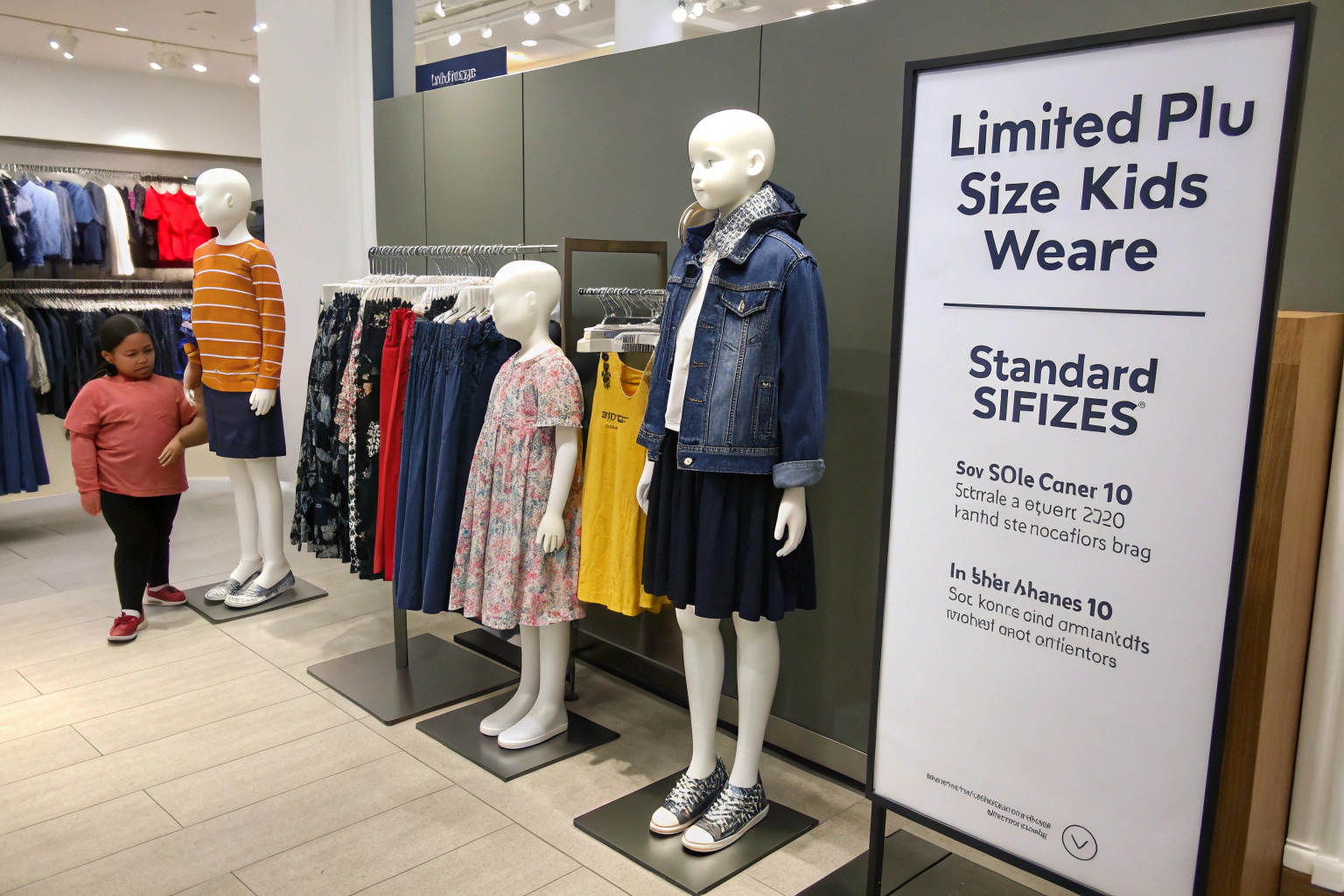
Retail space allocation limits market access through preferential placement of standard sizes, limited inventory capacity for extended sizes, categorization that marginalizes plus sizes, and visual merchandising that fails to represent diverse body types. These retail barriers reinforce the perception that plus size children’s wear is a niche category.

Why do retailers prioritize standard sizing?
The economics of retail space dictate that retailers allocate space to products that deliver the highest sales per square foot. Since standard sizes historically outperform plus sizes in this metric—partly because plus size selection is limited—the cycle perpetuates itself. Additionally, buyers for major retailers often lack data about the true demand for plus size children’s wear because the category has never been properly merchandised or marketed. Without compelling sales data from test cases, retailers are hesitant to allocate precious shelf space to a category they perceive as risky or unproven.
How does online categorization impact discoverability?
Even in digital environments where space is theoretically unlimited, categorization and filtering limitations make plus size children’s wear difficult to find. Many retailers don’t include robust size filtering for children’s categories, or they bury plus sizes within standard sizing rather than creating dedicated sections. This lack of clear navigation means parents must scroll through hundreds of products to find extended sizes, often abandoning the search out of frustration. Without dedicated landing pages, SEO optimization, and clear categorization, plus size options remain virtually invisible to many potential customers.
What role does societal stigma play in market dynamics?
Deep-seated societal attitudes about weight and body image influence both supply and demand in the plus size children’s wear market, creating psychological barriers that transcend practical business considerations.
Societal stigma plays a significant role in market dynamics by causing parental hesitation in seeking out plus sizes, creating marketing challenges for brands, influencing design aesthetic toward concealment rather than style, and perpetuating the association of plus size with "problem" rather than "opportunity." These psychological factors suppress both supply and demand.

How does stigma affect parental purchasing behavior?
Many parents experience emotional discomfort when purchasing plus size clothing for their children, interpreting it as acknowledging a "problem" rather than simply buying clothes that fit. This discomfort leads some parents to avoid the plus size section altogether, instead purchasing standard sizes that don’t fit properly or shopping in the next age category, which creates its own fit issues. Brands that do offer plus sizes often receive this demographic data but misinterpret it as lack of demand rather than recognizing the complex emotional factors suppressing purchases. This misunderstanding further discourages investment in the category.
Why are brands hesitant to market plus size lines?
Children’s wear brands fear that explicitly marketing plus sizes might alienate their core customer base or damage their brand image by association with weight issues. This leads to a "stealth" approach where extended sizes are available but not prominently featured in marketing campaigns, lookbooks, or social media content. The lack of representation then reinforces the stigma by making plus size children invisible in fashion media. Additionally, brands worry about appearing to "promote" obesity, despite research showing that well-fitting, stylish clothing actually supports positive body image and mental health for children of all sizes.
Conclusion
The plus size children’s wear market remains severely underserved due to a perfect storm of structural, economic, and social barriers. Outdated sizing systems, production complexities, retail space limitations, and societal stigma have collectively created a market failure that leaves a significant portion of the childhood population without appropriate clothing options.
The brands that successfully break through these barriers will need to address multiple challenges simultaneously: developing truly functional sizing based on actual body measurements rather than age assumptions, investing in specialized pattern-making expertise, creating compelling retail presentations both online and in stores, and marketing that normalizes and celebrates body diversity.
The opportunity is substantial—not just commercially, but socially. Providing stylish, well-fitting clothing to all children, regardless of their body type, supports positive self-image and inclusion. As consumer awareness grows and early innovators demonstrate the commercial viability of this segment, the market is poised for significant transformation.
The question is not whether the plus size children’s wear market will eventually be served, but which forward-thinking brands will lead this long-overdue industry evolution and reap the rewards of serving an exceptionally loyal customer base.
Ready to address the underserved plus size children’s wear market? Our expertise includes developing specialized patterns, sourcing appropriate fabrics, and creating collections that combine style, comfort, and proper fit for all body types. Contact our Business Director, Elaine, at elaine@fumaoclothing.com to discuss how we can help you develop a successful plus size children’s wear line.