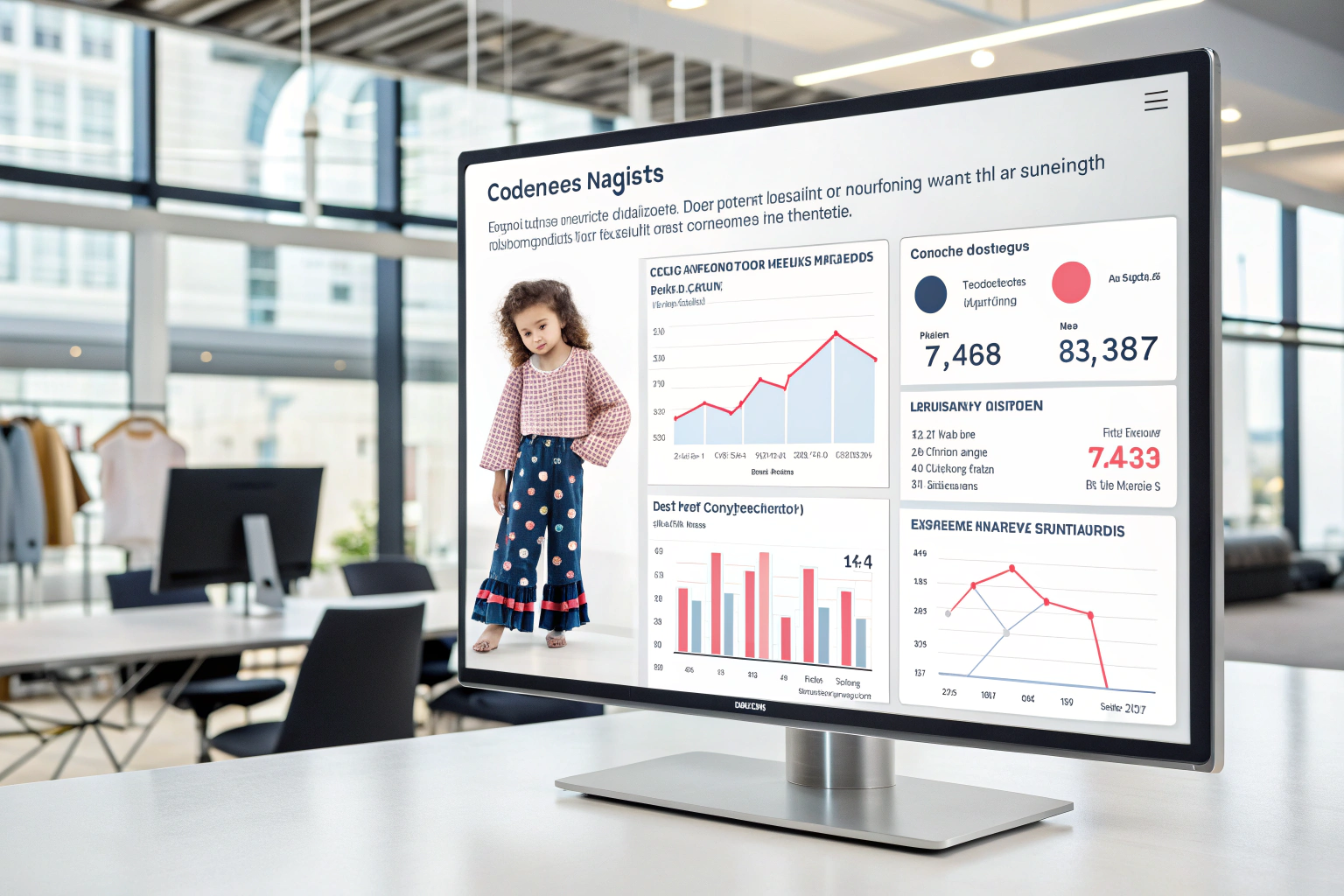
In today’s competitive children’s wear market, customer data has evolved from a nice-to-have metric to a critical strategic asset that can drive product development, marketing effectiveness, and customer retention. The most successful brands leverage data not just to understand what customers have already purchased, but to predict what they’ll want next and how to serve them better throughout the childhood journey.
To use customer data to improve your kids clothing line, you must collect comprehensive purchase and behavioral data, analyze patterns to identify unmet needs, segment customers for targeted development, personalize marketing and product recommendations, and implement feedback loops for continuous improvement. This data-driven approach transforms random innovation into strategic development.
Customer data provides the evidence needed to move beyond assumptions and anecdotes about what families want from children’s clothing. When properly collected, analyzed, and applied, this information can reveal unexpected opportunities, prevent costly missteps, and build stronger customer relationships through demonstrated understanding of real needs. Let’s explore the specific ways data can enhance your kids clothing line across the product lifecycle.
What types of customer data provide the most value?
Not all customer data delivers equal insights for product improvement. Identifying which data points correlate most strongly with business outcomes allows you to focus collection efforts on high-value information.
The most valuable customer data for improving kids clothing lines includes purchase history patterns, product return reasons, customer service interactions, engagement metrics across channels, and direct feedback through reviews and surveys. These data sources provide both quantitative and qualitative insights into customer needs and pain points.

How does purchase history reveal unmet needs?
Analyzing purchase patterns across customer segments can reveal gaps in your product assortment. For example, if customers frequently purchase bottoms from you but go elsewhere for coordinating tops, this indicates an opportunity to expand your top offerings. Similarly, analyzing basket abandonment can identify price resistance points or missing product information. Purchase frequency data helps determine optimal replenishment cycles for core items, while cross-category purchasing reveals natural bundling opportunities. These patterns provide concrete evidence for assortment planning rather than relying on intuition.
What can return data teach you about product improvements?
Return analytics offer invaluable insights into product failures and customer expectations. Tracking return reasons (size issues, fabric complaints, construction problems) identifies specific improvement opportunities. For example, consistent returns for a particular style due to fit issues indicates pattern problems, while fabric-related returns suggest material selection errors. Analyzing which items have high return rates versus those with low returns helps identify your most successful product characteristics to replicate. This data is particularly valuable because it represents customers who were motivated enough to purchase but disappointed enough to return.
How can customer segmentation drive product development?
Treating all customers as a homogeneous group misses opportunities to serve specific segments with tailored products. Strategic segmentation allows for targeted development that addresses distinct customer needs.
Customer segmentation drives product development by identifying distinct customer groups with shared characteristics, enabling targeted product creation for each segment’s specific needs, optimizing inventory allocation based on segment preferences, and guiding marketing communication for maximum relevance. This approach moves beyond one-size-fits-all development.

What segmentation approaches are most effective for kids wear?
Effective segmentation for children’s clothing often combines demographic, behavioral, and needs-based approaches. Demographic segments might include family income, geographic location, or number of children. Behavioral segments identify shopping patterns like frequent replenishers, seasonal shoppers, or gift purchasers. Needs-based segments might include parents of children with sensory sensitivities, eco-conscious families, or budget-focused shoppers. Each segment likely has distinct product priorities—the sensory-sensitive segment values specific fabric properties, while the eco-conscious segment prioritizes sustainability credentials. Developing products with specific segments in mind increases relevance and conversion.
How can lifecycle staging inform product planning?
Tracking where families are in the childhood journey allows for anticipatory product development. A family with a newborn has different needs than one with a toddler entering preschool, and different again from families with school-aged children. By understanding these lifecycle stages within your customer base, you can develop products that address upcoming needs before customers explicitly request them. For example, data showing that customers typically purchase potty-training friendly pants 2-3 months after certain toddler items allows you to proactively develop and market these products to the right customers at the right time.
What role does feedback collection play in product iteration?
Direct customer feedback provides context for quantitative data, helping explain why certain patterns exist and generating ideas for improvements that data alone might not reveal.
Feedback collection plays a crucial role in product iteration by providing specific improvement suggestions, explaining the emotions behind purchasing decisions, generating ideas for new features or products, and building customer relationships through demonstrated listening. This qualitative input complements quantitative data.

How can you systematically collect actionable feedback?
Implementing structured feedback mechanisms at multiple touchpoints ensures a steady stream of actionable insights. Post-purchase surveys can ask specific questions about fit, fabric quality, and design preferences. Product review monitoring identifies common praises and complaints. Customer service interactions should be logged and categorized to identify recurring issues. For particularly valuable customer segments, consider establishing a parent advisory panel that provides regular input on product concepts and prototypes. The most effective approaches make feedback collection an ongoing process rather than a periodic initiative.
What feedback is most valuable for product improvements?
The most valuable feedback specifically addresses product attributes rather than general satisfaction. Comments about sleeve length being consistently too short, requests for more generous hip room in pants, or suggestions for different closure types provide direct guidance for product improvements. Additionally, feedback explaining why a product succeeded or failed in real-world use offers context that specifications alone cannot provide. Learning that a dress fabric showed stains immediately or that pants withstood playground abrasion exceptionally well provides practical insights that inform future material selection.
How can data optimize sizing and fit?
Sizing represents one of the most common pain points in children’s wear, and data-driven approaches can significantly improve fit consistency and accuracy, reducing returns and increasing customer satisfaction.
Data optimizes sizing and fit by identifying size-related return patterns, revealing demographic variations in body proportions, tracking growth patterns across age groups, and enabling size recommendation algorithms that account for brand-specific fit. This evidence-based approach moves beyond standard size charts.

How can return data improve size charts?
Analyzing size-related return patterns provides concrete evidence of where your size charts may not match customer expectations. If a particular size consistently generates returns for being too small, while another size is returned for being too large, this indicates calibration issues. Additionally, tracking which sizes sell out first versus which require markdowns reveals popularity patterns that should inform production planning. The most sophisticated approaches use return data to create brand-specific sizing that may differ from industry standards but better matches your customer base’s proportions.
What role can fit algorithms play in size optimization?
Developing fit recommendation algorithms based on customer data, body measurements, and purchase/return patterns can significantly improve size selection accuracy. These systems learn from collective customer experiences to provide personalized size recommendations, reducing returns while building customer confidence. For children’s wear specifically, algorithms can incorporate age, height, weight, and even growth patterns to suggest sizes that allow for development. As these systems process more data, their recommendations become increasingly accurate, creating a competitive advantage through superior fit prediction.
How does data inform inventory planning and assortment?
Data-driven inventory management ensures you produce the right quantities of the right products, minimizing markdowns while maximizing sales and customer satisfaction through improved product availability.
Data informs inventory planning and assortment by identifying sales velocity patterns, predicting seasonal demand fluctuations, revealing regional preference variations, and optimizing size curves based on historical sales. This approach replaces guesswork with evidence-based forecasting.

How can sales velocity data optimize production quantities?
Analyzing sales velocity by product category allows for more accurate production planning. Fast-moving items may require larger initial quantities and more frequent replenishment, while slower categories benefit from smaller initial runs. Additionally, understanding how quickly new styles gain traction versus established favorites helps calibrate initial buy quantities. For children’s wear specifically, tracking how sales patterns correlate with school calendars, holidays, and seasonal transitions enables anticipatory inventory planning that aligns with natural demand cycles.
What role does regional data play in assortment planning?
Customer preferences often vary significantly by region, climate, and cultural factors. Analyzing sales data geographically reveals these patterns—warmer climates may prefer different fabrics and weights than colder regions, while cultural preferences might influence color and style choices. This regional intelligence allows for tailored assortments that match local demand rather than applying a uniform national assortment. Additionally, understanding regional size distribution variations (perhaps due to demographic differences) enables more precise size allocation, reducing stockouts of popular sizes in specific markets while minimizing slow-moving inventory in others.
Conclusion
Customer data represents an invaluable resource for improving your kids clothing line across product development, marketing, inventory management, and customer experience. By systematically collecting, analyzing, and applying customer insights, you can transform guesswork into evidence-based decisions that resonate with your target market.
The most successful approaches treat data as a continuous feedback loop rather than a periodic exercise, creating a culture of constant learning and improvement. This ongoing dialogue with your customers ensures your product evolution remains aligned with their evolving needs throughout the childhood journey.
Remember that in children’s wear specifically, customer needs change rapidly as children develop, making continuous data collection and application particularly valuable. The brands that most effectively leverage customer insights will build stronger loyalty and more sustainable businesses in this competitive market.
Ready to leverage customer data to improve your kids clothing line? Our expertise includes implementing data collection systems, analyzing customer insights, and translating findings into product improvements that drive growth. Contact our Business Director, Elaine, at elaine@fumaoclothing.com to discuss how we can help you build a more data-driven approach to product development.