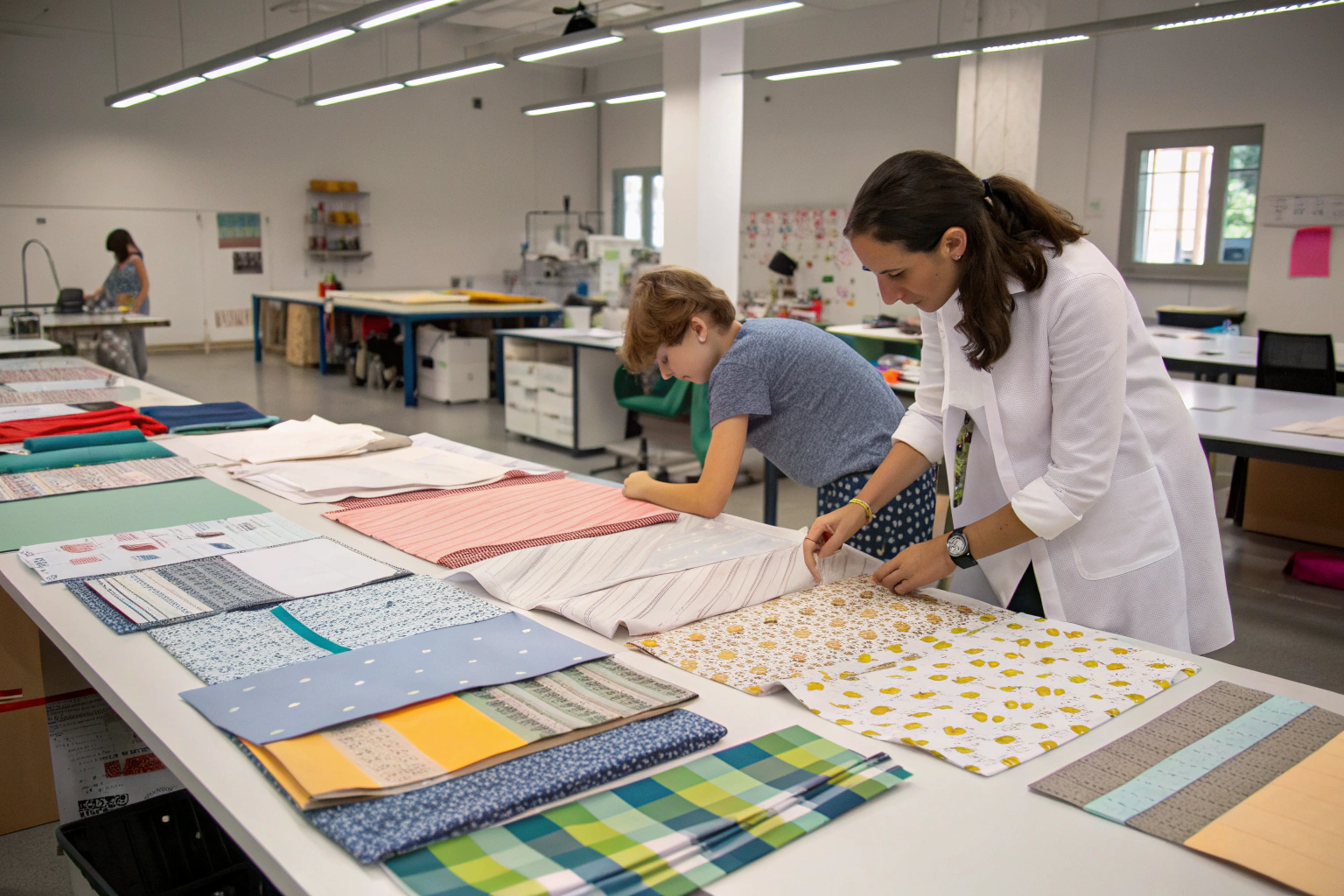
Choosing the right fabrics for children’s clothing involves balancing multiple considerations that go far beyond aesthetics. The selection process must address safety concerns, comfort requirements, durability needs, and practical care considerations while still delivering on style and brand positioning. Getting this balance right is crucial for both commercial success and product safety.
The most important factors when selecting kids wear fabrics include safety certifications and compliance, comfort and sensory properties, durability and performance characteristics, ease of care and maintenance, and appropriateness for the intended use and age group. These factors work together to ensure fabrics meet the unique demands of children’s clothing.
Fabric selection forms the foundation of any children’s clothing line, impacting everything from initial wearability to long-term customer satisfaction. The best fabric choices acknowledge that children are not just small adults—they have different physiological needs, activity patterns, and safety requirements that must be addressed through thoughtful material selection. Let’s explore the specific factors that should guide kids wear fabric decisions.
Why are safety certifications the non-negotiable starting point?
Safety represents the absolute foundation of children’s product development, with fabric selection playing a crucial role in meeting regulatory requirements and addressing parental concerns about chemical exposure and physical hazards.
Safety certifications are the non-negotiable starting point because they verify compliance with legal requirements, provide assurance about chemical safety, address specific vulnerabilities of children’s developing systems, and build trust with safety-conscious parents. These certifications should be considered before any other fabric attributes.

What certifications should you prioritize for different markets?
The OEKO-TEX Standard 100 certification is globally recognized for verifying that textiles are free from harmful levels of more than 100 substances regulated by law. For the US market, CPSIA compliance is mandatory, with specific requirements for lead and phthalate content. The Global Organic Textile Standard (GOTS) certification covers both environmental and social criteria for organic fibers. For sleepwear, flammability standards like CPSC 16 CFR Part 1615/1616 in the US require specific fabric treatments or inherent flame resistance. These certifications should be verified through laboratory testing and proper documentation from suppliers.
How do safety considerations vary by age group?
Infant fabrics (0-24 months) require the most stringent safety standards due to developing immune systems and tendency to mouth clothing. For this age group, avoid rough textures, loose fibers, or any treatments that might transfer to skin or mouths. Toddler fabrics (2T-5T) need to accommodate increased mobility while maintaining safety, with particular attention to durability and colorfastness. School-age children’s fabrics must withstand rigorous activity while avoiding restricted movement. Understanding these age-specific considerations ensures appropriate fabric selection throughout childhood development stages.
How do comfort and sensory properties impact wearability?
Comfort directly influences whether children will willingly wear clothing, making it a crucial commercial consideration beyond mere physical pleasantness. Sensory characteristics can determine success or failure with sensitive young wearers.
Comfort and sensory properties impact wearability by determining how clothing feels against sensitive skin, influencing body temperature regulation, affecting freedom of movement during play, and determining whether children develop positive or negative associations with getting dressed. These factors directly impact customer satisfaction and repeat purchases.

What fabric characteristics contribute to comfort?
The mechanical properties that contribute to comfort include softness (often measured by instruments like the Kawabata Evaluation System), breathability (the ability to transmit moisture vapor), moisture-wicking capability (moving perspiration away from skin), and stretch and recovery (freedom of movement without bagging). Natural fibers like cotton, bamboo, and merino wool often excel in comfort properties, though advanced synthetics have made significant improvements. The best fabric choices balance these characteristics based on the garment’s intended use—activewear prioritizes moisture management, while loungewear emphasizes softness.
Why are sensory considerations particularly important for children?
Children often have heightened sensory sensitivity compared to adults, making them particularly aware of fabric textures, seams, tags, and even subtle differences in hand feel. Fabrics that feel slightly irritating to adults may be completely unwearable for sensitive children. This has led to the growth of sensory-friendly clothing lines featuring tagless designs, flatlock seams, and exceptionally soft fabrics. When selecting fabrics, consider conducting wear tests with children of the target age group to identify potential sensory issues before full production.
What durability characteristics ensure longevity?
Durability directly impacts both customer satisfaction and brand perception, as parents expect children’s clothing to withstand active use and frequent laundering while maintaining appearance and integrity.
Durability characteristics ensure longevity by providing resistance to abrasion during play, maintaining color vibrancy through repeated washing, withstanding stress at seams and closures, and recovering from stretching without permanent deformation. These properties determine whether clothing survives one child or can be passed to siblings.

How can you evaluate fabric durability before production?
Standardized testing methods provide objective measures of durability, including Martindale or Wyzenbeek tests for abrasion resistance, tear strength tests, pilling resistance evaluations, and colorfastness testing to washing, light, and crocking (rubbing). Additionally, stretch recovery tests measure how well fabrics return to their original shape after stretching. Reputable fabric suppliers should provide test reports for these characteristics. For critical applications, conducting your own testing on fabric samples provides additional assurance before committing to large purchases.
What construction techniques enhance fabric durability?
The durability of a finished garment depends on both fabric properties and construction methods. Reinforced stitching at stress points, appropriate seam types for the fabric weight and stretch, and strategic pattern placement to minimize stress on bias grains all contribute to longevity. When selecting fabrics, consider how they will perform during cutting and sewing—some fabrics may require special needles, stitch types, or seam finishes to maximize durability. Collaborating with your manufacturer during fabric selection ensures the chosen materials can be constructed into durable garments.
Why is ease of care a crucial consideration for parents?
Practical care requirements significantly influence purchasing decisions and long-term satisfaction, as parents balance aesthetic preferences with the realities of managing children’s laundry.
Ease of care is a crucial consideration because it impacts the practical usability of clothing, determines long-term appearance maintenance, influences purchasing decisions for time-pressed parents, and affects whether clothing remains in rotation after initial wear. Fabrics that simplify care typically see higher utilization and customer satisfaction.

What care properties are most valued by parents?
Parents consistently prefer fabrics that are machine washable and dryable, resistant to shrinking and fading, quick-drying for efficient laundry turnover, and wrinkle-resistant to minimize ironing. Stain resistance or ease of stain removal is particularly valued for children’s clothing. These practical considerations often outweigh aesthetic preferences, especially for everyday clothing. When selecting fabrics, consider the care instructions that will be required and how they align with your target customer’s lifestyle—premium fabrics requiring special care may be acceptable for occasion wear but not for school uniforms.
How can fabric selection reduce long-term maintenance?
Choosing fabrics with inherent easy-care properties—like performance synthetics that resist stains and odors, natural fibers with permanent press treatments, or blends that combine natural comfort with synthetic durability—can significantly reduce the time and effort required for clothing maintenance. Additionally, colorfast dyes that maintain vibrancy through numerous washes extend the wearable life of garments. The most successful fabric choices acknowledge that children’s clothing will undergo rigorous cleaning and select materials that can withstand this treatment while maintaining their appearance.
How does intended use dictate fabric selection?
The purpose of the garment should drive fabric selection, with different activities and occasions requiring specific performance characteristics that optimize functionality and appropriateness.
Intended use dictates fabric selection by establishing performance requirements, determining appropriate aesthetics, defining durability needs, and influencing comfort priorities based on activity level and environment. Matching fabric properties to garment function ensures optimal performance.

What fabric characteristics suit different clothing categories?
Activewear and playwear require stretch recovery, moisture management, and abrasion resistance. Sleepwear needs softness, breathability, and for older children, flame resistance. School uniforms benefit from wrinkle resistance, colorfastness, and durability. Formal wear requires drape, luxury hand feel, and special care acceptance. Outerwear demands weather protection, wind resistance, and possibly insulation. Each category has distinct requirements that should guide fabric selection rather than applying a one-size-fits-all approach across a collection.
How can fabric selection enhance product functionality?
Strategic fabric selection can enhance garment functionality beyond basic coverage. Moisture-wicking fabrics keep children comfortable during physical activity, temperature-regulating materials adapt to changing environments, UV-protective fabrics offer sun safety, and antimicrobial treatments reduce odors between washes. These functional benefits provide tangible value that parents appreciate and may justify premium pricing. When selecting fabrics, consider not just what the clothing is, but what it does for the child wearing it—this perspective often leads to more thoughtful, commercially successful selections.
Conclusion
Selecting fabrics for children’s wear requires a multidimensional approach that balances safety, comfort, durability, care, and functionality. The best fabric choices acknowledge that children have unique needs that differ from adults, with particular attention to developing systems, sensory sensitivity, and active lifestyles.
By establishing clear criteria based on these key factors and rigorously evaluating fabrics against them, brands can develop clothing that not only looks appealing but performs well in real-world use. This thoughtful approach to fabric selection builds customer trust, enhances brand reputation, and ultimately creates products that children enjoy wearing and parents feel good about purchasing.
The most successful children’s wear brands treat fabric selection as a strategic decision rather than an aesthetic one, recognizing that the right materials form the foundation upon which great clothing is built.
Ready to make informed fabric selections for your kids wear line? Our expertise includes sourcing and testing fabrics that meet the unique requirements of children’s clothing while aligning with your brand positioning and cost parameters. Contact our Business Director, Elaine, at elaine@fumaoclothing.com to discuss how we can help you select the perfect fabrics for your collection.