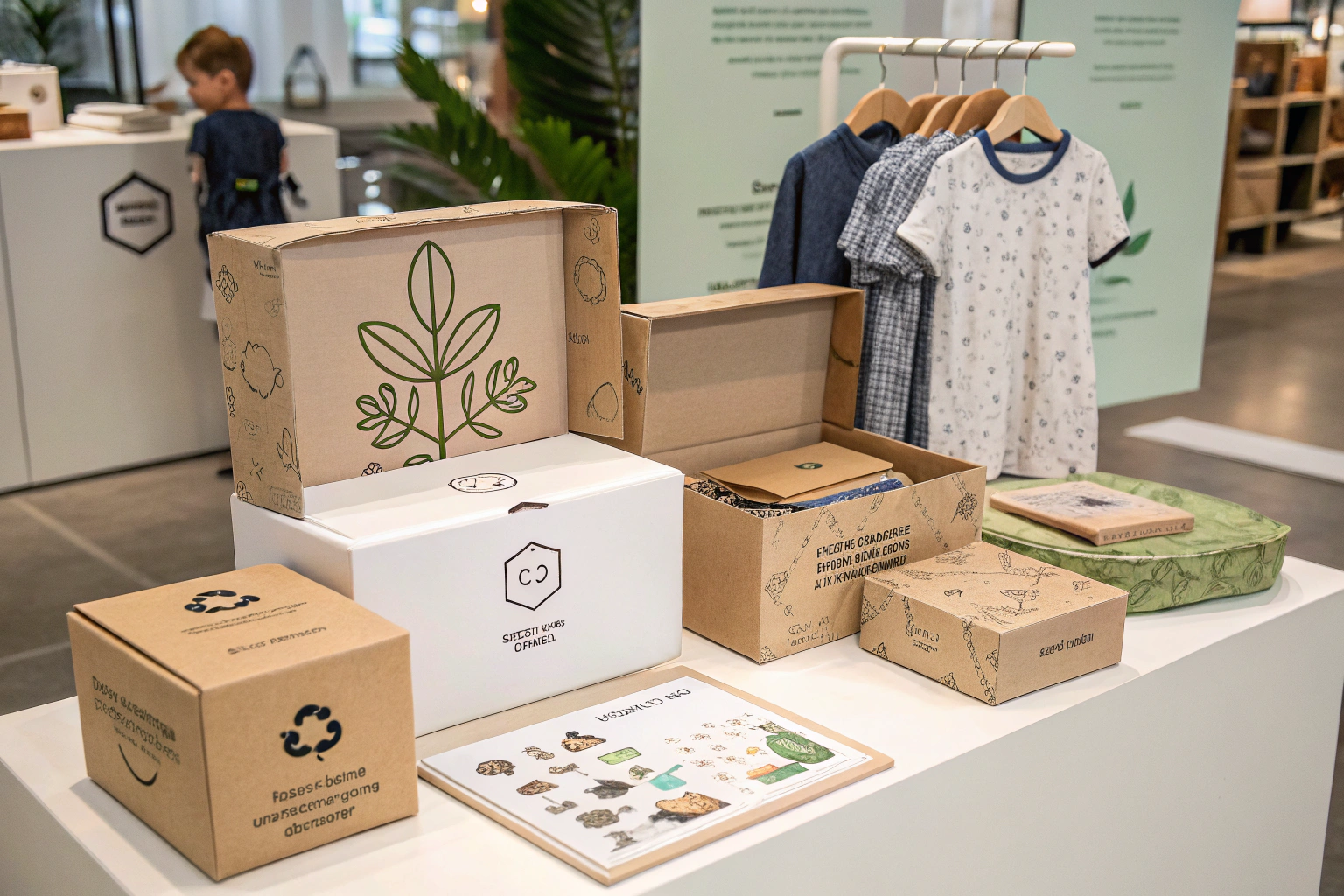
The landscape of children’s clothing packaging is undergoing a significant transformation as brands respond to evolving consumer expectations around sustainability, functionality, and experiential elements. Modern packaging has evolved from mere protective wrapping to an integral part of the brand experience that can significantly impact purchasing decisions and customer loyalty.
The latest developments in kids wear packaging include plant-based and compostable materials, interactive and reusable designs, minimalist and reduced-waste approaches, smart packaging with digital integration, and educational elements that extend product value. These innovations reflect broader shifts in consumer values, particularly around environmental responsibility and experiential engagement.
Today’s parents increasingly view packaging through dual lenses: environmental impact and experiential value. The most forward-thinking children’s wear brands are reimagining packaging as both an ecological statement and an extension of play, creating unboxing experiences that delight children while aligning with parental values. Let’s explore the specific innovations shaping the future of children’s clothing packaging.
Why are sustainable materials dominating packaging innovation?
The shift toward eco-friendly packaging materials represents one of the most significant developments in children’s wear, driven by growing consumer awareness and regulatory pressures. Sustainable packaging has evolved from niche differentiator to industry expectation.
Sustainable materials are dominating packaging innovation because they address growing consumer demand for environmental responsibility, comply with increasingly strict packaging regulations, reduce long-term packaging costs through material efficiency, and align with brand values that appeal to modern families. This shift represents both ethical and commercial imperatives.

What plant-based alternatives are replacing traditional plastics?
Brands are increasingly adopting plant-derived materials like cornstarch-based bioplastics, mushroom packaging, seaweed-based films, and bamboo fiber containers that offer similar protective qualities to conventional plastics while being compostable or biodegradable. These materials particularly appeal to parents concerned about both environmental impact and chemical exposure, as they typically avoid the petroleum-based compounds and potential toxins associated with traditional plastic packaging. The visual and tactile qualities of these materials—often featuring natural textures and earthy aesthetics—also reinforce brand commitments to sustainability.
How are recycled materials being implemented creatively?
Beyond basic recycled cardboard, innovative brands are utilizing unconventional recycled content like ocean-bound plastics transformed into mailers, agricultural waste converted to molded pulp inserts, and even recycled children’s clothing transformed into padding material. These approaches often incorporate storytelling elements that explain the packaging’s origin, creating educational moments about circular economies. The most effective implementations balance environmental benefits with practical considerations like durability, weight, and cost—addressing both idealism and the realities of shipping and handling.
How is interactive packaging enhancing the unboxing experience?
Interactive packaging transforms the routine act of unpacking into an engaging experience that extends brand interaction beyond the clothing itself. These elements particularly resonate in children’s wear where the packaging often becomes part of the play experience.
Interactive packaging enhances the unboxing experience by incorporating play elements that extend product engagement, creating memorable moments that encourage social sharing, building emotional connections through surprise and delight, and providing additional value that justifies premium positioning. This approach recognizes packaging as a touchpoint rather than just a container.

What types of interactive elements are most effective?
Successful interactive packaging often includes transformable elements like boxes that convert into play structures, puzzles or games printed on interior surfaces, scratch-and-sniff panels incorporating child-friendly scents, and augmented reality triggers that unlock digital content when scanned. These features extend the brand experience beyond the clothing itself, creating memorable moments that children associate with the brand. The most sophisticated implementations connect these interactive elements to the clothing’s theme or story, creating a cohesive narrative from packaging to product.
How can packaging encourage reuse and extended engagement?
Designing packaging for second-life functionality significantly increases its perceived value while reducing environmental impact. This might include storage boxes designed specifically for children’s clothing organization, drawstring bags that become laundry or travel bags, or packaging components that function as toy organizers. When parents see ongoing utility in packaging, they’re more likely to retain and reuse it rather than immediately discarding it—extending brand visibility while minimizing waste. This approach requires thoughtful design that balances the packaging’s primary protective function with its secondary use case.
Why is minimalist packaging gaining popularity?
The movement toward simplified, reduced-material packaging reflects growing consumer preference for efficiency and waste reduction. Minimalist approaches often deliver both environmental and economic benefits while creating a premium, considered aesthetic.
Minimalist packaging is gaining popularity because it reduces material costs and environmental impact, creates a premium uncluttered aesthetic that appeals to modern sensibilities, simplifies the unpacking experience for busy parents, and aligns with values of intentional consumption. This trend represents a shift from abundance to essence in packaging design.

How are brands implementing reduced-material solutions?
Progressive brands are adopting innovative structural designs that use clever folding techniques instead of additional components, integrated closures that eliminate need for separate tapes or labels, and size-optimized packaging that matches clothing dimensions precisely rather than using standard oversized boxes. These approaches often reduce material usage by 30-50% compared to conventional packaging while maintaining protection during shipping. The most sophisticated implementations feel intentionally spare rather than cheap, using high-quality materials and precise construction to communicate value through craftsmanship rather than abundance.
What role does information design play in minimalist packaging?
With reduced surface area, strategic information hierarchy becomes crucial in minimalist approaches. Essential information is prioritized and presented with clarity, while secondary details move to integrated digital channels via QR codes or URLs. This approach maintains regulatory compliance and necessary product information while eliminating visual clutter. Many brands use this opportunity to develop beautiful typographic treatments or subtle graphic elements that reinforce brand identity without requiring additional labels or inserts.
How is smart packaging transforming customer engagement?
The integration of digital technology with physical packaging creates new opportunities for connection, education, and extended brand experiences. Smart packaging bridges the physical and digital worlds in ways particularly engaging for tech-native families.
Smart packaging is transforming customer engagement by connecting physical products to digital content, providing supply chain transparency that builds trust, enabling personalized experiences through scannable elements, and creating shareable moments that extend brand reach. This approach meets modern families where they already are—in digital spaces.

What technologies enable effective smart packaging?
The most accessible smart packaging implementations use QR codes and NFC chips to connect packaging to digital content like styling suggestions, care instruction videos, brand stories, or interactive games. More advanced approaches might incorporate augmented reality triggers that bring packaging graphics to life when viewed through a smartphone, or unique codes that unlock personalized content. These technologies are particularly effective in children’s wear where they can extend play value—for example, packaging that becomes part of an augmented reality game or connects to character backstories.
How can smart packaging enhance sustainability communication?
Smart elements can provide detailed sustainability information that wouldn’t fit on physical packaging, such as supply chain transparency, material sourcing stories, recycling instructions specific to local municipalities, or updates about packaging recycling programs. This approach addresses the growing consumer desire for transparency while overcoming the physical limitations of packaging surfaces. When parents can easily access information about a brand’s environmental practices, they develop greater trust and connection—factors that significantly influence loyalty in the competitive children’s wear market.
What educational packaging trends are emerging?
Packaging is increasingly serving as an educational tool that extends learning beyond the product itself, particularly in children’s wear where parents value opportunities for development and engagement.
Educational packaging trends include incorporating learning activities into packaging design, providing content that supports developmental milestones, creating opportunities for parent-child interaction, and aligning with educational values that resonate with modern families. This approach adds meaningful value beyond basic functionality.

How can packaging support child development?
Thoughtful packaging might include age-appropriate activities printed on interior surfaces—simple puzzles for toddlers, more complex games for older children, or creative prompts that encourage drawing or storytelling. These elements transform waiting periods (like when parents are inspecting clothing) into engaged moments. Some brands incorporate developmental information for parents about how clothing features support emerging skills like dressing independence, with packaging providing the perfect platform for communicating these thoughtful design details.
What role can packaging play in environmental education?
Packaging offers a natural platform for teaching environmental concepts through illustrated recycling instructions, simple explanations of compost cycles, or child-friendly stories about material origins. When children participate in proper packaging disposal or reuse through clearly designed systems, they develop early eco-literacy habits. The most effective approaches make sustainability concepts accessible and engaging rather than preachy, using positive messaging and age-appropriate language that empowers rather than alarms young children.
Conclusion
The latest developments in kids wear packaging reflect a fundamental rethinking of packaging’s role—from protective necessity to integrated brand experience that delivers environmental responsibility, engagement, education, and efficiency. The most successful implementations balance these multiple objectives while maintaining the practical functionality that ensures products arrive in perfect condition.
As consumer expectations continue to evolve, packaging will increasingly serve as a tangible expression of brand values and a touchpoint for building lasting relationships with families. Brands that approach packaging strategically—considering its entire lifecycle from production to disposal or reuse—will build stronger connections with the increasingly values-driven children’s wear market.
Ready to innovate your kids wear packaging strategy? Our expertise includes developing packaging solutions that balance sustainability, functionality, and engagement while aligning with your brand values. Contact our Business Director, Elaine, at elaine@fumaoclothing.com to discuss how we can help you implement cutting-edge packaging that delights customers and supports your business objectives.