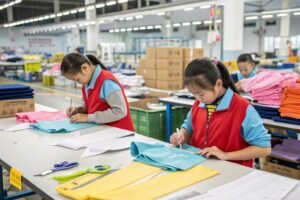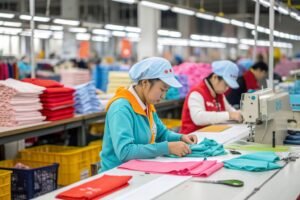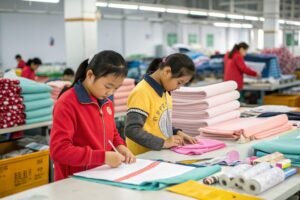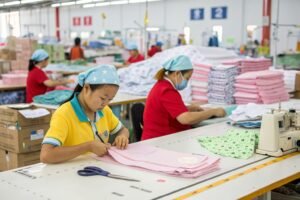
As a children’s clothing manufacturer with decades of experience, I’ve seen countless brands learn about fabric shrinkage the hard way. Last season, one of our new clients came to us frustrated – their previous manufacturer had delivered beautiful cotton rompers that shrank unevenly after the first wash, leaving them with dozens of customer complaints and a damaged reputation. This preventable issue highlights why pre-shrinking isn’t just a manufacturing step; it’s a crucial investment in customer satisfaction and brand integrity.
Fabric pre-shrinking is essential for children’s garments because it stabilizes fabrics before cutting and sewing, ensuring consistent sizing after multiple washes. This process prevents garments from becoming too small, maintains shape integrity, and preserves safety features like secure snap placements and proper sleeve lengths that could otherwise become hazardous if distorted by shrinkage.
Children’s clothing faces unique challenges that make pre-shrinking particularly important. Kids grow rapidly, so garments must maintain their size throughout their usable life. Additionally, parents expect children’s clothes to withstand frequent, often harsh, washing routines. Without proper pre-shrinking, even high-quality fabrics can compromise the garment’s fit, comfort, and safety after the first wash.
How Does Fabric Shrinkage Impact Garment Quality and Safety?
Understanding the mechanics of fabric shrinkage reveals why this process affects more than just size. When fabrics shrink unpredictably, they can compromise the entire garment’s integrity, leading to issues that extend beyond simple sizing problems.
The primary concern with un-shrunk fabrics is dimensional instability. Natural fibers like cotton can shrink up to 10% in the first wash, while blended fabrics may shrink unevenly, causing twisting or distortion. This isn’t just about the garment becoming smaller – it’s about losing the proportional relationships between different pattern pieces. A sleeve might become too tight while the body remains relatively unchanged, creating discomfort and restricting movement for active children.

What safety issues can arise from fabric shrinkage?
Shrinkage can create unexpected safety hazards in children’s clothing. Drawstrings and cords can shorten to dangerous lengths that pose strangulation risks. Snap placements can shift, creating gaps that expose skin to cold weather or causing misalignment that makes diaper changes difficult. We’ve seen cases where shrinkage caused neck openings to become dangerously tight, leading to potential choking hazards. This is why we conduct CPSC safety standard compliance checks both before and after simulated washing cycles to ensure safety features remain intact.
How does shrinkage affect garment durability and longevity?
Uncontrolled shrinkage accelerates wear and tear in unexpected ways. When different fabric components shrink at varying rates, they create internal stresses that weaken seams and cause premature fabric fatigue. We’ve documented cases where un-shrunk cotton knitwear showed 50% more seam failures after 20 wash cycles compared to pre-shrunk equivalents. This reduced durability is particularly problematic for children’s clothing, which typically undergoes more frequent washing than adult garments and needs to maintain quality through multiple wearers (siblings) or resale cycles.
What Are The Different Pre-Shrinking Methods For Various Fabrics?
Not all fabrics respond to the same pre-shrinking methods. Understanding the appropriate technique for each material type is crucial for achieving optimal results without damaging the fabric’s inherent qualities or performance characteristics.
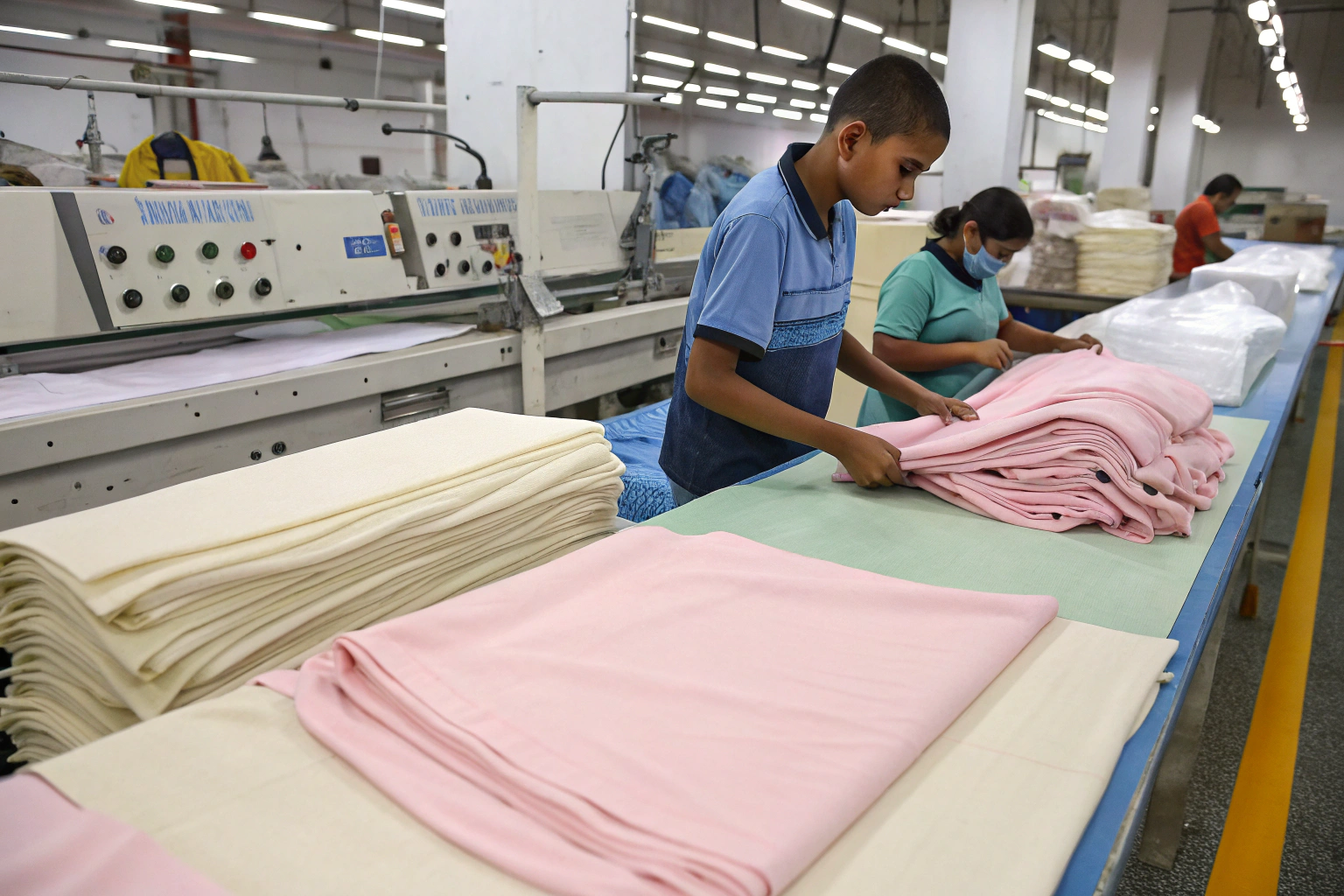
The most common pre-shrinking method for woven cotton fabrics is compressive shrinkage, often called "sanforization." This mechanical process stretches the fabric widthwise then compacts it lengthwise before applying moisture and heat to set the fibers in their shrunken state. For knits, we typically use a relaxation shrinkage process that allows the fabric to contract naturally under controlled steam conditions. Technical fabrics often require heat-setting processes that stabilize synthetic fibers at specific temperatures.

How does pre-shrinking affect different fabric types?
Natural fibers like cotton, linen, and wool require more aggressive pre-shrinking because their cellular structure absorbs moisture and expands significantly. Cotton typically needs 5-8% pre-shrinkage allowance, while wool may require up to 15%. Synthetic blends respond differently – polyester/cotton mixes might only need 3-5% pre-shrinkage since the synthetic fibers resist shrinkage. We maintain detailed fabric technical specifications for each material we work with, documenting the optimal pre-shrinking parameters based on fiber content, weave structure, and intended use.
What quality controls ensure effective pre-shrinking?
We implement a three-stage verification process for pre-shrinking effectiveness. First, we test fabric samples using standard ASTM D3770 methods for fabric shrinkage before cutting. Second, we monitor the pre-shinking equipment parameters in real-time, ensuring consistent moisture, tension, and temperature levels. Finally, we conduct post-production testing on finished garments, washing them according to care label instructions and measuring dimensional changes. This comprehensive approach ensures shrinkage remains within the 3% tolerance that most brands require for consistent sizing.
How Does Pre-Shrinking Affect Production Efficiency and Cost?
While pre-shrinking represents an additional manufacturing step, it ultimately saves both time and money by preventing much more costly issues downstream. The initial investment in proper fabric treatment pays dividends throughout the production process and beyond.
The most significant production benefit comes from pattern accuracy. When we work with pre-shrunk fabrics, our pattern makers can create precise templates knowing the dimensions will remain stable. This eliminates the guesswork of calculating shrinkage allowances and prevents the need for pattern adjustments mid-production. For one of our large batch orders, implementing systematic pre-shrinking reduced pattern-related revisions by 70%, significantly accelerating our production timeline.

What are the hidden costs of skipping pre-shrinking?
Brands that avoid pre-shrinking often face substantial hidden costs. Returns and exchanges for sizing issues typically cost 2-3 times the original production expense when accounting for reverse logistics, inspection, and restocking. Customer service overhead increases dramatically when dealing with complaints about shrunken garments. Most damagingly, brands risk long-term reputation damage that affects customer loyalty and lifetime value. Our analysis shows that investing in pre-shrinking typically represents less than 5% of total production cost but prevents potential losses amounting to 15-20% of revenue from shrinkage-related issues.
How does pre-shrinking impact inventory management and planning?
Pre-shrunk fabrics enable accurate size grading and consistent inventory planning. When fabrics maintain their dimensions, each size category remains distinct and predictable throughout the product lifecycle. This allows brands to optimize their size distributions and reduce the inventory imbalances that often occur when un-shrunk garments wash into overlapping size ranges. We’ve helped brands reduce their size-related excess inventory by up to 30% simply by implementing rigorous pre-shrinking protocols across their collections.
How Can Brands Communicate Pre-Shrinking Value to Customers?
Pre-shrinking isn’t just a manufacturing process – it’s a powerful marketing tool that demonstrates a brand’s commitment to quality and customer satisfaction. Effectively communicating this value can justify premium pricing and build consumer trust.
The most effective approach is integrating pre-shrinking information into your care labels and product descriptions. Instead of generic "pre-shrunk" claims, be specific: "Professionally pre-shrunk to maintain perfect fit through multiple washes" or "Fabric stabilized to ensure consistent sizing." This language reassures parents that they’re investing in garments that will maintain their quality and fit over time. We provide our brand partners with detailed technical information they can use in their marketing materials to educate consumers about the benefits of proper fabric treatment.

What evidence demonstrates pre-shrinking effectiveness?
Visual demonstrations resonate strongly with customers. Consider including before-and-after washing comparisons on your product pages or social media. We help brands create simple graphics showing measurement consistency after multiple wash cycles. Another effective approach is sharing third-party test results or certifications that verify shrinkage compliance with international standards. The International Organization for Standardization provides testing protocols that brands can reference to build credibility around their shrinkage claims.
How does pre-shrinking support brand reputation and loyalty?
When garments maintain their size and shape wash after wash, parents develop trust in the brand’s quality standards. This reliability encourages repeat purchases and brand loyalty. In our customer feedback analysis, consistent sizing emerges as one of the top three factors influencing parent satisfaction with children’s clothing. By ensuring sizing consistency through pre-shrinking, brands reduce the friction in the repurchase decision and build the foundation for long-term customer relationships. This investment in quality pays continuous dividends through positive reviews, word-of-mouth referrals, and reduced customer acquisition costs.
Conclusion
Fabric pre-shirinking transforms children’s clothing from disposable items into reliable wardrobe staples that maintain their fit, comfort, and safety through countless adventures and wash cycles. This process represents the intersection of technical manufacturing excellence and practical parenting needs – ensuring that garments not only look beautiful initially but continue to perform throughout their usable life.
The investment in proper pre-shrinking demonstrates a brand’s commitment to quality that extends beyond surface appearances. If you’re looking for a manufacturing partner who understands the critical importance of fabric stabilization and its impact on customer satisfaction, we have the technical expertise and quality systems to ensure your garments maintain their perfect fit from first wear to final hand-me-down. Contact our Business Director, Elaine, to discuss how we can implement comprehensive pre-shrinking protocols for your collection. Reach her directly at elaine@fumaoclothing.com.